Olivia Rodrigo Releases New Single Drop Dead and Honors The Cure Influence Ahead of Third Studio Album Launch

The global music landscape has witnessed a significant shift with the release of Drop Dead, the latest single from multi-Grammy-winning artist Olivia Rodrigo, which serves as a poignant homage to the enduring legacy of Robert Smith and The Cure. This release marks a critical juncture in Rodrigo’s career as she prepares for the launch of her highly anticipated third studio album, titled You Seem Pretty Sad For A Girl So In Love, scheduled for worldwide release on June 12. The single not only reinforces Rodrigo’s position as a dominant force in contemporary pop but also highlights a sophisticated evolution in her songwriting, characterized by a deep reverence for the alternative rock and post-punk movements of the 1980s.
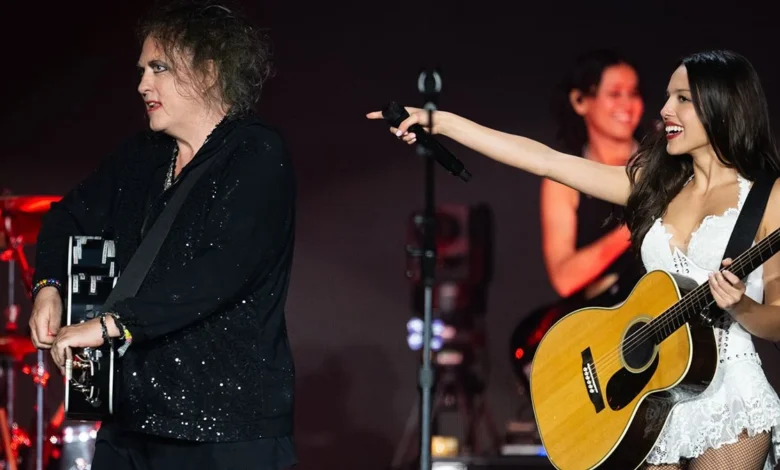
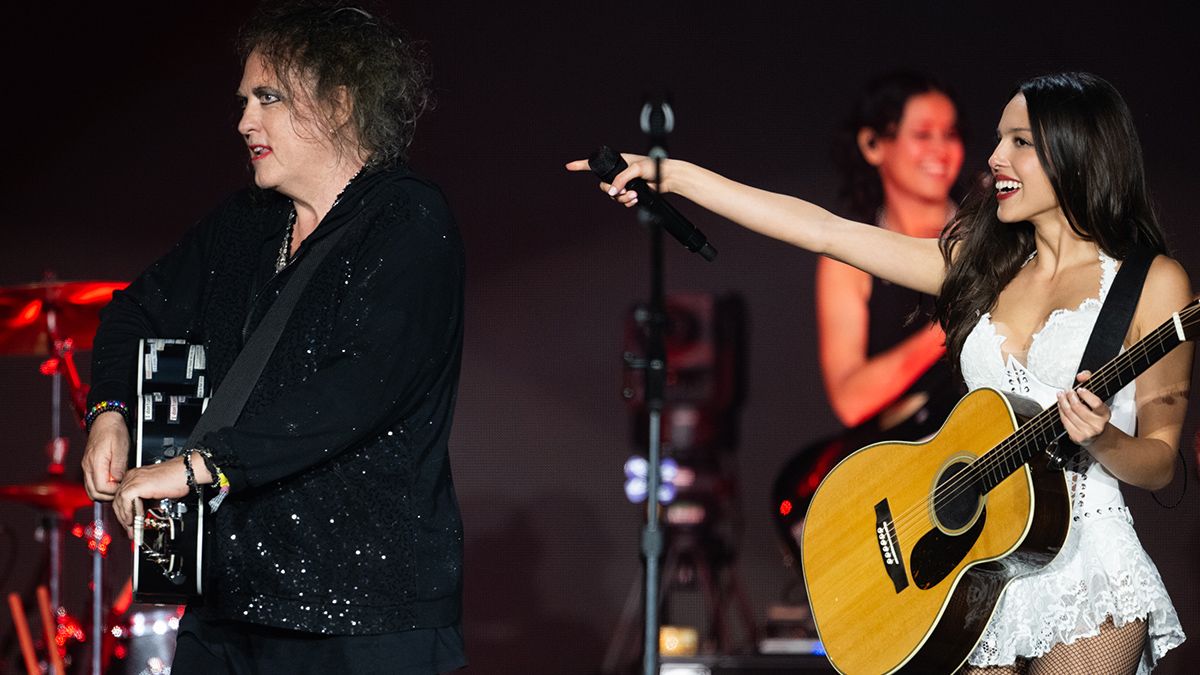
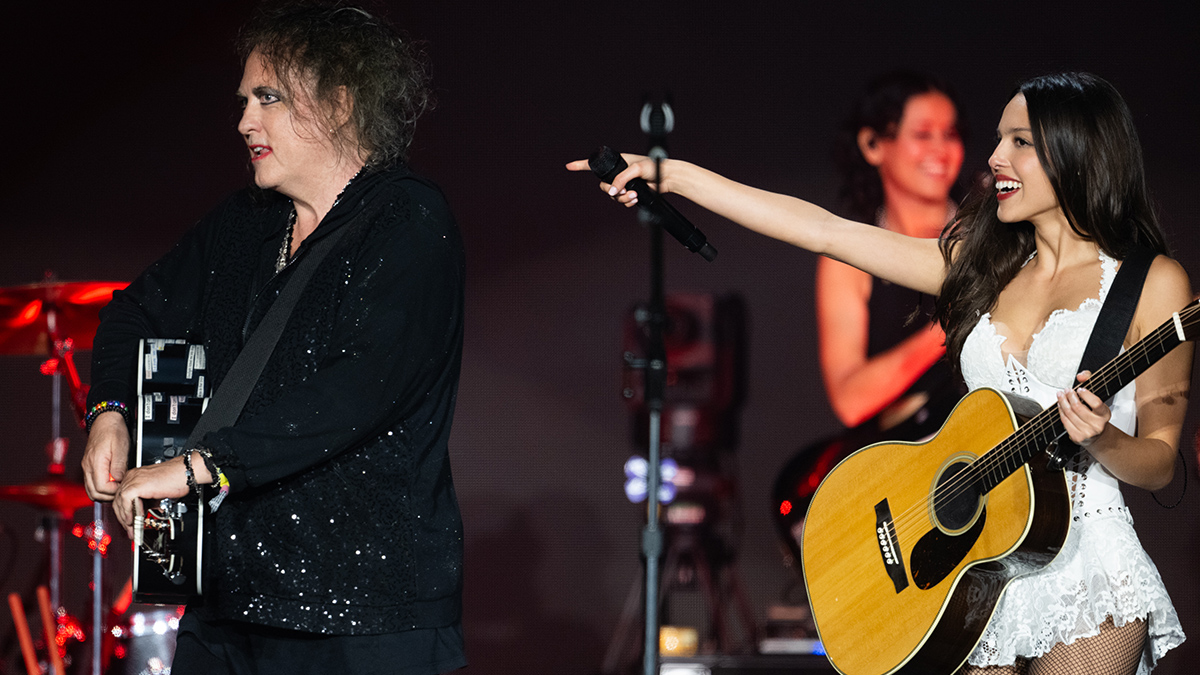
The genesis of Drop Dead can be traced back to a series of high-profile interactions between Rodrigo and Robert Smith, the iconic frontman of The Cure. Their professional relationship reached a pinnacle during the 2025 Glastonbury Festival at Worthy Farm, Pilton. Performing on the legendary Pyramid Stage before a crowd exceeding 200,000 attendees, Rodrigo surprised the audience by inviting Smith to join her for a dual-song set. The pair performed The Cure’s classic hits Friday I’m In Love and Just Like Heaven, a moment that industry critics described as a "passing of the torch" from an alternative rock pioneer to a modern pop visionary. The impact of this collaboration is explicitly woven into the fabric of Drop Dead, where Rodrigo references the 1987 classic Just Like Heaven within the opening verse.
In the first verse of Drop Dead, Rodrigo sings, "I know that the bar closes at 11, but I hope you never finish that beer," a likely nod to traditional British licensing hours, setting a grounded, atmospheric scene. This is immediately followed by a direct lyrical tribute: "You know all the words to Just Like Heaven, and I know why he wrote them now that you’re standing right here." The "he" in this context is widely understood to be Robert Smith. Music analysts suggest that this lyrical choice reflects a personal dialogue between the two artists, possibly stemming from conversations during their time in the studio where Smith may have shared the original inspirations behind his most famous compositions.
The Artistic Connection Between Robert Smith and Olivia Rodrigo
The relationship between the 23-year-old pop star and the 67-year-old rock legend has transitioned from mutual admiration to active mentorship. In a recent feature for Vogue, Smith expressed his genuine respect for Rodrigo’s craft, noting that despite the age gap and differing demographics, the quality of her songwriting is undeniable. Smith revealed that the two have spent significant time together in professional settings, stating that Rodrigo frequently consults him on creative matters ranging from fashion to musical arrangement. He further confirmed that they have shared "memorable nights in the studio," fueling speculation regarding Smith’s potential involvement in Rodrigo’s upcoming album.
Rodrigo’s affinity for The Cure is not a recent development but rather a foundational element of her musical upbringing. In 2023, she publicly credited her father for introducing her to the seminal sounds of the 1980s, including Depeche Mode and The Cure. This familial influence has allowed Rodrigo to bridge the generational divide, incorporating the angst and melodic sensibilities of new wave into a framework that resonates with a younger audience. Drop Dead serves as the sonic manifestation of this blend; while Smith does not officially appear as a performer on the track, the instrumental sections bear a striking melodic resemblance to The Cure’s 1985 hit In Between Days, utilizing bright, jangly guitars and a driving rhythmic section that echoes the post-punk era.
Production Pedigree and Collaborative Excellence
The technical execution of Drop Dead is the result of a powerhouse collaboration involving some of the most successful figures in the modern music industry. The track was co-written and produced by Dan Nigro, Rodrigo’s long-term creative partner who was instrumental in the success of her debut album SOUR and its follow-up GUTS. Nigro’s production style, which often emphasizes raw emotional delivery paired with polished, radio-ready hooks, remains a cornerstone of Rodrigo’s sound.
Adding further weight to the production is the involvement of Amy Allen, who is credited as a co-writer on the single. Allen’s inclusion is particularly noteworthy following her recent success at the Grammy Awards, where she was named Songwriter of the Year. Her portfolio includes extensive work on Sabrina Carpenter’s recent chart-topping albums, Short n’ Sweet and Man’s Best Friend. The synergy between Rodrigo, Nigro, and Allen suggests a strategic move to solidify the upcoming album’s commercial and critical standing. By aligning with top-tier talent that understands the current pop zeitgeist, Rodrigo is positioning You Seem Pretty Sad For A Girl So In Love to be a defining record of the mid-2020s.
The Glastonbury Context and the 2026 Fallow Year
The timing of this release and its connection to the Glastonbury Festival provides a broader context for Rodrigo’s current trajectory. The 2025 festival, where the collaboration with Smith occurred, was a landmark event for the United Kingdom’s largest music gathering. Established by Michael Eavis in 1970, Glastonbury has become a cultural barometer, and Rodrigo’s headline-caliber performance solidified her status as an international superstar.
The significance of the 2025 event is heightened by the fact that the festival will take a "fallow year" in 2026. This planned pause is a tradition at Worthy Farm, designed to allow the land to rest and recover from the environmental impact of 200,000 annual visitors. For Rodrigo, the 2025 performance served as a grand finale to her previous era and a bridge to her next. The memories of that performance, immortalized in the lyrics of Drop Dead, serve to keep the spirit of the festival alive during the hiatus, maintaining a connection with her fanbase through shared cultural milestones.
Anticipation for You Seem Pretty Sad For A Girl So In Love
As the lead single, Drop Dead sets the emotional and sonic tone for the upcoming third studio album. Rodrigo has described the collection as a series of "sad love songs," a theme that has become her trademark. However, industry insiders suggest that this new body of work will explore more complex emotional landscapes than the heartbreak-centric themes of her earlier records. The influence of Robert Smith suggests a move toward more atmospheric, perhaps even gothic, pop elements, moving away from the pop-punk energy of tracks like good 4 u and toward a more mature, alternative sound.
The album title, You Seem Pretty Sad For A Girl So In Love, hints at a narrative of internal conflict and the performative nature of happiness in the public eye. Given Rodrigo’s history of vulnerable and diaristic songwriting, expectations are high for a record that provides a candid look at her life as she navigates her early twenties under intense global scrutiny.
Broader Industry Implications and Fact-Based Analysis
The success of Drop Dead and the anticipation for the new album highlight a broader trend in the music industry: the "alternative-pop crossover." Artists like Rodrigo are increasingly looking to the past to find authenticity, bypassing the synthetic sounds of the late 2010s in favor of instrumentation and arrangements that feel more organic and historically grounded. By collaborating with or referencing legends like Robert Smith, Rodrigo is not just paying tribute; she is legitimizing her place within a lineage of serious songwriters.
Furthermore, the involvement of Amy Allen reflects the rising influence of female songwriters in shaping the sound of the Billboard charts. The success of Allen, alongside Rodrigo’s own songwriting prowess, indicates a shift toward artist-driven narratives that prioritize lyrical depth. Data from streaming platforms shows that listeners are increasingly gravitating toward "storytelling" tracks, a demand that Rodrigo has consistently met.
As June 12 approaches, the music industry will be watching closely to see if You Seem Pretty Sad For A Girl So In Love can match the record-breaking success of its predecessors. SOUR and GUTS both debuted at number one on the Billboard 200 and produced multiple platinum singles. If Drop Dead is any indication, Rodrigo’s third outing will likely continue this streak, further cementing her legacy as one of the most influential artists of her generation. For now, Drop Dead remains a powerful testament to the enduring power of musical mentorship and the timeless appeal of a well-crafted sad song.
Related posts: