The return of professional football in the United States has brought with it a renewed intensity in digital sports discourse, specifically regarding the performance of quarterbacks. As the NFL season begins, social media platforms—particularly X (formerly Twitter)—have seen the emergence of a peculiar, food-centric lexicon used to characterize errant passes and interceptions. This trend, which describes a turnover as a "sandwich," represents the latest evolution in the highly competitive and often performative realm of online sports criticism. By framing a quarterback’s failure to protect the football as the preparation or delivery of a specific, often absurdly constructed sandwich, fans have found a new, viral medium to express their dissatisfaction with on-field performance.
Historical Roots and Linguistic Evolution
The term "meatball" has served as a staple of baseball vernacular for decades. In the context of Major League Baseball, a "meatball" refers to a pitch thrown directly over the heart of the plate, lacking movement or strategic location, making it an easy target for a batter. The transition of this term into the football sphere required a linguistic shift to accommodate the game’s unique terminology and the shape of the ball.
Because the football is an oblong, non-spherical object, the transition from "meatball" to "meatball sub" occurred naturally within the digital sports community. The nomenclature allows for a degree of creative escalation; the more elaborate and unappetizing the sandwich described, the more significant the perceived error of the quarterback. Records indicate that this trend did not emerge overnight. Data from social media archives suggest that the phenomenon began gaining traction in late 2023. One notable early instance involved a post referring to New Orleans Saints quarterback Derek Carr throwing a "fully loaded shrimp po’boy," a satirical critique of a turnover that resonated with fans due to the specific regional connection between the player and the food item.
The Catalyst of the 2024 Season
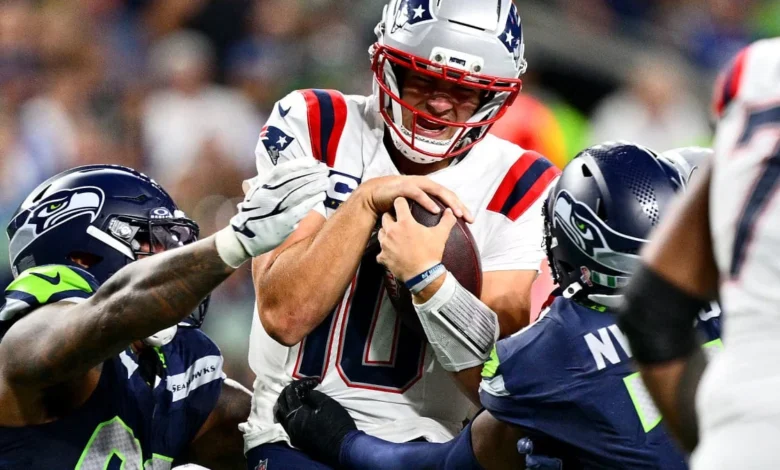
While the lexicon has existed in nascent form for nearly a year, the 2024 NFL season marked its transformation into a mainstream meme. A significant factor in this surge was the performance of New England Patriots quarterback Drake Maye. Following an offseason characterized by intense scrutiny, Maye’s performance during a Week 1 matchup against the Seattle Seahawks served as the primary catalyst for the trend’s proliferation.
Maye’s situation was unique due to his public association with a popular sandwich franchise. Over the past two years, Maye has engaged in community outreach programs, frequently appearing at Jersey Mike’s locations in the Boston area to support local charitable initiatives. When Maye threw three interceptions during the season opener, the irony of his public association with a sandwich shop was immediately leveraged by critics. The juxtaposition of his community service and his on-field struggles created a "perfect storm" for social media engagement, leading to a deluge of posts labeling his turnovers as specific sandwich orders.
Comparative Analysis of Sports Slander
The emergence of the "sandwich" meme is a symptom of a broader shift in how fans interact with professional athletes. Historically, sports criticism was confined to television punditry and newspaper editorials. Today, the democratization of discourse through social media has fostered a culture of "slander," where the goal is often to produce the most creative or humorous critique possible, rather than a strictly analytical one.
This trend follows the trajectory of "football terrorism"—a term used to describe a style of play so aesthetically displeasing or ineffective that it implies the coach or player is actively sabotaging the team. Similarly, the NBA community has long utilized tropes like "get ready to learn Chinese" to mock players who appear to be losing their standing in the league. These memes serve as a barometer for public perception. When a player becomes the subject of these tropes, it is often an indicator that they have lost the benefit of the doubt from the broader fan base.
Data-Driven Perspectives on Quarterback Performance
From an analytical standpoint, the prevalence of this meme highlights the immense pressure placed on young quarterbacks. In the modern NFL, the expectations for high draft picks—such as Drake Maye or Deshaun Watson, who was also targeted by fans using the "pastrami on pumpernickel" descriptor—are immediate.
When a quarterback commits an interception, the cost is measurable in terms of Expected Points Added (EPA). Interceptions are arguably the most damaging statistic for a quarterback, as they not only result in a lost possession but often provide the opposing team with favorable field position. While fans use "sandwich" jokes to mask their frustration with humor, the underlying sentiment remains a reflection of the high-stakes nature of the game. For front offices, the "slander" is a metric of public sentiment that, while not always accurate to the internal scouting process, reflects the growing impatience of a fan base that expects rapid development in an era of high-scoring offenses.
The Longevity of Viral Sports Trends
Despite the rapid adoption of the sandwich lexicon during the first week of the NFL season, industry analysts and social media trend-watchers suggest that the shelf life of such memes is often short. The nature of viral content is cyclical; once a joke reaches a point of saturation, it often faces backlash from users who find the repetition tedious. Evidence of this fatigue is already visible, with some users on platforms like X expressing a desire for more substantive discussion regarding team strategies and player development.
However, the legacy of these trends often lives on in the "year-end recap" videos that aggregate the most memorable moments of the season. These compilations, often set to trending audio, serve as a historical archive of the digital zeitgeist. The sandwich meme, in its current form, is likely to be viewed as a snapshot of the 2024 season’s specific brand of humor—a blend of culinary absurdity and intense competitive criticism.
Implications for Future Fan Engagement
The rise of such memes presents a challenge for public relations departments within NFL organizations. While some players and teams choose to lean into the humor, others find the constant digital mockery to be a distraction. The incident involving Drake Maye demonstrates that a player’s off-field brand, while intended to be positive, can inadvertently provide ammunition for critics when on-field performance falters.
Moving forward, the relationship between sports performance and digital meme culture will likely continue to tighten. As leagues look for ways to increase engagement with younger demographics, the ability of fans to synthesize real-time events into cultural shorthand—like the "meatball sub" interception—will remain a primary way in which the game is consumed. Whether this trend persists for the remainder of the 2024 season or fades into obscurity, it serves as a testament to the influence of digital platforms in shaping the modern narrative of professional sports. The "sandwich" is merely the latest, albeit most flavorful, example of how the internet continues to rewrite the rules of athletic critique.