How Nithya Raman is Rewriting Political Campaign Strategy Through the Lens of Microdrama Production

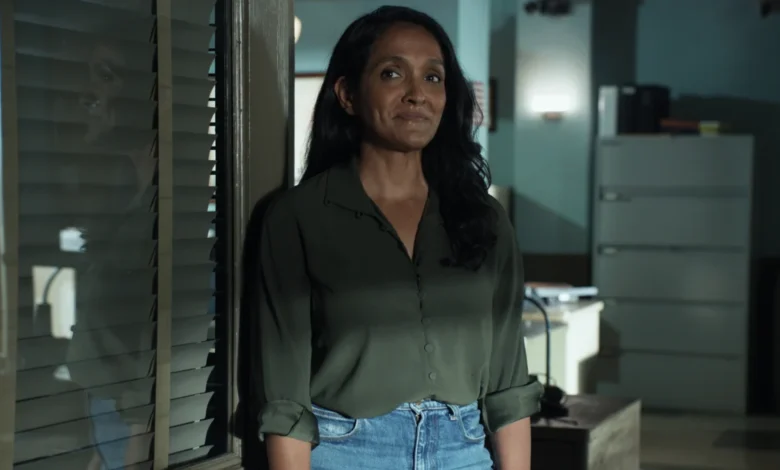
On an unseasonably stifling September afternoon in Chatsworth, California, the air conditioning at the Capital Arts soundstages has failed, leaving a dedicated film crew to navigate both the rising mercury and a demanding production schedule. The stakes are unusually high for a local political race: the team has a single day to capture four distinct microdramas designed to bolster Los Angeles City Councilwoman Nithya Raman’s bid for the mayor’s office. This unconventional approach to political outreach, which leans heavily into the aesthetics of viral internet culture, represents a departure from the traditional, polished, and often static nature of municipal campaign advertising.
As the crew races against the clock to finalize a telenovela-themed segment before the candidate’s arrival, the atmosphere is a blend of high-stress industry professionalism and the manic energy of a grassroots project. Actors Hannah Martinez and Adriana Palacios execute a series of exaggerated, melodramatic sequences, complete with a farcical face slap, under the guidance of director Ryan Wagner. Wagner, who serves as the creative director at CandyJar—a prominent entity in the burgeoning microdrama industry—is tasked with maintaining a balance between campy entertainment and the delivery of specific policy messages.
The Rise of the Microdrama Ecosystem
The emergence of this production style is not accidental. Over the last two years, a localized ecosystem of creators, writers, and technicians in Los Angeles has matured, largely in response to a volatile labor market within traditional Hollywood. As major studio productions have fluctuated, these creative professionals have turned to vertical, short-form content to sustain their livelihoods.
For Wagner, who previously cut his teeth in the independent film circuit, the transition to political campaigning was a direct reaction to the fatigue of traditional door-knocking. After an unsuccessful attempt at canvassing during the primary election, Wagner realized his skills as a filmmaker might offer a more effective contribution to the campaign than his efforts on the pavement. He approached the Raman campaign with a daring proposition: he and his peers would produce a series of microdramas, entirely pro bono, to test whether the format could resonate with a younger, digital-native electorate.
Initially, the campaign staff were supportive yet cautious. The concept of using soap-opera-style narratives to discuss nuanced policy issues like rent stabilization and public transit was unorthodox. However, the data soon justified the risk.
Data-Driven Engagement and Youth Voter Turnout
The campaign’s reliance on this format is underpinned by clear demographic trends. Recent polling from the Los Angeles Times highlights a significant divide in voter preference: while the mayoral race remains competitive, Councilwoman Raman commands a substantial lead among voters aged 18 to 29, with 66% favoring her compared to only 4% for incumbent Mayor Karen Bass.
Reaching this demographic, however, is a persistent challenge for political consultants. Traditional television advertising, direct mailers, and radio spots often fail to capture the attention of younger voters who primarily consume information through algorithmic social media feeds. Microdramas—characterized by rapid pacing, vertical orientation, and emotional storytelling—have proven to be a highly effective vehicle for delivering political messaging in a format that feels native to these platforms.
During the primary election, the Raman campaign’s initial microdramas—which paired wonky policy discussions with high-drama narratives—amassed over 850,000 views. This performance made them some of the most successful pieces of content produced by the campaign to date. These metrics played a pivotal role in the candidate’s unexpected second-place finish in June, effectively validating the strategy as a primary pillar of her communication plan.
From Grassroots Experiment to Campaign Strategy
Following the success of the primary campaign, the Raman camp took the calculated step of investing $15,000 in a series of new spots for the November runoff. This budget, while modest by the standards of major mayoral races, provided enough resources to offer the crew modest stipends and cover basic production necessities.

Kyle Rohrbach, who manages video content for the Raman campaign, noted that the pivot to microdramas was about "meeting people where they are." The strategy relies on the premise that modern voters, particularly those in the younger cohorts, are looking for authenticity and a willingness from politicians to engage with cultural trends rather than relying solely on the sterile, scripted messaging of traditional campaigns.
The current production slate includes several thematic parodies designed to resonate with specific voter blocks. One such project is a satire of "The Pitt," which targets the influence of high-dollar donors backing the incumbent’s campaign. Another, a "Mean Girls" spoof, focuses on Raman’s public opposition to a $1 billion contract for the Los Angeles Police Department. By wrapping these contentious issues in the familiar tropes of pop culture, the campaign successfully lowers the barrier to entry for viewers who might otherwise tune out a standard political ad.
Broader Implications for Political Communication
The reliance on this format serves a dual purpose: it reaches the target audience while simultaneously providing work for members of the Hollywood workforce affected by the industry’s broader economic shifts. Producer Kemma Filby, who has built a professional reputation in the microdrama space with titles such as "Chasing Kiarra" and "I Accidentally Stole the Bad Boy’s First Kiss," emphasizes the mutual benefit.
"For so many people, their livelihood right now is dependent on microdramas," Filby stated. "It’s a space where people are getting lots of views—and it’s also fun. Young people want to see politicians who can engage with the culture and be a little silly."
The political implications of this are significant. As candidates across the country search for ways to cut through the digital noise, the success of the Raman campaign suggests that "wonky" policy-making can be made palatable if presented through a culturally resonant lens. It also signals a shift in the political consulting industry, where the ability to produce high-quality, platform-specific content is becoming as vital as traditional polling or opposition research.
A Candidate’s Direct Involvement
The final phase of the day’s production arrived when Councilwoman Raman stepped onto the set. Her involvement was a significant departure from the original, candidate-free videos of the primary. As she prepared to deliver a key line, she consulted with Wagner to ensure the tone remained aligned with her platform, despite the inherent absurdity of the scene.
"They’re great," Raman remarked after reviewing the script. Following the successful completion of the shoot, she addressed the crew, thanking them for their dedication and their belief that "L.A. can be better."
For Wagner, the presence of the candidate on set was the ultimate validation. It signaled that the campaign not only tolerated this unconventional approach but viewed it as a vital component of their path to victory. "Having her here," Wagner observed, "is the most solid endorsement that this is something that feels worth her time, and is actually helping the campaign."
As the November runoff approaches, the campaign will roll out these segments across social media platforms. The transition from horizontal, broadcast-ready advertisements to vertical, mobile-optimized microdramas marks a broader evolution in how local governments are marketed to the public. Whether this will be sufficient to overcome the hurdles of the general election remains to be seen, but the strategy has already successfully transformed the way voters perceive the candidate—not merely as a council member, but as a participant in the cultural, digital conversation.
The success of the Raman microdramas demonstrates a fundamental shift: political engagement is no longer just about the delivery of policy, but about the delivery of content that feels like it belongs in the palm of the voter’s hand. By leveraging the skills of those who have mastered the art of the 60-second hook, the campaign is attempting to turn the mundane work of city governance into a compelling, episodic narrative that demands attention in an increasingly crowded media landscape.