Cavalry Becomes Free for Individual Users Following Strategic Acquisition by Canva to Expand Professional Motion Design Capabilities


The landscape of digital motion design underwent a significant transformation on April 16, 2026, as the professional-grade animation software Cavalry transitioned from a subscription-based model to a free offering for individual creators. This pivotal shift follows the official acquisition of Scene Group, the UK-based studio behind Cavalry, by the global design powerhouse Canva. The move represents a strategic effort to democratize high-end procedural animation tools, positioning Cavalry as a formidable, no-cost alternative to established industry standards such as Adobe After Effects. Available for both macOS and Windows, the software now provides its full suite of sophisticated features to solo practitioners without the barrier of a monthly fee, while maintaining a paid tier specifically for enterprise-level organizations.
The Strategic Context of the Acquisition
The acquisition of Scene Group by Canva is the latest in a series of aggressive expansions by the Australian-headquartered design giant. Over the past several years, Canva has systematically acquired specialized creative tools to bolster its ecosystem, most notably the 2024 acquisition of the Affinity creative suite. By integrating Cavalry into its portfolio, Canva is addressing a critical gap in its service offering: professional-grade motion graphics. While Canva has long offered simplified animation tools for social media content, the addition of Cavalry brings procedural, node-based capabilities that are typically reserved for high-budget film, broadcast, and interactive design projects.
Market analysts view this move as a direct challenge to the "Creative Cloud" hegemony. By making a professional tool free for individuals, Canva is utilizing a "freemium" growth strategy similar to that of Figma, which gained massive market share by offering robust free tiers before being targeted for acquisition by Adobe (a deal that was later abandoned due to regulatory pressure). The decision to keep the Enterprise plan paid ensures a sustainable revenue stream from large-scale studios while building a massive user base of individual designers who will eventually carry the tool into their professional workplaces.
A New Aesthetic and Functional Identity
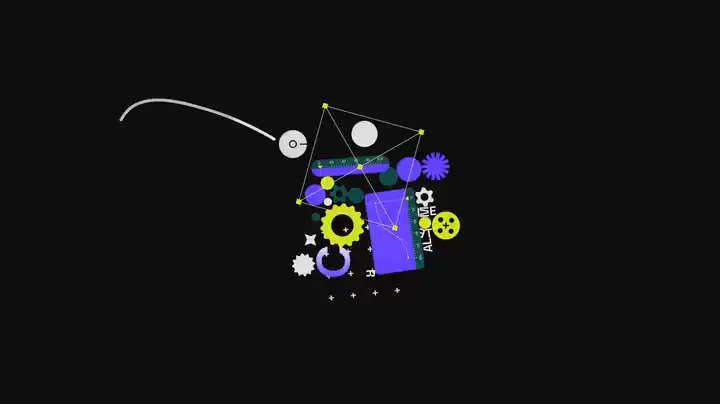
The rebranded Cavalry interface makes a bold visual statement, eschewing the traditional muted grays of professional software for a vibrant "electric violet" (#5B3FF0) theme. This deep purple interface is punctuated by high-contrast "acid yellow" accents, most notably on the "Download for free" call-to-action buttons. This design choice is more than a branding exercise; it signals a departure from the legacy software aesthetic, aiming to appeal to a younger, tech-savvy generation of motion designers who prioritize speed and modern UI/UX.
Despite the vibrant new look, the software remains a powerhouse of technical capability. The "trusted by" list prominently features industry titans such as Buck, Pentagram, and Studio Dumbar, reinforcing Cavalry’s status as a tool capable of meeting the demands of the world’s leading design agencies. The software’s hero gallery showcases the breadth of its procedural power, featuring parametric type animations from Studio Feixen and complex, layered circuit compositions by Marsio Bellizzi.
Technical Innovations: Procedural Power and Real-Time Rendering
Cavalry distinguishes itself from traditional layer-based animation software through its node-based architecture. In a layer-based system, such as After Effects, animations are built by stacking elements chronologically and spatially. In contrast, Cavalry’s procedural system allows designers to create complex relationships between objects. This means that a single change to a "parent" node can propagate through hundreds of "child" elements instantaneously, a workflow that is essential for data visualization and generative art.
One of the most significant advantages of Cavalry is its real-time rendering engine. Traditional motion design often involves lengthy "preview" wait times as the computer calculates each frame of an animation. Cavalry is built to leverage modern GPU architectures, allowing designers to see their changes live. This immediacy reduces the friction of the creative process, enabling more experimentation and faster iteration cycles. For individual designers working on tight deadlines, the elimination of render-preview lag is a transformative productivity gain.
Key Features for the Modern Designer
The free version for individuals does not appear to be a "lite" version; it includes the core features that have made Cavalry a favorite among motion specialists:
- Advanced Rigging and Character Animation: The software includes robust rig controls and "Rubber Hose" features, which allow for organic, fluid character movement. This makes it a viable tool for 2D character animators who require more flexibility than basic keyframing provides.
- Data-Driven Animation: Cavalry excels at "Data Import," allowing users to drive animations using external datasets from CSV or JSON files. This is a critical feature for fintech applications, sports broadcasting, and infographics, where real-time data needs to be translated into visual motion.
- Lottie Export and Web Integration: Perhaps the most practical "unlock" for modern web designers is the seamless Lottie export. Lottie is an open-source animation file format that allows high-quality animations to be rendered on web and mobile platforms in real-time as code. By offering Lottie export for free, Cavalry enables designers to ship production-ready assets directly to developers without the need for additional third-party plugins or expensive rendering passes.
- Physics Engine: The software includes a built-in physics engine that allows objects to interact realistically with gravity, collisions, and friction, further automating the animation process.
Chronology of the Transition
The journey of Cavalry from a niche startup tool to a free global asset followed a clear trajectory:
- 2019-2020: Scene Group launches Cavalry in beta, positioning it as a "2D tool with a 3D brain." It gains a cult following among procedural designers.
- 2021-2023: The software moves to a subscription model. It introduces advanced features like the "Scenegraph" and "Forge" to compete with established VFX tools.
- Late 2025: Strategic talks begin between Canva and Scene Group as Canva seeks to complete its "Pro" suite.
- April 16, 2026: The acquisition is finalized. The subscription paywall for individuals is removed, and the software is re-released under the Canva umbrella.
Industry Implications and Market Reaction
The reaction from the creative community has been overwhelmingly positive, though tempered by questions regarding long-term data privacy and the potential for "Canva-fication"—the fear that the software might eventually lose its professional complexity in favor of a more simplified, consumer-friendly interface. However, the decision to maintain the original development team at Scene Group suggests that Canva intends to preserve the software’s technical integrity.
For Adobe, the pressure is mounting. The "individual" segment of the market is increasingly looking toward free or one-time-purchase alternatives. With Cavalry now free, and Affinity providing a low-cost alternative to Photoshop and Illustrator, the value proposition of the Creative Cloud subscription is being scrutinized more than ever by freelance designers and small studios.
Furthermore, the integration of Cavalry into the Canva ecosystem suggests a future where high-end motion design is accessible directly within a browser or a unified desktop application. If Canva can successfully bridge the gap between Cavalry’s node-based complexity and Canva’s user-friendly interface, it could redefine the "floor" of what is considered standard design capability.
Broader Impact on the Creative Economy
The democratization of tools like Cavalry has broader implications for the creative economy. By lowering the barrier to entry, a wider range of creators can now produce high-end motion content that was previously restricted to those who could afford expensive software licenses and high-performance hardware. This is particularly relevant in emerging markets, where subscription costs in US dollars can be prohibitively expensive for individual freelancers.
Moreover, the emphasis on Lottie and web-native formats reflects a shift in where motion design lives. We are moving away from video-centric motion (MP4/MOV) toward interactive, code-based motion. By providing the tools to create these assets for free, Canva is essentially subsidizing the next generation of the interactive web.
In conclusion, the transition of Cavalry to a free model for individuals is a landmark event in the software industry. It marks a shift from software as a product to software as an ecosystem entry point. As individual designers flock to the platform to utilize its real-time rendering and procedural power, the "Electric Violet" interface may soon become as ubiquitous in the design world as the traditional toolsets it seeks to disrupt. For the individual creator, the message is clear: professional-grade motion design is no longer a luxury, but a standard accessible to all.