Brave Sells Its Search Index To AI Companies And Now Faces A Landmark Copyright Lawsuit

The digital landscape faces a significant legal reckoning as the New York Times, alongside other major media publishers including the Daily News, the Chicago Tribune, and the Orlando Sentinel, has initiated formal litigation against Brave Software. At the core of the dispute is the company’s practice of crawling, indexing, and subsequently licensing vast swaths of the public internet to prominent artificial intelligence developers. This development brings into sharp focus the tension between traditional search engine operations and the burgeoning data-hungry AI industry.
On November 2, 2026, the New York Times filed a complaint alleging that Brave has systematically scraped over 30 billion webpages without providing an effective mechanism for site owners to opt-out, subsequently packaging this data for sale to AI entities such as Cohere, Mistral, Perplexity, and Anthropic. This lawsuit represents a critical escalation in the ongoing debate over how AI models are trained and whether the ingestion of copyrighted content for commercial AI products constitutes fair use or intellectual property theft.
The Mechanism of the Dispute: The Brave Search API
Brave Search operates differently than the legacy search engines of the previous decade. While its primary interface is a consumer-facing search engine, a substantial portion of its business model involves the Brave Search API. This product allows AI firms to bypass the resource-intensive process of crawling the entire web themselves. Instead, they purchase access to a pre-built, structured index of the internet.
According to Brave’s own documentation, this index holds over 30 billion pages and expands by millions of entries daily. The API provides more than just raw text; it offers "LLM Context," which includes extracted page segments and source metadata, essentially delivering the information in a format ready for immediate ingestion by Large Language Models (LLMs). The Times argues that this process is not mere indexing for navigation—the standard function of a search engine—but rather a commercial enterprise designed to fuel AI competitors by effectively scraping content and reformatting it for machine learning applications.
Chronology of the Legal Confrontation
The legal friction between publishers and Brave has been building for several years, paralleling the rapid expansion of generative AI.
- 2023: Brave publishes promotional content highlighting its relationship with Anthropic, explicitly mentioning that the search index was utilized in the training of the Claude 2 model.
- March 2025: TechCrunch reports that Anthropic has formally added Brave Search as a "subprocessor," a term used in privacy and data agreements to define third-party vendors that process user or operational data. During this same period, independent developers and researchers confirmed through reverse-engineering queries that Claude’s responses often mirrored the exact results provided by the Brave search index, suggesting a direct pipeline between the two.
- July 2026: A conflict between News Corp and Brave reaches a boiling point, with News Corp filing a lawsuit alleging that Brave intentionally obscures its crawler identities to prevent publishers from blocking them.
- November 2, 2026: The New York Times and a coalition of regional newspapers file a comprehensive lawsuit against Brave, citing copyright infringement and unauthorized circumventing of access controls, such as paywalls.
The Robots.txt Controversy: The "Invisible" Crawler
One of the most contentious points in the current litigation is the technical behavior of the Brave crawler. Standard internet protocol dictates that website owners use a robots.txt file to instruct search engine bots on which pages they are permitted to crawl. This system relies on "user agents"—unique names for each crawler. Google, Bing, and OpenAI all provide distinct names for their bots, allowing site administrators to selectively block them.
Brave, however, maintains that its crawler does not advertise a differentiated user agent. In its technical documentation, the company asserts that it follows the "rules" of Googlebot, meaning if a site is accessible to Google, it is accessible to Brave. The company justifies this by claiming that many sites are specifically optimized for Google, and a crawler that identifies itself differently might be blocked by default, potentially damaging the quality of their index.
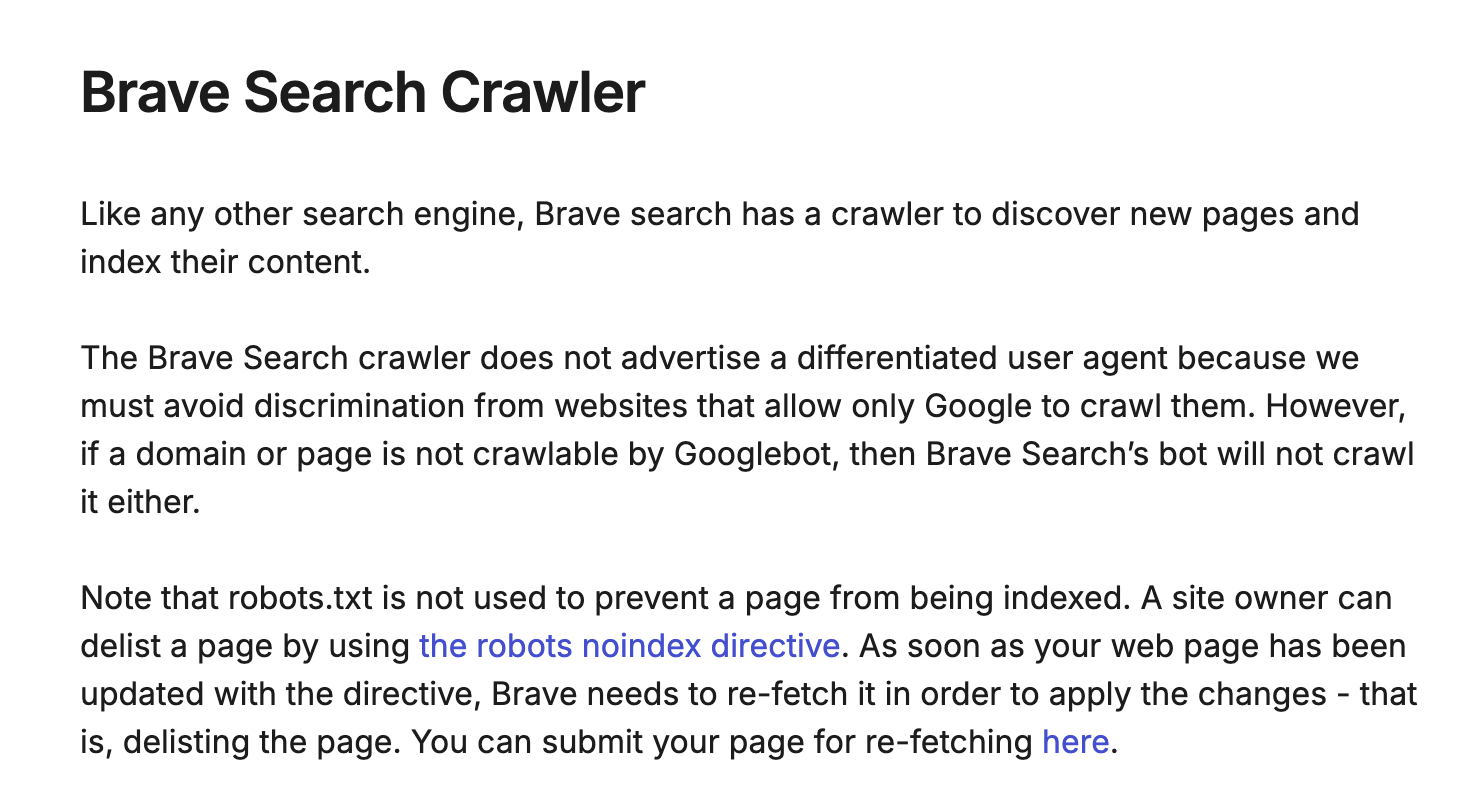
Legal critics and the plaintiffs argue that this is a deliberate strategy to circumvent the rights of website owners. By operating without a unique name, Brave makes it impossible for a developer to write a simple directive in their robots.txt file to exclude Brave while keeping other search engines active. To block Brave, a site owner must essentially block all major search engines, an act of "digital suicide" for most businesses. The only alternative offered by Brave is the "noindex" tag, which forces a page to be dropped from all search results, including those that drive legitimate, traffic-bearing clicks.
Data Monetization and the Shift in Search Utility
The distinction between a search engine and a data wholesaler is the crux of the moral and legal argument. A traditional search engine provides a link to a website, serving as an intermediary that drives traffic and ad revenue to the content creator. When a search engine sells its index to an AI company, that direct relationship is severed.
When an AI chatbot answers a query using data from the Brave API, it provides a synthesis that often eliminates the need for the user to visit the source website. This "zero-click" environment deprives publishers of the traffic necessary to sustain their business models. As the Times complaint highlights, the AI company receives the content "already chopped up," and the decision to credit the source or link back to the original article rests entirely with the AI developer, not the publisher.
Implications for the Digital Ecosystem
If the courts rule in favor of the publishers, the decision could force a massive restructuring of how AI search products are built. A ruling requiring full transparency and the ability for publishers to granularly opt-out of AI-specific indexing would likely increase costs for AI startups that currently rely on the low-cost access to the Brave index.
Conversely, if Brave prevails, it could establish a legal precedent that indexing the web for commercial AI training is a protected activity similar to traditional search. This would solidify the position of search companies as the "middlemen" of the internet, with the power to commoditize content regardless of the original creator’s wishes.
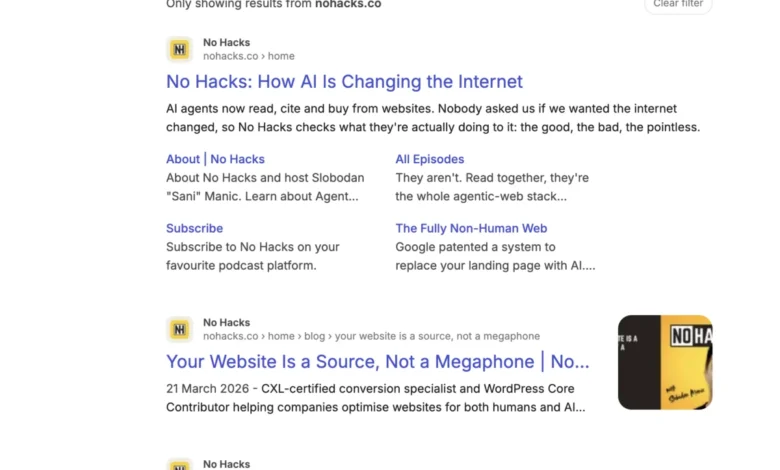
For website owners, the immediate implication is one of vulnerability. Currently, checking one’s exposure involves using the site: operator on Brave’s search interface to see which pages have been indexed. For many publishers, the results show that their proprietary content is being stored and processed by an index they never consented to join. As of late 2026, the industry remains in a state of uncertainty, awaiting a judicial signal on whether the "public" nature of the internet implies an automatic license for AI-driven commercial exploitation.
As the legal proceedings move forward, the case serves as a reminder that the foundational rules of the web—the robots.txt standard and the concept of "search"—are being redefined in real-time. For publishers, the goal is to regain control over their intellectual property; for Brave and its AI partners, the goal is to maintain the data velocity required to compete in a market where the next generation of intelligence is built on the cumulative knowledge of the entire human web. With no settlement in sight, the outcome of this case will likely define the economic relationship between publishers and the AI industry for the next decade.
Related posts: