Maxon revolutionizes professional creative workflows with touch support for Cinema 4D and ZBrush on the new MacBook Pro PROLED XDR

The professional creative landscape is undergoing a significant transformation following Apple’s announcement of the new MacBook Pro PROLED XDR. For the first time in the history of the MacBook line, Apple has introduced a high-performance touchscreen interface, a hardware shift that has prompted immediate software innovation from industry leaders. Maxon, the developer behind the standard-setting Cinema 4D and ZBrush software, has officially announced that both platforms will receive native touch support in late November 2026. This integration represents a major pivot in how 3D artists, animators, and digital sculptors interact with their workstations, bridging the gap between mobile flexibility and desktop-class computational power.
A New Era for Apple Hardware
The MacBook Pro PROLED XDR has garnered significant attention not only for its unprecedented touch-enabled display but also for the underlying architecture driving it. Equipped with the new M5 Pro and M5 Max chips, the device is designed to handle the heavy rendering and simulation tasks inherent in 3D production. The PROLED XDR display technology offers brightness, contrast ratios, and color fidelity that surpass previous iterations, providing a canvas that meets the rigorous demands of professional color grading and high-end visualization.
For decades, the Apple laptop ecosystem has maintained a strict separation between macOS and touch-based input, favoring the trackpad and keyboard. The introduction of touch functionality on the PROLED XDR display challenges the traditional paradigm of the "workstation." By allowing users to manipulate 3D models and animation timelines directly with their fingers, Maxon and Apple are aiming to reduce the friction between a creative’s intent and the digital output.
The Integration Timeline
The rollout of these capabilities follows a structured schedule that aligns with the hardware release of the new MacBook Pro. The hardware itself is slated to reach consumers starting November 6, 2026. Shortly thereafter, in late November, Maxon will release the software updates necessary to enable touch gestures within Cinema 4D and ZBrush. This synchronized timeline suggests a deep level of cooperation between Apple and Maxon to ensure that the haptic and touch responsiveness is optimized for professional workflows.
Additionally, Maxon has confirmed that a dedicated Cinema 4D app for the iPad is scheduled for release before the end of 2026. This move indicates a long-term strategy to create a seamless, cross-platform ecosystem where an artist might begin a sculpture on an iPad and finalize a complex scene on the MacBook Pro, using consistent touch-based controls across all devices.
Expanding the Creative Toolkit: Spatial Preview
Perhaps the most ambitious component of Maxon’s recent announcement is the integration of the Spatial Preview API for the Apple Vision Pro. This feature allows Cinema 4D users to leverage the Mac Virtual Display capability to extend their creative environment into the realm of spatial computing.
By enabling artists to "step inside" their 3D creations, Maxon is shifting the evaluation process from a flat, two-dimensional monitor view to an immersive, real-world scale experience. Through the Spatial Preview API, designers can examine the proportions, lighting, and composition of a scene as if it were a physical object. This is expected to have a profound impact on industries such as architecture, interior design, and retail planning.
For instance, an architect can now walk through a virtual rendering of a building lobby, identifying potential flaws in spatial flow or lighting placement that might be missed on a traditional screen. This functionality is not merely an aesthetic enhancement; it is a functional tool aimed at reducing the time spent on physical prototyping and iterations, as clients can be brought into the virtual space to provide feedback in real-time.
Industry Implications and User Experience
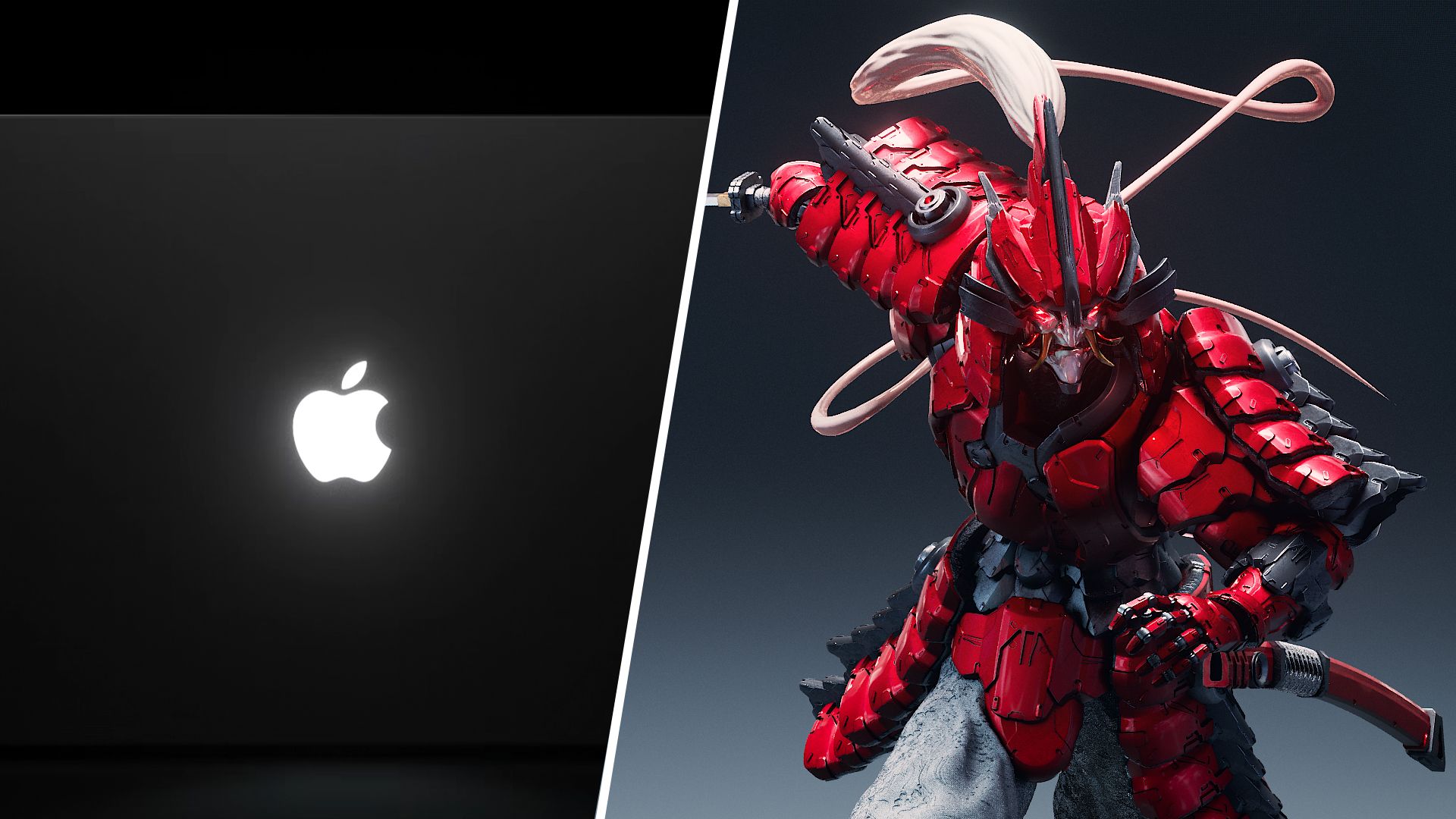
The inclusion of touch support in ZBrush is a natural evolution for a software that has long championed the "clay-like" sculpting experience. With the success of ZBrush for iPad, which allowed users to utilize the Apple Pencil and finger gestures to shape digital assets, bringing this experience to the MacBook Pro is a logical progression. It allows artists to maintain their existing desktop pipelines—utilizing the power of the M5 Max chip—while gaining the tactile, intuitive control of a touch interface.
Critics and industry analysts have noted that while touchscreen Windows laptops have existed for years, the Apple implementation is likely to be distinct due to the integration with macOS 27 and the specific calibration of the PROLED XDR display. The objective is to complement, rather than replace, the traditional mouse and keyboard workflow. For complex tasks like node-based compositing or intricate keyframe animation, the precision of a mouse remains superior; however, for sculpting, rotating models, and navigating large environments, the touch interface promises a more fluid experience.
Collaborative Workflows in Spatial Computing
Beyond individual creation, the Apple Vision Pro integration aims to redefine how design teams collaborate. The capability to share a scene with clients or stakeholders who are also wearing a headset allows for a shared, immersive review session. In a collaborative setting, participants can view the 3D space from a "bird’s-eye view" or be placed within the scene at a 1:1 scale.
This is particularly relevant for exhibition designers and experiential agencies, such as those that manage high-stakes hospitality or retail rollouts. By removing the technical barrier of navigating a 3D interface, reviewers can provide feedback based on their perception of the space itself, rather than their ability to manipulate a complex software interface. This is expected to shorten the feedback loop and reduce the risk of miscommunication between the creative team and the client.
Technical Foundations: macOS 27 and visionOS 27
The software ecosystem supporting these features—specifically macOS 27 and visionOS 27—has been optimized for low-latency data transfer between the Mac and the Vision Pro headset. The Spatial Preview API is a critical component here, as it must render high-fidelity 3D data in real-time to maintain the sense of presence required for spatial computing.
The hardware requirements are significant, as the new MacBook Pro models are built to sustain the processing load required for these tasks. The M5 series chips feature improved neural engines and dedicated media engines, which are essential for the real-time ray tracing and geometry processing that Cinema 4D demands. As these technologies mature, it is likely that other software providers will follow Maxon’s lead in adopting similar APIs to support the growing spatial computing market.
Looking Ahead
The decision to bring touch and spatial integration to the professional MacBook Pro line signifies a change in Apple’s stance regarding the "pro" user. Previously, Apple maintained a clear distinction between the iPad’s touch-first interface and the Mac’s pointer-based precision. By blurring these lines, Apple is acknowledging that modern creative workflows require a hybrid approach.
For Maxon, the challenge will be ensuring that the user interface of Cinema 4D and ZBrush remains usable on a touchscreen without sacrificing the density of features that professional users require. The company’s focus on "intuitive touch capabilities" suggests that they are not simply porting mobile controls to the desktop, but rather developing a new language of interaction that balances gesture-based input with the complexity of professional-grade tools.
As the late November update approaches, the design community remains eager to see how these tools perform in production environments. The combination of the M5-powered MacBook Pro, the high-precision PROLED XDR display, and the immersive capabilities of the Apple Vision Pro creates a robust suite of tools that could very well set the new standard for the next generation of 3D and spatial design. Whether this trend leads to a wider adoption of touchscreen technology across the broader creative software industry remains to be seen, but the initial response from the sector suggests a significant shift is already underway.
Related posts: