Adobe Unleashes After Effects 26.5 Alongside a Revolutionary Agentic AI Assistant Beta and Advanced 3D Capabilities

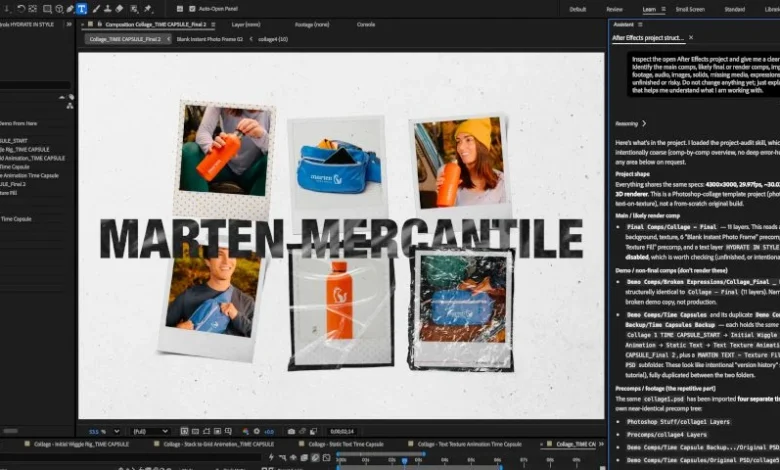
The landscape of digital compositing, visual effects, and motion graphics continues to evolve at a rapid pace as Adobe Inc. officially rolls out After Effects version 26.5. Billed as a crucial workflow and performance upgrade for industry professionals, this September 2026 release arrives packed with optimizations for existing tools, most notably the integration of disk caching for the AI-powered Object Matte tool. However, the software giant is simultaneously generating significant industry buzz with a parallel beta build. This experimental version introduces an agentic AI Assistant designed to interpret natural-language commands, fundamentally shifting how artists interact with complex post-production environments.
Complementing these updates are substantial enhancements to on-screen layout guides, a modernized Effect Controls panel, and cutting-edge 3D text and shape materialization powered by Adobe Substance. As digital content creators face tighter deadlines and increasingly intricate project demands, these dual releases—spanning stable production updates and forward-looking experimental tech—underscore Adobe’s aggressive push to embed artificial intelligence deeply into the creative pipeline.
Main Facts of the Release
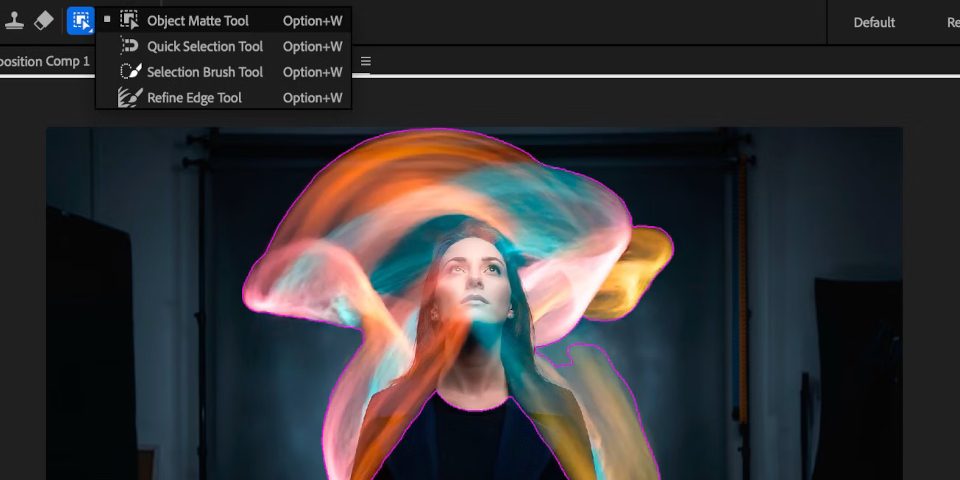
After Effects 26.5 focuses heavily on mitigating technical bottlenecks that have historically plagued heavy compositing workloads. The headline improvement within the stable release targets the Object Matte tool, which was initially deployed in version 26.2 earlier this year. Object Matte relies on advanced AI algorithms to automate rotoscoping—traditionally one of the most tedious and time-consuming tasks in visual effects. By introducing disk caching support to Object Matte, Adobe has solved a critical memory management hurdle.
Previously, After Effects required the system to hold every propagated frame of an Object Matte operation directly in RAM. This often resulted in memory bloat and sluggish interactive performance, forcing artists to recalculate mattes from scratch across multiple sessions. With version 26.5, matte results are securely stored in disk cache. This breakthrough not only preserves precise rotoscoping data even after a project is closed and reopened, but it also frees up valuable RAM resources, allowing complex compositions to run with vastly improved fluidity.
In tandem with the caching update, version 26.5 addresses long-standing user interface and workflow grievances in the composition, layer, and footage panels. On-screen guides have received a comprehensive overhaul. Artists can now position guides based on precise percentages rather than static pixel measurements, pin them to the bottom and right edges of a panel in addition to the traditional top and left edges, and assign customized color codes to individual guides for better project organization. Furthermore, the Effect Controls panel has undergone modernization, featuring instance-specific color-labeling capabilities that streamline the visual hierarchy of layered effects.
Chronology and Background of Adobe’s AI Integration
The deployment of After Effects 26.5 and its accompanying AI-focused beta builds represents the culmination of a multi-year strategy by Adobe to overhaul its flagship creative suites with generative and agentic artificial intelligence. The timeline of this transformation reflects an accelerating development cycle. In April 2026, Adobe released After Effects 26.2, which introduced the foundational Object Matte automated rotoscoping tool, signaling a major leap forward in AI-assisted video editing infrastructure.
Following the industry-wide adoption of those early computer vision tools, Adobe turned its attention to workflow automation and software navigation. By June 2026, the company initiated a phased rollout of agentic AI assistants across its core desktop ecosystem, beginning with beta integrations in Photoshop and Premiere Pro. These early rollouts tested user receptiveness to natural-language command interfaces. Building upon the telemetry and user feedback gathered from those summer trials, Adobe has now expanded the agentic assistant framework into the much more intricate realm of motion graphics and visual effects via the September 2026 After Effects beta.
Supporting Data, Pricing, and System Requirements
For professional studios and independent creators planning their software budgets, After Effects 26.5 is available immediately as part of Adobe’s subscription model. Operating strictly on a rental basis, a single-app subscription for After Effects is priced at $34.49 per month, or $263.88 annually when billed on a yearly commitment.
The software demands modern hardware specifications to handle its advanced rendering and AI calculations. After Effects 26.5 is officially supported on Windows 11 and macOS 14.0 or later. To fully leverage features like the Object Matte disk caching and the Advanced 3D renderer, robust graphics hardware with dedicated VRAM and high-speed NVMe solid-state drives for caching are strongly recommended by hardware analysts within the post-production community.
Official Responses and Industry Reception
While Adobe representatives have emphasized that the stable 26.5 release is built directly around user-requested performance enhancements, the broader creative community is fixated on the experimental features housed within the beta track. Industry analysts and early beta testers have pointed out that the new agentic AI Assistant represents a paradigm shift for motion designers.
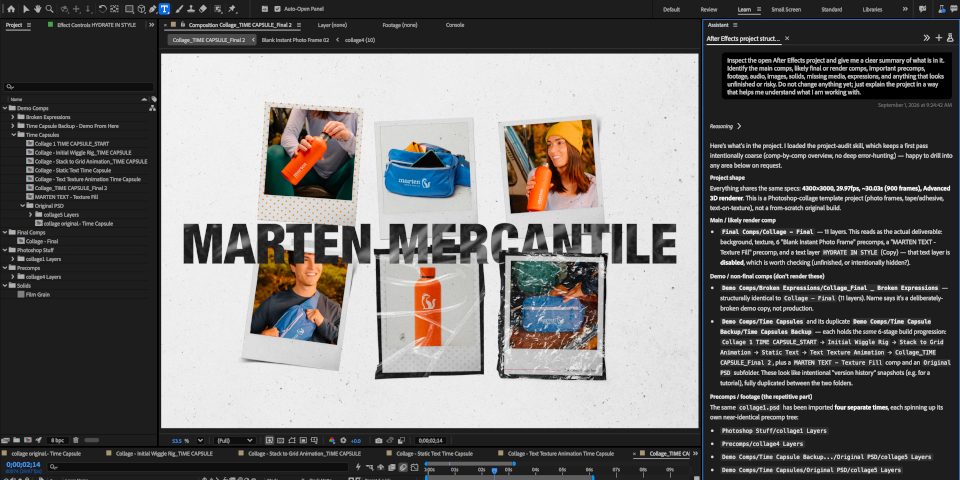
According to Adobe’s documentation and engineering teams, the AI Assistant is designed to transcend simple search functions by actively executing multi-step workflows. When prompted via natural language, the assistant can inspect project hierarchies, parse complex compositions or footage supplied by external collaborators, and generate comprehensive automated status reports. Moreover, the assistant bridges a significant technical divide by writing custom JavaScript expressions. This allows visually focused artists who lack formal programming backgrounds to implement complex mathematical expressions and dynamic animations simply by describing what they want to achieve in plain English.
Alongside the AI Assistant, the beta release introduces powerful 3D enhancements that expand Adobe’s ecosystem integration. Artists can now apply rich Substance materials directly to 3D text and custom shapes—a capability previously restricted to basic primitive 3D objects. Additionally, the Advanced 3D renderer now permits the use of standard layers as material sources, enabling creators to project live video feeds or entire pre-compositions as dynamic textures across 3D environments.
Broader Impact and Implications for the VFX Industry
The introduction of agentic AI into After Effects carries profound implications for the visual effects and motion graphics industries. For decades, mastering After Effects required extensive technical training, a deep understanding of layer hierarchies, and rigorous memorization of menu layouts and expression syntax. By introducing natural-language command execution, Adobe is effectively lowering the barrier to entry for novice designers while simultaneously accelerating throughput for seasoned professionals.
Critics and ethics watchdogs within the digital arts community continue to monitor the rapid expansion of AI tools, expressing concerns regarding workflow dependency and the evolving role of junior artists whose foundational tasks—such as rotoscoping and basic rigging—are increasingly automated. However, studio supervisors largely welcome efficiency gains, arguing that offloading tedious technical overhead allows artists to focus on higher-level creative decision-making and narrative design.
As Adobe continues to refine these features in the public beta environment ahead of future stable deployments, After Effects 26.5 and its companion tools signal a definitive industry transition. The boundary between human intent and software execution is blurring, setting a new benchmark for how digital artists will collaborate with their software in the years to come.
Related posts: