From Viral Blender Experiment to A24 Box-Office Phenomenon: The Masterclass in Practical and Digital Hybrid Filmmaking Behind Backrooms

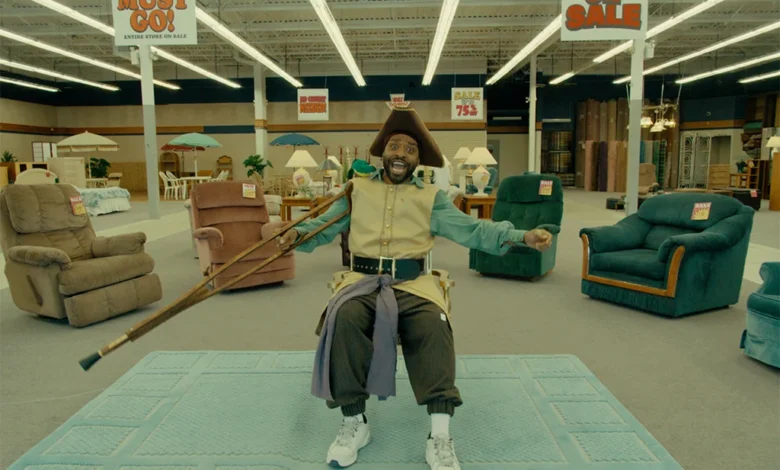
What began as a fleeting piece of internet lore—a viral photograph of an empty, aggressively yellow-carpeted room in a defunct Wisconsin furniture store—has transformed into one of the most commercially and critically successful psychological horror releases of 2026. Directed by Kane Parsons in his feature film debut, A24’s Backrooms expands upon the filmmaker’s prolific, internet-famous YouTube web series. The cinematic narrative follows Clark, a struggling furniture store owner portrayed by Chiwetel Ejiofor, who accidentally slips through a mysterious dimensional portal beneath his showroom floor into an endless, labyrinthine expanse of monotonous corridors. Concurrently, his therapist, Mary, played by Renate Reinsve, embarks on a desperate and harrowing journey to track him down.
The journey of Backrooms from a teenager’s bedroom computer screen to a massive theatrical feature represents a watershed moment for modern hybrid filmmaking. It demonstrates how contemporary visual effects (VFX) can seamlessly merge with rigorous practical construction, honoring foundational internet culture while elevating it to cinematic heights.
The Genesis: From a Sixteen-Year-Old’s Blender Project to a Cinematic Pipeline
Kane Parsons first began constructing his eerie, uncanny vision of the Backrooms using the open-source 3D creation suite Blender when he was just 16 years old. Years later, those formative digital files served as the literal foundational architecture for the feature film’s expansive visual effects pipeline. However, the production never fell into the trap of assuming that a digital origin necessitated an entirely Computer-Generated (CG) final product.
Instead, the production methodology relied on a close-knit synthesis where physical sets, practical makeup effects, complex puppetry, fluid simulations, and digital environments were developed in tandem. Visual Effects Supervisor Edward Douglas noted the unique workflow required to honor the director’s early creations. There were specific sequences where the crew took the exact Blender files Parsons built as a teenager, enhanced them to meet modern cinematic standards, and successfully integrated them into a high-end studio pipeline.
This deep-rooted digital background heavily influenced how Parsons approached physical production. Rather than utilizing his background as an excuse to rely purely on green screens and digital assets, Parsons demonstrated a fierce commitment to building tangible, physical worlds that his actors could genuinely inhabit. Douglas encapsulated this philosophy by defining visual effects not merely as "computer things," but as a pragmatic toolbox used to achieve what could not physically be captured on camera, ensuring that every practical limitation was met with creative problem-solving.
Set Construction and the Architecture of the Endless Maze
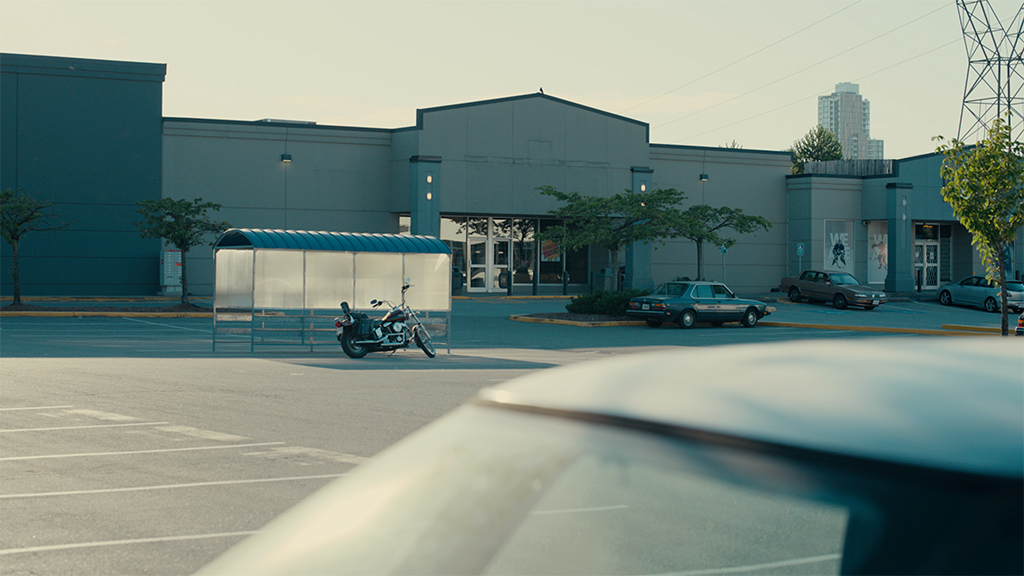
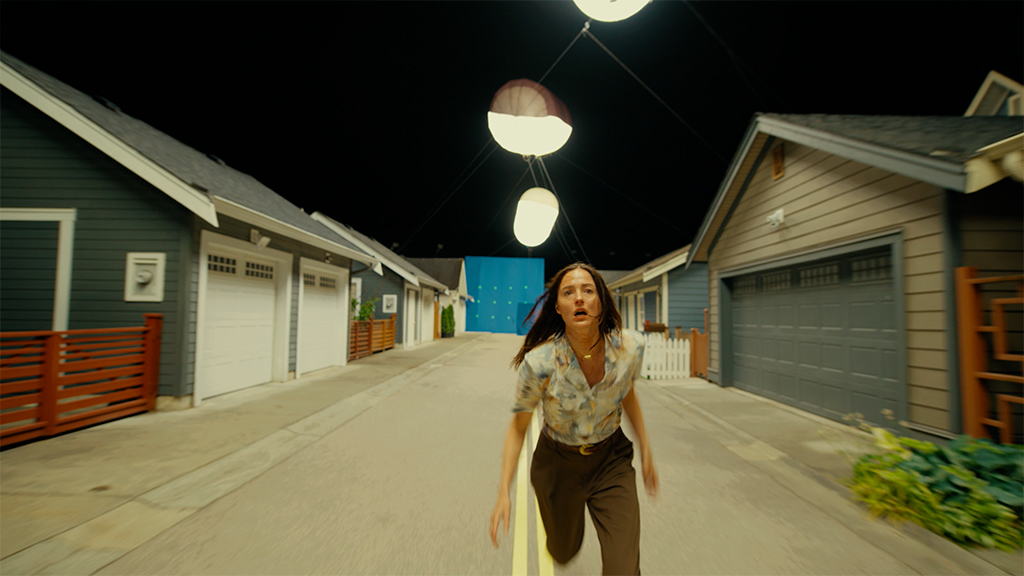
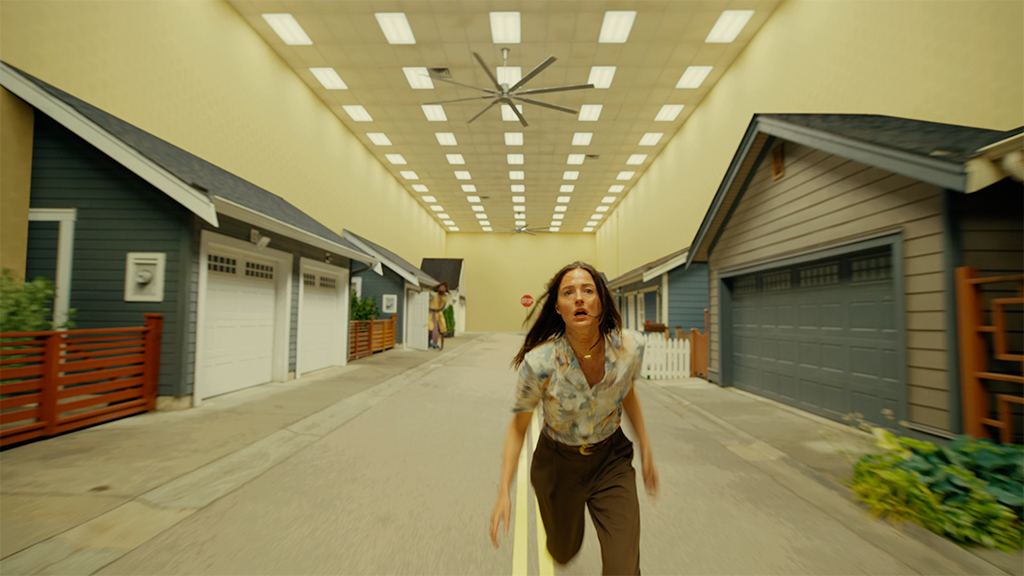
The physical scale of Backrooms was remarkably ambitious for an independent feature boasting a modest $10 million budget. The production team constructed approximately 30,000 square feet of intricate physical sets spread across four distinct sound stages. In parallel, Parsons mapped out roughly 100,000 square feet of digital architecture. This created a fascinating duality on set, where actors frequently walked between physical walls and fully digital spaces without noticing a tangible shift in their environment.
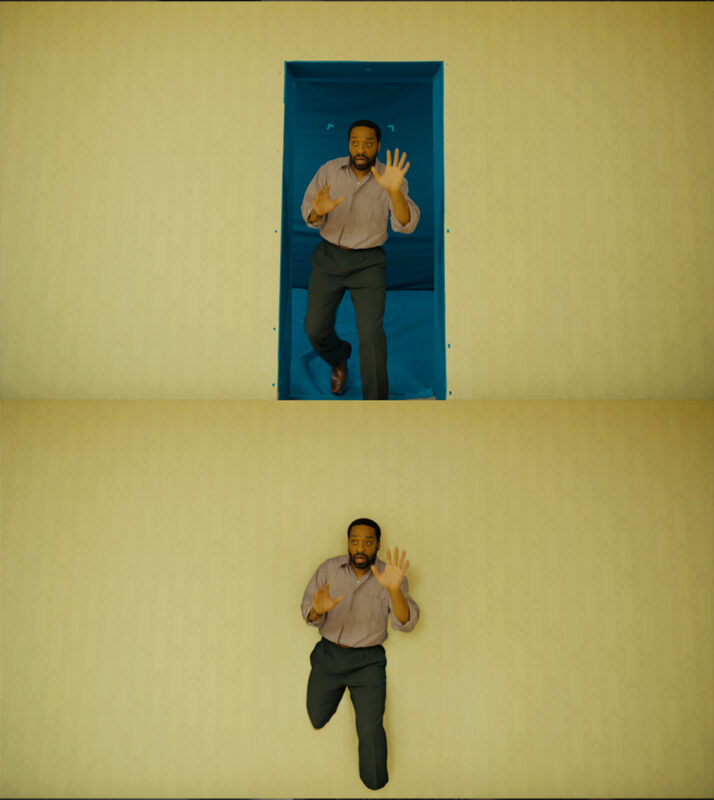
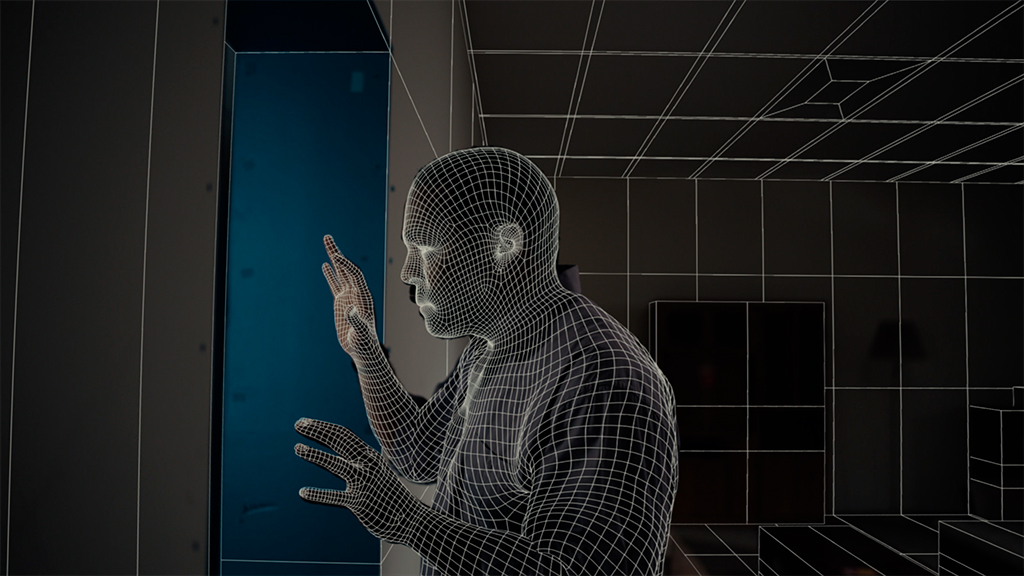
One of the most technically demanding motifs in the film is the concept of "clipping"—the surreal phenomenon where characters phase in and out of the Backrooms by sliding through solid walls. While conceptually simple, executing this effect realistically presented immense hurdles for the visual effects team, primarily handled by Mr. Wolf VFX. Actors performed these transitions naturally on set by stepping through physical gaps in the modular sets, allowing the VFX artists to digitally reconstruct the walls closing behind them.
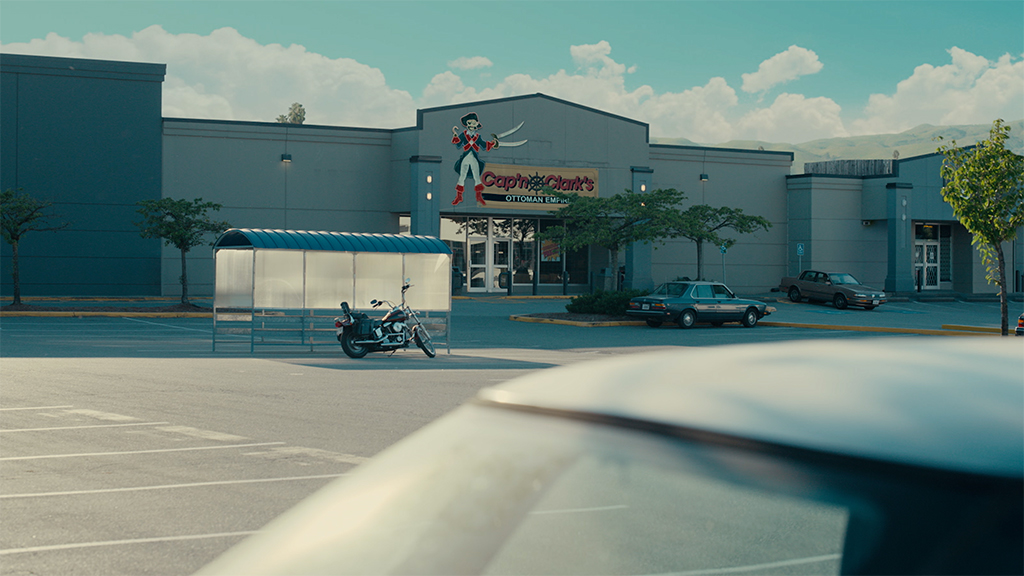
Because the digital objects interacted directly within the frame, hiding imperfections was nearly impossible. The breakthrough that successfully sold the illusion was not just the complex rotomation and hand-rotoscoping, but the meticulous projection of CG shadows cast onto the walls from the animated geometry.
Practical Makeup Magic and the Uncanny "Still Lifes"
While digital tools formed the labyrinth, the inhabitants of the Backrooms—known as the "Still Lifes"—relied heavily on groundbreaking practical makeup effects. Led by Makeup Effects Supervisor Werner Pretorius and his team at Amazing Ape, the production utilized vastly more practical creature effects than Douglas initially anticipated during pre-production.
The creation of the redheaded Still Life drew aesthetic inspiration from the distorted, smeared facial sculptures of artist Evan Penny. Brought to life by actress Rhiannon Roberts, the character required immense physical endurance. Roberts stood motionless in high heels within a cramped corner, wearing heavy prosthetic makeup for three consecutive days of filming, utilizing hidden viewing holes to navigate the space.
Another prominent creature, the striped-shirt Still Life, featured a face that was 90 per cent practical prosthetic makeup, with digital intervention reserved specifically for its anomalous multiple sets of eyes. While the top and bottom prosthetic eyes were static glass pieces lacking emotional depth, the VFX team replaced them with CGI counterparts to lock their gaze onto a uniform eyeline. To heighten the psychological unease, the animators introduced cascading, offset blinks across the extra sets of eyes.
The practical work was executed with such extraordinary precision that it frequently deceived industry professionals. When plates were sent to external vendors for eye enhancement, artists routinely asked for the "unprocessed" originals, completely mistaking the high-end practical prosthetics for digital creations.
Bringing "Pirate Clark" to Life: A Multi-Disciplinary Feat
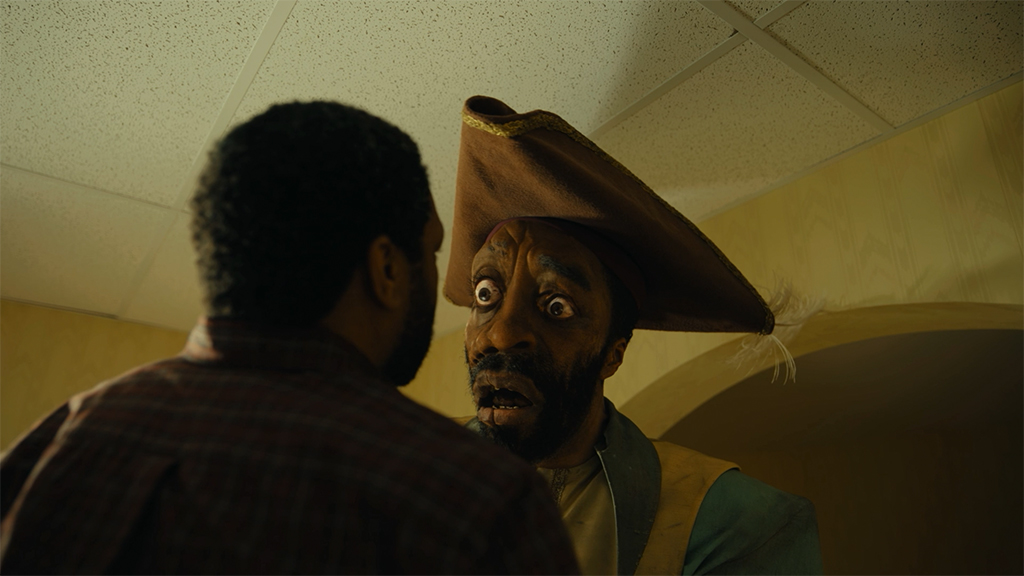
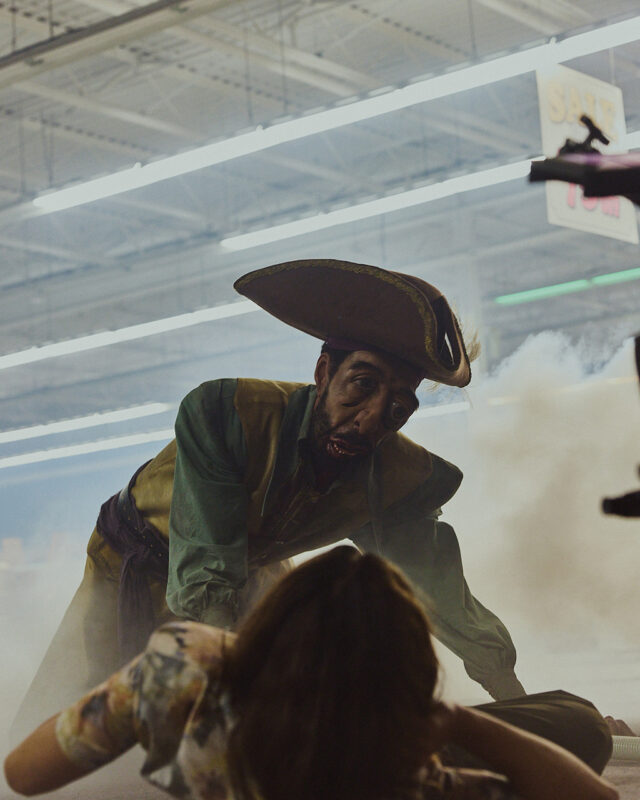
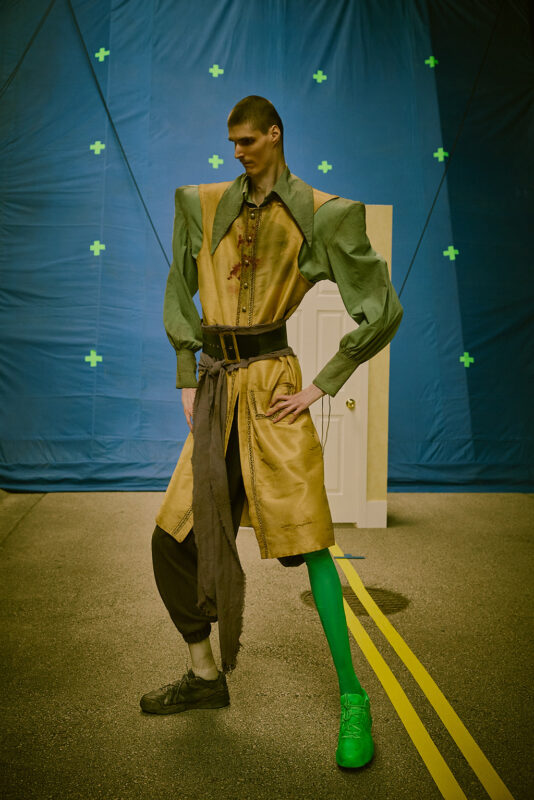
Among the film’s most memorable entities is Pirate Clark, an imposing 8.5-foot-tall physical duplicate of Ejiofor’s character. Initially, the production debated utilizing a performer on stilts to achieve the towering height. However, stunt coordinators quickly realized that the physical limitations of stilts would severely compromise production speed and safety.
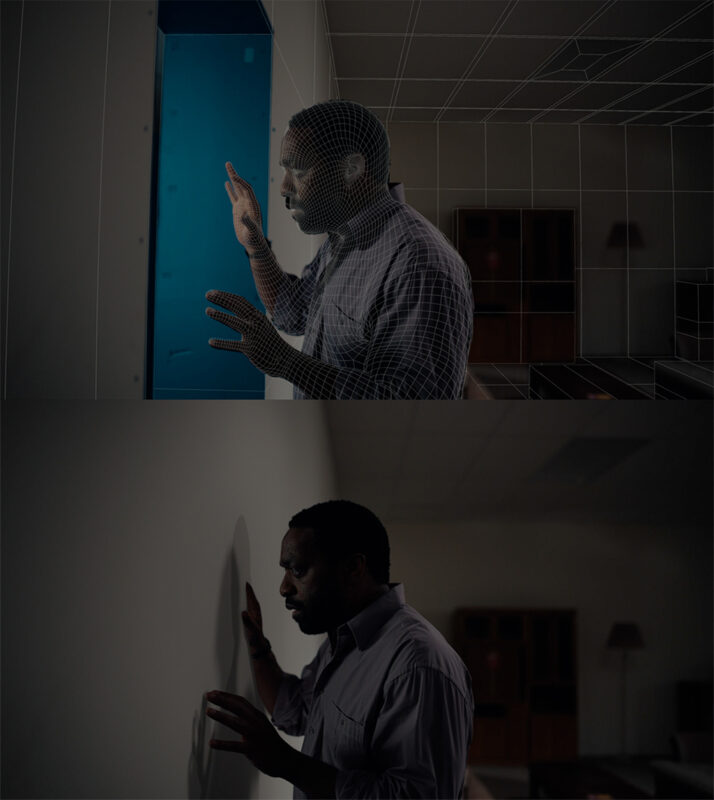
A breakthrough occurred when the team cast Robert Bobroczkyi, the towering performer renowned for his work in Alien: Romulus. Booked over a single weekend, Bobroczkyi provided the physical foundation for the character alongside master puppeteer Richard Darwin.
Because the physical puppet mask could not deliver the complex micro-expressions required for the emotional beats of the narrative, Zoic Studios stepped in during post-production. Utilizing a high-resolution 3D scan of Chiwetel Ejiofor, the team mapped a digital face onto the towering frame. Rather than defaulting to aggressive monster tropes—such as exaggerated snarls and furrowed brows—the filmmakers deliberately chose restraint. The goal was to imbue the towering duplicate with profound expressions of fear and sadness, requiring constant micro-animation adjustments to maintain lighting and angular consistency across changing camera perspectives.
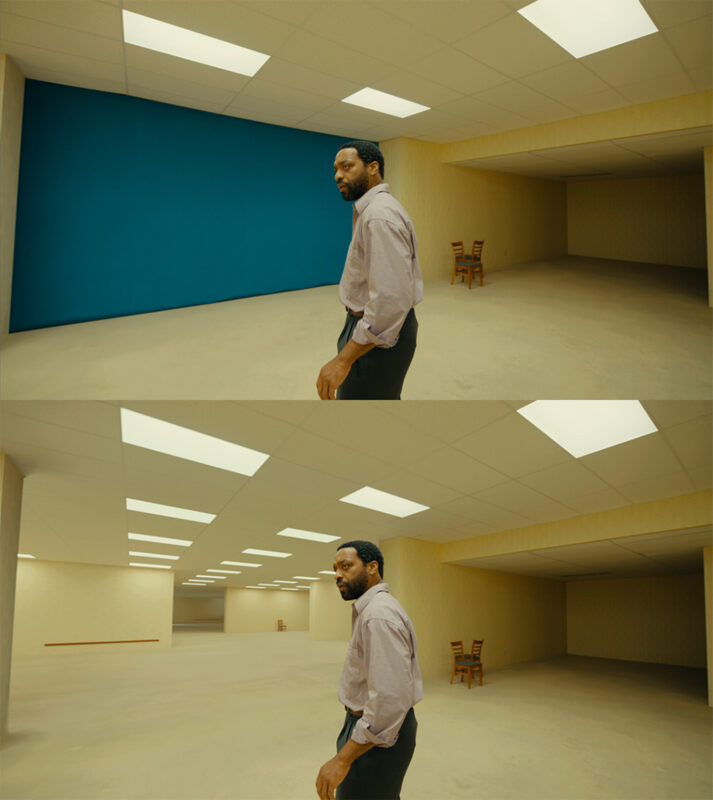
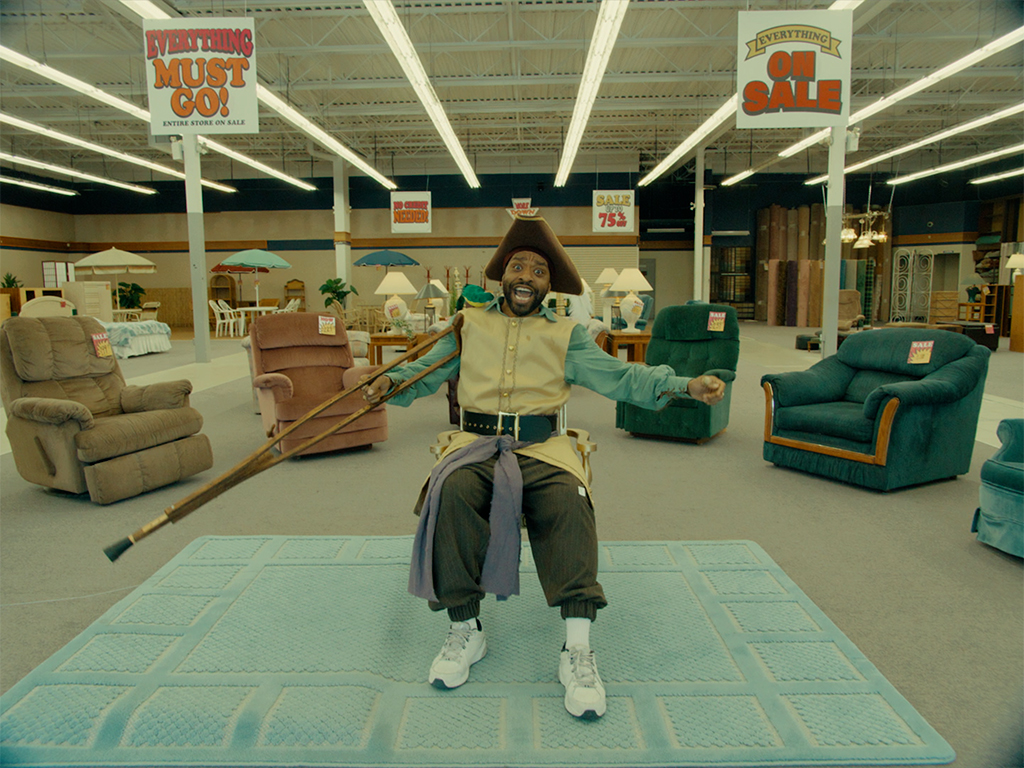
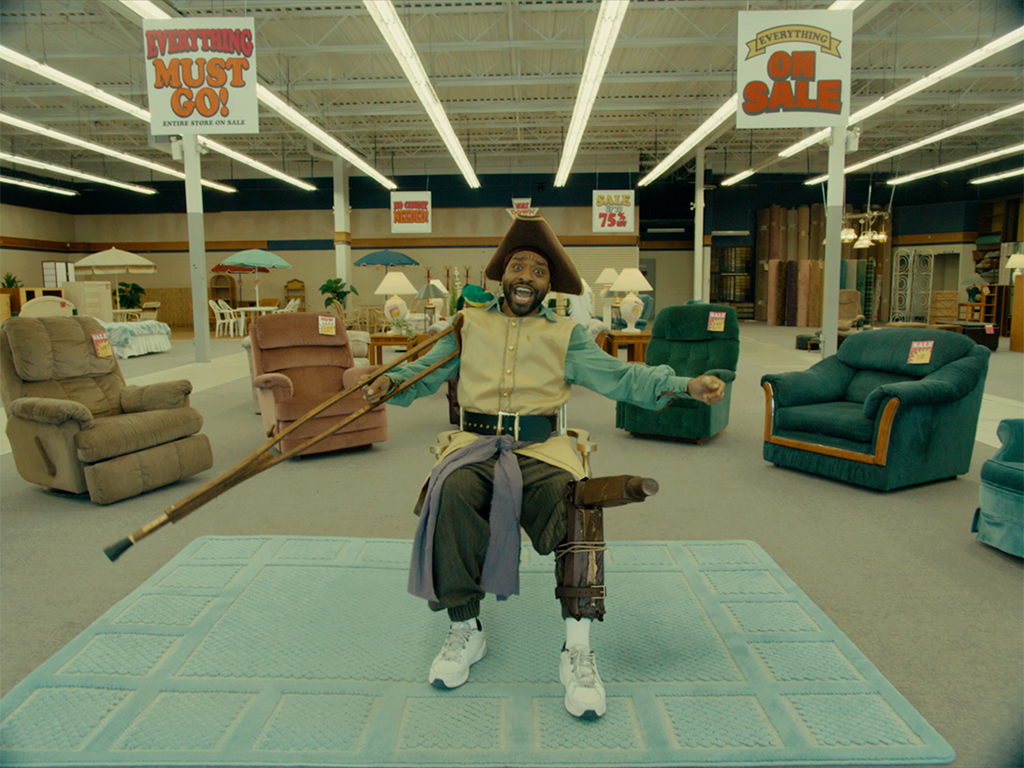
Furthermore, safety considerations dictated other unexpected digital interventions. In a sequence featuring a flashback commercial, Clark’s pirate peg leg and the subsequent collapse of his chair were entirely handled via digital pants replacement and CG props to prevent injuries on set.
A Massive VFX Undertaking for an Independent Feature
The technical statistics of Backrooms underline a massive undertaking for a modern indie film. Out of the movie’s total running time, approximately one hour and eighteen minutes feature visual effects work. The production delivered 600 VFX shots out of a total shot count of just 830. This heavy digital footprint also encompassed roughly ten minutes of entirely CG material, including the unsettling found-footage sequence that opens the film.
To accomplish this, the production coordinated with an extensive network of 11 external visual effects vendors alongside its dedicated in-house team. Key partners included Zoic Studios, Roxel Creative, Mr. Wolf VFX, CoSA VFX, Barnstorm Visual Effects, Stormborn VFX, Shapeshifter VFX, OscarFX, Rotomaker, Beyond Performance Capture Studios, and Industrial Pixel 3D Studios.
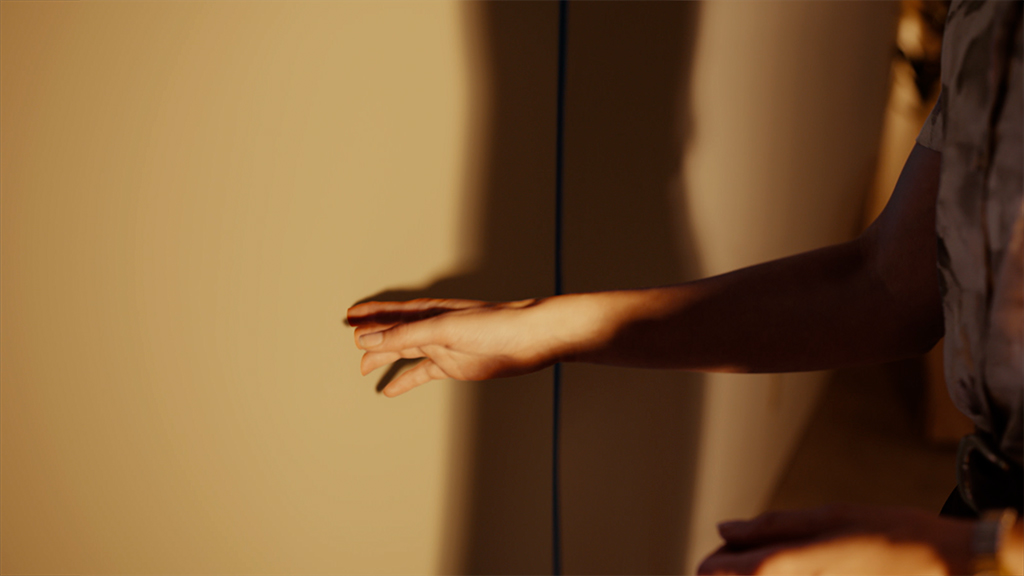
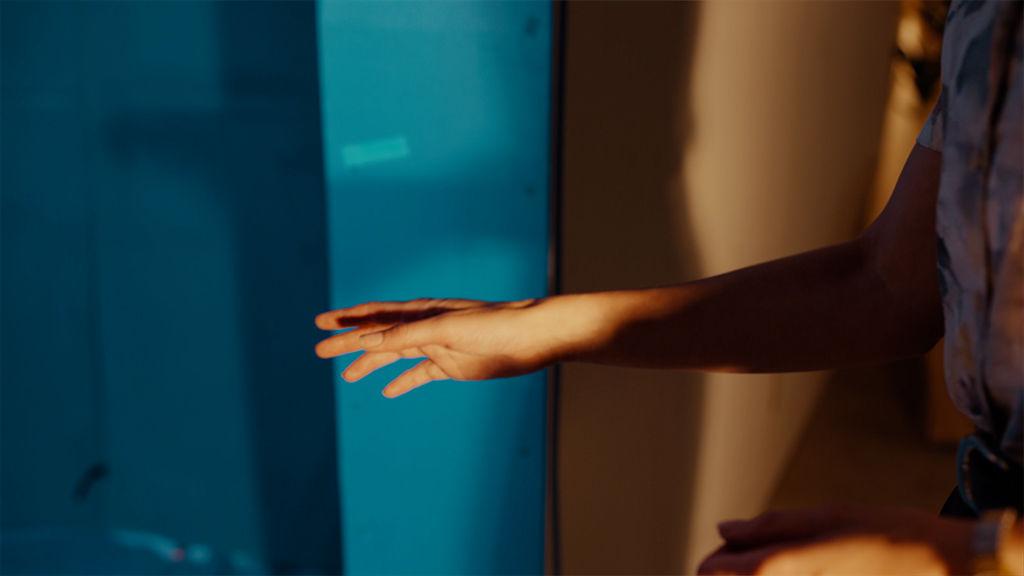
Special mention belongs to Roxel Creative and Associate VFX Supervisor Calvin Romeyn, who helped streamline the Blender-to-VFX pipeline. Additionally, CoSA VFX tackled the ethereal Threshold Chamber near the film’s conclusion—a set requiring extensive blue and green screen integration where only the physical door and floor were built on stage, housing the direct spiritual successor to Parsons’ original 16-year-old Blender YouTube file. Stormborn VFX also executed complex fluid and destruction simulations, such as an excavator dramatically smashing through the interior of Mary’s childhood home.
Embracing Analog Authenticity in an Era of Digital Dominance
Despite the heavy reliance on modern digital pipelines, the production fiercely protected its analog roots. This commitment was especially evident in the film’s handling of archival video material. Instead of relying on digital filters to simulate VHS degradation, the crew ran footage through physical VCR hardware, manipulating frame rates, tape speeds, and tracking parameters by hand.
Kane Parsons even utilized a physical distortion box—functioning much like an analog guitar pedal—to manually jam electrical signal distortion into the cables running between computers and recording decks during the transfer process.
Implications and Industry Legacy
The unprecedented success of Backrooms points toward a shifting paradigm in modern horror cinema. By bridging the gap between viral digital folklore and traditional Hollywood production values, the film proves that internet-born intellectual property can mature into sophisticated cinematic art when placed in the hands of visionary creators and supported by seasoned technical supervisors.
Edward Douglas reflected on the collaborative synergy that defined the production, emphasizing that the magic lies in the blur between departmental boundaries. When practical makeup, physical set construction, puppetry, and visual effects operate as a unified organism rather than isolated silos, the resulting cinematic experience achieves a tactile authenticity that resonates deeply with audiences. As Backrooms continues its historic theatrical run, it leaves an indelible blueprint for how independent filmmakers can harness digital tools without losing the raw, physical soul of practical filmmaking.
Related posts: