The landscape of the American media industry has been cast into a state of profound uncertainty following a decisive legal intervention by the federal judiciary. U.S. District Judge Araceli Martínez-Olguín issued a 14-day temporary restraining order on Monday, effectively freezing the proposed $110 billion merger between Paramount Global—recently acquired by David Ellison’s Skydance Media—and Warner Bros. Discovery (WBD). This ruling prevents the corporate entities from finalizing their transaction before a critical evidentiary hearing scheduled for August 3. The decision comes in direct response to a high-stakes antitrust lawsuit spearheaded by the State of California and joined by 11 other states, all of whom argue that the consolidation represents an existential threat to competition within the entertainment sector.
The legal challenge represents a significant hurdle for a deal that many industry analysts believed was on the verge of completion. While the transaction had previously secured a green light from the Department of Justice under the Trump administration, the intervention by state-level Attorneys General underscores a growing rift between federal regulatory stances and state-level protections against market monopolization. The states’ primary contention is that the merger of two of the "Big Five" Hollywood studios would create a behemoth with unprecedented leverage over both consumers and the labor market, potentially leading to higher subscription costs for streaming services, diminished output of original content, and a catastrophic wave of job losses across the creative industry.
The Basis of the Antitrust Challenge
The coalition of states, led by California Attorney General Rob Bonta, has presented a detailed complaint outlining the potential for market distortion. According to the filing, a combined Paramount-Skydance and Warner Bros. Discovery entity would control approximately 27% of the domestic market for widely released theatrical films. This concentration of power, the states argue, would grant the new conglomerate an outsized ability to dictate terms to theater chains, streaming platforms, and international distributors.
Beyond theatrical distribution, the lawsuit highlights the risks to the burgeoning streaming landscape. By uniting the libraries of Max (formerly HBO Max) and Paramount+, the merged company would possess one of the most formidable intellectual property portfolios in history, spanning from the DC Universe and Looney Tunes to Star Trek and Nickelodeon. The states contend that this "content fortress" would make it nearly impossible for smaller, independent streaming services to compete for subscribers, eventually leading to a less diverse media ecosystem.
Furthermore, the states have raised concerns regarding "monopsony" power—a market condition where there is only one buyer for a product or service. In this context, the "product" is creative talent. If the number of major studios continues to shrink, writers, directors, animators, and actors will have fewer avenues to sell their work, leading to suppressed wages and less favorable contractual terms. This labor-centric argument has gained significant traction following the industry-wide strikes of 2023, which highlighted the precarious nature of creative employment in the era of digital consolidation.
Financial Stakes and the "Ticking Clock"
The delay is not merely a procedural setback; it carries immense financial implications for the leadership at both companies. Under the terms of the acquisition agreement, Paramount and Skydance are operating under a strict "ticking clock" mechanism. Should the deal remain unfinalized by September 30, Paramount is obligated to pay Warner Bros. Discovery shareholders approximately $7 million for every day of delay thereafter. This penalty is designed to compensate WBD investors for the opportunity costs and market volatility associated with a protracted closing period.
The stakes are even higher in the event of a total collapse of the deal. The agreement includes a staggering $7 billion breakup fee, a sum that could potentially cripple Paramount Global if the merger is permanently blocked by the courts. Paramount has been grappling with significant debt and a declining linear television business for several years, and many analysts view this merger as the company’s only viable path to long-term stability.
For David Ellison, the founder of Skydance Media and the architect of the modern Paramount, the injunction is a test of nerves. Ellison, who successfully navigated a complex bid to take control of National Amusements (the Redstone family’s holding company) earlier this year, has staked his reputation on the successful integration of these two media giants. The $110 billion valuation reflects not just the current assets of the companies, but the projected "synergies"—a corporate euphemism that often translates to massive cost-cutting and personnel reductions.
Internal Anxiety and the Human Cost
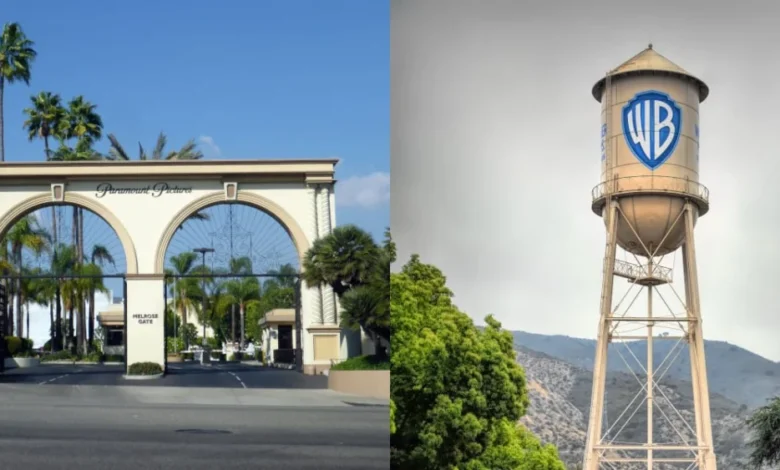
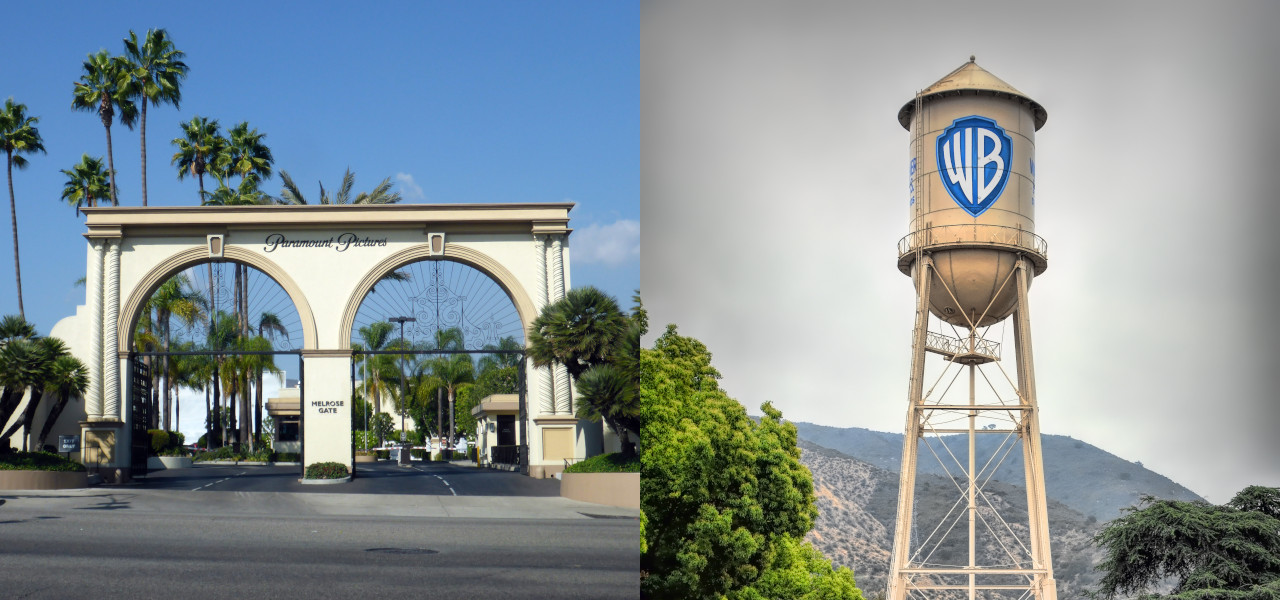
Inside the halls of Paramount’s Melrose Avenue lot and Warner Bros. Discovery’s Burbank headquarters, the mood is reportedly one of "sustained anxiety." The prospect of a merger of this magnitude almost inevitably leads to the elimination of overlapping departments. In previous industry mergers, such as the Disney-Fox acquisition, thousands of positions in marketing, distribution, accounting, and legal services were rendered redundant.
Employees at Paramount, in particular, find themselves in a paradoxical position. While many fear the "round after round of layoffs" that would likely follow a successful merger, there is an equal fear of what happens if the deal fails. Without the capital infusion and scale provided by the WBD partnership, there are concerns that Paramount could face a "fire sale" of its individual assets—such as the CBS network, the Smithsonian Channel, or the Paramount film library—which could result in even more fragmented and unpredictable job losses.
The 14-day restraining order has only prolonged this period of limbo. Internal memos at both companies have urged staff to remain focused on day-to-day operations, but sources close to the production side suggest that long-term greenlighting of new projects has slowed to a crawl as executives wait to see which brand identities will survive the consolidation.
A Timeline of the Media Mega-Merger
To understand the gravity of Judge Martínez-Olguín’s ruling, one must look at the rapid-fire chronology of events that led to this moment:
- January 2026: Skydance Media, backed by private equity and the Ellison family fortune, enters exclusive talks to acquire National Amusements, the controlling shareholder of Paramount Global.
- March 2026: The Skydance-Paramount deal is finalized, positioning David Ellison as the new head of the historic studio.
- April 2026: Reports surface that Ellison is in high-level discussions with David Zaslav, CEO of Warner Bros. Discovery, regarding a "merger of equals" that would unite the two entities.
- May 2026: The $110 billion merger is officially announced, promising to create a global leader in news, sports, and entertainment.
- June 2026: The Department of Justice, under the Trump administration’s pro-consolidation stance, grants federal antitrust approval, citing the need for American media companies to scale up to compete with tech giants like Netflix, Amazon, and Apple.
- July 15, 2026: A coalition of 12 states files a lawsuit in California, alleging that the federal government failed to account for the localized economic impact and the specific harms to the creative labor market.
- July 20, 2026: Judge Martínez-Olguín issues the 14-day temporary restraining order, halting all closing activities.
Broader Implications for the Entertainment Industry
The outcome of the August 3 hearing will serve as a bellwether for the future of media consolidation in the United States. If the judge decides to extend the injunction into a preliminary injunction, it could signal a shift in how antitrust laws are applied to the "platform era." For decades, antitrust enforcement focused primarily on consumer prices. However, the states’ focus on "content diversity" and "labor competition" suggests a more modern interpretation of what constitutes a healthy market.
.png)
Industry observers are also watching how this affects the animation sector, a core component of both companies’ portfolios. Warner Bros. Discovery owns the legendary Warner Bros. Animation and Cartoon Network Studios, while Paramount controls Nickelodeon and the Paramount Animation division. Critics of the merger argue that when two such giants combine, they often "vault" or cancel projects that are seen as competing with their own internal brands. The recent history of WBD—marked by the controversial cancellation of nearly-finished films for tax write-offs—has made the creative community particularly wary of further consolidation.
Moreover, the merger’s pause provides a moment of reflection for the wider industry. If a $110 billion deal can be stalled by state-level action despite federal approval, it may discourage other pending acquisitions in the pipeline. The "Big Three" era—where a handful of companies control all major media—may be facing its first significant legal firewall.
Looking Ahead to the August 3 Hearing
When the parties convene on August 3, the burden of proof will be on the states to demonstrate that "irreparable harm" would occur if the merger is allowed to proceed before a full trial. Conversely, lawyers for Paramount and Warner Bros. Discovery will likely argue that any further delay threatens the financial viability of the companies and unfairly penalizes shareholders.
The legal teams for the studios are expected to present evidence that the merger is a defensive necessity. They will likely argue that in a world dominated by big-tech algorithms and trillion-dollar companies like Apple and Google, even a $110 billion media company is a relatively small player. They will claim that the merger is the only way to ensure that "legacy" Hollywood can continue to produce high-quality cinema and journalism.
For now, the 14-day restraining order stands as a stark reminder that in the world of high-finance and corporate maneuvering, the final word often belongs not to the CEOs in the boardroom, but to a judge in a courtroom. As the September 30 deadline looms, the $7 million-a-day penalty serves as a high-priced countdown for David Ellison and David Zaslav, while thousands of employees and millions of consumers wait to see the next chapter of this corporate drama.