The Future of AI-Powered Smart Glasses Clouded by Escalating Privacy Concerns and Wearability Backlash.

The ambitious push by major technology companies to establish artificial intelligence-powered smart glasses as the next transformative consumer device is facing significant headwinds, as a surge in negative consumer feedback regarding privacy implications and practical wearability threatens to derail this nascent market. Once hailed as the successor to smartphones, these sophisticated wearables are increasingly mired in controversy, drawing comparisons to past technological failures and sparking a broader debate on the societal integration of always-on AI.
Meta’s AI Glasses: A Nexus of Controversy
At the forefront of this emerging crisis is Meta, whose AI glasses, developed in collaboration with Ray-Ban, have become a focal point for privacy advocates and critical consumers. Despite a strategic rebranding from "Meta Ray Bans" to "Meta AI glasses" and an initial surge in sales—reportedly tripling in 2025 following the integration of new AI features—the company has been plagued by a series of high-profile incidents and revelations that undermine public trust.
One of the most alarming issues surfaced recently when Meta was compelled to update its AI glasses’ software after reports emerged that some users were actively seeking out and paying hackers to disable the devices’ recording indicator lights. This illicit modification allowed wearers to surreptitiously record video and audio without any visible indication, transforming a seemingly innocuous gadget into a potent, undetectable surveillance tool. This capability directly contravenes the company’s stated commitment to transparency, which relies on a visible light to signal recording activity. The existence of such a black market for modifications underscores the deep-seated privacy anxieties surrounding these devices.
This incident is not an isolated one; it builds upon a growing pattern of privacy-related challenges for Meta’s AI glasses. As detailed by Wired, the phenomenon of "Meta Ray Ban creeps" has become increasingly prevalent. This term refers to individuals who exploit the glasses’ recording capabilities to capture footage of others without their explicit consent or even knowledge. Such incidents contribute to an atmosphere of distrust, making public spaces feel less private and prompting legitimate concerns about the constant flow of potentially unsolicited content being fed back to Meta’s systems. The sheer volume of content, often hours of daily recordings, raises questions about data retention, access, and the potential for misuse.
Adding another layer of complexity, UK regulators initiated an investigation in March following deeply disturbing reports. According to the Swedish publication Svenska Dagbladet, Meta’s content review contractors were allegedly exposed to highly intimate footage captured by users through their glasses. This included sensitive moments such as "bathroom visits, sex and other intimate moments," raising serious ethical questions about data handling, employee welfare, and the boundaries of user privacy in the age of pervasive surveillance. The sheer scope of this alleged breach of trust has intensified calls for stricter oversight and accountability for companies operating in the wearable tech space.
Despite these mounting concerns and ongoing investigations, Meta appears to be pushing ahead with features that could further exacerbate privacy fears. The Financial Times reported that Meta is experimenting with a version of the glasses capable of recording user actions 24/7, potentially without any discernible recording indicators. The stated purpose of this continuous capture is to feed users’ activity into a personalized AI training system, ostensibly to enhance the device’s utility. However, the prospect of constant, unmonitored recording raises profound questions about individual autonomy, the right to be forgotten, and the potential for an unprecedented level of data collection on personal behaviors and interactions.
Further fueling the privacy debate, Meta’s Chief Technology Officer confirmed the company is exploring the integration of facial identification technology into its AI glasses. This development immediately ignited a fresh wave of criticism, as facial recognition, particularly when integrated into discreet wearable devices, is widely perceived as a powerful surveillance tool with significant implications for civil liberties. The ability to instantly identify individuals in public spaces, cross-reference them with databases, and track their movements could fundamentally alter social interactions and public anonymity, transforming everyday life into a constant state of potential identification and data collection.
The Public Backlash and Stigma
This escalating storm of negative sentiment is now threatening to undermine the device’s commercial success, despite the initial sales boost. The cultural perception of AI glasses is rapidly shifting from innovative gadget to privacy invasion tool, leading to a significant drop in their "cool factor."
A notable example of this cultural shift came from pop singer Lorde, who, during a performance at Madrid’s Mad Cool festival, publicly cautioned her audience against adopting the devices. "Don’t get the glasses," Lorde reportedly advised the crowd, adding with dismissive candor, "Not sexy." While a single celebrity endorsement or criticism might not typically signify a major market shift, Lorde’s statement resonated widely, serving as a symbolic turning point against the wearables. It highlighted a growing public discomfort with the pervasive, often invisible, nature of recording in social settings, particularly for public figures who already contend with constant scrutiny.

The impact of this negative perception is already being felt by users. Engadget reported that Meta’s glasses are increasingly being dubbed "pervert glasses" in public discourse. This highly damaging epithet has led to some users feeling ashamed to wear their devices in public, fearing social ostracization or accusation. This social stigma, if it entrenches itself, could prove to be an insurmountable barrier to mainstream adoption, regardless of technological advancements or added functionality. The psychological burden of wearing a device associated with unethical behavior can quickly outweigh any perceived benefits.
Competitors and the Echoes of Google Glass
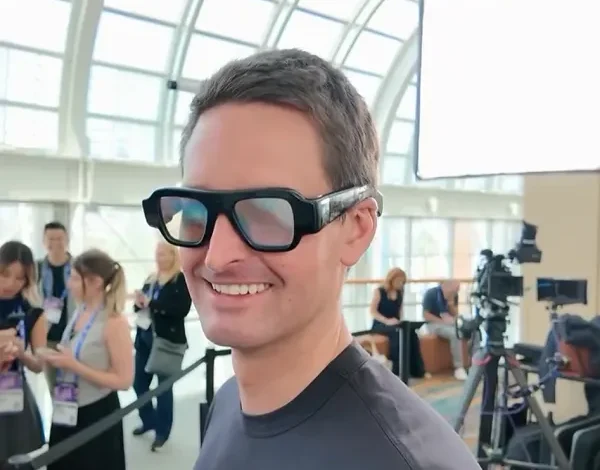
Meta is not alone in navigating these turbulent waters. Other tech giants are also vying for a share of the smart glasses market, and they too are encountering significant hurdles. Snapchat, for instance, recently previewed its augmented reality (AR) Specs, only to face immediate and widespread criticism.
An image of Snapchat CEO Evan Spiegel modeling the AR Specs went viral, drawing derision for the glasses’ "absurdly big" design. Reports widely focused on Spiegel’s visibly folded ear in the photograph, struggling under the weight of the enormous frames. This instantly created a perception of functional wearability issues, making the devices appear cumbersome and impractical rather than sleek and futuristic. While these glasses promise expanded AR functionality, it seems unlikely that advanced features will be enough to offset the significant lack of aesthetic appeal and the practical discomfort implied by their design, especially with a hefty $2,000 price tag. This high cost, coupled with an unproven value proposition and design flaws, makes mass market adoption seem improbable.
The current struggles of Meta and Snapchat bear an uncanny resemblance to the fate of Google Glass, a pioneering smart eyewear device that Google launched in 2013. Google famously discontinued consumer sales of its Google Glass device in 2015, just two years after its initial rollout. The failure was multi-faceted: hardware limitations and a lack of compelling, widespread functionality played a role. However, two critical factors mirrored today’s challenges: the device’s high price tag of $1,500, which made it inaccessible to many, and the pervasive social stigma that quickly attached itself to wearers. The distinctive look of Google Glass, initially novel, rapidly became a reason for public scorn, with wearers being pejoratively labeled "Glassholes."
Crucially, Google Glass devices were also banned from numerous public and private establishments, including bars, movie theaters, and casinos, precisely because of their recording capabilities and the privacy fears they engendered. This precedent is now being revisited, as Meta’s glasses appear destined for a similar fate, further restricting their utility and appeal.
Regulatory Response and Broader Implications
The growing concern over privacy and surveillance capabilities is already translating into concrete regulatory action. As reported by syracuse.com, the New York Office of Court Administration announced a ban on all camera-equipped glasses from all state courts, effective this month. This proactive measure signals a growing trend, and it is widely expected that New York will be the first of many jurisdictions to implement similar restrictions across various public and private spaces. Such bans, while understandable from a privacy and security standpoint, significantly diminish the practical utility of these devices, especially for a product envisioned as an "always-on" assistant. If smart glasses cannot be worn in workplaces, public institutions, or social venues, their value proposition for continuous connectivity and information overlay collapses.
The combined force of negative public perception, social stigma, and increasing regulatory restrictions could collectively sound an early death knell for the entire smart glasses industry, at least in its current privacy-invasive iteration. This outcome would severely undermine Meta’s long-term strategic vision, particularly CEO Mark Zuckerberg’s expressed hope that AI glasses will eventually supersede smartphones as the primary connective devices, ushering in a new era of pervasive computing and metaverse interaction.
Meta has invested heavily in artificial intelligence, viewing it as a truly transformative technology. However, while AI tools have demonstrated value in specific applications, their broader consumer applications have yet to fully live up to the hype or deliver overwhelmingly superior user experiences. Alexandr Wang, head of Meta’s Superintelligence unit and one of its highest-profile AI recruits, conceded this point in May on The Core Memory podcast. He stated that while many users find AI tools "somewhat helpful," overall user experiences "are not overwhelmingly better" as a direct result of AI implementation.
Wang emphasized that the onus is on Meta to develop more genuinely valuable AI tools and applications to win over a wider user base and improve public sentiment. A cornerstone of this strategy is the company’s AI glasses push, which aims to provide users with an accessible, always-on AI assistant. Given the initial increase in sales following the rebranding and AI feature integration, Meta’s optimism could be seen as well-placed. However, the accelerating rise of negative sentiment, the specter of "pervert glasses," and the looming threat of widespread bans now pose a significant and potentially insurmountable challenge.
It appears increasingly likely that the negative use cases and privacy infringements associated with AI glasses will come to dominate public perception, overshadowing their potential for augmented reality overlays, real-time information access, and valuable insights. This could severely slow down adoption rates and, if the criticism continues to gain traction and translate into widespread cultural rejection and legal restrictions, it could very well see several ambitious smart glasses projects go the way of Google Glass, relegated to the annals of promising but ultimately failed technological experiments. The delicate balance between innovation, utility, and fundamental human rights to privacy will ultimately determine the fate of this nascent industry.
Related posts: