3Dflow Releases 3DF Zephyr 9.0 Introducing Integrated 3D Gaussian Splatting and Enhanced Geospatial Visualization Tools

3Dflow, a leading developer of computer vision and photogrammetry solutions, has officially announced the release of 3DF Zephyr 9.0, a milestone update to its flagship software suite that integrates cutting-edge 3D Gaussian Splatting technology. This latest iteration, arriving more than a decade after the software’s initial debut, signifies a strategic shift in the photogrammetry industry by bridging the gap between traditional textured mesh reconstruction and modern, radiance-field-based rendering techniques. The update is designed to serve a diverse user base ranging from visual effects (VFX) artists and game developers to architectural surveyors and scientific researchers.
The Evolution of 3DF Zephyr: A Decade of Innovation
Since its first commercial release in early 2015, 3DF Zephyr has established itself as a robust alternative to industry giants such as Agisoft Metashape and CapturingReality’s RealityCapture. Developed by the Italy-based 3Dflow, the software was built upon a proprietary reconstruction engine that emphasizes accuracy and user control. Over the years, the software has evolved from a specialized tool for heritage preservation into a multi-purpose platform capable of handling massive datasets, including aerial Lidar and high-resolution terrestrial photography.
The core workflow of 3DF Zephyr has traditionally followed a multi-phase pipeline. It begins with Structure from Motion (SfM), where the software analyzes source images or video frames to determine camera positions and generate a sparse point cloud. This is followed by Multi-view Stereo (MvS), which produces a dense point cloud. In previous versions, the final output was typically a textured 3D mesh or a digital elevation model. However, version 9.0 introduces a significant departure from this polygon-centric approach by embracing 3D Gaussian Splatting (3DGS).
Understanding the Integration of 3D Gaussian Splatting
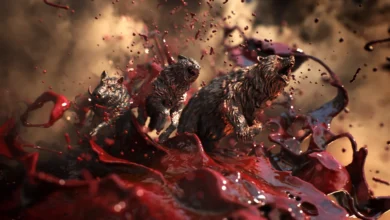
The centerpiece of the 3DF Zephyr 9.0 update is the new 3D Gaussian Splatting toolset. Unlike traditional photogrammetry, which attempts to fit a geometric skin (a mesh) over a point cloud, Gaussian Splatting represents a scene as a collection of millions of semi-transparent, colored ellipsoids (gaussians). This method allows for the capture of complex visual phenomena that are notoriously difficult for traditional photogrammetry to reconstruct, such as reflections, transparency, and thin structures like hair or foliage.
3Dflow has implemented a versatile three-tier workflow for splat generation, allowing users to balance processing time against visual fidelity:
- SfM-based Splatting: Splats are generated directly from the sparse point cloud. This is the fastest method, suitable for quick previews or low-complexity environments.
- MvS-based Splatting: By utilizing the dense point cloud, the software produces higher-fidelity results with better structural integrity.
- Optimized Splatting: For professional-grade results, users can apply 3Dflow’s proprietary photoconsistency algorithm. This refines the point cloud by cross-referencing it with the original source images to ensure the highest possible accuracy before the splatting process begins.
This integration positions 3DF Zephyr as a direct competitor to standalone splatting tools like Postshot or Nerfstudio. By keeping the entire process—from image alignment to splat optimization—within a single interface, 3Dflow aims to reduce the friction typically associated with jumping between different software packages for 3D reconstruction.
Hardware Acceleration and Cross-Platform Performance
Historically, 3DF Zephyr was heavily reliant on NVIDIA’s CUDA technology, which limited its high-performance capabilities to users with NVIDIA GPUs. The release of version 8.0 began to dismantle this barrier by introducing OpenCL support, enabling the software to run on AMD and Intel hardware. Version 9.0 continues this trend, though with some technical caveats regarding the new splatting tools.
According to technical documentation released by 3Dflow, while the general photogrammetry engine is now cross-vendor compatible, the 3D Gaussian Splatting generation is currently optimized for single-GPU configurations. Furthermore, the company notes that NVIDIA GPUs utilizing CUDA still offer superior performance and faster processing times for splat generation compared to OpenCL-based counterparts. This performance gap is attributed to the specific memory management requirements of the Gaussian Splatting training process, which currently benefits from the mature optimization of CUDA libraries.
Enhanced Geospatial Visualization and Workflow Refinements
Beyond the headline addition of Gaussian Splatting, 3DF Zephyr 9.0 introduces several features aimed at the geospatial and surveying sectors. One of the most notable additions is the support for satellite and hybrid map tiles directly within the 3D viewport. This allows surveyors and architects to visualize their scanned environments within a real-world geographical context, facilitating better site planning and data verification.
To further support the GIS (Geographic Information System) community, 3DF Zephyr 9.0 now supports the export of tiled meshes in Esri’s i3s (Indexed 3D Scene) format. This is a critical addition for professionals who need to stream large-scale 3D models over the web or integrate them into ArcGIS environments.
The user experience has also seen significant refinements:
- Tripod Camera Controller: Borrowing from 3DF Scarlet (3Dflow’s laser scan management software), a new navigation mode mimics a tripod-style movement. This is particularly useful for inspecting interior scans or navigating large environments from a fixed perspective.
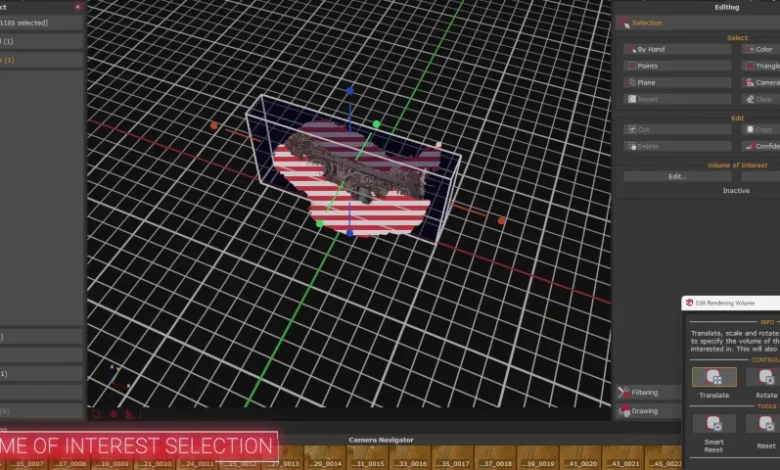
- Volume of Interest (VoI) Tools: The selection workflow has been unified. The "Volume of Interest" selector is now consistently available across all subtools, allowing users to isolate specific areas of a dense point cloud or mesh for processing, thereby saving time and computational resources.
- Format Support: The software now supports video export in HEIF (High Efficiency Image File) format, providing a better balance between file size and image quality for documentation and presentation purposes.
Chronology of Recent Major Updates
To understand the significance of version 9.0, it is helpful to look at the development trajectory over the last 24 months:
- Version 7.0 (Late 2023): Focused on UI overhaul and massive improvements to the MvS engine, significantly reducing noise in dense point clouds.
- Version 8.0 (2025): The "OpenCL Milestone," which opened the software to AMD and Intel users, breaking the long-standing NVIDIA exclusivity.
- Version 9.0 (July 2026): The "Radiance Field Milestone," integrating 3D Gaussian Splatting and expanding geospatial export capabilities.
Market Analysis and Industry Implications
The inclusion of Gaussian Splatting in a mainstream photogrammetry package marks a turning point for the industry. For years, photogrammetry was defined by its ability to create "watertight" geometry for CAD and 3D printing. However, as the demand for digital twins in the metaverse and real-time engines like Unreal Engine 5 grows, the focus has shifted toward visual realism.
Industry analysts suggest that by incorporating 3DGS, 3Dflow is targeting a burgeoning market of "hybrid" creators—professionals who need the geometric precision of traditional photogrammetry for some projects and the photorealistic "look" of splats for others. This dual-capability makes 3DF Zephyr 9.0 a highly versatile tool in an increasingly fragmented market.
Furthermore, the decision to remain a perpetual license provider for its Lite and Full versions (while offering subscription options) remains a key selling point. Many professionals in the VFX and surveying industries have expressed "subscription fatigue," and 3Dflow’s continued support for permanent ownership models provides a competitive edge over companies moving toward mandatory cloud-based or rental-only models.
Pricing, Tiers, and Availability
3Dflow has maintained its tiered pricing structure to ensure accessibility for different levels of users. 3DF Zephyr 9.0 is compatible with 64-bit versions of Windows 10 and 11.
- 3DF Zephyr Free: This version remains a powerful entry point for hobbyists, allowing for the processing of up to 50 source images or video frames. While limited to a single GPU, it now serves as a viable way for users to experiment with Gaussian Splatting at no cost.
- 3DF Zephyr Lite ($209): Aimed at indie developers and freelancers, the Lite edition supports unlimited source images and up to two GPUs. It provides a significant performance boost over the free version while remaining affordable.
- 3DF Zephyr Full ($4,600 / $290 per month): The flagship edition includes the complete suite of tools, including Lidar support, aerial surveying tools, and multi-GPU acceleration. The perpetual license includes one year of technical support and updates.
Conclusion
With the release of version 9.0, 3Dflow has successfully modernized 3DF Zephyr to meet the demands of the 2026 digital landscape. By integrating 3D Gaussian Splatting alongside its proven photogrammetry pipeline, the company has provided a comprehensive solution for reality capture. Whether the goal is to create a high-precision architectural model or a photorealistic virtual environment, 3DF Zephyr 9.0 offers the tools necessary to bridge the physical and digital worlds. As hardware continues to evolve and the demand for high-quality 3D content grows, the innovations found in this update are likely to set a new standard for the industry.