The cinematic landscape is currently witnessing a dramatic collision of epic proportions, not just within the narrative of Christopher Nolan’s highly anticipated film, but between the established titans of Hollywood and the burgeoning, disruptive force of artificial intelligence. Nolan’s "The Odyssey," a colossal undertaking reportedly costing $250 million and filmed entirely on IMAX 70mm, premiered today, promising an immersive, grand-scale spectacle. Yet, a mere three days prior to its theatrical release, an entirely different "Odyssey" emerged from the digital realm, one born not of countless hours of meticulous filming and a vast crew, but of code and a singular vision, raising profound questions about the future of filmmaking.
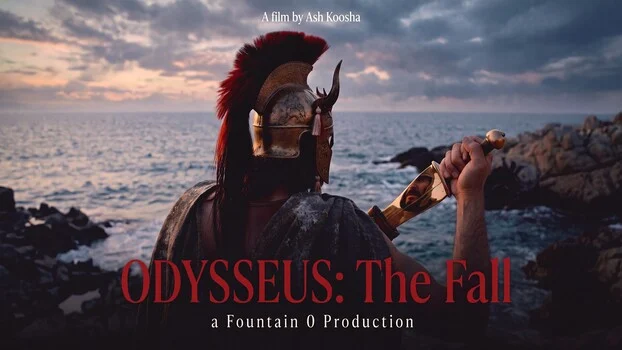
This alternative epic, titled "Odysseus: The Fall," is the brainchild of Fountain 0, a London-based entity that boldly proclaims itself the leading AI movie studio. Clocking in at a substantial 135 minutes, the runtime of a traditional feature film, this AI-generated production was reportedly conceived and executed primarily by one individual, director Ash Koosha, over a concentrated three-month period. The budget? A starkly contrasting mid-five figures, a fraction of the cost of even a single minute of Nolan’s meticulously crafted vision.
The Genesis of an AI Epic
Ash Koosha, a director with a track record of pushing technological boundaries in filmmaking, has taken on the titular role of Odysseus himself, casting his own likeness. The supporting cast, a dozen digital avatars, were sourced from individuals within his personal network, their appearances meticulously recreated. The visual rendering of "Odysseus: The Fall" was achieved using a proprietary AI system called Kling, a testament to the rapid advancements in generative AI technology.
Unlike the traditional theatrical rollout for a Hollywood blockbuster, "Odysseus: The Fall" is slated for a digital release. It will be available for rent at $9.99 on Fountain 0’s proprietary platform later this summer, bypassing the physical confines of movie theaters altogether. A teaser trailer, released to generate buzz and showcase the film’s aesthetic, offers a glimpse into this digitally constructed world.
A Polarizing Reception: "Rancid Slop" vs. Technological Frontier
The immediate public and critical response to "Odysseus: The Fall" has been, as one might anticipate, intensely divided. Online reactions have ranged from scathing condemnations, with descriptors like "rancid slop" and "AI parasite" making the rounds, to cautious intrigue about the technological achievement. The criticisms leveled against the film echo many of the familiar concerns surrounding early AI-generated content: dialogue perceived as stilted and unnatural, character expressions lacking authentic emotional depth – what some describe as a deficit of "interior life" – and an overall textural quality that feels more like a description of a film than a fully realized cinematic experience.
However, director Ash Koosha frames his endeavor not as a threat to filmmaking, but as an democratizing force. He articulated his perspective in a statement, asserting that AI "is a threat to nothing except distance, the distance between a person with a story and the means to tell it." Koosha further emphasized his belief that technology itself is not the arbiter of cinematic quality, stating, "a tool has never made a film worth watching. A person with something urgent to say has made every one of them, and that won’t change."
Interestingly, Koosha has expressed a hope that Nolan’s "The Odyssey" will be a commercial success, suggesting that his own AI-driven version might, paradoxically, drive audiences toward the more traditional cinematic offering. This stance is further supported by his prior work; his last feature, produced for approximately $2,000, achieved the distinction of being the first fully AI-generated film to be screened at the prestigious Tribeca Film Festival. This history lends weight to his arguments, making it more difficult to dismiss "Odysseus: The Fall" as merely a superficial publicity stunt.
The Implication of Cost: A New Paradigm for Storytelling?
The juxtaposition of these two "Odysseys" is where the true significance of this moment lies. Nolan’s film represents the apex of traditional filmmaking – a monumental investment in physical production, involving immense logistical challenges, skilled artisans, and tangible locations. The very act of capturing reality through the lens of the largest film cameras ever conceived, and directing them at genuine human faces, is a primary draw for audiences seeking an authentic, visceral cinematic experience.
In stark contrast, "Odysseus: The Fall" is the product of a digital architect’s intensive typing and algorithmic processing. The question is not merely whether this AI-generated "Odyssey" is a good film – by most accounts, it is not. The more profound and perhaps uncomfortable inquiry is what the discourse surrounding AI filmmaking will sound like when the next iteration is not demonstrably bad, but merely mediocre, yet still produced at a fraction of the cost of a cup of coffee.
Supporting Data and Context
The rapid evolution of AI in creative industries is not an isolated phenomenon. Generative AI models have seen exponential growth in capabilities and accessibility over the past few years. Tools like DALL-E 2, Midjourney, and Stable Diffusion have demonstrated the power of AI to create compelling images from text prompts. More recently, advancements in AI video generation, such as those powering "Odysseus: The Fall," are beginning to emerge, blurring the lines between human and machine creativity.
- AI Development Timeline: The concept of AI-generated art and media has been explored for decades, but the current surge in sophisticated generative models began to gain significant traction around 2020-2021 with the widespread adoption of large language models and diffusion models. The ability to generate coherent and lengthy video content is a more recent development, with significant breakthroughs occurring in the last 18-24 months.
- Budgetary Discrepancy: The reported $250 million budget for Nolan’s "The Odyssey" is indicative of the immense financial resources required for large-scale Hollywood productions. This includes costs for principal photography in diverse locations, extensive visual effects, a large cast and crew, marketing, and distribution. The mid-five-figure budget for "Odysseus: The Fall" highlights the drastic reduction in production overhead achievable through AI, eliminating many of these traditional cost centers.
- AI Content Creation Growth: While specific data for AI-generated feature films is nascent, the broader market for AI-generated content is expanding rapidly. Companies are increasingly exploring AI for marketing materials, concept art, and even short-form video content. The accessibility of these tools suggests a future where individuals and smaller entities can produce content at scales previously unimaginable.
Fountain 0 and Ash Koosha’s Vision
Fountain 0’s positioning as the "leading AI movie studio" underscores their ambition to be at the forefront of this technological shift. Their approach, as demonstrated by "Odysseus: The Fall," is to leverage AI not as a mere special effect, but as the foundational engine of creation. Ash Koosha’s personal involvement, both as director and subject, further imbues the project with a singular, auteurist quality, albeit one mediated through algorithms.
Koosha’s stated philosophy—that AI bridges the gap between storytellers and the means of telling stories—resonates with the broader discourse around the democratization of technology. While the current output may be rudimentary, the potential for AI to empower independent creators with limited resources is significant. This could lead to an explosion of diverse narratives, originating from voices that might otherwise be excluded from traditional film production pipelines.
Broader Impact and Implications
The emergence of "Odysseus: The Fall" raises critical questions that extend beyond the artistic merit of a single film:
- The Future of the Film Industry: If AI can produce feature-length films at such a low cost, how will this impact traditional studio models, labor, and the economics of filmmaking? Will there be a bifurcated market, with high-budget, meticulously crafted blockbusters coexisting with a flood of low-cost, AI-generated content?
- The Definition of Art and Authorship: What does it mean to be a filmmaker when a significant portion of the creative process is automated? How will audiences perceive authorship and artistic intent in AI-generated works? The debate over "art" versus "craft" will undoubtedly intensify.
- Ethical Considerations: Issues surrounding copyright, intellectual property, and the potential for AI to replicate existing artistic styles without attribution will become increasingly pressing. The sourcing of human likenesses also raises ethical questions about consent and digital representation.
- Audience Perception and Engagement: As Koosha himself acknowledges, audiences can currently discern the difference between a traditionally filmed and an AI-generated product. However, as AI technology matures, this distinction may become less apparent. The challenge will be to maintain audience engagement and emotional connection with content that may lack the nuances of human performance and experience.
The confrontation between Nolan’s "The Odyssey" and Koosha’s "Odysseus: The Fall" is more than just a cinematic event; it is a preview of a paradigm shift. The conversation has moved from theoretical possibilities to tangible, albeit imperfect, realities. The uncomfortable question remains: what will be the lasting legacy of this AI-generated "Odyssey," and how will it shape the epic journeys of storytelling in the years to come? The answer will unfold not just in the theaters, but in the algorithms and the digital platforms that are rapidly redefining the very act of filmmaking.