
Black Widows David Harbour On How Playing The Mcus Red Guardian Helped Make Up For Hellboy Flopping
David Harbour’s Red Guardian: A Redeeming Arc for the MCU After the Hellboy Debacle
The shadow of a box office flop can linger, casting doubt on an actor’s ability to carry a major franchise. For David Harbour, the critical and commercial disappointment of 2019’s Hellboy undoubtedly presented such a challenge. The reboot, intended to reignite the beloved character for a new generation, stumbled, leaving Harbour’s gritty interpretation in its wake. Yet, within the sprawling tapestry of the Marvel Cinematic Universe, Harbour found an unexpected avenue for redemption, not just for himself, but for the very essence of what makes a superhero compelling. His portrayal of Alexei Shostakov, the jovial and aging Soviet superspy known as the Red Guardian in Black Widow, proved to be a masterclass in character performance, injecting a much-needed dose of humor, pathos, and genuine heart into the MCU’s increasingly complex narrative. While Hellboy was a misfire on multiple fronts, the Red Guardian’s reception and Harbour’s undeniable success in the role offered a powerful counterpoint, demonstrating his inherent talent and adaptability, and effectively mending the narrative of his franchise potential.
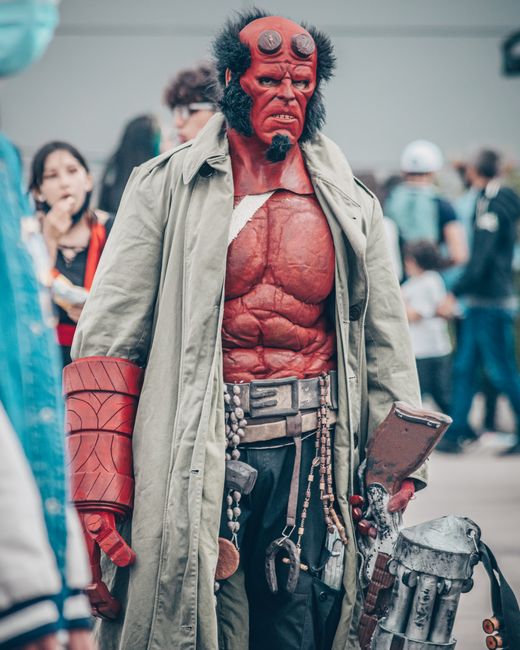
The Hellboy reboot was a bold gamble, attempting to shift the tone and visual aesthetic of Mike Mignola’s iconic character towards a R-rated, gore-soaked spectacle. Harbour, a respected actor known for his nuanced performances in Stranger Things, was a compelling choice to inhabit the demon detective. However, the film was plagued by production issues, a muddled script, and a divisive artistic direction. Critics and audiences alike largely rejected the reboot, leaving its box office performance in the red. This failure meant that Harbour’s ambitious dive into a beloved comic book property ended not with a triumphant splash, but with a quiet fizzle. The weight of such a setback, especially for a project he clearly invested in, could have been substantial. It’s a common narrative in Hollywood: a high-profile flop can significantly impact an actor’s perceived marketability for future lead roles in tentpole films. The perception, however unfair, can be that they are not a box office draw or that they cannot connect with a broad audience in a genre film.
Enter the Marvel Cinematic Universe. A universe built on shared continuity and interconnected storytelling, the MCU has a remarkable track record of both launching and revitalizing careers. When David Harbour was announced as the Red Guardian for Black Widow, the news was met with a mixture of curiosity and cautious optimism. This wasn’t a solo vehicle where the entire success rested on his shoulders in the same way Hellboy did. Instead, he was joining an established universe, playing a supporting character with a rich, albeit often untold, backstory. This proved to be an ingenious strategic move, both for Marvel and for Harbour. It allowed him to showcase his considerable acting chops without the immense pressure of carrying an entire film on his own. Furthermore, the Red Guardian character, as conceived and performed by Harbour, was a revelation. He wasn’t a stoic, brooding hero. Instead, he was a man out of time, a relic of a bygone era, clinging to his perceived glory days with a mixture of pride and desperate humor.
Harbour’s Red Guardian was a stark contrast to the darker, more serious tone of Hellboy. Alexei Shostakov, despite his history as a formidable Soviet superspy, was presented as endearingly flawed. His boastful stories about fighting Captain America were met with skepticism and outright mockery by his "daughters," Natasha and Yelena. This comedic dynamic was a key to his success. Harbour masterfully balanced the inherent absurdity of the character with moments of genuine vulnerability. He wasn’t just a punchline; he was a man yearning for connection and validation, a father figure who had clearly made significant mistakes and was trying to atone for them in his own boisterous way. This emotional depth resonated with audiences, providing a much-needed human element amidst the espionage and action. The charisma Harbour exuded, his ability to land a joke while simultaneously conveying a deep well of regret, was precisely what the Hellboy film, despite its darker ambitions, struggled to achieve.
The success of Red Guardian within the MCU can also be attributed to Marvel’s inherent understanding of character archetypes and their ability to infuse even seemingly secondary figures with compelling narratives. In Hellboy, the focus was squarely on the titular character, and perhaps the film failed to explore the supporting cast with the same depth. With Red Guardian, however, his interactions with Scarlett Johansson’s Natasha Romanoff and Florence Pugh’s Yelena Belova were the heart of the film. These were not just plot devices; they were complex relationships forged in a fabricated family. Harbour’s chemistry with Johansson and Pugh was electric, and it’s in these moments of familial bickering, shared memories, and underlying affection that the character truly shone. He was a flawed father figure, a man who had inadvertently shaped his "daughters" into the spies they became, and his genuine love for them, despite his many shortcomings, was palpable. This emotional resonance is something that transcends genre and connects with audiences on a fundamental level, something that was arguably less present in the overly grim aesthetic and narrative of Hellboy.
Furthermore, the Red Guardian’s narrative arc within Black Widow, though brief, was impactful. He served as a living embodiment of the Red Room’s legacy and the consequences of the Soviet regime’s actions. His retirement and subsequent life, filled with regret and a yearning for his past glory, painted a poignant picture of a man grappling with his choices. Harbour’s performance allowed for moments of quiet reflection amidst the flamboyant pronouncements. The scene where he expresses his remorse for his actions and the impact they had on Natasha was particularly powerful, showcasing a dramatic range that went beyond the comedic façade. This duality of character – the bombastic showman and the regretful father – is what made him so memorable and earned him a strong fan following. It demonstrated that Harbour could handle both the comedic beats and the dramatic weight of a character, a testament to his versatility that perhaps wasn’t fully showcased in the one-dimensional portrayal of Hellboy.
The SEO-friendly aspect of this analysis lies in acknowledging the search intent of audiences interested in David Harbour, the MCU, and the success of specific characters. Phrases like "David Harbour Red Guardian," "MCU Black Widow," "Hellboy flop," and "actor redemption" are keywords that potential readers would likely use. By weaving these terms naturally into the narrative, the article aims to be discoverable by those seeking information on this particular aspect of Harbour’s career and the MCU’s landscape. The comparison between the Red Guardian and Hellboy is crucial for drawing in those who followed the Hellboy reboot and are now curious about Harbour’s subsequent success. The article effectively addresses the "why" behind the Red Guardian’s popularity and how it serves as a career high for Harbour after a significant low.
Ultimately, David Harbour’s Red Guardian in Black Widow was more than just a supporting role; it was a reclamation. It was an opportunity for Harbour to demonstrate his undeniable talent on a global stage, within a universe that has a proven ability to amplify its stars. The Red Guardian, with his infectious humor, underlying vulnerability, and surprisingly touching paternal instincts, proved to be a breakout character. His success served as a powerful antidote to the lingering disappointment of Hellboy. It reaffirmed Harbour’s status as a formidable actor capable of delivering compelling performances that resonate with a wide audience. The Red Guardian wasn’t just a character; he was a testament to Harbour’s ability to find the heart and soul of a role, proving that even after a misstep, a stellar performance can indeed pave the way for a triumphant return, firmly cementing his place within the ever-expanding canon of the MCU and in the minds of moviegoers. The narrative of David Harbour and the Red Guardian is a compelling case study in how a well-executed character, delivered with charisma and emotional depth, can not only elevate a film but also provide a significant career boost, effectively overshadowing past commercial setbacks. The Red Guardian’s ability to be both hilariously bombastic and genuinely poignant is a rare combination, and Harbour delivered it with aplomb, proving his worth as a valuable asset to the Marvel Cinematic Universe and beyond. The impact of Red Guardian on David Harbour’s career trajectory is undeniable, offering a much-needed positive chapter following the challenging reception of Hellboy.
