ArchCG Studio Launches MatSnap AI, Revolutionizing Material Generation in Autodesk 3ds Max


ArchCG Studio has officially released MatSnap AI, a groundbreaking new material generation plugin meticulously designed for Autodesk 3ds Max. This innovative tool marks a significant advancement in 3D content creation workflows, leveraging sophisticated image-based analysis to transform ordinary reference photos or screen captures into high-quality physically based rendering (PBR) materials directly within a 3ds Max scene. The introduction of MatSnap AI promises to streamline the often time-consuming and technically complex process of material authoring, offering artists and designers an efficient pathway to achieving photorealistic results with unprecedented ease.
Technical Deep Dive: The Core Functionality of MatSnap AI
At its heart, MatSnap AI operates by processing input from either user-supplied images or real-time screen captures. The plugin employs advanced computer vision and machine learning algorithms to intelligently identify and interpret the nuanced surface characteristics present in these visual references. This analytical capability allows MatSnap AI to discern critical material properties such as texture, reflectivity, and surface irregularities, which are fundamental to creating believable digital representations.
Following its analytical phase, MatSnap AI proceeds to generate a comprehensive suite of base texture maps essential for PBR workflows. These outputs typically include:
- Diffuse (Albedo) Map: Captures the base color of the surface without any lighting information, crucial for accurate light interaction.
- Normal Map: Simulates surface detail and bumps without adding actual geometry, enhancing perceived realism with fewer polygons.
- Roughness Map: Defines how rough or smooth a surface appears, influencing the scattering of light and the sharpness of reflections.
- Displacement Map: Modifies the actual geometry of the mesh, creating genuine bumps and indentations for highly realistic surface detail.
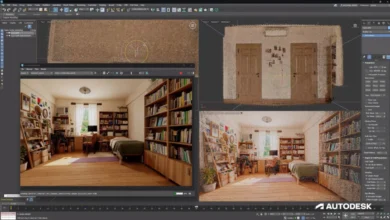
These generated maps are then intelligently assembled into a coherent material definition, specifically optimized for compatibility with Corona Renderer, a popular physically accurate renderer widely used in architectural visualization, product design, and animation. The completed PBR material is then seamlessly inserted directly into the active material editor within 3ds Max, providing artists with immediate access for further fine-tuning, customization, and integration into their projects. This direct integration significantly reduces the manual steps traditionally required to set up and apply new materials, thereby accelerating the iterative design process.
Addressing Workflow Challenges: Seam Correction and Text-Driven Generation
A pervasive challenge in texture generation, particularly when working with image-based inputs, is the presence of visible seams or inconsistencies when a texture is tiled across a larger surface. MatSnap AI directly addresses this common hurdle with an integrated seam correction feature. This powerful tool allows users to meticulously blend edges and refine tiling patterns directly within the 3ds Max interface, eliminating repetitive visual artifacts and ensuring a uniform and continuous surface appearance. The ability to perform this critical step within the same software environment minimizes the need for external image editing applications, consolidating the workflow and saving valuable time.
Beyond its core image-based capabilities, MatSnap AI extends its utility with a flexible text-driven mode. This innovative feature enables users to generate materials even in the absence of a specific reference photo. By inputting descriptive text prompts, artists can leverage generative AI to conjure entirely new material definitions. This mode is particularly advantageous during early concept development, rapid prototyping, or when specific visual references are unavailable. It opens up new avenues for creative exploration, allowing designers to experiment with material ideas that might not yet exist in photographic form, thereby expanding the creative potential of 3ds Max users. The blend of image-based precision and text-driven creativity positions MatSnap AI as a versatile tool for a wide range of design scenarios.
Enhanced Integration and Automated Material Setup
MatSnap AI’s design philosophy emphasizes not just material generation but also intelligent integration into the existing 3ds Max workflow. The plugin includes several features aimed at automating and enhancing material setup, further reducing manual intervention and improving realism. For instance, it can automatically configure Fresnel effects for certain surface types. The Fresnel effect describes how the reflectivity of a surface changes with the viewing angle, a crucial property for accurately simulating materials like glass, water, or plastics. By automating this, MatSnap AI ensures that generated materials inherently possess a higher degree of physical accuracy.
Furthermore, the software incorporates mapping randomization capabilities. This feature is particularly beneficial when applying materials across large or repetitive surfaces, such as brick walls, tiled floors, or expansive terrains. By subtly randomizing the orientation, scale, or offset of texture maps, MatSnap AI effectively reduces the noticeable repetition that can often break the illusion of realism in 3D renders. This intelligent randomization ensures that each instance of a tiled texture appears slightly unique, enhancing the overall visual fidelity and convincingness of the scene. Such thoughtful integration features underscore ArchCG Studio’s commitment to delivering a comprehensive and workflow-centric solution.
The Business Model: BYO-Key and Google Cloud Integration
ArchCG Studio has adopted a distinctive business model for MatSnap AI, distributing the plugin as a one-time purchase. This approach contrasts with the subscription-based models prevalent in many software offerings today, potentially appealing to users who prefer outright ownership. Critically, MatSnap AI operates on a "bring-your-own-key" (BYO-Key) model for its underlying API usage. This means that users are required to connect their own Google Cloud account for the intensive processing tasks involved in material generation.
Under this model, all billing for the computational resources consumed during material generation is handled directly by Google Cloud, rather than being intermediated by ArchCG Studio. This offers a transparent and scalable cost structure, as users only pay for the specific amount of processing power they utilize. This model can be particularly advantageous for individual artists or smaller studios who might have fluctuating demands for material generation, allowing them to scale their costs precisely with their usage. ArchCG Studio also explicitly states that API credentials provided by users are stored locally on their systems, a measure designed to enhance security and user control over their cloud accounts. This transparent and user-centric approach to pricing and security is a notable aspect of MatSnap AI’s market entry.
Background Context: The Evolution of 3D Material Generation
The realm of 3D material generation has undergone a profound evolution over the past few decades, driven by increasing demands for photorealism and efficiency in digital content creation. Initially, artists painstakingly crafted textures pixel by pixel using 2D image manipulation software. This manual process was time-consuming, prone to inconsistencies, and required a high degree of artistic skill to achieve convincing results. The advent of procedural textures offered a partial solution, allowing artists to generate patterns and materials algorithmically, but often lacked the organic nuances found in real-world surfaces.
The mid-2000s saw the rise of photogrammetry and image-based modeling, where real-world objects were scanned and reconstructed into 3D models with corresponding textures. While highly accurate, this method often required specialized equipment and controlled environments, making it less accessible for everyday material creation. The subsequent shift towards Physically Based Rendering (PBR) became a pivotal moment. PBR models accurately simulate how light interacts with materials based on real-world physics, leading to far more consistent and realistic results across different lighting conditions. However, creating the multiple PBR texture maps (albedo, normal, roughness, metallic, displacement) still remained a complex and labor-intensive task.
The past five years have witnessed an explosion in the application of Artificial Intelligence (AI) and Machine Learning (ML) to creative industries, particularly in 3D content generation. Generative AI models, trained on vast datasets of images and 3D assets, have demonstrated an unprecedented ability to create new content, including textures, models, and even entire scenes. Tools leveraging AI have begun to emerge, aiming to automate and accelerate various aspects of 3D production. MatSnap AI is a direct product of this technological trajectory, building upon the foundational principles of PBR and integrating state-of-the-art AI to address the persistent challenges faced by 3D artists in material authoring. Its release signifies a maturation of AI in practical DCC (Digital Content Creation) workflows, moving from experimental novelty to essential production utility.
Chronology of AI in Creative Tools: A Brief Overview
The integration of AI into creative tools, while seemingly recent, has a longer history of gradual evolution.
- 1990s – Early 2000s: Basic AI algorithms were used in tools like Photoshop for functions such as content-aware fill, smart selections, and basic image enhancement filters. These were often rule-based or utilized simpler statistical models.
- Mid-2000s – Early 2010s: Machine learning began to be applied to more complex tasks, such as image recognition and style transfer, though often in research settings rather than mainstream creative applications. The development of sophisticated rendering engines and PBR workflows created a demand for more efficient texture creation.
- Mid-2010s (Deep Learning Revolution): Breakthroughs in deep learning, particularly with Convolutional Neural Networks (CNNs) and Generative Adversarial Networks (GANs), started to show immense potential for image generation and manipulation. This period saw the first glimpses of AI creating photorealistic images from scratch or transforming existing ones.
- Late 2010s – Early 2020s: Generative AI models became more robust and accessible. Projects like StyleGAN demonstrated high-quality face generation, while text-to-image models (DALL-E, Midjourney, Stable Diffusion) democratized AI-powered image creation. Concurrently, specialized AI models began to be trained for 3D tasks, including generating normal maps from diffuse textures, upscaling textures, and eventually, creating full PBR material sets.
- 2023 – Present: The release of MatSnap AI by ArchCG Studio fits squarely into this current phase, where sophisticated AI models are being packaged into user-friendly plugins for mainstream Digital Content Creation (DCC) applications like Autodesk 3ds Max. This represents a shift from general-purpose AI to highly specialized, workflow-specific AI tools that directly address pain points in professional production pipelines. MatSnap AI’s ability to interpret reference photos and generate a full PBR material suite is a direct evolution of these prior developments, making advanced AI capabilities readily available to a broader audience of 3D artists.
Inferred Industry Reactions and Statements
While official statements from industry analysts or user communities are yet to be widely published, the introduction of MatSnap AI is likely to elicit significant interest and discussion within the 3D visualization and content creation sectors.
From ArchCG Studio (Inferred Developer Perspective):
"Our vision with MatSnap AI was to empower 3D artists by drastically reducing the technical overhead associated with material creation," an ArchCG Studio representative might state. "We understand that photorealism is paramount in modern rendering, but the traditional methods for achieving it can be incredibly time-consuming. By leveraging advanced AI, MatSnap AI allows artists to transform simple images into production-ready PBR materials with unprecedented speed and accuracy. Our goal is to free up creative minds to focus on design and artistic expression, rather than getting bogged down in repetitive texture authoring. The BYO-key model for API usage also reflects our commitment to transparency and putting cost control directly into the hands of our users, ensuring scalability that adapts to their project needs."
From Industry Analysts (Inferred Perspective):
"The release of MatSnap AI represents a compelling leap in the integration of AI into practical 3D production pipelines," an industry analyst might observe. "For architectural visualization, product design, and game development studios, the ability to rapidly convert real-world references into high-quality PBR materials is a significant workflow accelerator. The seam correction and text-driven generation features further enhance its utility, positioning it as a versatile tool for both realism and conceptual design. The BYO-key model, while requiring a slightly different setup for users, could prove to be a cost-effective solution for many, offering direct control over their operational expenses for AI processing. This tool aligns perfectly with the broader industry trend towards more intelligent automation in content creation, where efficiency and photorealism are increasingly critical competitive advantages."
From the 3D Artist Community (Inferred Initial User Reactions):
Initial reactions from the vast community of 3ds Max users are expected to be a mix of excitement and cautious optimism. Forums and social media channels dedicated to 3D rendering are likely to buzz with discussions. "This could be a game-changer for speeding up my arch-viz projects," one artist might post. "If it truly works as advertised, the time saved on material creation alone would be worth the investment." Other artists might express interest in its performance with diverse image types, its integration with other renderers beyond Corona, and its overall accuracy compared to manual material authoring or existing procedural tools. The text-driven mode is also likely to spark creative experimentation, with users keen to explore its potential for generating unique and novel material ideas.
Broader Impact and Implications
The introduction of MatSnap AI carries several significant implications for the 3D industry and digital content creation at large:
- Enhanced Efficiency and Productivity: Perhaps the most immediate impact is on workflow efficiency. Artists and studios can dramatically reduce the time spent on material authoring, a traditionally labor-intensive task. This allows for faster iteration cycles, more time for creative refinement, and ultimately, the ability to deliver projects more quickly and cost-effectively. For industries with tight deadlines, such as advertising, film, and architectural visualization, this efficiency gain is invaluable.
- Democratization of Photorealism: MatSnap AI lowers the barrier to entry for achieving high-quality PBR materials. Artists with less specialized knowledge in texture painting or procedural material setup can now leverage real-world photos to generate complex materials. This democratizes access to photorealism, enabling a wider range of creators to produce professional-grade visuals without extensive training in advanced material techniques.
- Consistency and Quality Improvement: By automating the generation of PBR maps from a single source, MatSnap AI helps ensure consistency across different material properties, which is crucial for believable rendering. The integrated seam correction further guarantees higher quality outputs, reducing the need for post-processing and manual fixes. This leads to a higher overall standard of visual fidelity in 3D projects.
- Shift in Artistic Skillsets: While MatSnap AI automates a part of the material creation process, it doesn’t eliminate the need for artists. Instead, it shifts the focus of their skills. Artists can now spend less time on the technical execution of texture maps and more time on creative direction, scene composition, lighting, and fine-tuning materials for specific artistic visions. It encourages a move towards being a "material director" rather than solely a "texture artisan."
- Acceleration of AI Integration in DCC Tools: MatSnap AI is part of a growing trend where AI is becoming an indispensable component of professional DCC software. Its success could encourage other developers to integrate similar intelligent automation features, leading to a new generation of smart creative tools that empower artists to achieve more with less effort. This accelerates the broader adoption of AI within the creative tech ecosystem.
- Economic Implications for Studios: For larger studios, investing in tools like MatSnap AI can translate into significant cost savings by optimizing labor hours. For freelancers and smaller studios, it levels the playing field, allowing them to compete with larger entities by accessing high-quality material creation capabilities without the need for extensive in-house development or specialized personnel. The BYO-key model further ensures cost scalability, aligning expenses directly with project needs.
- Future Development Potential: The release of MatSnap AI hints at a future where 3D asset creation is increasingly intelligent and automated. ArchCG Studio may look to expand its AI capabilities to other aspects of 3ds Max or other DCC applications, potentially extending to automated model generation, scene assembly, or even animation assistance.
In conclusion, MatSnap AI by ArchCG Studio represents a significant milestone in the ongoing integration of artificial intelligence into professional 3D content creation. By efficiently transforming real-world references and text prompts into high-quality PBR materials, the plugin offers a powerful solution to long-standing challenges in workflow efficiency and photorealism. Its innovative technical features, combined with a user-centric business model, position MatSnap AI as an essential tool for modern 3D artists and a harbinger of the increasingly intelligent and automated future of digital design.