Bright Tangerine Unveils OpenRig System to Revolutionize Modular Camera Support and Workflow Efficiency

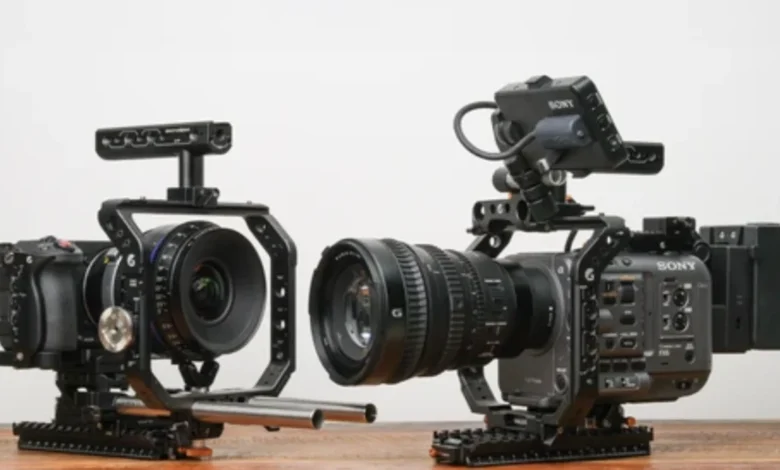
The professional cinematography landscape is currently undergoing a significant shift toward modularity, as production timelines tighten and the demand for rapid gear transitions between gimbals, tripods, and handheld configurations increases. Bright Tangerine, a British manufacturer renowned for its precision-engineered camera support systems, has officially launched its OpenRig system—a comprehensive, modular rigging architecture designed to eliminate the common friction points associated with traditional rail-based support. By integrating an innovative open-jaw design with industry-standard Arca and NATO mounting profiles, Bright Tangerine seeks to address the ergonomic and efficiency challenges that have long plagued camera operators and camera assistants.
The Problem with Traditional Rail Systems
For decades, the standard for professional camera rigging has relied on 15mm or 19mm rods, often requiring accessories to be slid onto the rails from the end of the support structure. While reliable, this mechanical requirement presents a significant logistical hurdle: if a camera operator needs to swap a lens motor, matte box, or handle, they are frequently forced to dismantle other mounted components simply to clear the rail. In a high-pressure commercial or documentary environment, these seconds—or minutes—spent stripping and rebuilding a rig translate directly into lost creative time.
The OpenRig system effectively bypasses this bottleneck. Its defining feature, the open-jaw connection, enables users to mount accessories vertically. By snapping components directly onto the NATO profiles or Arca mounts from above, the operator can modify their configuration mid-shoot without disturbing existing gear. This shift from a "linear" assembly process to a "vertical" or "modular" one represents a fundamental change in how camera departments can approach rig management.
Chronology and Development
The development of the OpenRig system arrives at a time when the gap between mirrorless cinema cameras—such as the Sony FX3, Nikon Z series, and Canon C-line—and full-scale production cinema cameras is rapidly closing. Historically, Bright Tangerine has focused on high-end matte boxes and support for industry titans like ARRI or RED. However, the surge in popularity of "prosumer" cinema bodies necessitated a more versatile solution.
Bright Tangerine spent the last 24 months iterating on the OpenRig concept, focusing on the cross-compatibility of the Arca dovetail and NATO standards. By standardizing the interface, the company aims to reduce the "proprietary tax" that often forces operators to buy cage-specific accessories for every new camera body they acquire. The internal testing phase included field trials with documentary cinematographers who required the ability to move from a handheld shoulder rig to a gimbal-mounted configuration in under sixty seconds, a requirement that served as the primary benchmark for the system’s design.
Structural Components and Technical Specifications
The OpenRig ecosystem is built upon a foundation of precision-machined aluminum, designed to maintain structural integrity while keeping weight at a minimum. The core components include:
- The OpenRig Rail: Acting as the backbone of the system, this rail features an inverted Arca dovetail and dual NATO profiles. Its compatibility extends to industry-standard DJI and Manfrotto systems, ensuring it can integrate into existing kits without requiring a total hardware overhaul.
- The Base Plate and Accessory Slot: This is the heart of the "open-jaw" philosophy. It allows for the rapid vertical mounting of components and features an integrated slot for anti-twist plates and specialized lens adapter supports, ensuring that even heavy prime lenses remain stable without the need for traditional rod systems.
- Arca Receiver and Dovetail: By facilitating a true quick-release workflow, this component allows for seamless transitions between support platforms. The stability provided by the Arca dovetail is significant enough to support larger-format cinema cameras, including the Sony FX6, RED Komodo-X, and the Canon C80.
- Halo Universal Cage: Unlike rigid, camera-specific cages, the Halo Universal Cage is designed as an independent structure. It clips into the dual NATO profiles of the rail system and provides a plethora of 3/8" and 1/4" threads, cold shoe mounts, and QD (Quick Detach) sockets, offering a level of customizability that is essentially future-proof.
Expanding the Ecosystem: Accessories and Future Roadmap
The utility of the OpenRig system is bolstered by an extensive range of dedicated accessories. Currently, the lineup includes magnetic short top handles—which leverage the speed of the rail system—alongside lens support brackets and NATO rosette mounts. For those who still require traditional rod-based support, Bright Tangerine has released a dedicated 15mm rod bracket that maintains the open-jaw functionality of the main rail.
Looking ahead to the next production cycle, Bright Tangerine has indicated that its R&D team is actively working on power distribution modules, ergonomic belly pads, and battery plate mounts. This roadmap suggests that the company is not just selling a mounting system, but rather a long-term platform designed to grow with the user’s equipment needs.
Industry Implications and Market Context
The release of the OpenRig system comes amidst a broader industry trend toward "universalization." As camera sensors evolve and chassis designs become more compact, the need for bulky, camera-specific rigging is declining. Industry analysts observe that camera departments are increasingly prioritizing systems that offer "platform independence." If a cinematographer can use the same base plate, rod system, and cage structure on a Sony FX3 as they do on a Canon C80, the return on investment for their support gear increases exponentially.
Furthermore, the focus on vertical mounting addresses a key ergonomic concern: balance. When accessories must be slid onto the end of a rod, the center of gravity of the rig often shifts during assembly, making it difficult for an operator to calibrate the rig’s balance on a gimbal. By mounting components vertically and locking them in place at the desired point of balance, the OpenRig system allows for more precise weight distribution, which is critical when operating handheld or on stabilized gimbals.
A Professional Perspective on Modular Rigging
While the convenience of a snap-in system is clear, the primary concern for professional camera operators is always stability. The use of Arca and NATO profiles is a strategic choice by Bright Tangerine. NATO rails have long been the industry standard for secure, tool-less mounting, and Arca dovetails are widely praised for their rigidity in photography and videography. By combining these two, Bright Tangerine is leveraging proven mechanical standards rather than introducing a new, proprietary locking mechanism that might be prone to failure or supply chain issues.
The system’s ability to accommodate cameras ranging from the compact Sony FX3 to the more substantial RED Komodo-X demonstrates the versatility of the engineering. By utilizing risers and specific Arca receivers, the system ensures that the optical center of the lens is correctly aligned with the matte box and follow focus, regardless of the camera body’s height. This level of precision is typically found only in high-end, cinema-grade systems, making the OpenRig a compelling option for mid-tier and high-end productions alike.
Conclusion: The Shift Toward Efficiency
The Bright Tangerine OpenRig system represents a calculated response to the realities of modern production. By prioritizing the "vertical" workflow, the system removes the mechanical obstacles that have historically hindered creative momentum on set. As production budgets continue to emphasize speed and versatility, the move toward modular, cross-compatible hardware is not merely a preference but a professional necessity.
With its robust build quality, thoughtful engineering, and a clear roadmap for future expansion, the OpenRig system is positioned to become a staple in the kits of independent filmmakers and professional camera crews. While the market for camera support remains competitive, Bright Tangerine’s emphasis on solving the "slide-on" bottleneck provides a tangible advantage that directly addresses the needs of the modern, fast-paced production environment. As the system rolls out globally, the industry will be watching to see how this modular approach influences the next generation of camera rigging designs.