From Pandemic Isolation to Orchestral Soundscapes: How John Talabot Conceived His New Persona OR and Music for Empty Stadiums

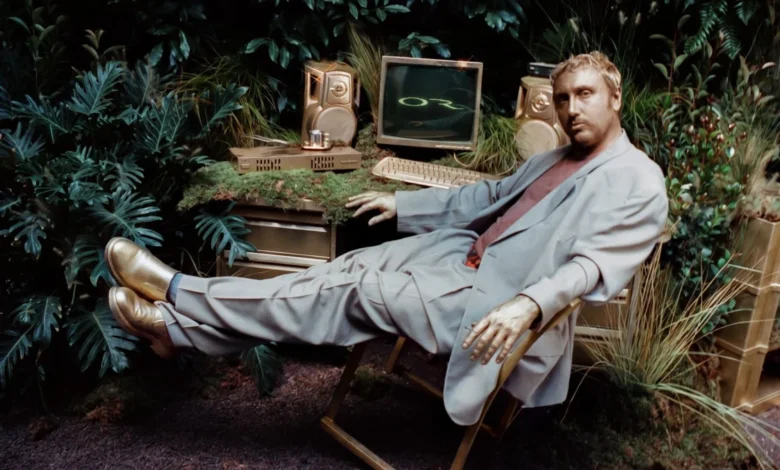
The global music industry experienced an unprecedented existential crisis during the COVID-19 pandemic, forcing artists across all genres to adapt to sudden lockdowns, shuttered venues, and the indefinite suspension of live performances. For Catalan electronic music producer and DJ Oriol Riverola, widely known as John Talabot, the public health restrictions imposed in March 2020 presented a profound professional and personal challenge. Confined to his home in Barcelona without access to his primary recording studio and facing the loss of a family member, Riverola turned inward. The result of this turbulent period is Music for Empty Stadiums, a 17-track, 90-minute ambient and electronic record released under his new alias, OR, via the London-based label AD93. The album stands as a distinct departure from his traditional dancefloor-oriented output, functioning instead as a symphonic exploration of isolation, limitation, and sonic escapism.
The Chronology of Crisis: From Festival Shutdowns to Lockdown Creation
The genesis of Music for Empty Stadiums traces back to the initial wave of pandemic lockdowns in early 2020. Riverola’s transition from an internationally touring DJ—frequently booked at premier electronic music festivals such as Dekmantel and Sónar—to an isolated home producer happened overnight. He recalls performing a Balearic music set on an Italian beach just as restrictions began to take effect, only to have local authorities prematurely halt the music as public health mandates tightened across Europe.
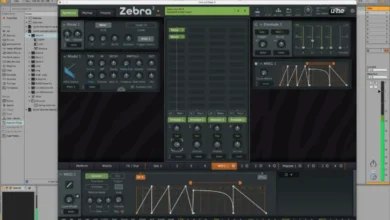
Upon returning to Barcelona, Riverola found his creative life upended. Mid-construction on a new professional studio, he was forced to abandon the project indefinitely. Furthermore, a delayed computer delivery left him with only a rudimentary setup: an aging computer and a limited suite of software tools, notably the first commercial version of the VST synthesizer ANA by Sonic Academy, which he had previously utilized for commercial composition work.
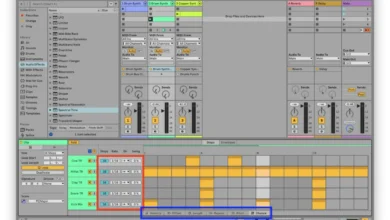
Despite these limitations, Riverola embarked on a prolific two-month writing spree, generating nearly 70 musical sketches between March and May 2020. Working with constrained software architecture, he relied heavily on the synthesizer’s ADSR envelopes to craft sharp, transient notes, alongside Max for Live sequencers. These raw files remained dormant in a Dropbox folder for months as public restrictions fluctuated and Riverola redirected his energy toward other endeavors, including a polyphonic sound composition titled AIR (or ARIA) created in collaboration with singer Maria Arnal for the Venice Biennale.
The Rediscovery and Genesis of the OR Alias
The catalyst for unearthing the pandemic-era recordings came through Nic Tasker, head of the London experimental label AD93. Tasker had approached Riverola seeking contributions for an NTS Radio broadcast dedicated to music produced during the global lockdowns. Upon receiving a selection of the Catalan producer’s unreleased sketches, Tasker recognized their unique emotional resonance and urged Riverola to compile them into a cohesive long-form project.
Opting to release the material under the minimalist alias OR, Riverola structured the album chronologically, sequencing the 17 tracks in the exact order they were composed during those initial months of confinement. The title of the record was inspired by a striking image captured by Riverola’s uncle at Barcelona’s Gran Teatre del Liceu, where a string quartet performed an opera to an audience entirely composed of 2,292 potted plants during a period of strict capacity limits. For Riverola, this photograph symbolized nature reclaiming urban spaces and art continuing in the complete absence of human presence—a motif that heavily influenced the overarching narrative of the album.
Symphonic Ambitions and Technical Production Challenges
Unlike conventional electronic dance music, which relies heavily on rhythmic drive, percussion, and low-end bass frequencies, Music for Empty Stadiums entirely omits drums and traditional percussion. Instead, the album achieves its visceral intensity through polyrhythms, evolving electronic textures, and layered melodic interplay.
Aiming for the dynamic range and emotional weight of a classical orchestra rather than a standard electronic record, Riverola drew inspiration from modern interpretations of classical composition, specifically referencing a performance of Maurice Ravel’s Boléro by the London Symphony Orchestra. He sought to emulate the piece’s gradual progression from quiet, subterranean instrumentation to overwhelming auditory intensity, allowing high and low melodies to intersect without the flattening effects of heavy dynamic compression.
The post-production phase proved to be an arduous and meticulous undertaking. Collaborating remotely with mix engineer Tommy Wallwork and mastering engineer Yves Roussel, Riverola spent eight months finalizing the sound design. The project required 193 distinct master renders over a nine-month period to achieve the precise stereo panning, balance, and symphonic dynamics necessary to translate the raw home studio recordings into a cohesive, high-fidelity sonic journey that spans from the opening track, "The Cortisol Arena," to the closer, "Serotonin Bliss Blues."
Creative Limitations as a Catalyst for Innovation
Riverola’s reliance on minimalist parameters during the creation of Music for Empty Stadiums aligns with a broader philosophy regarding artistic constraint. He frequently utilizes limited setups to combat creative fatigue, citing a previous 2021 project under the moniker Koraal, wherein he restricted his instrumentation to a single hardware synthesizer and one effects pedal—specifically the Clavia Nord Micro Modular.
According to Riverola, the modern abundance of digital plugins and hardware options often induces creative paralysis among contemporary producers. By imposing strict technical limitations, artists are forced to exhaustively explore the capabilities of a single tool, which simultaneously simplifies the subsequent mixing and layering phases of music production. He advises emerging electronic musicians to thoroughly master a single piece of hardware or software before expanding their studio ecosystem, arguing that sounds derived from a single source naturally cohere more effectively during the mixing stage.
Broader Industry Implications and Future Outlook
The release of Music for Empty Stadiums via AD93 highlights a broader post-pandemic shift within electronic music culture. During the height of the COVID-19 crisis, nightlife economies faced severe regulatory scrutiny, with clubs and raves frequently cast as public health hazards rather than hubs of cultural expression. Albums born from this era—such as Riverola’s ambient-leaning, non-percussive exploration—demonstrate how artists adapted to the loss of the physical dancefloor by channeling club-derived energy into introspective, home-listening formats.
As the live music sector fully rebounds, Riverola faces the unique challenge of translating a deeply personal, percussion-free, studio-conceived project into a live stage performance accompanied by bespoke visual production. Having spent decades performing high-energy DJ sets across the globe, the Catalan producer views this upcoming transition not merely as a tour cycle, but as the final, necessary chapter of an artistic exercise designed to process an unprecedented period in modern history. Music for Empty Stadiums is currently available worldwide through AD93.