TikTok Takes Aim at Global E-Commerce Giants with the Launch of a Standalone Dedicated Shopping App in Select Asian Markets

In a strategic maneuver to reshape the global digital retail landscape, short-form video behemoth TikTok has officially launched a standalone, dedicated shopping application. Currently rolling out in select markets across Southeast Asia—specifically targeting Singapore, Thailand, Malaysia, and the Philippines—the new mobile platform represents a calculated evolution of the company’s aggressive e-commerce ambitions. While TikTok has spent the better part of the last half-decade trying to weave native retail experiences directly into the fabric of its primary social media app, this new software signals a distinct pivot. By separating the storefront from the endless scroll of viral entertainment, the company is attempting to capture a different segment of consumer behavior: intentional, purchase-driven intent.
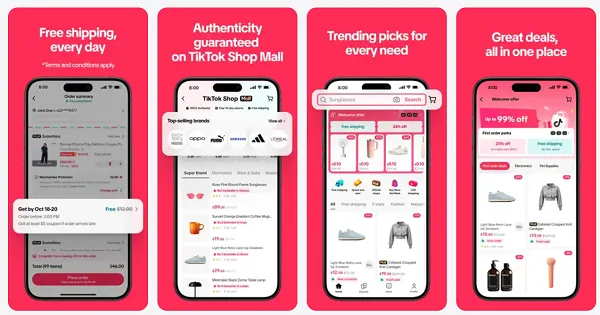
As highlighted by prominent social media industry analyst Matt Navarra, the rollout of the dedicated TikTok Shop application is currently restricted to a handful of strategic territories in Asia. Early access screenshots and interface breakdowns indicate that the software is explicitly engineered for product discovery, checkout facilitation, and inventory management. Although the core application heavily prioritizes catalog listings, personalized product recommendations, and streamlined transactions, it does not completely abandon its multimedia roots. Users navigating the standalone app retain access to targeted short videos and curated livestreams, which are deployed strategically to provide contextual demonstrations for listed goods.
Company promotional materials framing the rollout describe the platform as a centralized destination where consumers can "discover trending finds, exclusive deals and shopping support you can count on—all in one place." This venture is the latest and perhaps most ambitious attempt by parent company ByteDance to cement TikTok’s reputation not merely as a destination for viral entertainment, but as a primary transactional hub for global consumers.
The Blueprint of Success: Learning from Douyin in China
To fully understand the gravity of TikTok’s latest e-commerce foray, industry analysts look directly to the Chinese market, where ByteDance’s domestic twin application, Douyin, has achieved unprecedented commercial success. In China, the boundary between social media engagement and digital retail has been effectively erased, creating a digital economy driven heavily by livestream commerce and in-app purchasing mechanics.
According to data compiled by retail intelligence firm KrAsia, Douyin generated a staggering $500 billion in gross merchandise volume (GMV) throughout 2025. Livestream commerce, in particular, proved to be the primary engine of this economic activity, turning everyday content creators into powerful, high-converting digital storefronts. ByteDance executive leadership has spent years attempting to replicate this exact formula within Western and international markets through standard TikTok in-stream integrations.
However, translating the Douyin blueprint to a global audience has presented distinct structural challenges. While international iterations of TikTok Shop have undoubtedly experienced periods of rapid growth—generating an impressive $26.2 billion in gross merchandise volume globally during the first half of 2025 alone—the scale of adoption outside of Asia has fallen short of the meteoric benchmarks set in China.
Bridging the Behavioral Gap: Why a Standalone App Matters
Market researchers point to deeply entrenched consumer habits as the primary friction point for social commerce in Western and various international regions. For years, shoppers in mature e-commerce markets like the United States have developed a bifurcated digital routine: they visit dedicated e-commerce fortresses, such as Amazon, when they have a distinct purchasing intent, while they turn to platforms like TikTok or YouTube strictly for entertainment and passive media consumption.
Despite repeated attempts by virtually every major social media platform to merge these distinct psychological states into a seamless "social shopping" experience, widespread consumer adoption of in-stream checkout has remained sluggish. Users have historically resisted completing high-value financial transactions inside apps designed primarily for casual browsing and social interaction.
By introducing a standalone application dedicated exclusively to shopping, TikTok is attempting a clever psychological and architectural pivot. This strategy acknowledges consumer behavioral patterns by offering a dedicated space for retail—akin to opening a specialized brick-and-mortar storefront down the street from the entertainment arcade. At the same time, the app remains anchored to the broader TikTok ecosystem through shared accounts, algorithmic personalization, and multimedia product contexts. This structural separation may alleviate consumer hesitation regarding checkout security and app purpose, while successfully associating the overarching TikTok brand with legitimate, reliable retail activity.
A Chronology of TikTok’s E-Commerce Evolution
The release of the dedicated TikTok Shop app does not happen in a vacuum; it is the culmination of a multi-year, meticulously planned corporate strategy designed to transition the platform from an advertising-dependent media company into a diversified digital retailer.
The timeline of TikTok’s retail transformation reveals a steady escalation of commitment:

- 2020–2021 (The Pilot Phase): Recognizing the massive retail success of Douyin in China, ByteDance initiates preliminary social commerce tests on TikTok in partnership with retail giants like Shopify, allowing select creators to tag products directly in their videos.
- 2022 (Geographic Expansion): TikTok officially rolls out its native "TikTok Shop" feature in several Southeast Asian markets, including Indonesia, Thailand, Vietnam, and Malaysia, testing the waters for livestream-driven purchasing mechanics.
- 2023 (Western Rollout): Despite regulatory scrutiny and skepticism from Western advertisers, TikTok officially launches its e-commerce marketplace in the United States and the United Kingdom, heavily subsidizing shipping and merchant fees to jumpstart buyer adoption.
- 2024 (Scaling and European Penetration): The platform expands TikTok Shop availability to various new European Union merchant countries, steadily refining its merchant logistics, payment processing options, and affiliate marketing programs.
- 2025 (The Standalone Pivot): Amid slowing in-stream conversion rates in certain regions and massive multi-billion-dollar GMV milestones globally, TikTok begins testing and releasing the dedicated standalone TikTok Shop application in select Asian markets to capture intentional buyer traffic.
Market Analysis and Strategic Implications
Financial analysts and retail technology experts are closely monitoring the rollout of the standalone application, viewing it as a potential bellwether for the future of digital commerce. If the standalone app proves successful in the trial markets of Singapore, Thailand, Malaysia, and the Philippines, industry observers anticipate that ByteDance will likely look toward a phased global expansion, eventually introducing the platform to key Western economies.
However, the path forward is not without notable hurdles. The standalone application will enter a fiercely competitive global marketplace dominated by entrenched e-commerce giants, ranging from localized champions like Shopee and Lazada in Southeast Asia to global titans like Amazon and Alibaba. To succeed, TikTok must convince merchants that its dedicated app offers superior conversion rates, while simultaneously proving to consumers that its platform provides a safer, more reliable shopping experience than traditional web-based alternatives.
Furthermore, regulatory headwinds continue to shadow TikTok’s global operations, adding an extra layer of complexity to any international software deployment. Financial compliance, data privacy laws regarding payment processing, and cross-border logistics will require substantial capital investment and regulatory navigation as the platform scales.
Ultimately, the launch of the dedicated TikTok Shop app represents a mature realization by ByteDance leadership: forcing entertainment-first consumers to become impulse shoppers within a social feed has undeniable limitations. By building a dedicated digital mall, TikTok is no longer asking users to change their scrolling habits to accommodate shopping; instead, it is creating a purpose-built environment where shopping can finally take center stage.