Light Wrangler update brings advanced interactive lighting workflows to Blender users

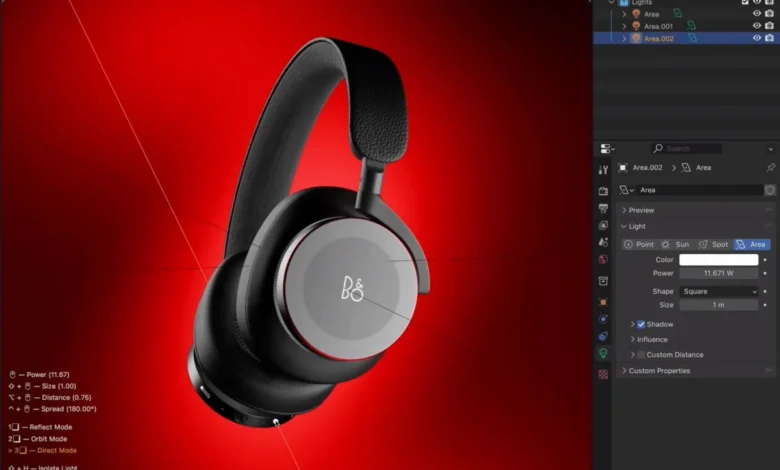
The landscape of 3D production within Blender has seen a significant shift in recent years as the open-source software matures into an industry-standard powerhouse. Among the tools facilitating this transition is Light Wrangler, an interactive lighting add-on developed by Leonid Altman. Recent updates to the software have further streamlined the complex process of lighting virtual environments, offering artists greater control and efficiency. As Blender’s adoption rates climb across architectural visualization, film production, and game development, tools like Light Wrangler have become essential components for professionals looking to optimize their rendering pipelines.
The Evolution of Lighting in Blender
Blender has long been praised for its robust feature set, particularly following the introduction of the EEVEE real-time engine and the overhaul of the Cycles path-tracing engine. However, as scene complexity increases, the manual placement and adjustment of hundreds of light sources can become a bottleneck. Historically, lighting artists had to rely on cumbersome transformation widgets and repetitive parameter adjustments in the property panels.
Light Wrangler emerged as a solution to these specific workflow frictions. By providing an interactive, viewport-centric approach to light manipulation, it allows artists to treat lighting as a direct creative process rather than a technical chore. Since its inception, the tool has undergone multiple iterations, moving from a basic utility to a comprehensive suite that addresses the nuances of high-end rendering. The latest update represents a milestone in this development cycle, focusing on responsiveness and user-interface integration that aligns with the latest Blender API updates.
Core Functionality and Technical Infrastructure
At its technical foundation, Light Wrangler is designed to interface directly with Blender’s native light objects, including Area, Point, Spot, and Sun lights. By creating a layer of abstraction between the artist and the base software’s properties, the add-on facilitates real-time updates that would otherwise require multiple clicks or constant navigation through the outliner.
The add-on operates by intercepting viewport interaction data, allowing for "on-the-fly" adjustments. This is particularly beneficial for artists working in high-fidelity scenes where viewport performance is critical. By reducing the overhead associated with frequent property updates, Light Wrangler enables a more fluid iterative process. For studios managing tight deadlines, this translates to faster look-development phases, allowing for more revisions and higher creative output within the same production windows.
Industry Context and Market Positioning
The market for Blender-specific third-party tools has exploded since the transition to the 2.8 series. According to recent data from the Blender Foundation, the user base has grown exponentially, with millions of active installs globally. This surge in popularity has created a thriving ecosystem of independent developers, such as Leonid Altman, who specialize in filling gaps in the core software’s feature set.
Light Wrangler is positioned as a mid-tier professional tool. With an individual license starting at $48.97, it targets freelance 3D artists, small-to-medium design agencies, and boutique animation studios. This pricing strategy places it in direct competition with other workflow-enhancing add-ons, yet it maintains a distinct niche by focusing exclusively on the lighting-specific workflow. The availability of a trial version serves as a critical entry point for studios that operate on strict procurement protocols, allowing for a "try-before-you-buy" assessment that ensures compatibility with existing studio pipelines.
Chronology of Development
The journey of Light Wrangler has been marked by a series of incremental updates, each reflecting the changing requirements of the Blender community:
- Initial Launch Phase: The tool debuted as a lightweight script aimed at simplifying the positioning of lights in large-scale scenes.
- Integration Phase: Version updates introduced support for complex light groups and deeper integration with Blender’s collection system, allowing for better organization in massive projects.
- Performance Optimization Phase: Recognizing the demand for real-time feedback, the developer focused on optimizing the interaction loop, ensuring that even scenes with thousands of objects remained responsive during light manipulation.
- Current Iteration: The latest updates have refined the UI/UX, ensuring that the tool remains compliant with the evolving Blender Python API, thereby guaranteeing long-term stability for users upgrading to the latest software versions.
Impact on Professional Pipelines
The implications of adopting specialized lighting tools are profound for professional production environments. In a traditional workflow, lighting is often treated as a secondary task performed after modeling and texturing are complete. However, industry best practices increasingly advocate for "lighting-first" or "lighting-aware" modeling, where light interactions are considered during the early stages of a project.
By reducing the friction of placing and modifying lights, Light Wrangler encourages this shift. For architectural visualization, where physical accuracy and material reflection are paramount, the ability to quickly test multiple lighting setups can significantly improve the final quality of the renders. In game development, the add-on allows environment artists to quickly block out lighting passes, providing a clear vision for the level design team before assets are fully textured or baked.
Economic and Technical Considerations
For the individual artist or small studio, the investment in a tool like Light Wrangler must be justified by time savings. If an artist saves an average of 30 minutes per project through more efficient light placement, the tool pays for itself within the first few commissions. As the 3D industry continues to demand higher fidelity and faster turnaround times, the value proposition of such add-ons becomes increasingly clear.
Furthermore, the support ecosystem—comprising Gumroad and Superhive—provides a reliable platform for software distribution and license management. This infrastructure is vital for independent developers who need to focus on code quality and feature updates rather than the complexities of digital sales and international tax compliance.
The Future of Blender Lighting Tools
As the industry moves toward path-tracing in real-time—exemplified by technologies like NVIDIA’s RTX and Blender’s own EEVEE-Next—the role of lighting add-ons will continue to evolve. Future versions of Light Wrangler will likely incorporate AI-driven light placement or automated lighting setups based on high-dynamic-range (HDR) image analysis.
The developer, Leonid Altman, has maintained a consistent record of updates, suggesting a commitment to the long-term viability of the tool. For potential users, the availability of a changelog is a critical resource; it provides transparency regarding the developer’s focus and ensures that the tool is evolving alongside the software it supports.
Conclusion and Practical Implementation
For those interested in integrating Light Wrangler into their pipeline, the process is straightforward. The add-on is available for purchase via Superhive and Gumroad, with documentation and support channels readily accessible. Potential users are encouraged to utilize the trial version to evaluate how the add-on interacts with their specific hardware configurations and project workflows.
In an era where software-as-a-service (SaaS) and subscription models dominate, the perpetual licensing model offered by Light Wrangler remains an attractive option for independent professionals. It offers a balance between cost-effectiveness and professional-grade performance. As the Blender community continues to set new standards for open-source 3D software, tools that bridge the gap between technical complexity and creative freedom will remain at the heart of the industry’s ongoing success. Whether for high-end cinematic visualization or rapid prototyping, the enhancements provided by Light Wrangler serve as a testament to the power of targeted, user-focused software development.