This TikTokker jumps on a trampoline every night. Has she figured out the secret to happiness?

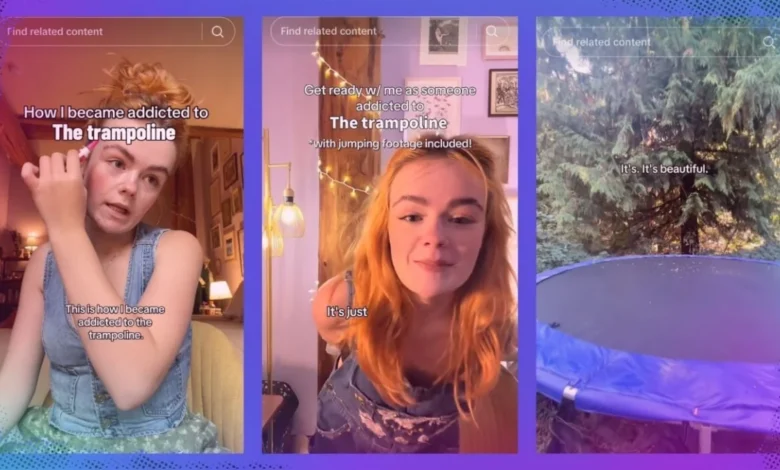
In an era defined by hyper-optimized morning routines, professionalized hobbies, and the relentless pressure to monetize every waking moment, one internet creator has captured the public’s attention by doing something refreshingly—and perhaps defiantly—simple. TikTok user @whatifimjustagirl has recently gone viral for a nocturnal ritual that spans seven years: spending nearly every night jumping on a backyard trampoline between the hours of midnight and 3:00 a.m. While the behavior has drawn curiosity and unsolicited psychological analysis from viewers, it has also sparked a broader cultural conversation about the nature of joy, neurodivergence, and the modern necessity of unstructured play.
A Seven-Year Chronology of Motion
The habit, which began nearly a decade ago, is not a product of an algorithmic trend or a fitness regimen. According to the creator, the routine is a deeply ingrained personal practice. While she acknowledges that the timing—the deep hours of the night—often surprises viewers, she describes the activity as a fundamental component of her daily regulation.
The timeline of this practice is significant. Seven years of consistent nocturnal jumping suggests that this is not a transient "viral moment" but a long-term lifestyle choice. In her documentation of the routine, the creator notes that she has curated a specific "wardrobe" for these sessions, prioritizing comfort—leggings and flannel shirts for colder nights—and auditory immersion through headphones. By performing this routine in the dead of night, she has essentially reclaimed the stillness of the late hours, transforming a suburban backyard into a private space for rhythmic movement.
Addressing the Public Discourse and Mental Health Speculation
As is common with viral content featuring non-conformist behaviors, the comment section of her videos quickly became a hub for amateur psychological assessment. A significant portion of the discourse centered on whether the behavior was an indicator of undiagnosed autism.
In a series of follow-up videos, the creator addressed these assumptions directly. She confirmed that she has been diagnosed with Obsessive-Compulsive Disorder (OCD) and acknowledged that her condition plays a role in her attachment to the trampoline. However, she was quick to draw a distinction between clinical symptoms and personal preference.

"I don’t think there needs to be a diagnosis for it," she stated, asserting that while her dedication to the trampoline might be considered "extreme" by societal standards, it is an activity driven by genuine enjoyment rather than an obsessive compulsion she feels forced to perform. Her public refutation of the "autism" label highlights a modern trend where internet audiences attempt to pathologize any behavior that deviates from the neurotypical norm, even when the subject explicitly defines their actions as a source of personal satisfaction.
The Science and Psychology of Rhythmic Play
While the creator’s routine is highly individualized, the physiological and psychological benefits of rhythmic, repetitive motion are well-documented in behavioral science. Jumping on a trampoline—often referred to as "rebounding"—is a form of vestibular stimulation. The vestibular system, which is responsible for balance and spatial orientation, responds positively to the rhythmic vertical motion of bouncing.
For many adults, the "play" aspect of life often disappears after childhood. Dr. Stuart Brown, a clinical researcher and founder of the National Institute for Play, has long argued that play is not merely a childish distraction but a biological necessity. According to Brown, play is a "state of being" that fosters social, emotional, and cognitive development. In the context of the creator’s nightly routine, the trampoline serves as a tool for stress relief and emotional regulation, providing a low-stakes environment where she can disconnect from the digital world and reconnect with her own physical presence.
The "Productivity Trap" and the Appeal of Meaningless Joy
The virality of the @whatifimjustagirl account likely stems from the stark contrast between her routine and the "hustle culture" that dominates social media platforms like TikTok and LinkedIn. Today, the internet is flooded with content centered on "biohacking," morning routines that start at 4:00 a.m., and the constant optimization of the human body for output.
By contrast, the trampoline routine offers no measurable "output." She is not training for an Olympic event, she is not filming a fitness tutorial, and she is not attempting to optimize her sleep quality. She is simply existing in a state of motion. This rejection of the "utility" of time is a radical act in an economy that values productivity above all else.
Sociologists often point to the rise of "digital burnout" as a primary reason for the popularity of "slow living" or "unproductive" content. When every hobby—from baking to knitting—is scrutinized for its potential to become a "side hustle," seeing someone engage in a hobby that cannot be monetized serves as a form of cultural catharsis for viewers who feel overwhelmed by the pressure to constantly improve.

Broader Implications for Digital Culture
The reaction to this story also underscores a shift in how we view the "private self" in the age of the "public self." By broadcasting her nightly routine, the creator has invited millions of people into a moment that was, for seven years, entirely solitary.
This raises questions about the future of internet fame: Can someone remain "authentic" when their private, sacred rituals are subjected to public scrutiny? The creator’s ability to maintain her boundaries—by firmly rejecting the labels others try to force upon her and by refusing to apologize for the perceived "strangeness" of her hobby—is a testament to the evolving agency of content creators.
Furthermore, her story highlights the changing definition of "wellness." In the past, wellness was defined by gyms, diets, and professional interventions. In the 2026 digital landscape, wellness is increasingly defined by the ability to find idiosyncratic joy in the mundane. Whether it is jumping on a trampoline at 2:00 a.m. or engaging in any other non-traditional activity, the public’s fascination with her story confirms a collective desire to redefine what a "successful" life looks like.
Conclusion: The Simplicity of Happiness
As the viral nature of this story eventually fades into the next internet cycle, the core message remains: the human need for movement, rhythm, and joy is constant. The creator has not invented a new wellness hack; she has simply rediscovered a lost capacity for play.
While the practicalities of her routine—the requirement of a backyard, the need for a trampoline, and the patience of neighbors—are not universally accessible, the philosophy behind it is. In a world that demands constant, high-speed productivity, there is profound value in the ability to step away, put on a pair of headphones, and simply bounce. If the secret to happiness is, as she suggests, as simple as doing what you love simply because you love it, then perhaps the most radical thing one can do in the modern age is to reclaim their time for themselves, entirely outside the gaze of the clock or the pressure to perform.
Her story is a reminder that the most significant life routines are not those that maximize our efficiency, but those that sustain our spirit. As long as she continues to jump under the stars, she serves as a quiet, rhythmic rebuttal to the idea that life must be optimized to be meaningful. Sometimes, the most meaningful thing one can do is to just keep jumping.