Pinterest Surges Past 661 Million Monthly Active Users in Q3 2026 Driven by AI-Powered Discovery and Resurgent European Growth


Pinterest has officially released its financial and operational results for the third quarter of 2026, revealing a period of robust expansion marked by a significant acceleration in global user acquisition, a double-digit increase in revenue, and deeper integration of artificial intelligence across its advertising ecosystem. Published on October 29, the Q3 earnings report highlighted a platform experiencing a renaissance in key legacy markets while continuing to capture the attention of younger demographic cohorts.
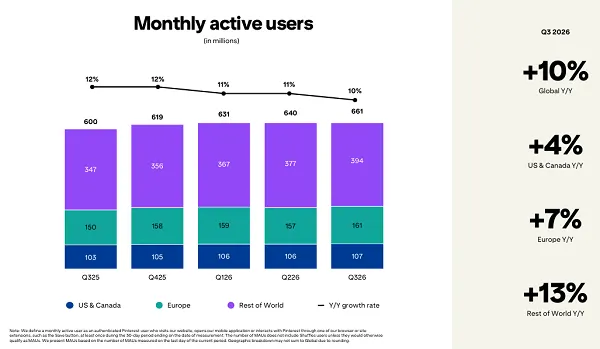
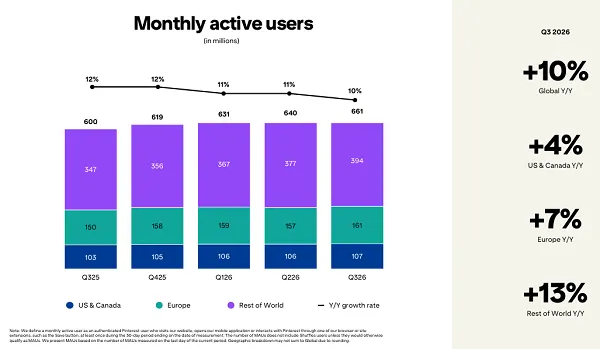
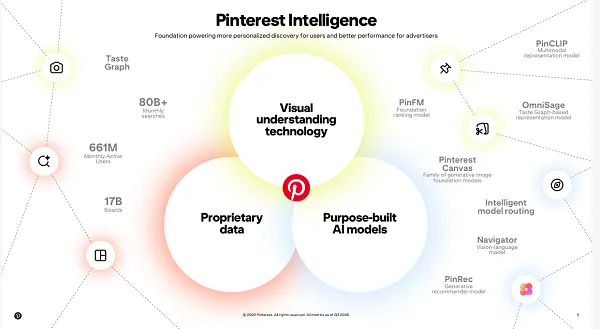
According to the data released by the company, Pinterest added 21 million global monthly active users (MAUs) during the third quarter alone, elevating its total global audience to an impressive 661 million. This metric reflects a notable upward trajectory compared to the previous quarter, fueled by targeted product strategies, algorithmic refinements, and a concerted push into automated advertising solutions. As digital platforms increasingly vie for user attention through disruptive technologies, Pinterest’s performance demonstrates the viability of focusing heavily on visual discovery, shopping intent, and curated human-AI collaboration.
Main Facts and Financial Performance
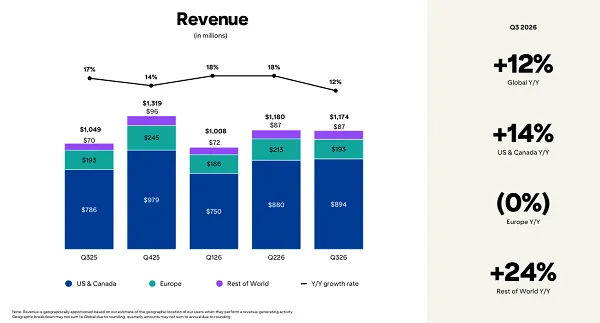
At the core of Pinterest’s Q3 2026 financial health is a total revenue of $1.17 billion, which represents a 12% increase compared to the same period in the previous fiscal year. This revenue growth was spearheaded by the platform’s performance in the United States and Canada, where revenue jumped 14% year-over-year.
However, international revenue growth faced unique headwinds. While user growth abroad remained resilient, international monetization was primarily impacted by evolving regulatory changes across Europe that directly affected cross-border selling and digital advertising compliance. Despite these hurdles, the company’s financial results underscore a healthy core business model that continues to extract high economic value from domestic users while laying the groundwork for international monetization catch-up.
Ad relevance emerged as a critical driver for these financial gains. Pinterest reported continuous improvements in its advertising ecosystem, largely attributed to an expanding array of data signals being integrated into its broader AI-powered targeting processes. By enhancing how ads are matched with user intent, Pinterest has managed to deliver higher returns on investment for brands without compromising the aesthetic and exploratory nature of the user feed.
Geographic Shifts and Demographic Dominance
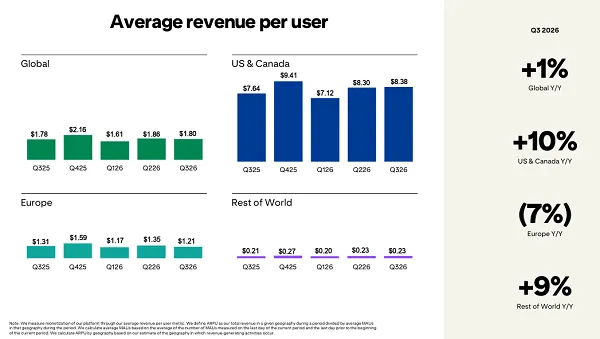
A particularly vital development in the Q3 report is the revitalization of user growth in Europe. Over the past year, European user metrics had largely stagnated and, at times, experienced slight declines due to market saturation and shifting digital habits. The reversal of this trend is of immediate strategic importance to Pinterest, given that European and U.S. users historically yield significantly higher Average Revenue Per User (ARPU) than the Rest of the World segment.
Even so, the Rest of the World category continues to serve as the volume engine for overall user acquisition. Pinterest added 17 million users in markets outside the U.S. and Europe during the third quarter, demonstrating that the platform’s appeal transcends Western markets.
Demographically, Pinterest continues to cement its status as a preferred destination for younger generations. Accompanying notes from the earnings release revealed that Gen Z now accounts for a staggering 57% of Pinterest’s total audience. This demographic dominance is paired with rising in-app engagement indicators, particularly across the U.S. and Canada, where users are displaying higher volumes of active participation through search queries, board creation, and outbound clicks. With more than 80 billion searches conducted on the platform every month, Pinterest continues to capitalize on a distinct user mindset defined by high shopping intent and actionable planning.
Strategic Evolution and Advertising Innovations
To sustain this momentum, Pinterest is systematically rolling out structural changes to its business and advertising models. Chief among these developments is the global launch of its new programmatic buying solution across all regions. By streamlining how advertisers purchase inventory on the platform, Pinterest is lowering the barrier to entry for mid-sized and large-scale brands alike.
The third quarter also marked the culmination of several strategic product rollouts designed earlier in the year. Last month, Pinterest introduced visual search ads, enabling advertisers to place targeted promotional content directly within organic Pinterest search results and Pin close-ups. This capability allows brands to intercept consumers at the exact moment of aesthetic inspiration.
Furthermore, Pinterest has doubled down on creator-driven commerce. Recognizing that modern consumers often trust individual creators over corporate entities, the platform has expanded opportunities for brands to sponsor creator Pins related to specific products. This creator-first approach extends beyond the digital interface; Pinterest’s ongoing partnership with Roku TV features a dedicated television program where creators showcase tangible products listed directly within the app, seamlessly bridging the gap between linear television viewing and digital e-commerce.
The Broader Impact: AI Integration and the Anti-Scroll Philosophy
As social media and discovery platforms grapple with the technological shifts brought on by generative artificial intelligence, Pinterest has carved out a distinct philosophical positioning. While many competing platforms have leveraged AI to maximize endless scrolling and keep users tethered to their screens for as long as possible, Pinterest has deliberately marketed its platform as a complement to real-world experiences.
The company’s strategic approach centers on helping users move from digital inspiration to physical execution—planning recipes, home renovations, outfits, and events before stepping away from the screen to live their lives. This use-case alignment has allowed Pinterest to integrate AI discovery tools safely without alienating its user base with radical algorithmic overhauls that run counter to the core purpose of visual discovery.
However, the platform is not entirely immune to the broader industry challenges posed by artificial intelligence. Like many digital spaces, Pinterest has contended with an observable influx of AI-generated content within Pins, a phenomenon that has drawn scrutiny and concern from a segment of its user base. Balancing the deployment of productivity-enhancing AI tools for creators and advertisers while simultaneously mitigating the oversaturation of low-quality, automated media remains a delicate tightrope walk. Industry analysts note that as visual discovery platforms evolve, Pinterest’s long-term reputation will heavily depend on how effectively it manages content integrity in the face of widespread generative tools.
Future Outlook and Industry Implications
Looking ahead, Pinterest enters the final stretch of 2026 with considerable tailwinds. The successful re-acceleration of user growth in Europe, combined with a dominant Gen Z user base and rising domestic engagement, places the company in a strong competitive position within the digital advertising landscape.
By scaling its programmatic buying solutions, deepening creator partnerships, and refining its AI-powered ad targeting, Pinterest is systematically removing friction for advertisers while honoring the high-intent behaviors of its massive global audience. Whether the platform can maintain this growth trajectory while navigating European regulatory landscapes and managing the influx of AI-generated media will define its trajectory in the quarters to come. For now, Pinterest’s Q3 2026 performance signals that its focused, intent-driven approach to social commerce continues to resonate deeply in a crowded and rapidly evolving digital economy.