
The Wedding Veil Inspiration The Magical Reason Why The Ceremony At The End Is Special To Lacey Chabert
The Enchanting Allure of the Wedding Veil: Lacey Chabert’s Magical Ceremony and the Profound Significance of the Veil
Lacey Chabert, a beloved actress known for her warmth and relatable roles, often finds herself at the heart of romantic narratives, both on-screen and in her personal life. While many aspects of a wedding contribute to its dreamlike quality, the wedding veil holds a particularly potent and often misunderstood significance. For Chabert, as for countless brides before her, the veil transcends mere fashion accessory, evolving into a powerful symbol of tradition, purity, and the profound transition into married life. The ceremony at the end, the culmination of dreams and promises, is imbued with an amplified magic when the bride is adorned with this ethereal drape, a tradition Lacey Chabert embraces with evident joy and a deep understanding of its historical and emotional weight. Understanding the origins and evolving interpretations of the wedding veil allows us to fully appreciate its role in a ceremony, especially one as cherished as Chabert’s. The veil’s journey from a practical necessity to a deeply symbolic garment is a fascinating one, reflecting societal shifts and the enduring human desire for ritual and meaning. Its presence at the altar, particularly during the final, most sacred moments of a wedding ceremony, signifies a sacred space, a moment of divine connection and personal transformation.
The historical roots of the wedding veil are as diverse as they are ancient, stemming from various cultural and religious traditions. Early civilizations believed the veil served as a protective charm, warding off evil spirits from the bride on her most vulnerable day. In ancient Greece and Rome, brides wore veils dyed yellow, symbolizing fire and acting as a safeguard against the "evil eye." These early interpretations highlight a fundamental human instinct: the desire to shield something precious from harm. As Christianity gained prominence, the veil’s symbolism evolved. During the medieval period, the veil, often referred to as a “flambeau,” was seen as a representation of purity and chastity. The act of lifting the veil, traditionally performed by the groom at the conclusion of the ceremony, symbolized the groom taking possession of his bride, a practice rooted in patriarchal societal structures that have thankfully largely faded. However, the underlying sentiment of unveiling something sacred and cherished remains. The sheer act of revealing the bride’s face to her husband for the first time under the veil’s concealment adds a layer of anticipation and intimacy to the moment. This unveiling is not simply a physical act but a symbolic shedding of a past identity and an embracing of a new shared future, witnessed by loved ones and, for many, by a higher power. The transition from singular to partnered is powerfully underscored by this symbolic reveal.
In many religious contexts, the wedding veil continues to hold profound theological meaning. In Judaism, the bride’s veil, known as a “tallis” or a “ketubah” (though the latter is the marriage contract, the concept of covering is present), traditionally symbolizes humility, modesty, and a sense of sacredness. The groom may lift the veil before the ceremony to ensure he is marrying the intended bride, a practice steeped in tradition and often performed with a sense of lightheartedness today, but with roots in ensuring legitimate union. In Orthodox Christianity, the veil, or “wimple,” is worn during the wedding ceremony as a symbol of the bride’s submission to her husband and her purity. This act of covering is seen as a sign of reverence and obedience. Even in less overtly religious ceremonies, the veil carries a spiritual weight. It creates a sacred aura around the bride, separating her momentarily from the mundane world and elevating her to a figure of reverence and devotion. This sense of separation is crucial for the heightened emotional impact of the ceremony’s climax. The veil becomes a physical manifestation of the sacred space created between the couple, their families, and their chosen officiant. It signifies the commitment being made as a holy act, a covenant entered into with intention and solemnity.
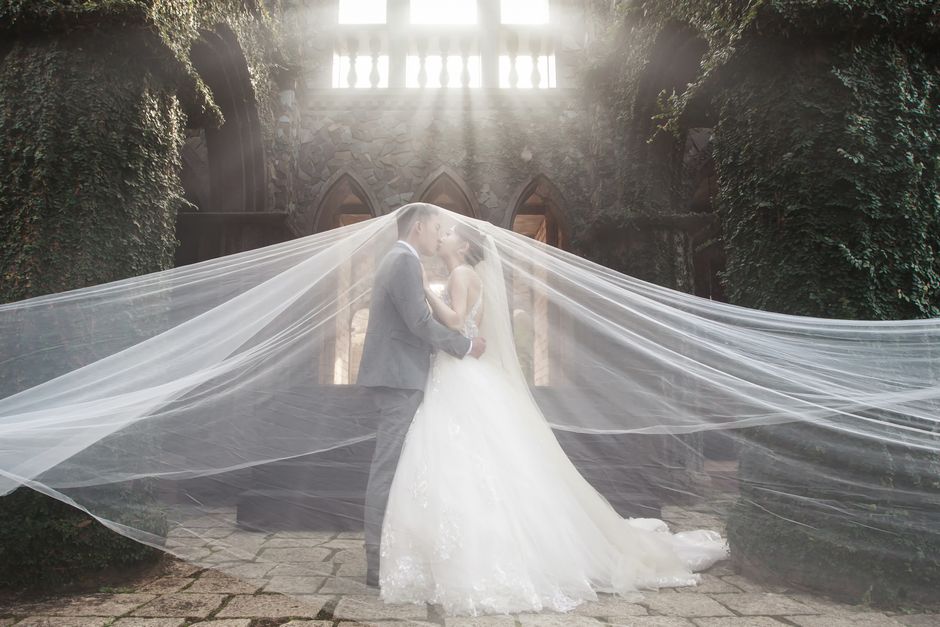
Beyond religious doctrine, the wedding veil has been embraced as a powerful emblem of feminine beauty and grace. The ethereal quality of lace, tulle, or silk cascading around a bride creates an undeniably romantic and breathtaking silhouette. The way light filters through the delicate fabric, softening features and adding an otherworldly glow, is a timeless visual that evokes dreams of fairy tales and happily ever afters. For Lacey Chabert, as for many modern brides, the choice of veil is a deeply personal one, reflecting her individual style and the aesthetic of her wedding day. Whether it’s a cathedral-length veil trailing behind her like a celestial train, a delicate birdcage veil adding a touch of vintage charm, or a fingertip veil that gracefully grazes her shoulders, each choice contributes to the overall narrative of her wedding. The veil becomes an extension of her personality, a silent declaration of her bridal aspirations. It frames her face, drawing attention to her expressions of love and commitment during those pivotal moments of the ceremony. The veil’s ability to enhance a bride’s natural beauty while simultaneously adding an element of mystique is a testament to its enduring appeal. It’s a piece of adornment that doesn’t compete with the bride but rather enhances her radiant presence, making her the undisputed focal point of the ceremony.
The ceremony at the end of a wedding is inherently the most significant and emotionally charged part. It is the moment where vows are exchanged, rings are presented, and the union is formally declared. This is where the magical reason for the veil’s presence truly shines. As the bride walks down the aisle, the veil acts as a visual prelude to the sacred exchange. It signifies anticipation, a building of emotional intensity. During the exchange of vows, the veil can be adjusted, sometimes partially lifted by the officiant or the groom, drawing attention to the bride’s heartfelt pronouncements and her commitment. The act of the groom lifting the veil, a tradition that has evolved but still holds meaning for many, signifies the moment of deep connection and shared intimacy. It’s the formal unveiling of the bride not just to her husband, but to the world as his wife. This act, often accompanied by a kiss, represents the culmination of their journey, the merging of two lives into one. The veil, in this instance, becomes a symbolic barrier that is lovingly and willingly breached, marking the profound transition. The finality of the vows, sealed with this symbolic unveiling, imbues the ceremony’s conclusion with an unparalleled sense of magic and destiny. It’s a visual and emotional punctuation mark on the beginning of their married life.
For Lacey Chabert, the wedding ceremony’s conclusion likely held a profound personal resonance. Having portrayed countless romantic heroines, she understands the power of these significant moments. Her own wedding ceremony, culminating in the exchange of vows and the symbolic unveiling, would have been a deeply personal and deeply felt experience. The veil, in this context, is not merely a prop but a tangible link to centuries of tradition, a symbol of her love and commitment, and a personal statement of her bridal vision. The magic of that final ceremony lies in the culmination of all the preparation, the emotions, and the promises, all beautifully framed by the presence of the veil. It’s a moment of immense vulnerability and immense strength, a declaration of unwavering love before witnesses and, for many, before God. The veil, by its very presence, amplifies the sacredness of this moment, transforming a beautiful event into a truly unforgettable and magical experience. The visual of the bride, veiled and radiant, then unveiled and beaming, is etched into the memories of all present, a testament to the enduring power of this simple yet profound garment. It represents the unveiling of a shared future, a life built together on the foundation of love and commitment. The veil, in essence, is the final, enchanting flourish that elevates the wedding ceremony to a truly magical event, a sentiment undoubtedly felt by Lacey Chabert and cherished by her and her new husband. The symbolism of the veil, far from being outdated, continues to resonate, offering a timeless expression of love, commitment, and the magical transformation that marriage represents.
