Optimizing Multiregion DVD and Blu-ray Playback: A Guide for Framerate Purists in the US and Ex-NTSC Countries

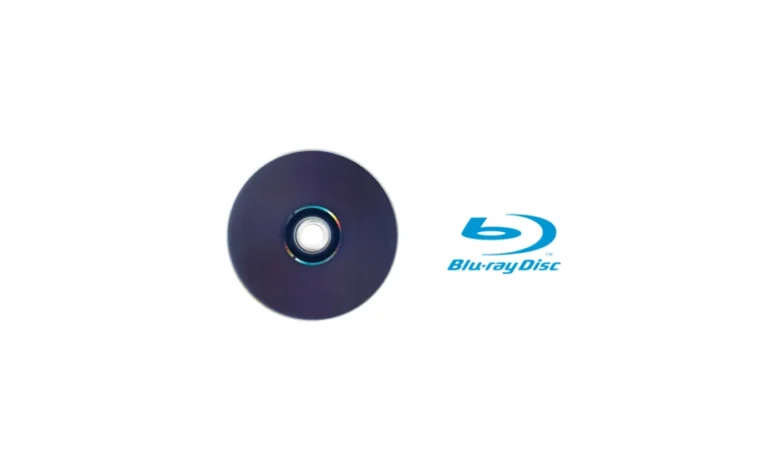
For videophiles and content purists, the quest for pristine media playback often extends beyond mere picture quality to the often-overlooked realm of framerate and cadence. The ideal scenario involves displaying video content at its native framerate, or an exact multiple thereof, to preserve the original motion characteristics intended by the creators. This pursuit becomes particularly complex when consuming physical media, such as DVDs and Blu-ray discs, across different global video standards, specifically between regions historically adhering to NTSC and those aligned with PAL/SECAM. While modern displays offer increasing flexibility, the interaction between these displays and multiregion players introduces a critical layer of technical consideration, especially for consumers in the United States and other ex-NTSC territories.
The Enduring Challenge of Global Video Standards
The historical divergence in global video standards forms the bedrock of these playback complexities. Introduced in the 1950s, the NTSC (National Television System Committee) standard, primarily adopted in North America, parts of South America, Japan, and some East Asian countries, operates at a nominal framerate of 29.97 frames per second (fps) or 59.94 fields per second for interlaced content. This framerate was inextricably linked to the 60 Hz frequency of the alternating current (AC) power grid in these regions, minimizing interference and ensuring stable picture display on cathode ray tube (CRT) televisions.
Conversely, the PAL (Phase Alternating Line) and SECAM (Sequential Color with Memory) standards, developed in the 1960s and adopted across Europe, Africa, Australia, and much of Asia, operate at 25 fps or 50 fields per second. This rate corresponded to the 50 Hz AC power grids prevalent in these regions. Beyond framerate, these standards also differed in lines of resolution and color encoding methods, creating a fragmented global ecosystem for video content distribution and playback.
While digital video has largely superseded analog broadcasting, the legacy of these standards persists in the framerates of recorded media. Films are typically shot at 24 fps (or 23.976 fps for NTSC compatibility), while television productions often adhere to the 25 fps or 29.97/50/59.94 fps standards of their originating regions. For purists, watching a 25 fps European production converted to 29.97/59.94 fps for playback on an NTSC-centric display can introduce noticeable motion artifacts, often described as "judder" or "stutter," disrupting the intended visual cadence. Alejandro Pérelman, an expert in audiovisual systems, specifically highlights live sports, such as tennis, as a scenario where forced framerate conversion from 50 fps to 59.94 fps or even 60 fps is particularly jarring.
Region Coding: A Barrier to Universal Playback
Further complicating cross-regional content consumption is the industry-imposed system of region coding for physical media. This practice, initiated with the advent of the DVD format in the late 1990s and continued with Blu-ray discs, was designed to control content distribution, facilitate staggered release windows, and enforce pricing strategies across different global markets.
For DVDs, the system established eight geographical zones (Regions 1-8), plus a Region 0 or ALL for unrestricted playback. Region 1 encompasses the U.S., Canada, and U.S. territories; Region 2 covers Europe, Japan, South Africa, and the Middle East; and so forth. DVD players are manufactured to only play discs encoded for their designated region, or Region 0.
When Blu-ray discs were introduced in the mid-2000s, a similar, albeit simpler, regional coding scheme was implemented. Blu-ray discs are coded for three primary zones: Zone A (Americas, East Asia, Southeast Asia), Zone B (Europe, Africa, Middle East, Oceania), and Zone C (Central Asia, South Asia, mainland China). Again, players are typically locked to their specific zone.
The more recent 4K UHD Blu-ray format has seen a significant reduction in restrictive region coding. While some 4K UHD discs are technically capable of being region-coded, the vast majority are released region-free, reflecting a broader industry trend towards more globalized content distribution in the streaming era. However, this liberation primarily applies to the 4K UHD disc itself; the underlying Blu-ray and DVD layers often included on these discs may still retain their original region coding.
To circumvent these restrictions, the market for "multiregion" or "multizone" players emerged. These are standard players that have been modified, typically by third-party vendors, to bypass the region coding enforcement, allowing them to play discs from any geographical zone. This provides consumers with the freedom to access content from around the world, regardless of its original intended market.
The US Market Anomaly: Forced Framerate Conversion
While multiregion players offer freedom from regional coding, a unique challenge arises in the United States and other ex-NTSC countries, particularly for framerate purists. Many monitors and televisions sold in the U.S. market are designed with a single, fixed panel refresh rate of 60 Hz, sometimes with a tolerance to accommodate 59.94 Hz (the exact NTSC framerate). This design choice simplifies manufacturing and caters to the vast majority of content historically consumed in these regions.
The consequence of this widespread display limitation is that many multiregion DVD and Blu-ray players sold within the U.S. market incorporate an automatic, real-time framerate conversion circuit. This circuit forces content originally produced at 25 fps or 50 fps (common in PAL/SECAM regions) to be converted to 59.94 fps or even an exact 60 fps before being output to the television. The rationale behind this design is to ensure compatibility with the prevalent 60 Hz-locked displays, thereby providing a "plug-and-play" experience for the average consumer.
However, for framerate purists who have intentionally invested in multistandard or multi-framerate monitors and TVs – displays capable of natively handling 25, 50, 59.94, and 60 Hz refresh rates – this forced conversion is highly undesirable. It negates the very benefit of their flexible display technology by introducing artificial motion artifacts. The conversion process, especially from 25/50 fps to 59.94/60 fps, is technically complex and often involves techniques like pulldown, which duplicates or interpolates frames, leading to an unnatural or "jerky" motion known as judder. For purists, the integrity of the original cadence is paramount, and these conversions compromise the artistic intent of the content creators.
Regrettably, a significant portion of multiregion players sold in the U.S. market lack an option to disable this automatic conversion. This forces purists into a difficult choice: either tolerate the converted framerate or seek out highly specific player models.

Navigating Solutions for Native Cadence Playback
For consumers committed to native framerate playback, several strategies can be employed, though each comes with its own considerations.
The "Match Source" Imperative
The most critical feature for a framerate purist in a multiregion player is the ability to "match source," "match framerate," or output "native" video. This functionality instructs the player to output the video content at its original framerate, allowing a compatible multistandard display to switch its refresh rate accordingly. This ensures that a 25 fps disc is played at 25 fps, a 50 fps disc at 50 fps, and so on, preserving the original motion cadence. Apple TV’s deep menu option to "Match Frame Rate" (introduced in 2017) serves as a prominent example of this desired feature in streaming devices, highlighting its importance for modern media consumption.
Specialized Vendors and 4K UHD Players
Finding multiregion players with this "match source" capability in the U.S. market can be challenging, as this feature is rarely highlighted in general sales materials. Specialized vendors catering to audiovisual enthusiasts often fill this gap. One such vendor, 220-electronics.com, known for offering both multistandard TV sets and multiregion players compatible with 110/220-volt power, has confirmed that certain current Panasonic UHD 4K models they sell include the option to activate or deactivate framerate conversion. This allows users to choose between outputting the native framerate of the disc or converting it to 59.94/60 Hz, depending on their display capabilities and preferences.
This information is particularly valuable for those planning to purchase a new multiregion 4K UHD Blu-ray player, as these newer models often incorporate more advanced video processing and user-configurable options. The general trend in 4K UHD hardware and content leans towards greater flexibility and adherence to international standards, making these players a more likely source for the coveted "match source" feature. For purists investing in a 4K UHD setup, selecting one of these compliant Panasonic units from a reputable vendor and ensuring the "match source" option is enabled in the player’s menu is the recommended approach.
Importing Region-Specific Players for Standard Blu-ray/DVD
For consumers who are not looking to upgrade to a 4K UHD multiregion player but still wish to play European Blu-ray or DVD discs at their native 25/50 fps cadence on their existing multi-framerate monitor or TV, an alternative strategy exists: purchasing a region-specific player from Europe.
Since most players sold in Europe are designed for PAL/SECAM regions, they inherently expect and output 25/50 fps content without forced conversion. If a consumer in the U.S. already owns a multi-framerate display with an available HDMI input, they can effectively bypass the U.S. market’s forced conversion by importing a standard (non-UHD 4K, non-multiregion) Blu-ray or DVD player from a European Amazon store (e.g., Amazon UK, Amazon Germany). These European players will output content at its native framerate, assuming the disc itself is also from a PAL/SECAM region.
When pursuing this option, two critical considerations arise: power supply and plug type. European electronics typically operate on 220-volt power, while the U.S. uses 110-volt. Consumers must carefully check the player’s label. If it’s a multivoltage unit (e.g., 100-240V), only a simple plug adapter will be needed. If it’s strictly 220-volt, a step-up voltage transformer will be required to avoid damaging the device. Shipping from European Amazon stores to the U.S. is generally efficient, often taking less than two weeks, and existing Amazon accounts facilitate the process.
Broader Implications and the Future of Physical Media
The intricacies of multiregion playback and framerate fidelity highlight a persistent niche market within the broader media landscape. While streaming services dominate content consumption, physical media, particularly Blu-ray and 4K UHD Blu-ray, continues to be valued by collectors and purists for superior bitrate, uncompressed audio, and often, the inclusion of bonus features and native framerate options.
The challenges discussed also underscore the ongoing technical literacy required from consumers to achieve optimal viewing experiences. As displays become more sophisticated with features like Variable Refresh Rate (VRR) and adaptive sync technologies, the onus shifts to source devices (players, streaming boxes) to output content in its purest form.
The industry’s historical reliance on region coding and regional technical standards is gradually eroding, driven by globalization and the borderless nature of digital distribution. However, the legacy of these systems continues to influence hardware design and consumer choices, particularly for those dedicated to preserving the highest possible fidelity in their home entertainment systems.
Conclusion: Empowering the Purist Consumer
For framerate purists in the United States and other ex-NTSC countries, achieving native cadence playback for foreign physical media requires an informed and deliberate approach. The market for multiregion players, while addressing region coding, often introduces a new hurdle through forced framerate conversion.
The key takeaway is to prioritize players offering a "match source" or "native framerate" output option. For those investing in a 4K UHD setup, specialized vendors like 220-electronics.com provide specific Panasonic models that meet this criterion, empowering users with the choice to preserve original motion. For standard Blu-ray and DVD content, importing a region-specific player from Europe offers a viable alternative, provided power supply considerations are addressed.
Ultimately, the pursuit of uncompromised video quality transcends mere resolution, extending into the nuanced world of framerates and cadences. By understanding these technical distinctions and making informed choices about playback hardware, purist consumers can ensure their global media collections are enjoyed exactly as their creators intended.
Related posts: