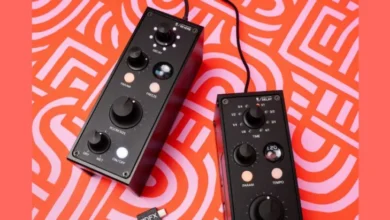
Morphoice Launches EightyTen Virtual Instrument Emulating the Iconic Roland JX-8P and SuperJX-10 Synthesizers

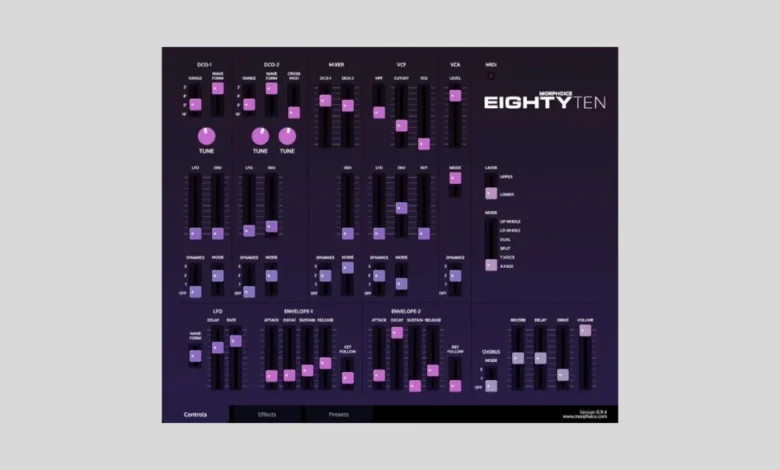
Software developer Morphoice has officially expanded its portfolio of vintage synthesizer emulations with the release of EightyTen, a virtual instrument that recreates the architecture of two of Roland’s most celebrated mid-1980s analog synthesizers. The plugin, currently in an open beta phase, serves as a comprehensive digital recreation of the Roland JX-8P and the SuperJX-10, providing modern music producers with the specific tonal characteristics that defined the transition from traditional analog synthesis to the digitally controlled era. This release marks a significant milestone for Morphoice, continuing a rapid development cycle that has seen the company tackle some of the most complex hardware architectures in synthesizer history.
The EightyTen arrives as a multifaceted tool, functioning as both a faithful recreation of the original hardware and an expanded workstation featuring modern digital effects. By combining the architectures of the JX-8P and the SuperJX-10—the latter of which was essentially two JX-8P engines housed in a single chassis—Morphoice offers a scalable sound design environment. The plugin is available across all major desktop platforms, including macOS, Windows, and Linux, supporting AU, VST, and VST3 formats. This cross-platform compatibility, particularly the inclusion of Linux, positions Morphoice as a developer catering to a diverse and technically savvy user base.
The Evolution of the Roland JX Series
To understand the significance of EightyTen, one must look at the historical context of the instruments it emulates. The Roland JX-8P was released in 1985, a pivotal year in the music technology industry. At the time, the market was being dominated by the Yamaha DX7 and the shift toward FM synthesis. In response, Roland developed the JX-8P as a "best of both worlds" solution. It utilized Digitally Controlled Oscillators (DCOs) to ensure tuning stability—a common issue with earlier Voltage Controlled Oscillators (VCOs)—while maintaining an entirely analog signal path for its filters and amplifiers.
The JX-8P was followed in 1986 by the SuperJX-10, which doubled the internal components to offer 12-voice polyphony and "dual" or "split" modes, allowing players to layer two different patches simultaneously. The MKS-70 was the subsequent rack-mount version of the SuperJX-10, favored by studio professionals for its space-saving design. These instruments became staples in the rigs of artists like Tangerine Dream, Depeche Mode, and The Cure, known for their lush pads, crystalline bells, and cinematic textures. Morphoice’s EightyTen aims to capture this specific "warm-yet-stable" character that distinguishes the JX series from the more aggressive Roland Juno or Jupiter lines.
Technical Architecture and Sound Engine
The core of EightyTen is built around the DCO architecture that defined the original hardware. One of the standout technical features included in the emulation is Cross Modulation. This allows the frequency of one oscillator to modulate the other, creating complex, non-harmonic overtones. In the 1980s, this was Roland’s way of allowing analog synthesizers to compete with the metallic, percussive sounds of the DX7. Morphoice has meticulously modeled this behavior, enabling users to recreate the iconic "I Feel For You" lead—famously associated with Chaka Khan—without requiring a vintage FM unit.
The filtration system in EightyTen remains true to the original specifications, featuring a 24 dB/octave resonant low-pass filter paired with a non-resonant high-pass filter. This combination allows for precise sculpting of the low-end while maintaining the "shimmer" for which the JX series is known. For modulation, the plugin provides two ADSR envelope generators per voice, which can be assigned to the filter, amplifier, or pitch.
Furthermore, the developer has integrated the legendary Roland stereo chorus effect. The original hardware was often criticized for its lack of hands-on controls—requiring the external PG-800 programmer for efficient editing—but praised for its internal chorus circuit, which added immense width and depth to the sound. EightyTen replicates this effect with "Fast" and "Slow" settings, capturing the specific bucket-brigade delay (BBD) characteristics of the 1980s hardware.
Modern Enhancements and Integrated Effects
While EightyTen is a tribute to the past, Morphoice has opted to include several modern features that extend the plugin’s utility beyond simple emulation. The most notable addition is the DarkStar Reverb. Inspired by the Strymon BigSky, a contemporary hardware pedal renowned for its "Shimmer" and "Cloud" algorithms, the DarkStar Reverb provides EightyTen with a cinematic scale that the original 1980s units could only achieve with expensive outboard gear.
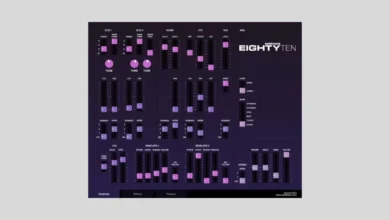
In addition to the reverb, the plugin features a lo-fi tape delay and the "HeatBurn" drive and distortion module. These tools allow producers to add grit and saturation to the otherwise clean DCO sounds, bridging the gap between vintage analog warmth and modern industrial or lo-fi aesthetics. The user interface also takes cues from the aforementioned PG-800 programmer, offering a "knob-per-function" layout that is significantly more intuitive than the "parameter-mapping" menus found on the original JX-8P and SuperJX-10 hardware.
Morphoice’s Development Timeline and Strategy
The release of EightyTen is part of an aggressive development roadmap established by Morphoice over the past eighteen months. The company has focused on "high-value" emulations—recreating instruments that are either prohibitively expensive on the used market or difficult to maintain due to aging components.
A brief chronology of Morphoice releases highlights this trajectory:
- February 2025: Release of "Unstable," an emulation of the Yamaha CS-80.
- May 2026: Release of "EightySix," an emulation of the Roland Juno-6.
- June 2026: Release of "EightyEight," an emulation of the Roland Jupiter-8.
- July 2026: Release of "EightyTen," the current JX-8P/SuperJX-10 hybrid.
The developer utilizes a "free beta" model, which allows the community to test the software and report bugs in exchange for early access. However, Morphoice has maintained a transparent policy regarding the transition from beta to stable releases. While the beta versions are free to download, future updates may transition to a paid model. To reward early adopters and supporters, the developer offers a lifetime license to anyone who contributes $10 or more during the beta phase via the Gumroad platform. This crowdsourced approach to funding development has become increasingly popular among boutique software houses, allowing them to remain independent while competing with larger entities like Arturia or Roland Cloud.
Industry Implications and Market Analysis
The release of EightyTen arrives at a time when the demand for "vintage-accurate" software is at an all-time high. However, the JX-8P and SuperJX-10 have historically been overshadowed by the more famous Juno and Jupiter series in the virtual instrument market. By focusing on these specific models, Morphoice is filling a niche for producers who seek the "sophisticated" analog sound of the mid-80s rather than the raw, buzzy tones of earlier oscillators.
Industry analysts suggest that the inclusion of advanced features like velocity and aftertouch response—key selling points of the original JX series—makes EightyTen particularly attractive to keyboardists and composers. The original SuperJX-10 was one of the first analog synths to offer comprehensive MIDI implementation, and Morphoice has modernized this by ensuring the plugin responds fluidly to modern MPE (MIDI Polyphonic Expression) and high-resolution controllers.
The move to support Linux is also a strategic decision. As more professional audio workflows move toward open-source environments or specialized Linux distributions, the availability of high-quality analog emulations remains a bottleneck. Morphoice’s commitment to the platform could secure a loyal segment of the market that is often ignored by major plugin developers.
Final Considerations for Users
As EightyTen is currently in beta, users should exercise caution when using the plugin in critical professional projects. Beta software is inherently subject to stability issues, and Morphoice has noted that future versions may not be backward compatible if significant architectural changes are made during the refinement process. However, for sound designers and hobbyists, the current version offers a robust look at the capabilities of the JX architecture.
The developer’s decision to include a "lifetime license" for a nominal donation of $10 represents one of the most accessible entry points into high-end synth emulation currently available. As the plugin moves toward a version 1.0 release, the community’s feedback on the Cross Modulation accuracy and the "HeatBurn" distortion characteristics will likely shape the final product.
In a broader sense, EightyTen represents the ongoing democratization of music technology. What once required thousands of dollars in hardware and a dedicated technician to maintain is now available as a lightweight digital download. By blending the historical accuracy of the JX-8P with modern effects like the DarkStar Reverb, Morphoice is not just recreating the past, but providing a tool for the future of electronic music production.