VirtuCamera 2 Launches With Pro Tier to Transform Mobile Devices into Professional Virtual Production Tools

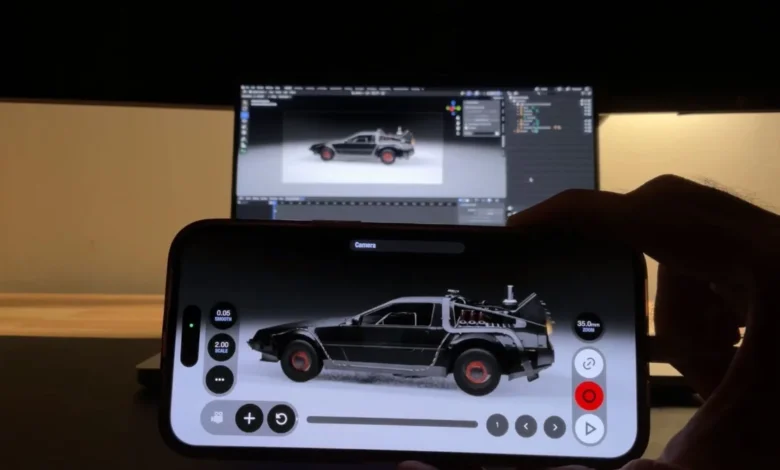
The landscape of modern 3D production has undergone a seismic shift as The Weird Byte, a Madrid-based software developer, officially announced the release of VirtuCamera 2. This software suite represents a significant advancement in the democratization of virtual cinematography, enabling artists and filmmakers to leverage the internal sensors of mobile devices—such as smartphones and tablets—to act as physical cameras within a digital 3D viewport. By bridging the gap between tactile, handheld camera operation and the precision of CG environments, VirtuCamera 2 aims to streamline workflows for previs, layout, animation blocking, and complex cinematic shot development.
A New Era for Virtual Production Workflows
Virtual production has long been the domain of high-budget studio environments utilizing expensive motion-capture stages and proprietary hardware. The core mission of VirtuCamera is to remove these barriers, providing a sophisticated bridge between a mobile device’s gyroscope and accelerometer data and the virtual cameras residing within industry-standard software packages.
The release of version 2 introduces a tiered licensing structure, most notably the new "Pro" version. While the standard version remains a robust tool for individual artists, the Pro iteration is explicitly engineered for professional studio environments where high-fidelity, real-time collaboration is a necessity. The software ensures that the physical movement of the camera operator in the real world is mapped with high fidelity to the camera object in the virtual space, allowing for natural, handheld camera movement that feels organic rather than artificially animated.
Chronology of Development and Technological Maturity
The Weird Byte has spent years refining the underlying communication protocols that allow mobile devices to interface with 3D software with minimal latency. The trajectory of VirtuCamera began with a focus on core stability and motion capture fidelity.
The original release established the fundamental capability of camera motion capture, playback control, and active camera switching. As the software gained traction among independent animators and small-to-medium-sized studios, the demand for more advanced features grew. The transition to version 2 reflects this evolution. By supporting a broad array of software—including Blender (5.2 LTS, 5.1, 5.0, 4.5 LTS), 3ds Max (2027 and 2026), Maya (2027 and 2026), Houdini (22, 21, 20.5), Cinema 4D (2026), and Nuke (17 and 16)—The Weird Byte has signaled a commitment to cross-platform compatibility that is critical for pipelines that utilize multiple software environments.
The roadmap for the software remains active, with the company confirming that integration for Maya 2023 and 2024 for the Pro Business tier is already in development, addressing the needs of studios still relying on slightly older, highly stable infrastructure.
Technical Capabilities and Feature Sets
The standard feature set of VirtuCamera 2 is designed to address the most common bottlenecks in virtual cinematography. Key functionalities include:
- Real-time Steady-cam Smoothing: This feature allows users to filter out the high-frequency jitters inherent in human hand movement, resulting in smooth, professional-looking tracking shots.
- Focal Length and Translation Control: Artists can adjust zoom and camera depth in real-time, matching the feel of physical glass.
- Movement Scaling and Translation Locks: For tight spaces or specific layout requirements, users can scale the physical movement of the camera or lock it to specific axes, ensuring the virtual output adheres strictly to the director’s vision.
- Performance Metrics: The software is optimized to operate at up to 60 frames per second, a frame rate that is essential for maintaining the immersion required for real-time performance capture.
The Pro version expands these capabilities by integrating advanced tools tailored for cinematographers and layout artists. While the specific list of Pro-exclusive features is constantly being refined, the goal of this tier is to provide the reliability and advanced control schemes required for complex, high-stakes productions where camera precision is non-negotiable.
Market Context and Industry Implications
The shift toward mobile-based virtual production tools is part of a broader trend in the entertainment industry toward "prosumer" democratization. Traditionally, virtual cameras required specialized tracking systems, often involving infrared markers or external sensor arrays. These systems remain the gold standard for high-end feature films, but they come with significant costs and a steep learning curve.
By leveraging the sophisticated IMU (Inertial Measurement Unit) sensors found in modern smartphones, The Weird Byte is lowering the barrier to entry. This is particularly impactful for independent filmmakers and small creative teams who may not have access to a dedicated motion capture studio. When an artist can perform a camera move on their phone and immediately see the results reflected in a complex Houdini or Blender viewport, the iterative process of "finding" the shot—the "layout" phase—is reduced from hours of manual keyframing to minutes of real-time performance.
Economic Accessibility
The Weird Byte has adopted a dual-pricing model to address the diverse needs of its user base. The standard version of VirtuCamera is available for a perpetual license starting at €17.99, an entry point that is intentionally low to encourage adoption among freelancers and students.
The Pro version, which targets high-end production houses, utilizes a subscription-based model starting at €9.99 per month. This model allows studios to scale their usage according to the demands of specific projects, ensuring that they only pay for advanced features during the active production cycle. This flexibility is a hallmark of modern software-as-a-service (SaaS) trends in the creative sector, where unpredictable project cycles often make perpetual software licenses a financial risk for production houses.
Expert Analysis of the Virtual Production Landscape
The integration of tools like VirtuCamera into professional pipelines represents a "bottom-up" disruption of the virtual production market. Historically, innovation in this space moved from high-end studios down to the consumer level. Now, with the proliferation of high-performance mobile hardware, we are seeing high-quality tools emerge from agile, smaller development houses that prioritize ease of use and immediate integration.
Industry analysts suggest that the primary challenge for tools of this nature is not the quality of the motion capture, but rather the synchronization between mobile sensors and the complex, often heavy, 3D scenes in software like Houdini or 3ds Max. The Weird Byte’s commitment to supporting multiple versions of these high-end applications indicates a focus on "pipeline stability"—a critical metric for studios. If a tool fails mid-production, the cost of downtime far exceeds the cost of the software license itself. By emphasizing a wide range of LTS (Long Term Support) versions, the developers are aligning themselves with the stability requirements of enterprise-level pipelines.
Future Outlook and Technical Challenges
As virtual production continues to evolve, the demand for higher-precision tracking will likely increase. Future updates to the VirtuCamera suite may need to address potential integration with external tracking systems, such as ARKit or LiDAR-based spatial mapping, to further enhance the accuracy of the camera’s position in 3D space.
Furthermore, the expansion into "Pro Business" tiers suggests that The Weird Byte is positioning itself for enterprise adoption. This move will necessitate robust support systems, comprehensive API documentation, and potentially bespoke integrations for specific studio workflows. The ability to handle complex scene graphs and high-polygon assets without losing the responsiveness of the camera feed will be the next major technical hurdle for the development team.
Conclusion
VirtuCamera 2 stands as a testament to the current state of digital filmmaking, where the boundaries between physical action and virtual result are becoming increasingly porous. By providing a reliable, affordable, and widely compatible bridge between mobile technology and professional 3D pipelines, The Weird Byte has provided a valuable tool for creators working across the spectrum of cinematic production.
For those interested in exploring the tool, the developers have provided a comprehensive suite of video tutorials and documentation on the official VirtuCamera website. As the software continues to integrate with the latest releases of industry-standard DCC (Digital Content Creation) tools, it is poised to become a staple of the virtual production toolkit, enabling a more fluid, intuitive approach to the art of the moving image. Whether for a small-scale indie project or a complex animation layout, the ability to "see" the shot through a mobile device is a transformative capability that is rapidly becoming a standard expectation in modern CG production.