Base FX Brings Hyper-Realistic Visual Effects to the Dark Comedy Underworld of Netflix Series Beef Season Two

Netflix’s critically acclaimed and Emmy-winning dark comedy anthology series Beef, created by Lee Sung Jin, has long thrived on exploring the outer limits of human petty grievances, toxic relationships, and extreme vengeance. While its inaugural season captivated audiences with a blistering road-rage feud starring Steven Yeun and Ali Wong, the highly anticipated sophomore season elevates the narrative stakes through an intricate blackmail scheme. This central plot sparks a volatile rivalry between two complex couples portrayed by a star-studded ensemble cast featuring Oscar Isaac, Carey Mulligan, Charles Melton, and Cailee Spaeny.
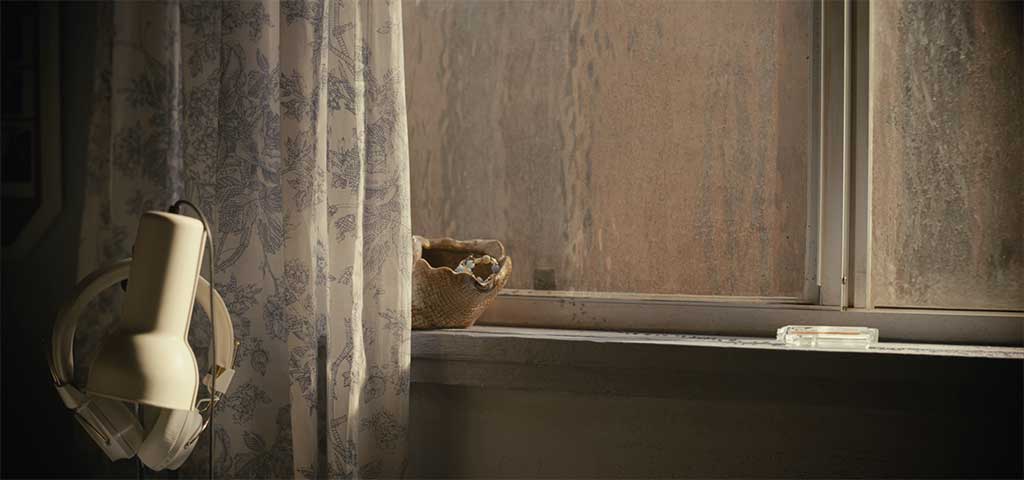
Behind the grounded realism of the show’s dark narrative beats lies a meticulously crafted layer of digital artistry. Base FX, a premier global visual effects studio renowned for its contributions to major cinematic and television projects such as Sinners and The Fantastic Four: First Steps, was tasked with producing 32 specialized visual effects shots for the second season. Rather than leaning into overt, bombastic spectacles typical of traditional blockbuster action films, Base FX’s mandate required a delicate touch. Their portfolio for Beef Season 2 ranged from swarming Argentine ants and dying bees to a harrowing coyote attack on a digital dachshund, alongside invisible enhancements like smartphone screen composites, a digital commercial airliner, and custom corporate logo replacements.
The Production Workflow: Direct Collaboration and Research-Driven Design
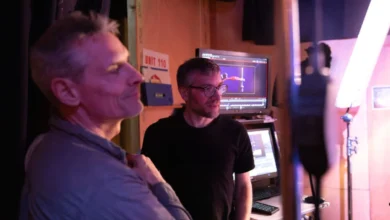
The creation of the visual effects for Beef Season 2 unfolded under unconventional circumstances. According to Visual Effects Supervisor Chris Morley, the production dynamic shifted significantly when the on-set visual effects supervisor wrapped up their duties early in the schedule and transitioned to another feature film. This departure inadvertently established a streamlined, direct communication pipeline between Morley and the show’s creative heavyweights, creator Lee Sung Jin and director Jake Schreier, both of whom directed their respective episodes.
"This was a unique experience in that the on-set visual effects supervisor wrapped after the shoot and moved on to another film," Morley notes. "This opened a direct communication path to Sonny [Lee Sung Jin] and Jake [Schreier], who were directing their respective episodes. I’m a big fan of working directly with the filmmakers so I can personally understand the feeling they are going for."
Unlike many contemporary television productions heavily reliant on exhaustive storyboards, concept art, or pre-visualization (previs), Beef operated with a relative scarcity of upfront visual planning materials. This creative freedom allowed Morley and his team at Base FX to pivot toward an intensive research-and-development phase immediately following the creative kickoff.
"One of my favorite things to do after a creative kickoff is to dive directly into researching different facets of a shot or sequence," Morley explains. "Gaining knowledge and referencing reality helps create a more grounded feeling in the work. It also helps for any random questions that may come up during a pub trivia night!"
Bringing the Microscopic World to Life: Ants and Bees
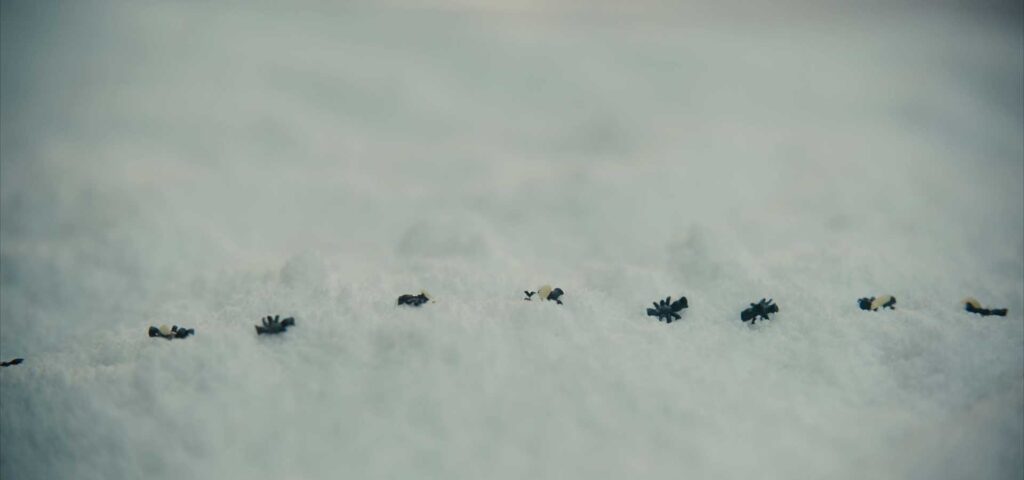
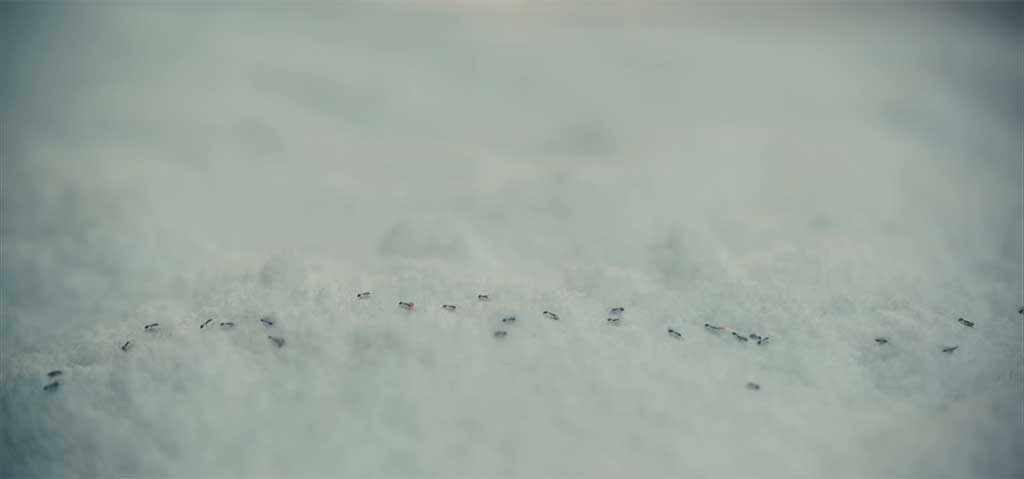
Among the most pervasive visual motifs in the second season are ants, which appear across multiple episodes to symbolically usher viewers in and out of narrative segments. Achieving photorealism on an insect scale demands meticulous attention to anatomical detail, environmental interaction, and lighting integration.

To establish authenticity, the Base FX team evaluated numerous ant species, weighing factors such as body coloration, overall size, and how they would interact with camera lenses and movement plates. Ultimately, the studio selected Argentine ants, primarily because their physical characteristics closely mirror typical household intruder ants.
"We adjusted their models based on macro photography references and created proportion variants that helped provide visual breakup in shots with many ants," Morley details. "Animators created walk cycles that were run through Houdini simulations. We also shot a time-lapse of ants devouring poison on a windowsill and heading back to the colony. This required a lot of frame speed tweaking to look correct."
Accidental real-world reference footage often proves invaluable in visual effects pipelines. In one instance, director Jake Schreier captured spontaneous smartphone footage of ants traversing a curb outside the production office. This impromptu reference provided the visual effects team with crucial empirical data regarding the actual speed at which ants navigate various urban surfaces.
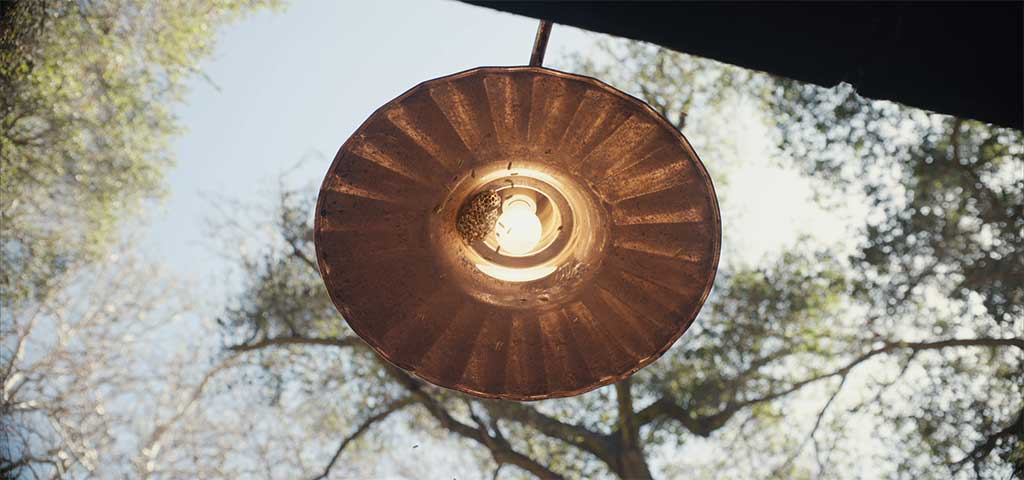
In addition to the ant colonies, a pivotal narrative moment features actor Charles Melton’s character, Austin, attempting to rescue a dying bee with a single drop of water. This intimate shot utilized a shallow depth of field, requiring precise storytelling through subtle animation nuances.

"We needed to tell a clear story in a shot with a racking shallow depth of field," says Morley. "We researched bee footage, more specifically, bees that were dying. Playing with different amounts of movement in the body, legs and wings was important to find the proper balance between actual reality and cinematic reality. We needed the animation to clearly sell that this bee is on its last breath and dies by the end of the shot."
Crafting the Canine Confrontation: The Coyote and the Dachshund
One of the season’s most technically demanding sequences involves a violent confrontation between a real-world coyote and a digital dachshund. Merging live-action animal footage with entirely computer-generated creatures requires rigorous synchronization in lighting, shadowing, and physical performance.

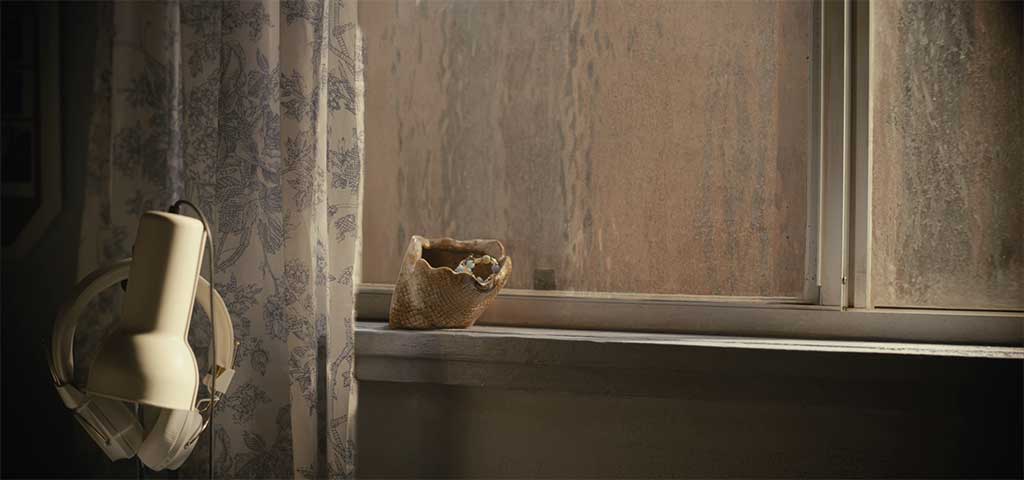
During principal photography for the attack sequence, the film crew utilized a physical plush stand-in of a dachshund to be held within the coyote’s jaws. While this prop served as a useful baseline for framing and initial lighting references, the resulting footage lacked the necessary intensity demanded by the narrative.
"Some of the shots in that sequence required coyote retiming, head replacement, and shadow interaction with the CG dachshund," Morley explains. "For the coyote attack principal photography, they shot a stand-in stuffy of the dachshund in the coyote’s mouth. It worked well for initial reference, but the shot required us to make the performance a bit more violent. Once we placed our thrashing CG dachshund in its mouth, the shot really came alive."
To animate the digital dog realistically, Base FX referenced extensive video footage of dachshunds rolling over and standing up, studying how their unique anatomical proportions—characterized by elongated bodies and short legs—dictated their physical momentum and thrashing movements.
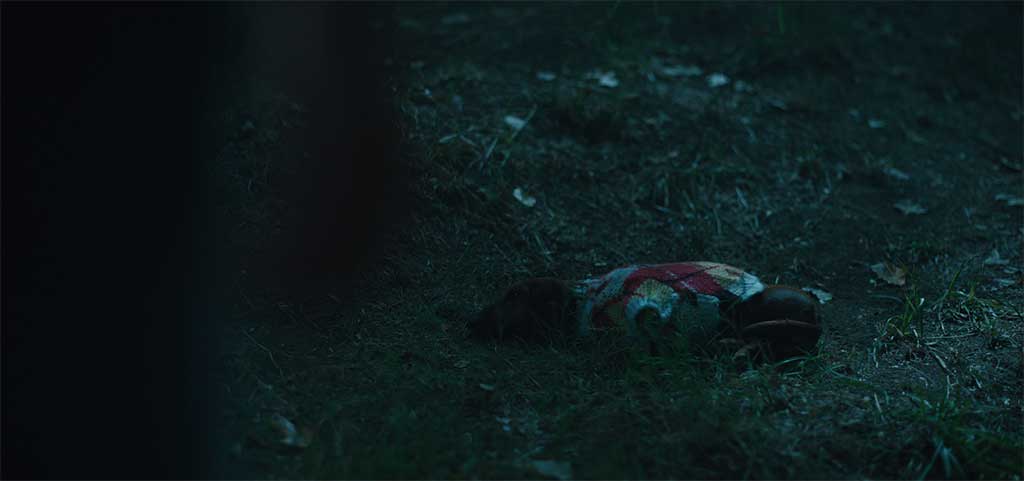
The tension peaked in the aftermath of the attack, where a wounded dachshund hangs in the balance, leaving audiences uncertain of its survival. Striking the precise emotional chord required careful calibration of the visual effects.
"There was a shot following the coyote attack where the dachshund is wounded, and the audience doesn’t know if it’s going to make it," Morley notes. "We ride the edge of subtle and extreme gore. We went back and forth on wound size, flowing blood, specular detail, and bloody fur edges. This went on until Sonny was able to align the visceral imagery of the wounded dog with the story that needs to be told."
Invisible Effects and Environmental Integration
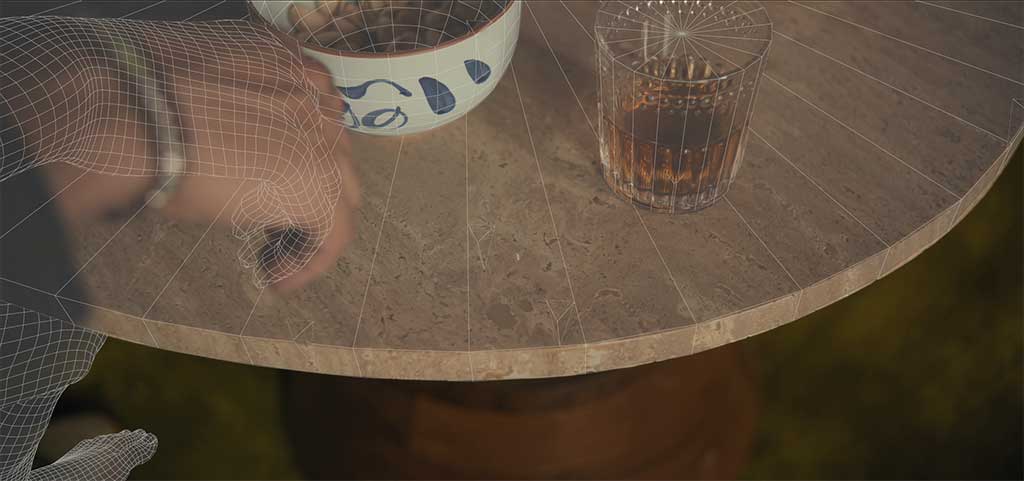
Beyond creature work, a significant portion of Base FX’s workload fell under the umbrella of "invisible effects"—enhancements designed to seamlessly blend into the background without drawing conscious attention from the viewer. These included complex smartphone screen composites, environmental surfacing match-moves, digital sign replacements, and an entirely computer-generated commercial aircraft.
For an aerial sequence, the production required a shot of a commercial airliner climbing to cruising altitude. While production initially sourced stock footage, the framing was overly tight, and the aircraft depicted did not match story requirements.
"Production found a piece of stock footage that captured the correct feeling, but its framing was too tight, and the aircraft was incorrect," Morley states. "We were asked to use that for inspiration while working on a full CG version with a Korean Air 747-8I. We created a digital matte painting (DMP) for the sky that mapped on a sphere and added CG clouds and foreground mist. We kept the camera movement and lighting to a pleasing yet grounded feel. The plane was in its initial climb to cruising altitude, so special attention was paid to cloud look and animated details such as the wheels retracting and panels closing."

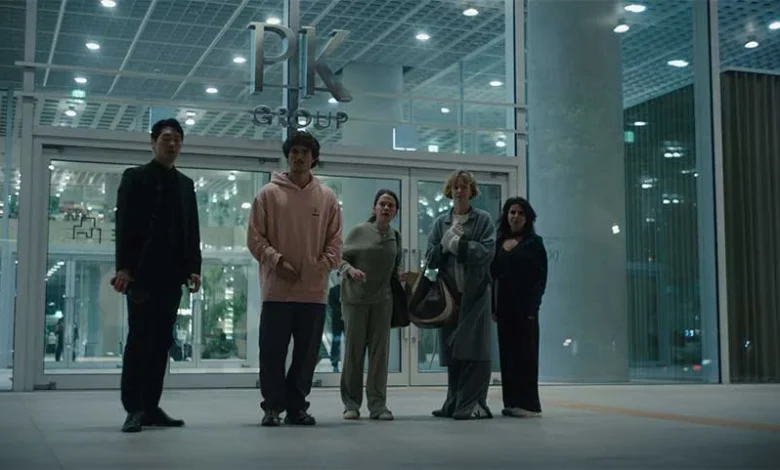
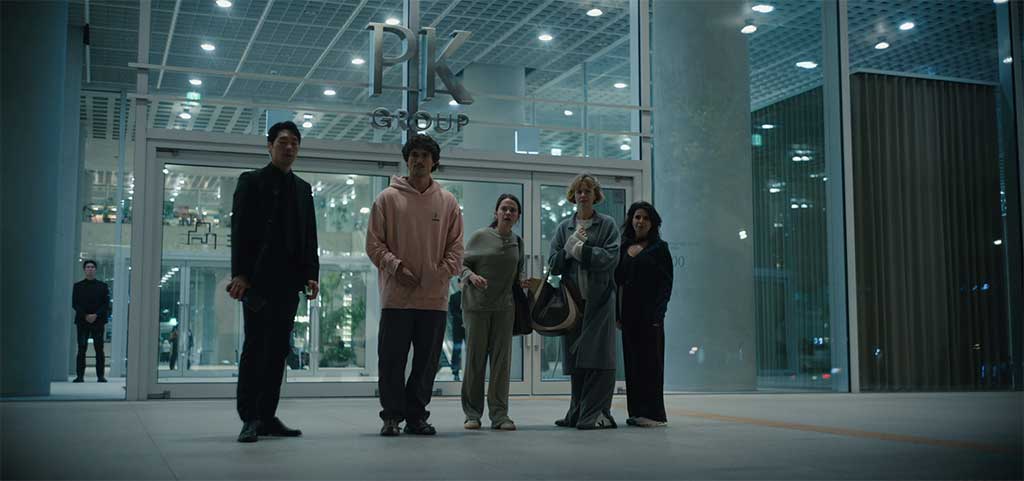
Similarly, corporate branding within specific scenes necessitated digital alterations. Existing building signage was replaced with a custom computer-generated version of the fictional PK Group logo. The team executed initial 2D design concepts to determine accurate scaling and compositional balance before constructing a fully modeled metallic sign complete with specialized texturing, shading, and lighting parameters.
The Philosophy of Restraint in Modern Television VFX
Throughout the production cycle for Beef Season 2, Base FX maintained a core philosophy rooted in restraint and fidelity to the physical world. In an industry where digital artists are frequently pressured to embellish reality for dramatic effect, Morley emphasizes that the primary challenge of the project was adhering strictly to naturalism.
"The biggest challenge on this show was to keep the visual effects subtle and grounded," Morley observes. "There was not much room to play with performance. If it is an ant, it needs to move exactly like an ant; if it is a dying bee, it needs to look exactly like a dying bee. Often, we try to inject extra life into things, but sometimes a project calls for a thing to just be a thing."
By anchoring their digital creations in rigorous physical research—ranging from macro photography of insects to canine biomechanics and accurate environmental terrain surfacing—Base FX ensured that the supernatural or heightened dramatic elements of Beef remained securely anchored within its gritty, authentic aesthetic. As streaming platforms continue to push the boundaries of cinematic television production, the invisible craftsmanship demonstrated in Beef Season 2 highlights the vital role that precise, disciplined visual effects play in supporting complex, character-driven storytelling.