The Anatomy of the iPhone Duo
The iPhone Duo marks a significant departure from the rigid, monolithic design language that has defined the iPhone series since its inception in 2007. Featuring a 7.6-inch internal display that utilizes advanced micro-LED technology, the device is designed to bridge the gap between a standard smartphone and a portable tablet.
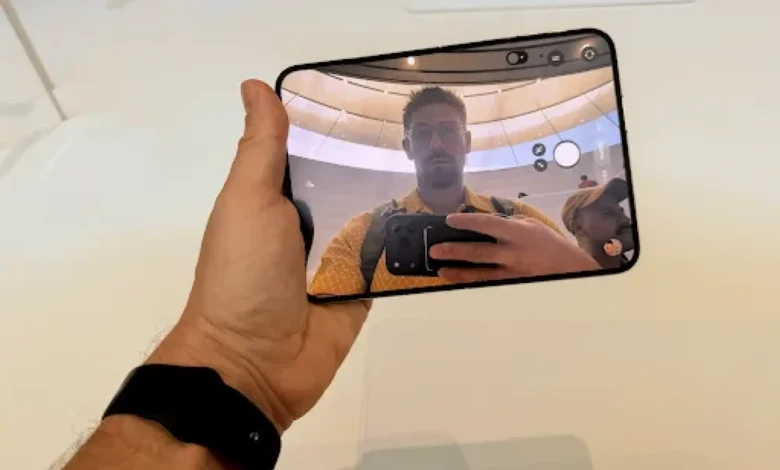
Initial reports from hands-on sessions indicate that the device’s physical profile is remarkably thin. When closed, the exterior screen offers a traditional iPhone experience, but the true innovation lies in the hinge mechanism and the software’s ability to transition seamlessly between states. Unlike earlier iterations of foldable technology from competitors that suffered from noticeable mechanical resistance, Apple’s hinge appears to prioritize fluid movement and durability, allowing the screen to lay perfectly flat when fully extended.

Real-World Impressions and the Crease Debate
A primary point of contention regarding all foldable devices has been the visibility of the "crease"—the line where the screen bends. Observations from those currently testing the unit, including Mashable’s own Senior Editor Stan Schroeder, confirm that while Apple has made significant strides in minimizing this indentation, it is not entirely absent.
When viewed head-on, the display appears remarkably uniform. However, under specific lighting conditions—particularly when tilted toward an overhead light source—a faint vertical ridge remains perceptible. This has sparked a nuanced debate among tech enthusiasts. Some, such as prominent tech reviewer iJustine, have praised the display’s vibrancy and the utility of the multi-window interface, calling the experience "amazing." Conversely, others, like Gizmodo Senior Editor Ray Wong, have noted that while the engineering is sophisticated, the laws of physics regarding flexible glass remain a challenge. The consensus among the early cohort is that while the crease is visible at certain angles, it does not impede the touch-responsiveness or the visual clarity of the screen during standard usage.
The "Surprise and Shine" Keynote Context
The unveiling of the iPhone Duo was the centerpiece of Apple’s September 9, 2026, event. For years, Apple was viewed as a laggard in the foldable space, with competitors like Samsung and Google having already released multiple generations of folding handsets. During the keynote, Apple emphasized that they were not interested in being "first," but rather in being "best."

The company highlighted the proprietary "Flex-OS," a specialized iteration of iOS 20, which is specifically designed to handle dynamic screen ratios. The software allows for an instant hand-off between the outer cover display and the full interior canvas. Whether a user is drafting an email, editing a video, or utilizing the device as a dual-screen workstation, the operating system adjusts the interface layout in real-time without perceptible latency.
Technological Implications and Market Positioning
At a starting price of $1,999, the iPhone Duo is positioned as a luxury, high-end device targeted at power users, creative professionals, and early adopters. This pricing strategy places it in direct competition with top-tier professional tablets and premium flagship smartphones.
Beyond the hardware, the integration of an under-display camera system has been a standout feature. Early testers, including tech creator Max Weinbach, expressed surprise at the quality of the sensor, which manages to maintain high resolution despite being hidden beneath the active display layer. This feature is crucial for maintaining the "full-screen" experience that Apple’s design philosophy currently demands.

Chronology of the Foldable Era
- Early 2024: Industry rumors begin to circulate regarding an "iPhone Fold" project.
- Late 2025: Apple files several key patents related to hinge durability and self-healing screen polymers.
- September 9, 2026: Official unveiling of the iPhone Duo at the "Surprise and Shine" keynote.
- September 2026: Initial hands-on previews by global media and select creators at Apple Park.
- October 23, 2026: Scheduled general availability for consumers.
Public and Creator Reception
The reaction on social media platforms has been a mix of awe and skepticism. YouTube streamer IShowSpeed’s livestream, during which he repeatedly folded and unfolded the device, served as a stress-test of sorts, highlighting the device’s tactile appeal. The rapid, smooth animation of the user interface during these transitions has been cited by many as the device’s "killer feature."
However, not all feedback has been positive. Comparisons to the Nintendo DS and Microsoft’s Surface Duo have been frequent, with some users questioning whether the added complexity of a folding screen outweighs the benefits of a larger display. Furthermore, concerns remain regarding long-term battery performance and the durability of the folding mechanism over several years of repeated use.
The Broader Impact
The launch of the iPhone Duo represents a pivotal moment for the smartphone industry. By entering the foldable market, Apple has essentially validated the form factor as a permanent fixture of mobile technology. This move is expected to accelerate the development of foldable-specific applications, as developers will now have a massive, unified incentive to optimize their software for variable screen sizes.

Moreover, the competition between the iPhone Duo and existing foldable rivals is expected to drive down costs for the entire category over the next 24 to 36 months. As Apple scales its production and refines its manufacturing processes, it is likely that the "crease" issue will be further mitigated, and the price point may eventually become more accessible to the average consumer.
Looking Ahead to October 23
As of now, the excitement surrounding the iPhone Duo is high, but the true test of the device will begin when it reaches the hands of millions of consumers. Real-world usage—ranging from extreme temperature environments to daily pocket-wear—will determine if Apple’s engineering can withstand the rigors of consumer life.
The company has invested heavily in the marketing of the device, positioning it not just as a phone, but as a "mobile studio." For now, the early hands-on impressions confirm that the hardware is as sleek as advertised, the software is exceptionally responsive, and the device represents a bold, if expensive, step into the next decade of mobile computing. Potential buyers have until October 23 to decide if the folding future is one they are ready to invest in.