Tournaments retire their mascots: Great brands raise theirs for life

The global marketing industry has long operated on the principle of the temporary campaign, deploying high-budget, short-term advertising blitzes designed to capture fleeting consumer attention. However, an analysis of long-term brand equity, consumer retention data, and modern digital integration reveals a fundamental shift in how enduring organizations build market share. While major sporting events such as the FIFA World Cup systematically retire their commemorative mascots after a single tournament, industry-leading brands are increasingly investing in permanent character infrastructure to drive multi-year profitability, market penetration, and cultural relevance.
This dichotomy highlights a growing divide between traditional campaign-based marketing and permanent brand assets. Data compiled by marketing effectiveness platforms demonstrates that recurring brand characters consistently outperform borrowed-fame strategies, such as celebrity endorsements, yet corporate marketing budgets continue to heavily favor short-term rentals over long-term intellectual property development.
Historical Context and the Evolution of Sports Mascots
The integration of official mascots into major international sporting events began in 1966 with the introduction of World Cup Willie for the FIFA World Cup in England. Since then, each quadrennial tournament has introduced a unique character intended to encapsulate the culture and spirit of the host nation, ranging from Spain’s orange-themed Naranjito in 1982 to France’s Footix in 1998 and South Africa’s Zakumi in 2010.
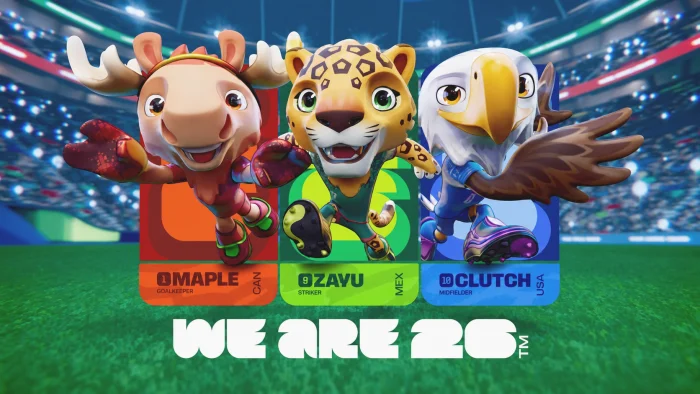
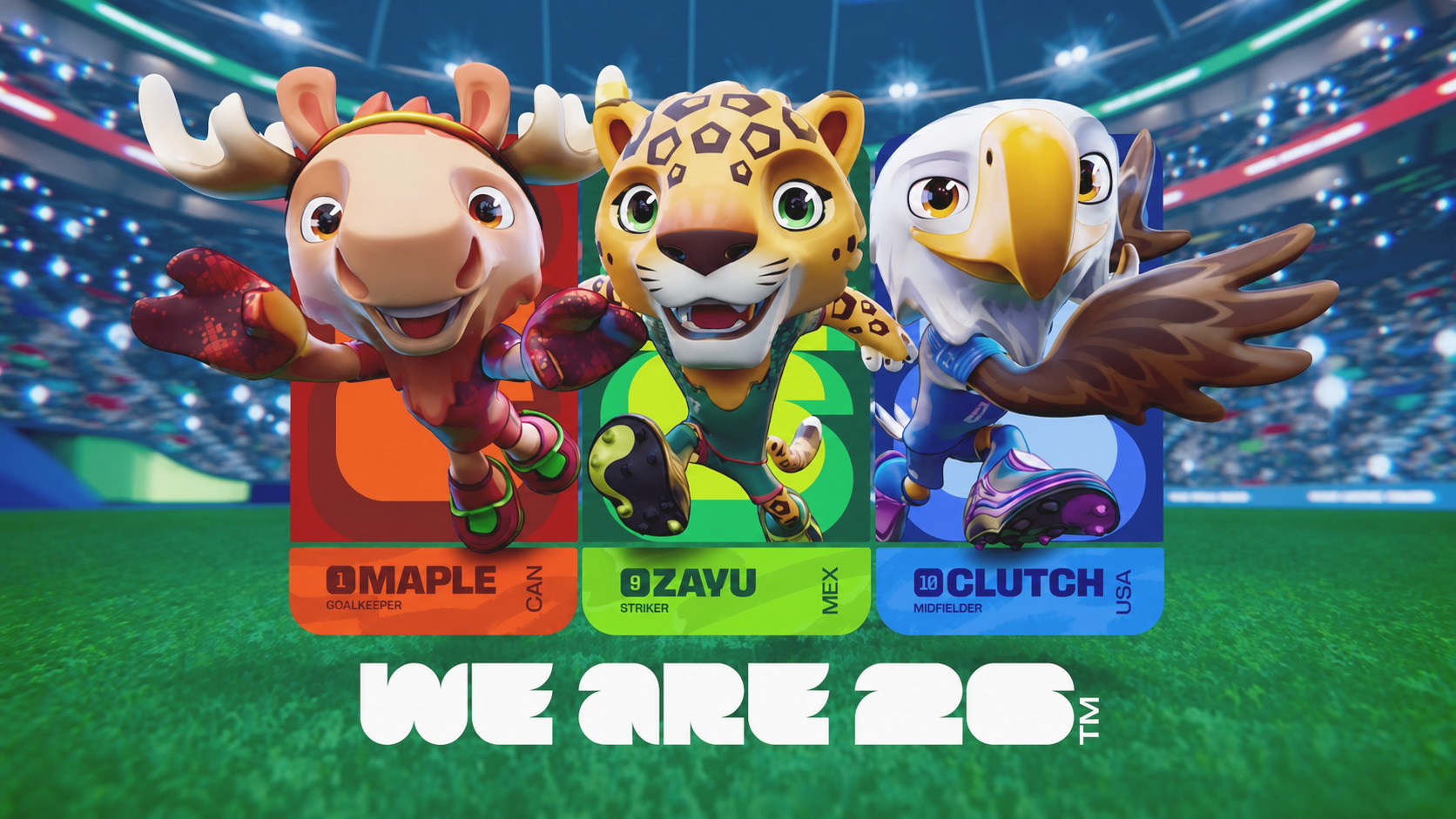
Traditionally, these figures served a purely ephemeral role, appearing on merchandise, stadium signage, and broadcast graphics before being permanently retired at the conclusion of the tournament. The 2026 FIFA World Cup, hosted across Canada, Mexico, and the United States, marked a structural evolution in this tradition. Official tournament mascots Maple, Zayu, and Clutch transcended traditional sideline appearances to integrate directly into interactive digital ecosystems, including FIFA Heroes and Roblox activations, sharing digital shelf space with contemporary football superstars like Lionel Messi and Kylian Mbappé.
This evolution underscores a broader transition in consumer engagement. Characters are no longer passive decorations confined to static print or broadcast mediums; they function as interactive digital infrastructure capable of engaging younger demographics across multiple virtual platforms simultaneously.
Quantitative Analysis: Characters Versus Celebrity Endorsements
The commercial efficacy of permanent brand characters over temporary marketing tactics is supported by empirical research from marketing analytics firms System1 and the Institute of Practitioners in Advertising (IPA).
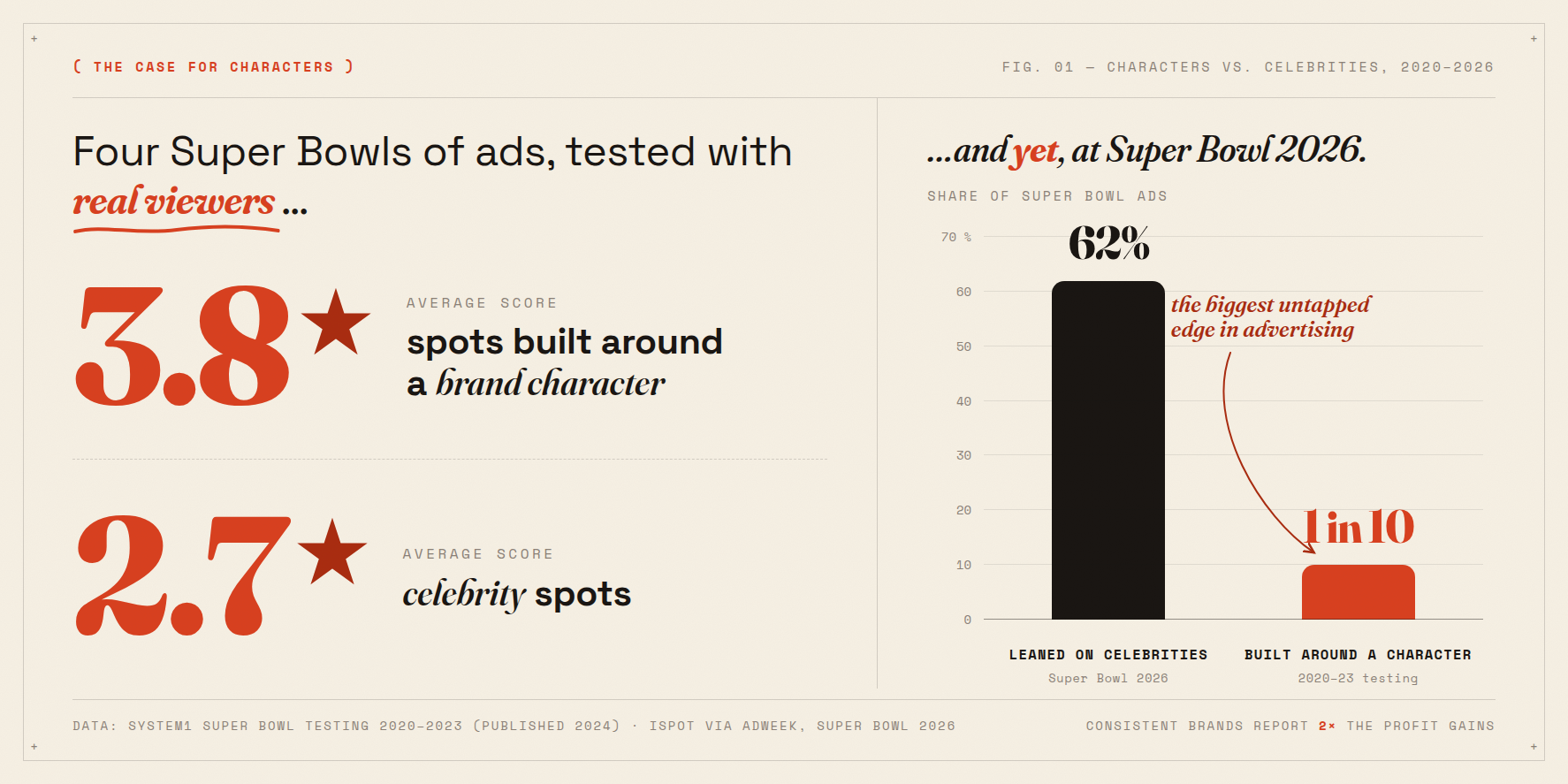
A landmark 2019 study by System1 analyzing fluent corporate devices found that advertising campaigns built around a recurring character were 37 percent more likely to grow market share and 30 percent more likely to drive long-term profit gains compared to campaigns lacking a central character. Subsequent research published in 2024 by System1 and the IPA further reinforced these findings, indicating that brands maintaining creative consistency—often anchored by a permanent character—report double the very large profit gains of inconsistent advertisers.
Despite these documented financial advantages, corporate investment patterns reflect a heavy reliance on temporary talent. During major advertising windows, such as the Super Bowl, industry tracking indicates that over 60 percent of commercial spots rely on celebrity endorsements. Conversely, fewer than 10 percent of analyzed Super Bowl advertisements feature a proprietary brand character.
Industry analysts attribute this discrepancy to corporate governance pressures. Celebrity endorsements often yield immediate quarterly sales bumps and satisfy short-term performance metrics, whereas building a proprietary character requires sustained capital investment, patience, and a long-term strategic vision.
The Corporate Shift Toward Permanent Character Assets
Despite the historical bias toward short-term campaigns, several major global corporations have successfully reintroduced legacy characters to drive modern engagement. McDonald’s Corporation successfully leveraged its nostalgic McDonaldland intellectual property by returning characters like Grimace to the market, generating unprecedented viral engagement across social media platforms. Similarly, the GEICO Gecko has maintained market presence for over 25 years, proving that abstract or service-oriented industries can humanize corporate identity through consistent character deployment.
Educational technology platform Duolingo has further demonstrated the efficacy of character-driven marketing. By positioning its corporate mascot—an owl—as an autonomous personality with distinct behavioral traits rather than a static logo, the company cultivated a digital following that rivals mainstream celebrity influence.
Furthermore, spontaneous cultural adoption often bypasses traditional corporate launches. Instances such as the organic internet adoption of Apple’s unannounced marketing character within MacBook campaigns illustrate that when a character possesses a well-defined personality, digital communities will amplify the brand narrative independently of formal corporate PR channels.
The Impact of Artificial Intelligence on Content Economics
The proliferation of generative artificial intelligence has fundamentally altered the economics of content creation, lowering production barriers and enabling brands and competitors alike to generate unlimited promotional assets at minimal cost. This technological shift has transformed the strategic value of proprietary intellectual property.
In an environment where digital content can be easily replicated, raw output ceases to function as a competitive advantage. Consequently, brand differentiation relies on owned assets that cannot be duplicated via automated prompts. While AI tools can generate visual approximations of characters, they cannot replicate accumulated narrative history, consumer familiarity, and established emotional equity.
Creative agencies emphasizing traditional artistic direction note that artificial intelligence acts as a production accelerator rather than a strategic substitute. Maintaining narrative coherence across hundreds of digital touchpoints requires strict artistic oversight, behavioral guidelines, and professional direction to ensure that character interactions maintain authenticity across dynamic real-time environments.
Systemic Integration and Real-Time Responsiveness
Modern brand characters operate within complex technological ecosystems. A primary operational challenge for modern organizations is maintaining real-time responsiveness during high-stakes global events.
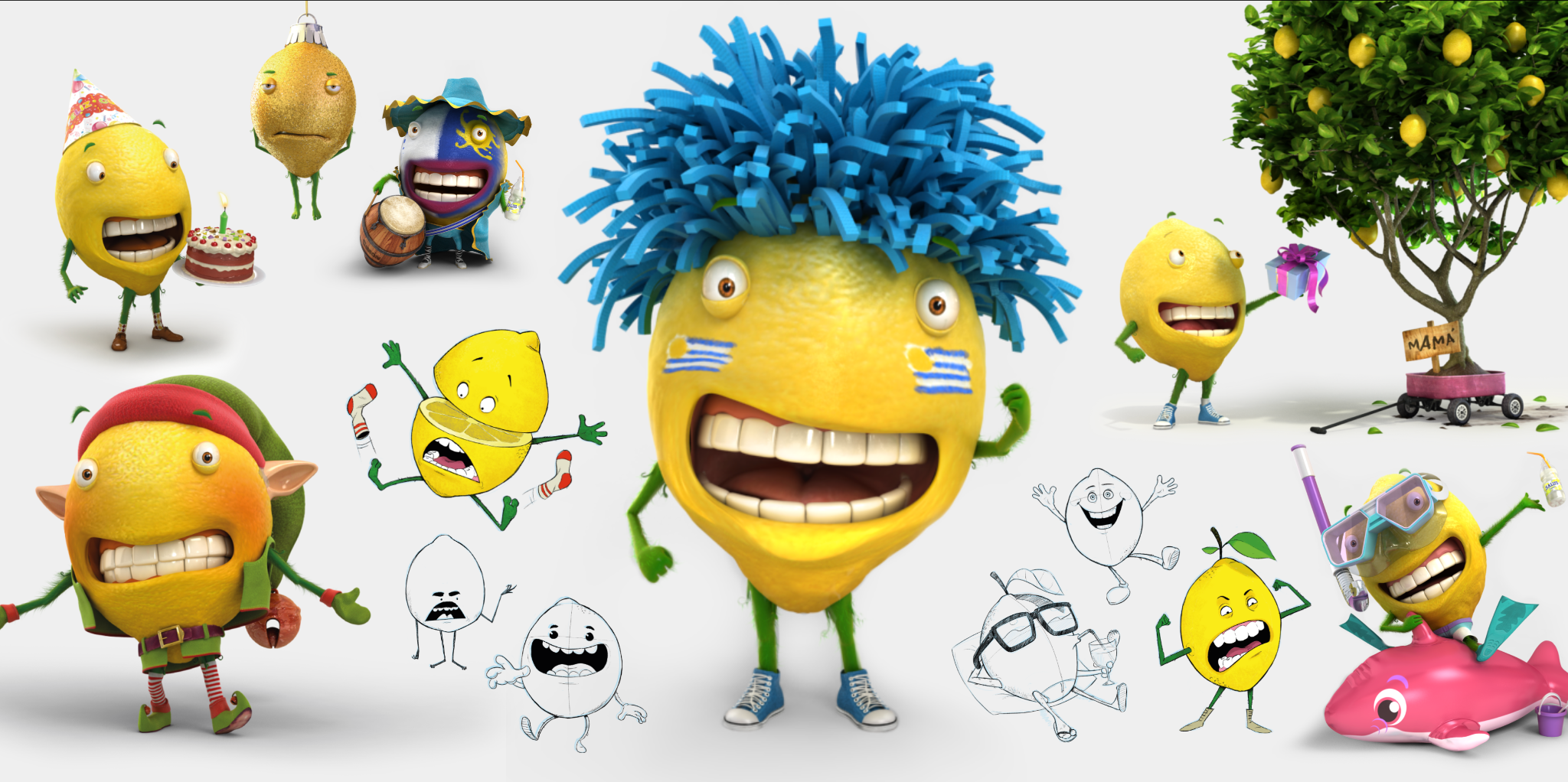
For instance, the integration of Uruguay’s national team mascot, Botija—originally established through fan voting via a sky-blue thermos design and subsequently redesigned in 3D for global tournaments—demonstrates the necessity of systemic infrastructure. To maintain relevance during live sporting events where match outcomes shift rapidly, the character required pre-approved content frameworks, multi-purpose narrative rules, and AI-enhanced production pipelines. This technical framework allowed a fictional entity to react instantaneously to real-world match scenarios without sacrificing authenticity or brand safety.
Future Implications and Strategic Recommendations
As artificial intelligence capabilities advance, the functional role of brand characters is expanding from static mascots to interactive digital ambassadors. Upcoming technological iterations enable characters to engage in real-time, multilingual conversations with consumers across digital channels year-round, transforming passive brand logos into active conversational participants.
For corporate leadership, the strategic imperative involves transitioning marketing metrics away from short-term campaign expenditures toward long-term asset accumulation. Treating characters as permanent product lines—complete with dedicated roadmaps, quantitative performance indicators measured across multi-year intervals, and formal intellectual property protections—mitigates the volatility inherent in traditional advertising cycles.
While major tournaments will continue to introduce and subsequently retire commemorative figures every four years, enduring commercial enterprises are increasingly adopting permanent character infrastructure. By investing in proprietary intellectual property rather than temporary promotional campaigns, organizations establish enduring brand equity that persists independently of active media spending, securing long-term recognition in an increasingly saturated global marketplace.
Related posts: