A Hollywood Creators Group Is Trying to Assess What AI Is Doing to the Industry (Exclusive)

The rapid and unpredictable advancement of generative artificial intelligence has sent tremors through the entertainment industry, leaving professionals across every corner of Hollywood questioning the long-term viability of their livelihoods. From concept illustrators and sound mixers to story editors and animators, the specter of automation has largely been discussed in terms of nebulous fear and speculative dread. In an effort to replace anxiety with empirical data and a unified vocabulary, the Creators Coalition on AI (CCAI) is officially launching a comprehensive public initiative designed to standardize terminology and assess the precise threat of job displacement across the creative sector.
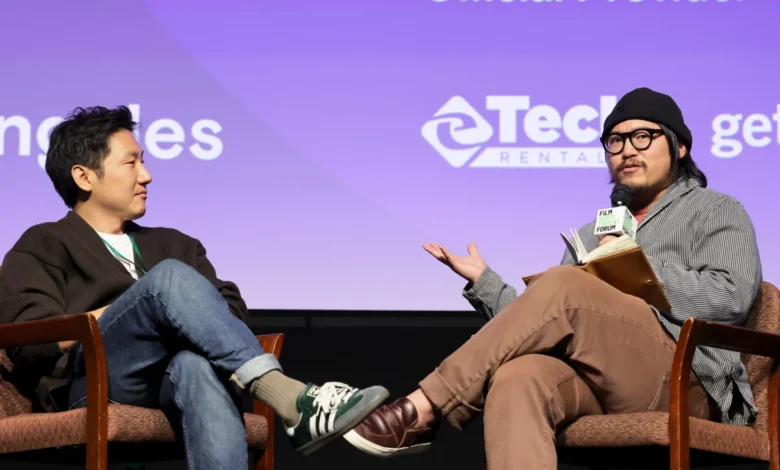
The initiative, known formally as the Standards & Definitions Project, features an industry-facing web portal equipped with two primary tools: a foundational glossary of approximately 180 terms related to artificial intelligence and an interactive resource called the AI Impact Visualizer. While trade guilds have historically fought valiantly for the immediate concerns of their specific memberships, the nine-month-old CCAI operates independently, functioning as a cross-disciplinary bridge. Founded by a consortium of prominent industry figures—including actor and filmmaker Joseph Gordon-Levitt, Oscar-winning director Daniel Kwan, late-night veteran and producer Ted Tremper, and more than a dozen other creative leaders—the coalition aims to unite artists around a decidedly human-led vision of creativity in the digital age.
Establishing Ground Truth in a Rapidly Evolving Landscape
For months, discussions regarding the intersection of artificial intelligence and Hollywood have been plagued by semantic confusion. Terms like generative AI, deepfakes, algorithmic editing, and digital likeness rights are frequently used interchangeably or vaguely, complicating both individual talent negotiations and broader legislative efforts. The newly released glossary is engineered to establish what organizers call a "ground truth," creating precise boundaries for what constitutes human-authored content versus machine-generated output.
For instance, the glossary defines human-authored content as creative work in which no generative artificial intelligence system contributed expressive content, regardless of the technological tools utilized during capture, processing, or distribution, provided that the AI systems performed solely technical functions like operating cameras, editing software, or standard musical instruments. Conversely, it meticulously outlines an AI Digital Performance, defining it as the application of artificial intelligence to capture, synthesize, modify, or replicate the natural performance attributes of a human or animal performer—encompassing visual and physiological likeness, kinetic facial expressions, body movements, biometric characteristics, choreography, and voice, either partially or in full.
These definitions were not drafted in a vacuum. They were rigorously debated, scrutinized, and refined over the course of two intensive summer conventions involving delegates representing eleven distinct creative realms, culminating in a summit just ten days prior to the platform’s public debut. Though currently established as working models, these definitions remain dynamic and subject to quarterly updates based on ongoing member feedback and technological evolution.
Quantifying the Threat: The AI Impact Visualizer
Perhaps the most anticipated component of the web portal is the AI Impact Visualizer, a metric-driven tool designed to assess the likelihood of role replacement across approximately 150 distinct jobs spread across 11 key creative areas, including directing, sound, animation, writing, and acting. Many of these overarching roles are further broken down into dozens of granular sub-categories.
The visualizer employs a straightforward numerical scale ranging from 0 to 5. A score of zero indicates that artificial intelligence "doesn’t touch the job," while a score of five signifies that the technology "could do the whole job" independently. While the platform has already polled over 250 industry professionals during its preliminary development phase, organizers harbor much larger ambitions, aiming to secure thousands of responses to build a statistically robust database mapping the true impact of automation on creative labor. At the time of the launch, a significant portion of the listed roles currently bear the designation "recommended knowledge," signaling that while the threat is acknowledged, empirical data collection is still ongoing.
Ted Tremper, a CCAI founder who produced The AI Doc earlier this year, emphasized that the tool is designed to move the industry past generalized panic. "The purpose of these resources is to take all the things we hear about with regard to AI and establish ground truth," Tremper explained in an interview. "This is not the terminus of what we’re trying to do. But it establishes an ongoing process for people to be able to coordinate."
While acknowledging that the impact study cannot account for every conceivable indirect disruption—noting, as an example, that a traditional hairdresser role might score a zero on direct automation yet still suffer if physical sets are entirely replaced by virtual environments—founders maintain that the visualizer finally quantifies what was previously left to speculation. "We hope people have the tools to talk with greater clarity as opposed to nebulous fear," Tremper added.
The Chronology and Evolution of the Creators Coalition on AI
The genesis of the CCAI traces back to December, arriving at a critical juncture when Hollywood was still reeling from historic dual strikes by the Writers Guild of America (WGA) and SAG-AFTRA, both of which grappled heavily with the unregulated integration of generative artificial intelligence. Recognizing that traditional union negotiations, while vital, operate within specific legal and structural boundaries, a collective of independent creators sought to build a broader, cross-industry coalition.
The group quickly attracted high-profile backing, amassing thousands of signatories that read like a Hollywood power roster, including filmmakers and producers such as Judd Apatow, Ava DuVernay, Margot Robbie, and Guillermo del Toro. Over the subsequent months, the organization structured its efforts into distinct realms of expertise, holding foundational conventions to address the unique vulnerabilities of different crafts. The culmination of these efforts is the simultaneous rollout of the glossary and the impact visualizer, supported by a vetted survey page that allows working Hollywood professionals to continuously input their real-world experiences and adjust the predictive metrics.
Broader Implications for Labor, Law, and Industry Standards
The ambitions of the Creators Coalition on AI extend far beyond the studio gates of Los Angeles and the confines of entertainment industry boardrooms. Founders and organizers view the establishment of a standardized lexicon as a vital prerequisite for effective political advocacy and legislative drafting.
In an era where state and federal lawmakers are racing to draft regulations regarding intellectual property, copyright protection, and digital likeness rights, the absence of clear definitions has frequently stalled legislative progress. By providing a coherent, vetted framework, the CCAI hopes to offer statehouses and federal regulators a reliable template for drafting precise, enforceable bills that protect human workers without stifling legitimate technological innovation.
Furthermore, the shared language provided by the Standards & Definitions Project is expected to heavily influence individual talent negotiations, guild contracts, and studio compliance policies. As streaming platforms and major studios increasingly experiment with synthetic media, digital background actors, and algorithmic script analysis, creators equipped with standardized terminology will possess greater agency in negotiating protective guardrails into their contracts.
A Warning from the Creative Vanguard
As the portal goes live, the co-founders of the coalition have underscored the broader cultural and economic stakes of their mission, framing Hollywood not merely as a unique case study, but as an early indicator for the global workforce.
Joseph Gordon-Levitt, actor, filmmaker, and founder of the collaborative creative platform HITRECORD, placed the initiative into a broader societal context upon the launch of the project. "To me, this is about more than Hollywood. Artists and content creators are a canary in the coal mine," Gordon-Levitt stated. "Without proper guardrails, AI companies will destroy not only the creative industries, but so many others. Building those guardrails is ambitious, but it’s possible, and a good first step is making sure we’re all speaking the same language."
Echoing this sentiment, director Daniel Kwan—who navigated themes of existential disruption and infinite possibility in his critically acclaimed film Everything Everywhere All At Once and has increasingly emerged as a prominent voice in AI activism—stressed the necessity of proactive self-determination. "If we’re going to be fighting for transparency, we should also be modeling it," Kwan remarked in a statement. "Let’s build some solutions together—and on our terms."
With the launch of the Standards & Definitions Project, the Creators Coalition on AI has transformed a decentralized, anxious debate into an organized, empirical campaign. Whether the rest of the corporate and technological landscape will engage with these newly established ground truths remains to be seen, but Hollywood’s creative community has firmly established its baseline for the battles ahead.