Sony FX5 Ushers in New Era of In-Camera RAW and Open Gate for Professional Filmmakers

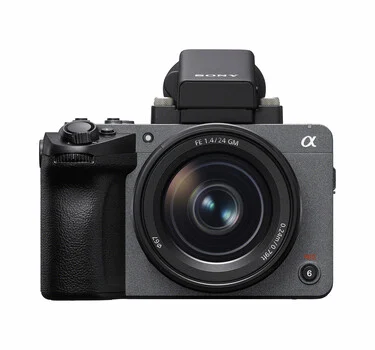
Sony has officially unveiled the ILME-FX5, a groundbreaking full-frame Cinema Line camera poised to redefine portable professional filmmaking. This new offering distinguishes itself with a newly developed, fully stacked Exmor RS CMOS image sensor, incorporating for the first time in the FX series the highly anticipated capabilities of Open Gate shooting and internal RAW recording. These advancements, previously the exclusive domain of Sony’s higher-tier cinema cameras, are now accessible in a more compact and agile form factor, signaling a significant leap forward for independent filmmakers, documentary crews, and content creators operating under demanding production constraints.
The heart of the FX5 is its advanced imaging system, meticulously engineered to deliver unparalleled image quality and flexibility. The fully stacked Exmor RS CMOS sensor, a testament to Sony’s continuous innovation in sensor technology, boasts an impressive dynamic range of over 15 stops when utilizing the S-Log3 gamma curve. This extensive latitude allows for remarkable detail preservation in both the brightest highlights and deepest shadows, providing cinematographers with a vast canvas for color grading and post-production manipulation. Complementing the sensor is the BIONZ XR2 image processing engine, a powerhouse that ensures swift and efficient data handling, crucial for high-resolution and high-frame-rate recording. Further enhancing its intelligent capabilities, the FX5 integrates a dedicated AI processing unit, which underpins sophisticated autofocus and image analysis features.
Sony has equipped the FX5 with three native base ISO settings: 800, 4,000, and 12,800. This multi-base ISO architecture is a cornerstone of professional cinema cameras, enabling optimal signal-to-noise ratios across a broad spectrum of lighting conditions. Manual selection of these base ISOs is available in Cine EI and Flexible ISO modes, offering precise control to the cinematographer. In the streamlined Cine EI Quick mode, the camera intelligently selects the most appropriate base ISO based on the user’s Exposure Index (EI) setting, simplifying exposure management in fast-paced shooting scenarios.
A significant addition to the FX series is the Dual Gain Shooting function. This innovative feature, designed to further expand the camera’s latitude and reduce noise, extracts additional information directly from the sensor. The result is smoother tonal gradations and enhanced shadow detail, particularly beneficial in challenging lighting environments. While this mode is limited to an equivalent gain of 18 dB and may not be universally available across all shooting settings, its inclusion represents a commitment to pushing the boundaries of image fidelity in the FX line.
Embracing the Full Frame: Open Gate and Internal X-OCN Revolutionize Workflow
The FX5 marks a pivotal moment for the FX series by introducing full-frame, 3:2 pixel readout across the entire sensor, a mode colloquially known as Open Gate. This capability, alongside traditional 17:9, 16:9, and Super 35mm scan modes, offers unprecedented flexibility in framing and post-production. Open Gate shooting essentially captures the maximum possible image area from the full-frame sensor, providing filmmakers with a generous "headroom" for reframing, stabilizing, and adapting footage for various aspect ratios without compromising image quality. This is a game-changer for productions requiring deliverables for multiple platforms, from traditional cinematic releases to social media formats.
Equally significant is the FX5’s ability to record internally in X-OCN, Sony’s proprietary 16-bit scene-linear RAW format. This eliminates the need for external RAW recorders, a common bottleneck in compact camera setups. The elimination of external recorders not only streamlines the camera rig by reducing cables, power draw, and weight, but also minimizes potential points of failure, a critical consideration for documentary and run-and-gun operations. Beyond the existing X-OCN LT codec, Sony has introduced two new variants, X-OCN C1 and X-OCN C2. These codecs are engineered to significantly reduce file sizes, thereby accelerating data transfers, simplifying post-production workflows, and lessening storage requirements – a crucial advantage when working with RAW footage.
At launch, the FX5 supports a robust range of frame rates to accommodate diverse creative needs. Users can capture stunning 5K footage at up to 60 frames per second (fps), 4K at up to an impressive 120 fps for dramatic slow-motion effects, and Full HD (FHD) at up to 240 fps for extreme slow-motion sequences. These frame rate options, combined with the internal RAW recording and Open Gate capabilities, position the FX5 as a formidable tool for high-end productions.
Intelligent Imaging: Advanced Autofocus, White Balance, and Image Controls
Sony has integrated its latest advancements in artificial intelligence to power the FX5’s autofocus system. AI-based human pose estimation allows the camera to recognize not only a subject’s eyes and head but also their entire body. This sophisticated tracking capability ensures tenacious autofocus performance, even in challenging low-light environments where traditional AF systems might struggle. The Real-time Tracking function further enhances subject acquisition, allowing the camera to lock onto and follow subjects automatically, freeing the operator to focus on composition and storytelling.
The FX5 also features Auto Tracing White Balance, a system that intelligently combines data from visible light and infrared sensors with deep-learning light-source estimation. This multi-faceted approach aims to deliver more stable and natural white balance results in a variety of shooting conditions, including shade, interiors, and mixed lighting. While the enhanced stability is specifically noted for X-OCN recordings, it underscores Sony’s commitment to accurate color reproduction out of the camera.
Filmmakers will appreciate the granular control over noise suppression, which can be toggled on or off to align with specific creative intentions and post-production workflows. For those utilizing anamorphic lenses, the FX5 includes a de-squeeze function that supports common aspect ratios including 1.3x, 1.5x, 1.6x, 1.8x, and 2.0x, simplifying on-set monitoring and pre-visualization.
A Refined Body and Enhanced Stabilization for Unwavering Stability
The FX5’s design prioritizes both ergonomics and operational efficiency. It incorporates a 5-axis optical in-body image stabilization system, a critical feature for handheld shooting and achieving smooth, cinematic motion. Sony claims that the latest stabilization unit offers approximately double the roll correction range compared to the previous generation found in the FX3, based on internal testing. This enhanced stabilization is crucial for maintaining steady shots in dynamic situations.
For handheld footage, the camera offers two stabilization modes: Active Mode and the new Dynamic Active Mode. Dynamic Active Mode provides even more aggressive stabilization by employing a more significant crop and disabling Clear Image Zoom, prioritizing maximum steadiness. This mode operates up to 60 fps with a maximum gain of 26 dB. Active Mode, while offering slightly less aggressive stabilization, supports higher frame rates up to 120 fps. It’s important to note that the availability of Dynamic Active Mode may depend on the chosen codec and frame rate settings, reflecting the complex interplay of processing power and image data.
The monitoring experience has also been significantly upgraded. The 3.5-type touch-panel LCD, boasting approximately 2.76 million dots in a 16:9 ratio, is larger than its predecessor on the FX3. It is mounted on a versatile 4-axis multi-angle arm, allowing for an impressive tilt range of approximately 98 degrees upward and 40 degrees downward, with an additional 180-degree outward swing for flexible positioning. The high-brightness panel ensures visibility even in bright sunlight. Crucially, shooting information is strategically placed around the edges of the screen, preventing it from obscuring the image. The camera also features the BIG6 home screen, a familiar interface for users of CineAlta cameras, which consolidates essential settings such as frame rate, exposure, LUTs, and other critical parameters. The redesigned menu system aligns with the operational philosophy of Sony’s CineAlta and FX6 models, facilitating a seamless transition for crews working across different Sony cinema cameras.
Enduring Performance: Power, Connectivity, and Robustness
Longevity and reliability are paramount in professional shooting environments. The FX5 features a high-efficiency cooling fan and an optimized heat dissipation system, engineered to ensure stable operation during extended recording sessions, a common concern with high-performance cameras. The camera body itself is constructed to be both lightweight and rigid, with strategically placed screw holes for direct accessory mounting, potentially eliminating the need for a full camera cage in many scenarios.
Powering the FX5 is the recently introduced Sony NP-SA100 high-capacity battery, offering 2,670 mAh capacity, approximately 1.3 times that of the Z-series NP-FZ100. This increased capacity translates to longer shooting times between battery swaps, a significant practical advantage for remote shoots or documentary work. Connectivity is robust, with two USB Type-C ports supporting timecode input via an optional adapter cable and external power delivery through USB Power Delivery (PD). Users will need to supply their own PD-compatible external power supply and USB cable. A wired LAN terminal facilitates remote operation and network connectivity, expanding the camera’s versatility in studio and broadcast environments. Integration with the Monitor & Control application further enhances remote capabilities, allowing for video monitoring and camera control via smartphones, tablets, and Mac computers.
Sony has also paid attention to accessibility, incorporating features such as a screen reader that reads menus aloud and an enlarged menu display option. While language support varies by region and not all menu items are covered by the screen reader, these additions demonstrate a commitment to broader user inclusivity.
In line with growing environmental consciousness, the FX5’s body incorporates approximately 30% or more recycled plastic, according to Sony’s internal research. Furthermore, the manufacturing sites in Thailand and China operate on 100% renewable energy, reflecting a broader corporate commitment to sustainability. The product bags are constructed from plant-derived nonwoven fabric.
Future-Proofing: Firmware Update Version 2.0 Promises Expanded Capabilities
Sony has announced a significant firmware update, version 2.0, slated for release in 2027. This update will unlock a host of advanced features, including high frame rate shooting up to 240 fps in X-OCN, XAVC S-I recording in 3:2 Open Gate, an optimized interface tailored for vertical shooting applications, and a frame grab function for extracting still images from video. This forward-thinking approach ensures that the FX5 will continue to evolve and meet the demands of future production workflows. Sony has cautioned that features and specifications are subject to change without notice.
Essential Optional Accessories
To further enhance the FX5’s capabilities, Sony offers a range of optional accessories. The Sony DVF-EL1 is a detachable 0.58-type OLED viewfinder with approximately 7.07 million dots. It supports HDR display with a DCI-P3 equivalent color gamut and 10-bit gradation, providing a precise monitoring experience. With a magnification of approximately 0.9x and a 50mm lens at infinity, users can switch between display modes prioritizing resolution or eye point. The viewfinder features a tilt mechanism for flexible positioning, though it cannot be used simultaneously with accessories attached via the Multi Interface Shoe.
The Sony XLR-H2 handle unit is designed for professional audio capture, featuring two XLR/TRS combo terminals and support for up to 4-channel audio input. Its dual AD converters digitize microphone signals across a wide dynamic range, enabling in-camera recording at up to 96 kHz, 32-bit float. This unit connects directly to the camera body via the Multi Interface Shoe for digital audio transmission.
For precise synchronization in multicamera and broadcast workflows, the Sony VMC-BNCU1 is an optional USB-C to BNC timecode adapter cable. This cable allows external timecode to be fed into the camera, ensuring seamless synchronization with multiple cameras and external audio devices.
Supporting Software Ecosystem
Sony is also committed to providing robust post-production software solutions. Monitor & Control version 3.0, scheduled for July 2026 or later, will enable both wired and wireless video monitoring and camera control. Catalyst Prepare version 3.0, expected in August 2026 or later, will merge the functionality of Catalyst Prepare and Catalyst Browse into a single, comprehensive application for video stabilization and color editing.
Price and Availability
The Sony ILME-FX5, bundled with the XLR Handle Unit, is slated to begin shipping in mid-August with a suggested retail price of $5,499.99 USD / $6,999.99 CAD. The ILME-FX5B body-only configuration will also be available in mid-August, priced at $4,899.99 USD / $6,299.99 CAD.
Voices from the Industry: Sony and Collaborators Weigh In
Yang Cheng, Vice President of Imaging Solutions at Sony Electronics Inc., articulated the strategic vision behind the FX5: "We wanted to build on the FX3, taking it one step further with the inclusion of some VENICE 2 features, like internal RAW recording and Open Gate. Features like these have been highly requested and will allow creators more creative freedom with an easier workflow." This statement highlights the company’s responsiveness to user feedback and its commitment to democratizing high-end cinema features.
Cinematographer Claudio Miranda, ASC, whose acclaimed work includes "Top Gun: Maverick" and "F1 The Movie," shared his experience after a test shoot: "I felt that FX5 is a camera that combines high quality image expression and mobility in a compact body, enabling people to use it across a wide range of shooting environments." His endorsement underscores the camera’s balance of image quality and practical portability.
Director Gareth Edwards, known for his work on "The Creator," "Rogue One: A Star Wars Story," and "Jurassic World: Rebirth," utilized the FX5 on a project spanning Cambodia, Thailand, and Nepal. He described the camera as revolutionary: "Guerrilla filmmaking just went to the next level as the FX5 is the run-and-gun cinema camera to beat." His project shot on the FX5 is reportedly available on YouTube, offering a practical demonstration of its capabilities in challenging, real-world scenarios.
Significance for Video Creators: Addressing Real-World Production Demands
The FX5’s headline features, Open Gate and internal X-OCN, are not mere spec-sheet enhancements; they directly address critical production challenges faced by filmmakers today.
Open Gate shooting is a transformative feature for creators delivering content across multiple aspect ratios. By capturing the full 3:2 sensor area, a single take can be meticulously reframed in post-production for 16:9 broadcast, 17:9 cinematic, 9:16 vertical social media, and even square formats, all without resorting to re-shoots or accepting the degradation of upscaled cropped regions. This capability is particularly invaluable for commercial and branded content where diverse platform deliverables are the norm, streamlining what has often required separate camera setups or entire additional shooting days. The expanded sensor area also provides crucial "headroom" for stabilization and creative reframing in post, enhancing the overall polish of the final product.
The integration of internal RAW recording, specifically X-OCN, liberates rigs from the encumbrance of external recorders. This translates to fewer cables, reduced power consumption, lighter setups, and a diminished risk of equipment failure, especially for handheld and gimbal-mounted applications. For documentary filmmakers and those engaged in vérité-style shooting, where setup time and rig mass directly impact the ability to capture fleeting moments, this is a profoundly practical improvement. The introduction of the new C1 and C2 codecs directly addresses the traditional drawback of RAW footage – its large file size – by offering reduced data rates, which in turn accelerates transfers, conserves storage space, and expedites post-production turnaround times.
The FX5’s three base ISOs and Dual Gain Shooting function enhance its performance in mixed or uncontrolled lighting, expanding the range of shooting conditions where excellent image quality can be achieved without resorting to additional noise. Furthermore, the menu and interface consistency with CineAlta and the FX6 offers a less obvious but significant benefit in multi-camera productions. Operators transitioning between different Sony cinema camera bodies can do so with minimal disruption, saving valuable time and reducing the learning curve. The 32-bit float audio recording capability through the XLR-H2 accessory further mitigates the risk of unrecoverable audio clipping or under-recording, a critical advantage when a dedicated sound mixer is not present on set.
For photographers venturing into videography, the FX5 occupies an intriguing space. Its price point positions it above hybrid mirrorless cameras but below the most dedicated cinema cameras, offering a compelling entry into professional video production with features previously reserved for Sony’s flagship VENICE 2 system, all within a form factor manageable by a single operator.
Conclusion: A Significant Leap Forward for Accessible Cinema
The Sony FX5 represents a significant stride in bridging the gap between Sony’s compact FX series cameras and its high-end cinema camera offerings. The inclusion of Open Gate capture and internal X-OCN recording, features that previously defined the distinction between the FX3 and FX6 and the VENICE line, now brings these advanced capabilities to a body designed for agile, single-operator use. While the initial launch frame rates are conservative compared to the capabilities promised by the 2027 firmware update, particularly the 240 fps X-OCN and 3:2 XAVC S-I, early adopters are investing in a platform that will evolve. The competitive positioning of the FX5 will ultimately be determined by market reception, but as a comprehensive package for creators demanding cinema-grade image capture without the logistical overhead of a large crew, it undeniably marks a substantial advancement from the FX3.