The Last Floating World War II Landing Ship Tank Preserves History on the Move

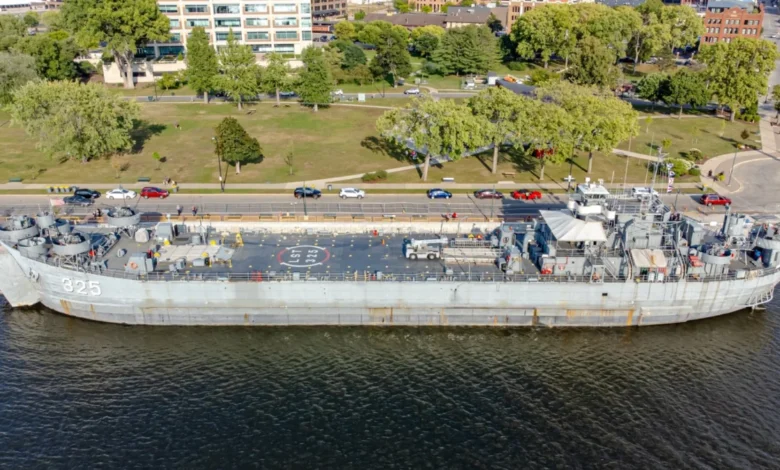
During the pivotal amphibious assaults of World War II, the United States Navy and its Allied partners relied heavily on specialized watercraft to project power from sea to shore. While iconic vessels such as the Higgins boat—officially designated as the Landing Craft, Vehicle, Personnel (LCVP)—captured public imagination for carrying infantry directly onto contested beaches, a heavier and more robust class of vessel was required to transport mechanized armor, artillery, and vital supplies. These vessels were known as Landing Ship, Tanks (LSTs). Designed to beach themselves directly onto hostile shores, drop a massive bow ramp, and disgorge tanks and trucks into the thick of battle, LSTs formed the logistical backbone of amphibious operations in both the European and Pacific theaters.
Today, nearly all of the thousands of landing ships constructed during the conflict have long since been decommissioned, sold for scrap, or sunk as artificial reefs. Yet, a solitary survivor remains afloat, operational, and committed to its mission of public education. The USS LST-325, affectionately and sardonically nicknamed the "Large Slow Target" by the troops who relied upon it under enemy fire, stands as a rare and functioning artifact of 20th-century naval engineering. Unlike the myriad static museum ships anchored permanently in harbors across the United States, the USS LST-325 retains its fully functional propulsion and steering systems, allowing it to cruise America’s inland waterways and coastal ports as a living monument to the generation that served.
Commissioning and Wartime Operations
The history of the USS LST-325 is deeply intertwined with the industrial mobilization of the United States during the early years of World War II. Constructed by the Evansville Boatmen’s Way Yard in Evansville, Indiana—an inland manufacturing hub that produced numerous LSTs far from the ocean—the vessel was officially commissioned into the U.S. Navy on February 1, 1943. Measuring 328 feet in length with a beam of 50 feet, the ship was specifically designed with a flat bottom and a shallow draft, structural compromises that made handling difficult in rough seas but essential for approaching shallow, unimproved enemy beaches.
Following its commissioning, the ship transited down the Ohio and Mississippi Rivers before heading out to sea to join the Allied war effort. The LST-325 was soon dispatched to the European Theater of Operations, where it participated in some of the most critical amphibious campaigns of the war. Its most notable contribution came during Operation Overlord, the historic Allied invasion of Normandy.
On June 7, 1944—just one day after the initial D-Day landings—the USS LST-325 arrived off the coast of Omaha Beach. Operating under hazardous conditions amidst wreckage, tidal shifts, and potential enemy artillery fire, the ship successfully unloaded 59 military vehicles and over 400 personnel directly onto the contested sands. This logistical feat was repeated numerous times throughout the campaign. Over the course of the war, the vessel made a remarkable 43 round-trip crossings of the English Channel, ferrying troops, ammunition, fuel, and equipment to fuel the Allied advance across Europe. For its meritorious wartime service, the USS LST-325 was awarded two battle stars before the cessation of hostilities led to its decommissioning on July 2, 1946.
Postwar Service and Return to American Waters
With the conclusion of World War II and a drastic drawdown of the U.S. military, the LST-325 was deemed surplus to naval requirements. However, its operational lifespan was far from over. In the post-war geopolitical landscape, the United States transferred many of its surplus naval vessels to allied nations under various military assistance programs.
The USS LST-325 was handed over to the Hellenic Navy of Greece, where it was renamed and pressed into service as a transport and landing ship. For decades, the vessel served the Greek military, undergoing various modifications and updates to keep it mission-capable in the Mediterranean. Its long and productive tenure with the Hellenic Navy ensured that the hull, engines, and mechanical systems were maintained long after sister ships in the U.S. inventory had been broken down for scrap metal.
By the late 1990s, the ship was once again slated for retirement, opening a window for preservationists in the United States. A dedicated group of veterans and maritime historians formed the USS LST Ship Memorial, Inc., with the ambitious goal of acquiring the vessel, repatriating it, and transforming it into a floating museum. In 2000 and 2001, a crew of dedicated volunteers traveled to Crete, Greece, restored the deteriorating ship to seaworthy condition, and successfully navigated the historic vessel across the Atlantic Ocean and up the Mississippi and Ohio Rivers, returning it to its birthplace in Evansville, Indiana.
The Unique Advantage of Mobility
The aspect that fundamentally distinguishes the USS LST-325 from almost every other historic naval vessel in the United States is its mobility. While the U.S. maritime preservation landscape features numerous prominent museum ships—including eight retired battleships and five historic aircraft carriers—these massive vessels are permanently moored. Once a battleship or carrier is converted into a museum, it occupies a fixed geographic footprint, relying entirely on local tourism to sustain visitor numbers.
For the USS LST-325, remaining permanently docked in a single mid-sized port presented long-term financial and demographic challenges. Recognizing that a static display in Evansville, Indiana, would not generate the continuous revenue required for the vessel’s costly upkeep, the ship’s management team made the strategic decision to take the museum on the road.
Since 2000, the organization has coordinated annual multi-week river cruises, navigating the inland waterways of the United States to bring the piece of history directly to communities that would otherwise never have the opportunity to tour a World War II combat vessel. These expeditions require months of planning, specialized Coast Guard inspections, and a dedicated crew of skilled volunteer engineers, deckhands, and docents.
Recent Voyages and Public Engagement
The operational strategy of keeping the LST-325 mobile has proven remarkably successful in sustaining public interest and generating essential operating funds. A prime example of this initiative occurred during a nearly month-long cruise that saw the vessel depart its home port in Evansville and journey along regional waterways to visit three distinct Tennessee river towns: Hendersonville, Ashland City, and Clarksville.
The tour proved to be an overwhelming public success. During the course of the month-long deployment, more than 44,000 visitors toured the historic decks of the landing ship. For veterans, families, and younger generations, stepping aboard the LST-325 offered an immersive, tangible connection to the scale and sacrifice of the Second World War that textbooks and static museum exhibits struggle to replicate. Visitors were able to walk the cavernous tank deck where Sherman tanks and transport trucks once sat, inspect the anti-aircraft gun positions, and view the cramped quarters where sailors lived during long, perilous ocean crossings.
Ken Rupp, the cruise director for the USS LST-325, emphasized the economic and operational necessity of these voyages in an official release detailed by the U.S. Army. "Evansville isn’t a big enough draw to support this," Rupp explained, noting the demographic realities of maintaining a major historical artifact. According to Rupp, the ship spends approximately eleven months out of the year docked in Evansville for maintenance, community events, and local tours. However, taking the ship "out on the road, one month out of the year, since 2000" has become the lifeblood of the organization, generating critical ticket sales, donations, and national media attention that help fund its year-round preservation.
Preservation Challenges and the Future of the LST-325
Operating and maintaining an 80-year-old military vessel presents a unique set of engineering and financial challenges. Unlike modern commercial vessels, replacement parts for the LST-325’s vintage diesel engines, electrical grids, and hydraulic systems are rarely manufactured today. The ship relies on a dedicated cadre of volunteer mechanics, marine engineers, and historians who meticulously fabricate parts, perform preventative maintenance, and adhere to strict maritime safety regulations set by the United States Coast Guard.
Furthermore, the rising costs of marine fuel, insurance, and dockage fees make each annual river cruise an increasingly complex logistical undertaking. Despite these hurdles, the leadership of the USS LST-325 Ship Memorial remains steadfast in its commitment to keeping the vessel operational. The ability to travel is viewed not merely as a fundraising mechanism, but as an educational imperative. By docking in different cities each year, the ship acts as a traveling ambassador for the millions of Americans who built, sailed, and fought aboard the LST fleet.
As the cohort of living World War II veterans continues to dwindle, the physical preservation of artifacts like the USS LST-325 takes on heightened historical significance. By remaining afloat and continuing to navigate the rivers and ports of the United States, the "Large Slow Target" ensures that the legacy of wartime innovation, industrial might, and collective sacrifice remains visible, accessible, and operational for generations to come.