Crafting The Epic: Inside Christopher Nolan’s Groundbreaking Practical and Visual Effects Approach to The Odyssey

Christopher Nolan has long established a reputation for pushing the boundaries of cinematic world-building, seamlessly blending complex intellectual themes with monumental physical production. From exploring recursive dreamscapes in Inception to staging temporal pincer movements in Tenet and capturing the visceral chaos of evacuation in Dunkirk, the British-American auteur has continually redefined the possibilities of modern filmmaking. While Nolan’s previous filmography leans heavily into contemporary settings, science fiction, and historical drama, his latest endeavor represents a natural evolution of his career: a sprawling, mythic adaptation of Homer’s ancient epic, The Odyssey.
The origin of Nolan’s cinematic journey into Greek mythology traces back decades, indirectly planted by a missed opportunity to direct Wolfgang Petersen’s 2004 historical epic Troy. Although that project did not materialize, the foundational desire to interpret the heroic age persisted. Eventually, Nolan gravitated toward The Odyssey not merely as an exercise in fantasy, but as a deeply human story centered around a core thematic anchor recurring throughout his filmography: the urgent, consuming importance of family. After the devastation of the Trojan War, the Greek king Odysseus embarks on a grueling, ten-year voyage across treacherous seas to return to his faithful wife, Penelope, and their son, Telemachus. Along the way, he confronts an array of gods, monsters, and surreal perils that have shaped western literature for millennia.
World-Building in the Bronze Age: A Sci-Fi Methodology
Adapting a text with sparse historical and archaeological records presented a unique production challenge. Little is concretely known about the daily life, architecture, or material culture of the Bronze Age Mediterranean, forcing the production team to approach the classical text with the methodology of a science fiction film.
“I’ve always enjoyed science fiction because it’s one of the most cinematic of genres,” Nolan explains. “We treated The Odyssey like a science fiction film. We look at the world-building and the fact that we have to create everything. We couldn’t do everything from research because very little is known archeologically and historically of the Bronze Age, so you had to do world-building in the manner of a science fiction film and obviously with visual effects and creatures. The same with the methodology. It was not dissimilar. I’ve always enjoyed horror and the chance to try use that language in the storytelling. I got to do that with The Odyssey.”
This genre-blending approach extended directly to the divine forces operating within the poem. Rather than introducing overt, photorealistic deities dropping from the heavens, Nolan chose to interpret divinity through the subjective lens of the narrative’s mortal figures. The characters perceive the divine in the monumental, terrifying manifestations of the natural world—raging seas, sudden squalls, howling winds through pine forests, and deafening thunderclaps.
“When it came to the gods and the idea of the divine, what I found in the poem to be the most interesting approach for me was to look at it from the point of view of the human characters,” Nolan states. “And the human characters encounter the divine in the world around them, in nature, the state of the sea, the wind blowing the pines, thunder and lightning, these things. And they’re not ambiguous in any way. They are evidence of divinity. That relationship with the gods is part of the world that they live in. That was an interesting approach to me because, in the poem, the real encounters with the gods tend to be through the gods disguising themselves as human beings. I wanted to try to have the audience look from the point of view of somebody at that time who is feeling the gods speaking through nature and is perhaps seeing gods represented in the people around them.”
Designing Myth: Production Architecture and Global Locations
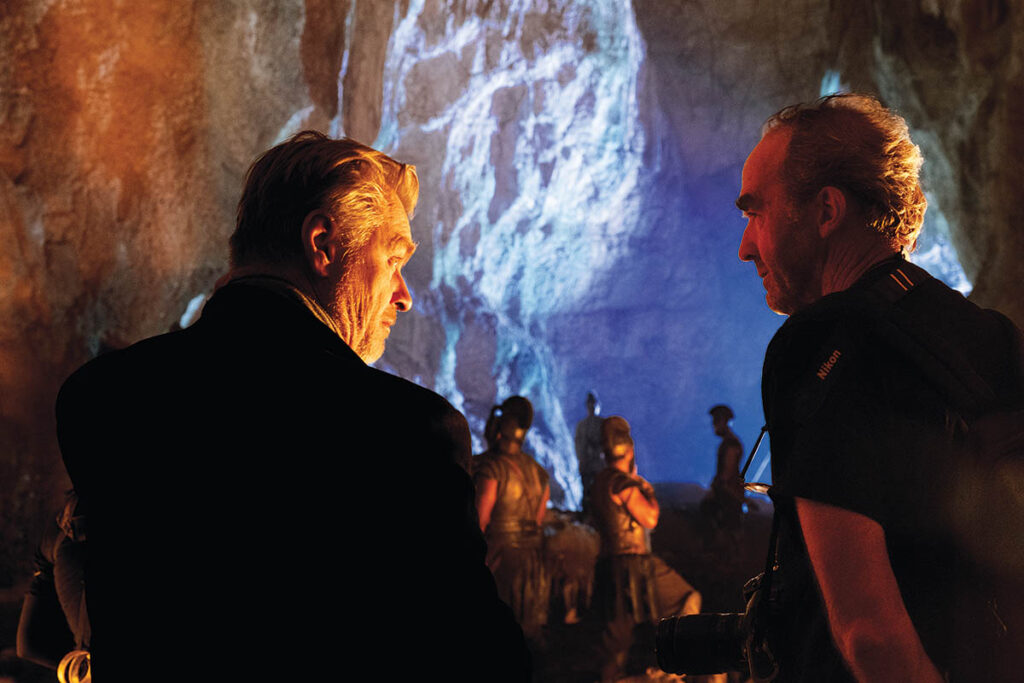
To bring this expansive world to life, production designer Ruth De Jong faced the daunting task of maintaining a consistent, grounded mythological tone across vastly different physical landscapes. Principal photography spanned five distinct countries: Morocco, Greece, Italy, Iceland, and Scotland.
Rather than confining the narrative strictly to the traditional Mediterranean basin—a geographical restriction De Jong notes would have visually stagnated a feature-length film—the production utilized diverse international terrains to evoke the psychological and physical disorientation of Odysseus’s travels. For instance, the ominous woods of the Laestrygonians were filmed in Scotland, where towering lodgepole-type pines meet the open ocean, creating a striking, alien landscape that feels entirely authentic to the film’s heightened reality.
“We wanted everything to be mythological and fantastical, but grounding it so you weren’t thinking twice,” De Jong remarks. “For instance, when you get to Circe’s stone house, or when you land in the woods with the Laestrygonians in Scotland, you aren’t thinking, ‘Wait, Odysseus is no longer in the Mediterranean.’ The goal was to have the audience so embedded in the journey that they’re not even realizing he’s as far north, south, east or west.”
De Jong’s historical revisionism also influenced iconic artifacts from the source material, such as the legendary Trojan Horse. Rejecting the familiar theatrical trope of a massive wooden animal on wheels sitting stationary outside the city gates, Nolan and De Jong reimagined the object through the lens of ancient Greek maritime engineering. Recognizing that the ancient Greeks were master shipbuilders and seafarers, the creative team designed a shiplap Trojan Horse featuring finely tooled heads and legs constructed with the precision of a hull.
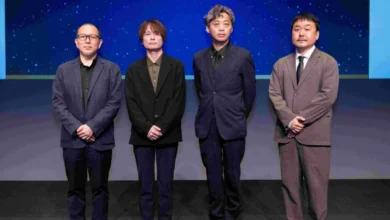
Global logistics required unprecedented inter-departmental synchronization. Art departments were established in every country of production, operating as a singular, unified entity alongside Visual Effects Supervisor Andrew Jackson, Marine Coordinator Neil Andrea, Special Effects Supervisor Scott Fisher, and Cinematographer Hoyte van Hoytema.
Practical Magic: The Hybrid VFX Philosophy
True to Christopher Nolan’s celebrated filmmaking ethos, The Odyssey relies heavily on practical effects, stunt work, and in-camera wizardry, reserving computer-generated imagery (CGI) primarily for seamless expansion and environmental clean-up. This philosophy bridges contemporary digital pipelines with the tactile, sculptural traditions of legendary practical effects artists like Ray Harryhausen, Rick Baker, and Rob Bottin.
“The challenge for Andrew Jackson and Scott Fisher and their teams was how to create fantastical imagery within the tone of the rest of the film,” Nolan observes. “That’s the big brass ring of visual effects. That’s when the visual effects and special effects artists are working at their best in creating imagery that is seamless with the rest of the film.”
Special Effects Supervisor Scott Fisher details the collaborative experimentation required to manifest the epic’s legendary beasts and natural disasters. “Chris doesn’t like throwing everything to a CG solution,” Fisher notes. “It’s always, ‘Let’s see what we can come up with. Where we can get to practically and then we’ll fix or expand or improve it with the CG option.’”
The Cyclops: From Conception to Production
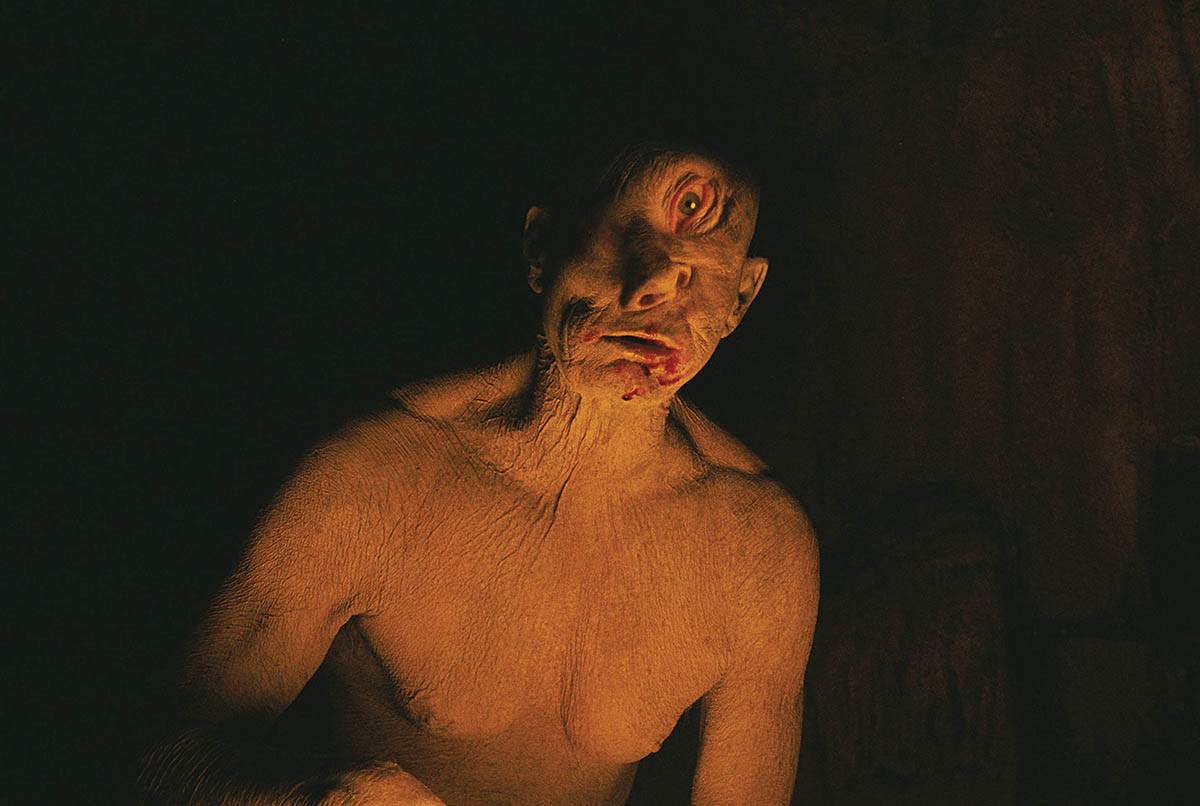
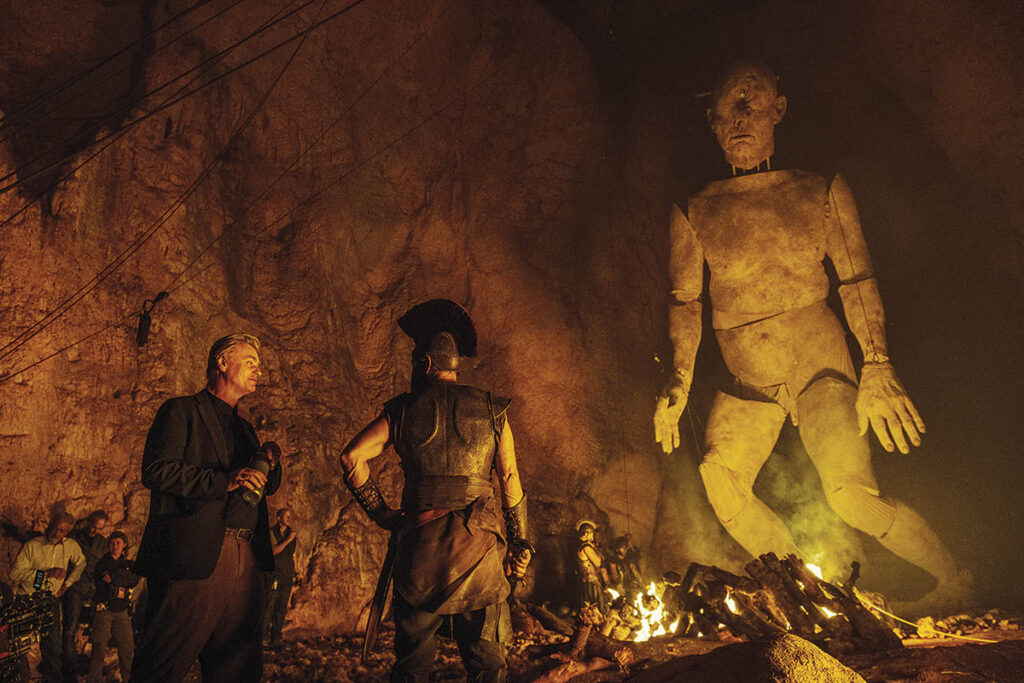
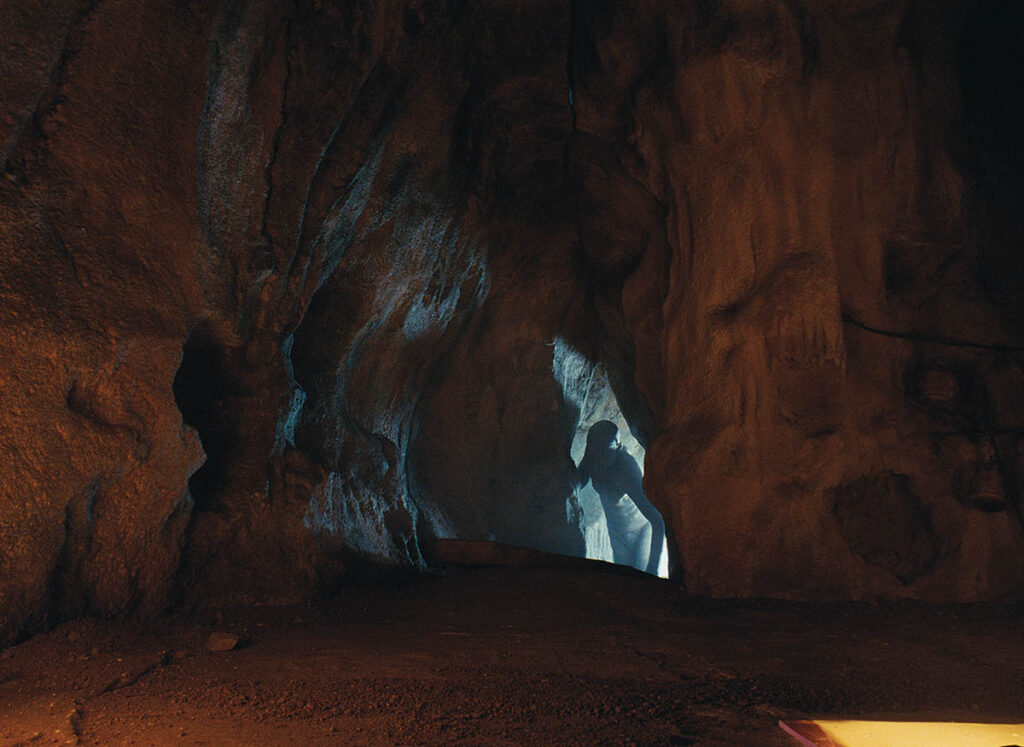
One of the most formidable technical hurdles was the realization of the Cyclops and its cavern lair. Initially slated to be filmed on a controlled soundstage in Los Angeles at the end of the production schedule, the sequence underwent a dramatic shift when Nolan discovered an authentic, ideal cave during a location scout in Greece. Because the Greek leg of the shoot was scheduled for February, the timeline for constructing the physical creature was compressed from six or seven months down to a mere two months.
To solve the scale and movement of the 36-foot-tall monster, Fisher’s team drew inspiration from large-scale European parade puppets. They constructed an extremely lightweight, articulated marionette utilizing ropes, counterweights, and simple joints.
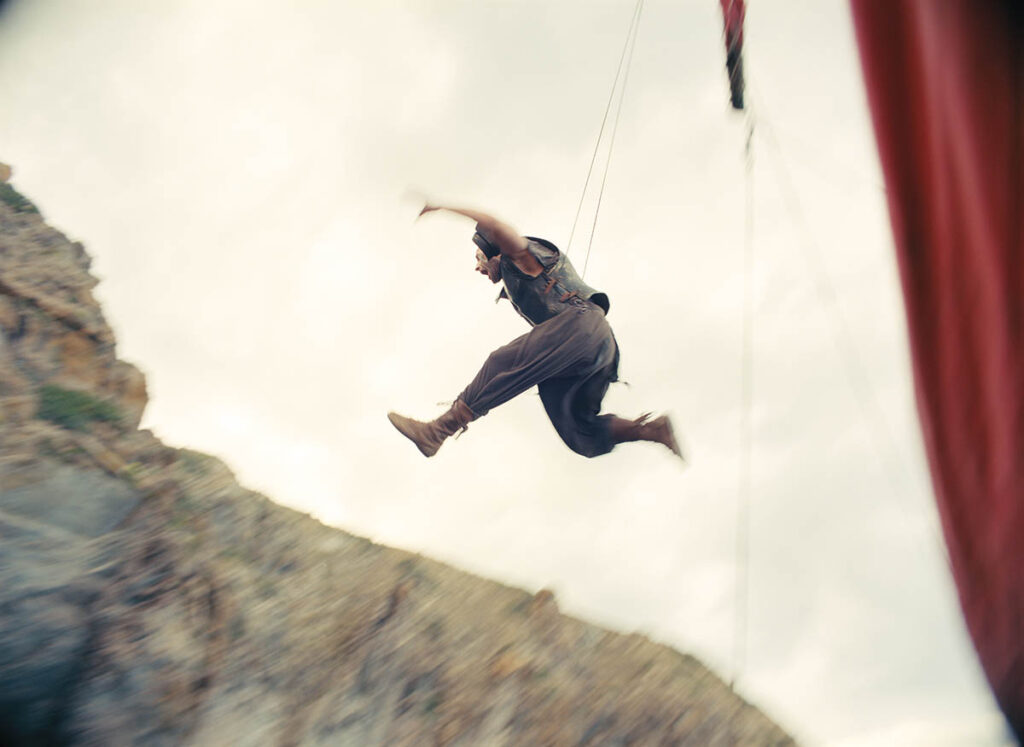
“We built a big stick figure that was the correct scale, 36 feet tall, and started with that,” Fisher explains. “It was extremely light, so it was easy to puppeteer. In France, they have these gigantic puppets in parade style. We looked at some of the ways they did that. Guys jumping off ropes and using their weight. As soon as you get something that big, weight becomes a factor.”
For close-up interactions involving characters being handled by the monster, a full-sized skin-and-dimension puppet was deployed alongside stunt performers and actors in specialized creature makeup. Visual effects supervisor Andrew Jackson noted that the compressed schedule ultimately served the production well, producing organic, unpredictable movements that would have been exceptionally difficult to program into a fully animatronic system. Furthermore, real real eyes were rotoscoped, composited, and timed precisely to live-action performances to achieve the signature single-ocular gaze.
Mastering Scylla, Charybdis, and the Wrath of Zeus
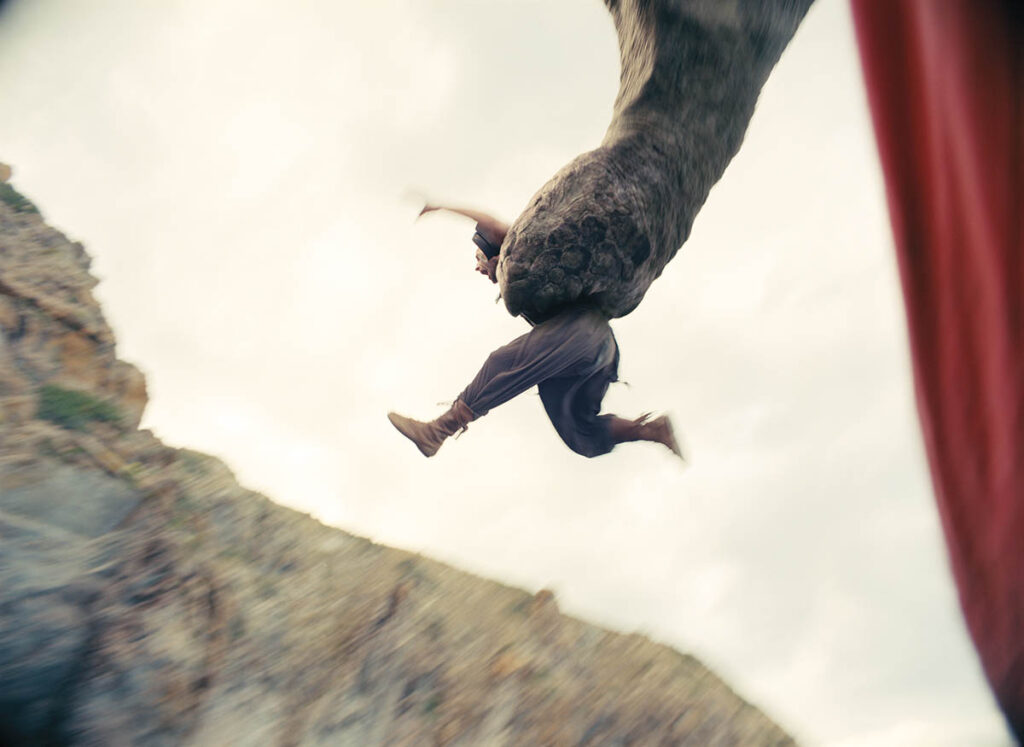
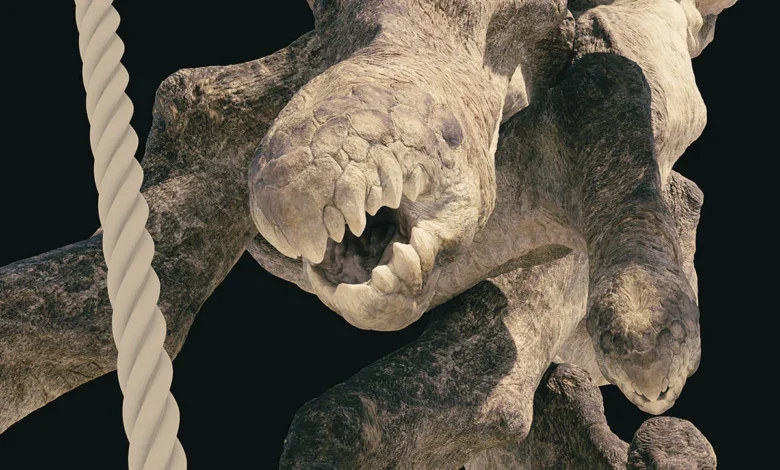
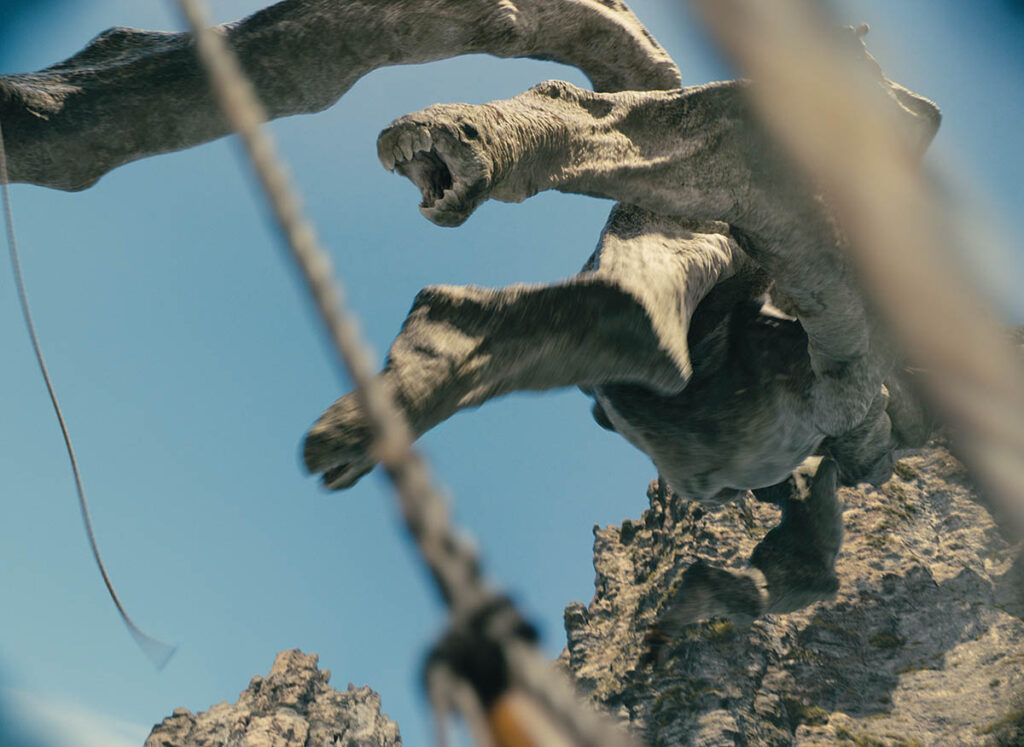
The six-headed sea monster Scylla and the treacherous whirlpool Charybdis required a similar hybrid strategy. Fisher’s department built a massive, physical foam-and-wire puppeteered head for Scylla, enabling the stunt team to interact physically with the monster as it lashed out, grabbed sailors, and destroyed shipboard rigging. Computer graphics were subsequently employed to blend the practical head back into coastal rock formations.
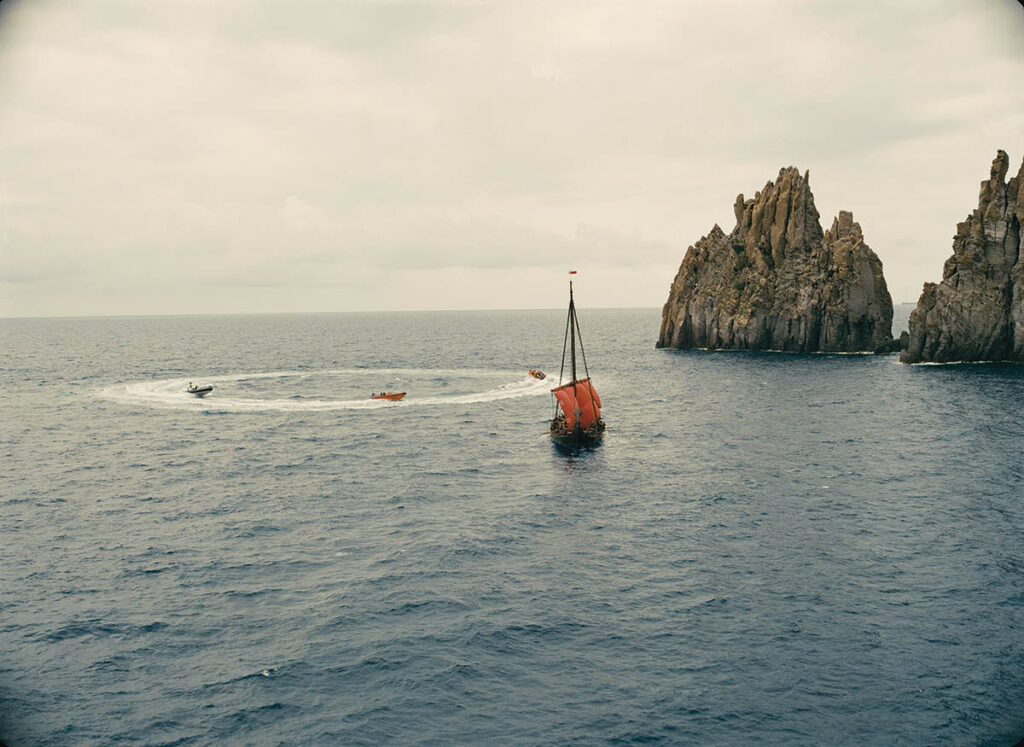
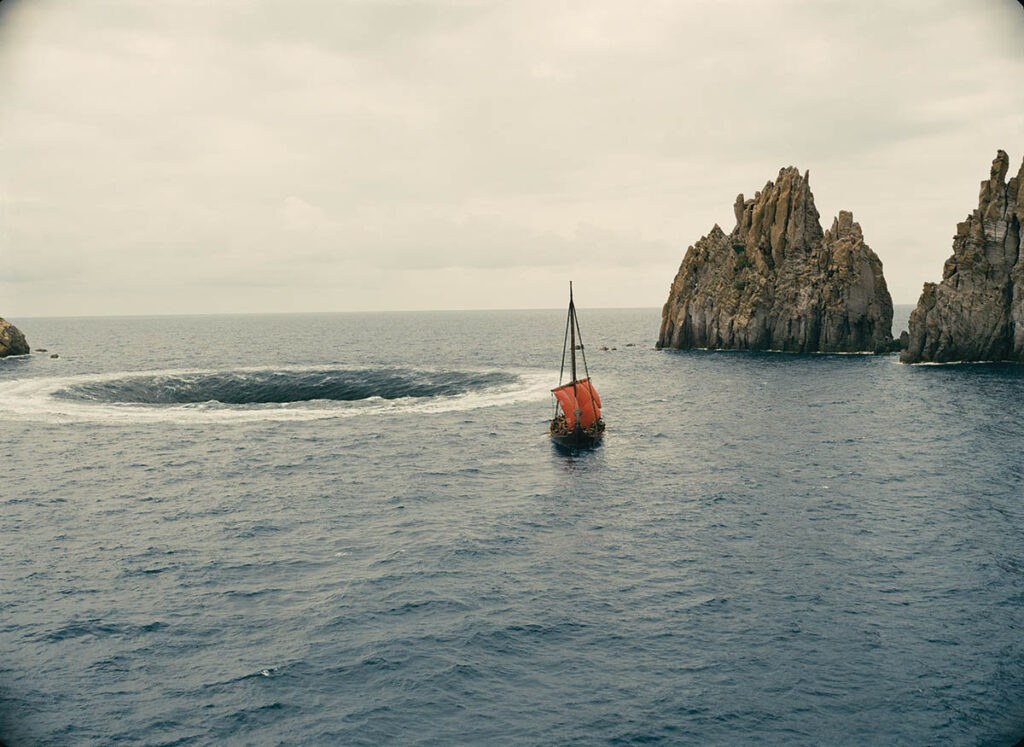
To simulate the titanic suction of Charybdis, the production adapted large-scale marine engineering. By deploying heavy-duty, boat-like thrusters in open water, the crew generated massive surface disturbances mimicking a roaring vortex. Water simulations and digital enhancements were applied primarily to wide overhead shots depicting the terrifying depth of the whirlpool.
Marine sequences were further complicated by the divine storms sent by Zeus. Water tank work was executed on the Falls Lake stage at Universal Studios Hollywood, utilizing a six-axis motion base submerged beneath a large section of ship deck to capture violent pitching, broken masts, and splintering hull timbers.
Post-Production Workflow and Legacy
In total, approximately 400 visual effects shots appear in the final cut of The Odyssey, managed primarily by VFX house DNEG under the supervision of Andrew Jackson. Because Nolan cuts his films concurrently with production alongside editor Jennifer Lame, the visual effects team was tasked with generating rapid 2D postvis composites of the mythical creatures during principal photography, allowing the editorial department to shape the rhythm of the sequences with accurate creature dimensions in place.
Looking back at the thematic architecture of his filmography, Nolan notes unintended yet profound creative dialogues between The Odyssey and his previous works, particularly Dunkirk and Interstellar. The claustrophobic tension of soldiers trapped inside the hull of a sinking ship in Dunkirk, for example, directly mirrors the chilling suspense of Odysseus and his men locked inside the dark cavern of the Cyclops.
By refusing to treat computer graphics as a catch-all solution, Nolan and his cadre of key collaborators—Jackson, Fisher, De Jong, and Van Hoytema—have forged a mythological landscape that honors classical literature while expanding the technical vocabulary of modern cinema. Through meticulous planning, uncompromising practical craftsmanship, and disciplined digital augmentation, The Odyssey stands as a testament to the enduring power of tactile filmmaking on an epic scale.
Related posts: