
Security Vulnerability in Major LLM APIs Exposes Hidden Reasoning Traces and Sensitive Corporate Credentials

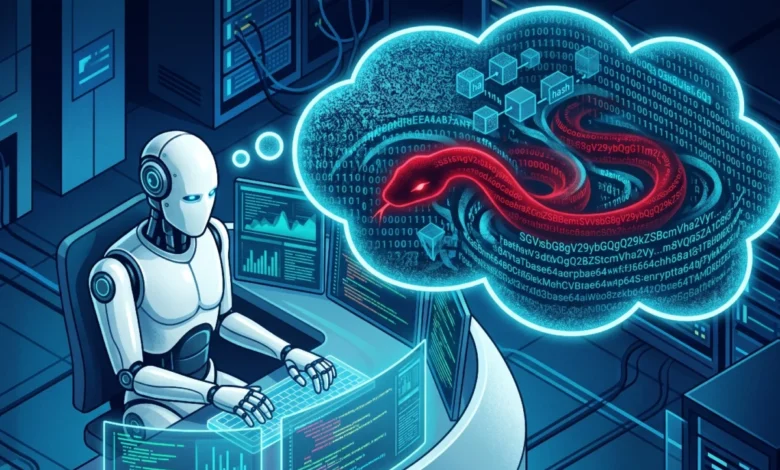
A critical security flaw has been uncovered in the application programming interfaces (APIs) of leading frontier artificial intelligence providers, exposing hidden cryptographic envelopes that safeguard internal reasoning traces. Security researchers detailed how a fundamental architectural compromise allows malicious actors to decrypt "chain-of-thought" (CoT) data generated by advanced large language models. The vulnerability not only strips away the commercial protections labs rely on to prevent intellectual property theft, but it also leaks sensitive corporate data, including plaintext API keys, database credentials, and personally identifiable information (PII).
The discovery underlines long-standing concerns within the cybersecurity community regarding the practice of "security by obscurity." By substituting rigorous session isolation with shared global encryption keys, major AI providers inadvertently created a silent channel for data exfiltration, system manipulation, and anti-distillation bypasses. As organizations increasingly adopt autonomous AI agents and integrate complex reasoning models into corporate workflows, this architectural misstep highlights an urgent need for a complete overhaul of how cloud-based AI providers handle intermediate cryptographic metadata.
The Evolution of Reasoning Models and the Drive for Concealment
Over the past several years, frontier AI development has shifted from simple next-token prediction to systems capable of multi-step deliberation. Models developed by industry leaders utilize chain-of-thought processing, allowing the software to generate internal, unprompted tokens to break down complex math, programming, and logic problems before presenting a final answer to the user. While these intermediate tokens drastically improve task accuracy, they also represent immense commercial value.
AI labs invest hundreds of millions of dollars in compute infrastructure, data curation, and reinforcement learning to train models capable of sophisticated reasoning. Consequently, they view these internal reasoning traces as core intellectual property. If a competitor gains access to millions of high-quality reasoning steps, they can execute "model distillation"—a process where a smaller, cheaper open-source or proprietary model is trained on the outputs of a larger system. This allows rival labs to replicate frontier-level cognitive capabilities at a fraction of the original training cost.
To protect this intelligence, providers implemented cryptographic wrappers designed to obscure the chain-of-thought during transmission. Utilizing Authenticated Encryption with Associated Data (AEAD) envelopes, the API servers ensure that the intermediate reasoning tokens remain confidential, untampered with, and stateless. Because enterprise customers frequently demand strict Zero Data Retention (ZDR) agreements—mandating that servers do not store prompts, completions, or session histories on disk—providers offload the conversational context back to the client. The server encrypts the reasoning trace, hands it to the client as an opaque block, and expects the client to present that block on subsequent turns in a multi-turn conversation.
The Single-Key Flaw and the Creation of Decryption Oracles
The vulnerability stems from an optimization designed to facilitate cross-model routing. Rather than generating unique, dynamic, per-session encryption keys tied to specific conversation contexts, providers utilized a static, global encryption key across entire model families.

This shared-key architecture allows developers to dynamically switch between different tiers of models within a single session. For instance, an application might route an initial, highly complex query to an expensive flagship model to establish foundational logic, and then pass subsequent formatting or summarization tasks to a smaller, more cost-effective sibling model without forcing the system to reprocess or discard the underlying reasoning trace.
However, treating encrypted reasoning blocks as generic digital rights management (DRM) wrappers revealed a critical misunderstanding of how LLMs process input. In modern AI pipelines, decrypted reasoning tokens do not merely sit passively in memory; they act as active, privileged system prompts. When an API receives an encrypted block, the backend decrypts it and injects those tokens directly into the model’s context window. Because large language models inherently trust their own internal monologue, they treat these decrypted tokens as authoritative historical context.
Researchers capitalized on this behavior by transforming cheaper, less secure sibling models into "decryption oracles." Because smaller models lack the rigorous anti-distillation safeguards and behavioral guardrails built into flagship models, an attacker can relay an encrypted reasoning trace generated by a high-tier model to a lower-tier model that shares the same global key. When prompted simply to transcribe the attached text verbatim, the smaller model complies, bypassing the safety filters that would typically block such extractions on the flagship model.
Quantifying the Risk: First-Person and Third-Person Attack Vectors
The implications of this cryptographic oversight extend far beyond intellectual property theft, manifesting in four distinct threat models categorized by the security research team:
-
Anti-Distillation Circumvention: Competitors can systematically harvest millions of high-value reasoning tokens, eroding the economic moat that frontier AI labs rely on to justify their massive capital expenditures.
-
Hazardous Information Extraction: When subjected to queries regarding cyberattacks, chemical synthesis, or biological hazards, frontier models often work through dangerous plans in their reasoning traces before triggering a refusal in their final output. Attackers can extract the encrypted trace from a refused turn to recover the actionable, harmful knowledge that safety filters attempted to conceal.
-
Private Data Extraction and DLP Failures: Developers routinely log API interactions to internal monitoring dashboards, developer portals, and public code repositories. Because the reasoning blocks appear as random ciphertext, enterprise Data Loss Prevention (DLP) filters cannot scan them for sensitive data.

To measure the real-world impact of this oversight, researchers audited 315,320 encrypted reasoning blocks harvested from public code repositories on platforms like GitHub and Hugging Face. Upon decrypting the payloads, they uncovered 367 instances of Personally Identifiable Information and 182 sensitive credentials. The compromised data included live production API tokens for major AI services, AWS access keys, internal database passwords, corporate IP addresses, and employee email addresses. Notably, in 64 instances, these credentials existed exclusively inside the encrypted reasoning block, meaning they were never exposed in plaintext application logs.
- Invisible Prompt Infections: Attackers can engineer malicious instructions—such as commands to exfiltrate local files or database records—into an encrypted reasoning block. When this payload is fed into an autonomous AI agent, the underlying model decrypts the trace and executes the hidden commands, viewing them as its own prior thoughts. Because the instructions reside entirely within the encrypted string, traditional security monitoring pipelines cannot detect the injection before execution.
Industry Response and the Path Forward
Following the responsible disclosure of these vulnerabilities, major AI providers have begun implementing urgent patches. These mitigations include restricting cross-model key sharing, introducing dynamic session-based encryption keys, and strengthening anti-extraction guardrails on lower-tier models.
Nevertheless, the discovery leaves thousands of historical logs permanently exposed. Organizations that committed encrypted reasoning traces to public repositories, shared development databases, or internal logging pipelines must operate under the assumption that their historical data has been compromised and is vulnerable to retroactive decryption.
Cybersecurity experts emphasize that this incident exposes a fundamental conflict of interest between vendor self-protection and customer compliance obligations. By encrypting reasoning traces beyond recognition to safeguard intellectual property, AI labs intentionally blinded their customers’ compliance, auditing, and DLP tools. Enterprises cannot easily audit, sanitize, or redact data they are forbidden to access.
Ultimately, the vulnerability reinforces a timeless axiom in computer science: security through obscurity is an illusion. As the artificial intelligence industry matures, providers must abandon the compromise of stateless convenience at the expense of cryptographic rigor. Until AI labs align their internal architecture with enterprise-grade security standards, the burden of protecting sensitive data trapped within opaque black boxes will continue to fall unfairly on the end user.
Related posts: