Mark Rober Launches Class CrunchLabs to Bring Free, Hands-On STEM Education to U.S. Classrooms

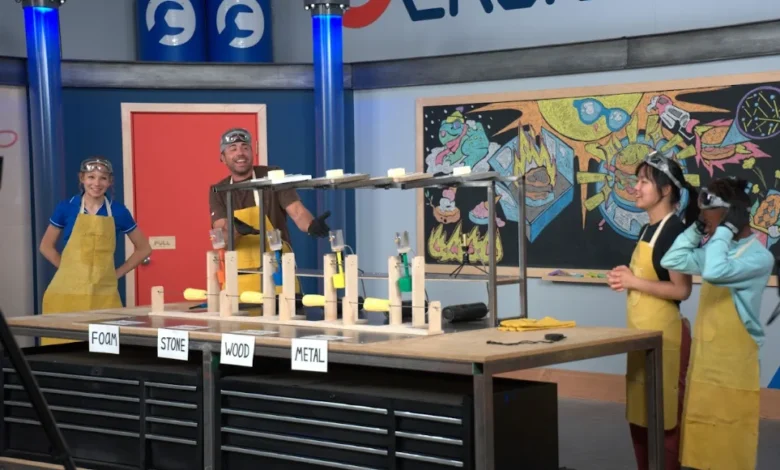
Former NASA engineer and prominent YouTube creator Mark Rober has officially unveiled Class CrunchLabs, an ambitious educational initiative designed to revolutionize middle school science instruction across the United States. Launched on September 29, 2026, the program aims to bridge the widening gap between traditional classroom teaching methods and the dynamic, highly engaging digital media consumed by modern students. With a target of reaching 70 percent of U.S. classrooms by the year 2030, Class CrunchLabs represents a massive $60 million investment in tuition-free, standards-aligned science curriculum intended to inspire the next generation of engineers, scientists, and critical thinkers.
The Genesis of a Digital-Age Curriculum
The inspiration for Class CrunchLabs struck Rober during a casual visit to a colleague’s home, where he asked the employee’s middle school-aged daughter about her current science curriculum. Expecting interactive, modern digital resources, Rober was instead shown an aging VHS tape of Bill Nye the Science Guy paired with a heavily photocopied, decades-old worksheet. This encounter crystallized a troubling reality for Rober: while entertainment and media consumption habits had evolved exponentially over the prior two decades, fundamental classroom science instruction had largely stagnated.
Recognizing his unique position at the intersection of mass-market entertainment and technical expertise—having spent years designing mechanical engineering projects for NASA’s Curiosity rover and cultivating an audience of tens of millions on YouTube—Rober decided to tackle the problem head-on. Rather than developing a commercial product designed to generate revenue, Rober and his team resolved to construct a comprehensive, multi-year curriculum for grades six through eight that would be offered to educators entirely free of charge, permanently.
Core Structure and Initial Course Offerings
Class CrunchLabs debuts with two comprehensive digital courses: "Carnival of Collisions" and "Mission Maglev." These foundational units leverage dozens of high-production-value videos paired with rigorous supplemental teaching resources, interactive challenges, and classroom activities.
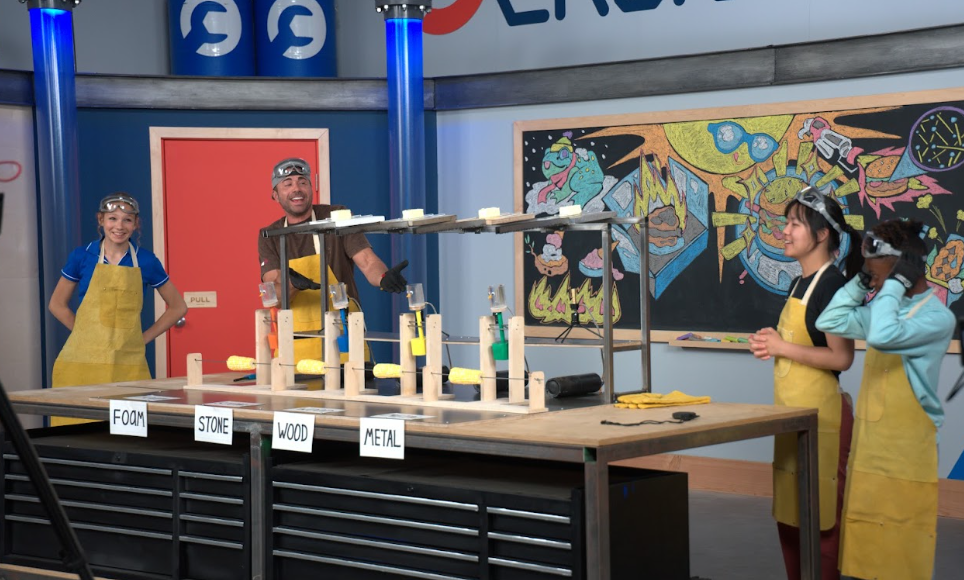
"Carnival of Collisions" utilizes the physics of classic carnival games to teach students complex principles regarding contact forces and kinetic energy. By reframing traditional physics problems into engaging scenarios—such as calculating how to stop a runaway truck with failing brakes—students are encouraged to debate, hypothesize, and work collaboratively to discover scientific solutions. Meanwhile, "Mission Maglev" introduces learners to the fascinating world of magnetic and electric forces, demonstrating how these invisible fields can be harnessed to make heavy machinery float.
Over the coming months, the platform plans to release a continuous stream of additional science courses aligned with national educational standards. Upon full completion, the program will encompass more than 1,000 distinct instructional videos localized in 34 languages, ensuring broad accessibility for diverse student populations.
Collaborating with Global Experts and Educational Institutions
To ensure the curriculum meets rigorous academic standards, CrunchLabs has partnered with esteemed organizations such as the National Science Teaching Association (NSTA) and NASA. By working directly alongside institutional bodies and veteran educators, Rober aims to eliminate the administrative friction that often hinders the adoption of new teaching tools in public schools.
Furthermore, the initiative places a heavy emphasis on representation and inclusivity. Understanding the maxim that children "cannot be what they cannot see," Class CrunchLabs features a diverse array of guest scientists, engineers, and digital creators representing various cultural backgrounds, genders, and international origins. Collaborations with popular creators such as ElectroBOOM and How Ridiculous inject additional enthusiasm into the lessons, blending rigorous academic content with charismatic digital storytelling.
Equity and Economic Accessibility in Modern Science Education
A central challenge in contemporary educational reform is resource disparity between affluent districts and underfunded Title I schools. To address this systemic inequity, CrunchLabs has intentionally engineered its hands-on experiments around zero-cost materials.
Rather than requiring specialized laboratory equipment that many public schools cannot afford, the curriculum relies on everyday items readily found in school supply closets or local recycling bins. Activities utilize common materials such as cardstock, rubber bands, plastic straws, binder clips, and bottle caps. For example, a forthcoming unit on potential energy playfully titled "Science Blob" replaces expensive accelerometers with a simple arrangement involving a Ziploc bag, a paper-clip-laden paper cutout, and common household items acting as a G-force monitor for less than a single penny. This ensures that a student in an under-resourced rural school district experiences the exact same quality of experiential learning as a peer in a private academy with unlimited funding.
The Broader Impact and Industry Implications
The launch of Class CrunchLabs arrives at a critical juncture for American education. National assessments have repeatedly highlighted declining proficiency scores in STEM (Science, Technology, Engineering, and Mathematics) subjects among middle school students, a trend exacerbated by the lingering disruptions of the COVID-19 pandemic. Traditional lecture-based instruction frequently fails to capture the sustained attention of digital natives accustomed to interactive media.
By combining the psychological engagement strategies of top-tier YouTube content with pedagogical frameworks vetted by professional educators, Rober’s initiative represents a potential blueprint for future public-private educational partnerships. Educational analysts note that projects of this scale—funded largely through private enterprise and philanthropic determination rather than public taxation—could shift expectations for how supplemental learning tools are developed and distributed globally.
As Rober dedicates a significant portion of his professional life and personal time over the next several years to volunteering for the project, the education sector watches with cautious optimism. If Class CrunchLabs successfully achieves its benchmark of penetrating 70 percent of U.S. classrooms by 2030, it may fundamentally redefine how science is taught, learned, and appreciated in the twenty-first century.