
The Provenance Tax: How LLM Watermarking Alters AI Agent Behavior and Threatens Operational Reliability

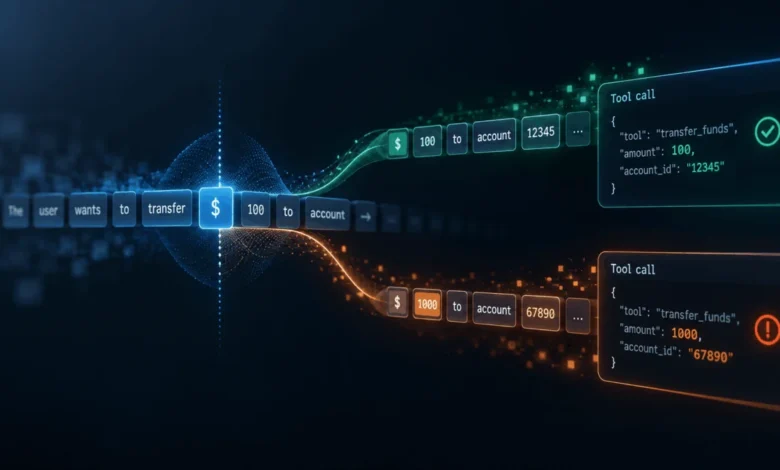
Watermarking artificial intelligence models has long been championed by regulators and developers as a frictionless solution to the growing crisis of synthetic media. By embedding an invisible, cryptographically verifiable statistical signature directly into generated text, providers can trace the provenance of content without noticeably altering the human reading experience. However, groundbreaking new research from cybersecurity firm Lasso Security reveals a critical, overlooked vulnerability in this paradigm: when watermarked large language models (LLMs) are deployed as autonomous AI agents capable of executing tools and making programmatic decisions, the verification mechanism introduces an unintended and potentially hazardous side effect known as "sampling drift."
The study, which examined Google DeepMind’s prominent SynthID-Text watermarking methodology across several open-source models, demonstrates that enabling a watermark does much more than subtly alter prose. It can fundamentally alter tool selection, corrupt argument generation, and unpredictably shift a model’s susceptibility to adversarial prompt injections. As international regulatory bodies mandate synthetic content labeling and major technology conglomerates rush to implement text provenance frameworks, these findings expose a profound tension between traceability and behavioral reliability in enterprise AI systems.
Understanding the Mechanics of Sampling Drift
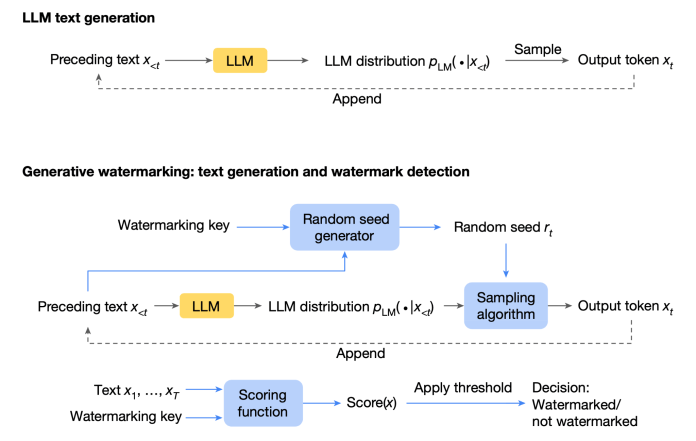
To comprehend why a provenance-tracking tool can destabilize software execution, one must examine the fundamental mechanics of how generative text models produce output. At each step of generation, an LLM calculates a high-dimensional probability distribution over its vocabulary, assigning numerical likelihoods to every potential next token. Under standard operating conditions, a sampling algorithm selects from these probabilities to construct a sentence.
Google DeepMind’s SynthID-Text modifies this foundational process through a technique called tournament sampling. Rather than passively observing token generation or appending metadata after the fact, SynthID actively intervenes during the sampling phase. It draws multiple candidate tokens from the model’s probability distribution and pits them against one another in a tournament governed by pseudorandom scores derived from a secret watermark key and the immediate text context. The tournament winner becomes the next generated token, establishing a subtle statistical pattern that can later be mathematically detected by anyone holding the corresponding key.

Google DeepMind originally reported that SynthID-Text preserves the underlying token distribution closely enough to ensure no measurable reduction in text quality across millions of live Gemini interactions. For human-facing applications, substituting one plausible synonym for another—such as swapping "furthermore" for "moreover"—is entirely harmless.
However, inside an AI agentic loop, the tolerance for textual variance drops to zero. A language model acting as an autonomous agent does not merely write essays; it generates JSON schemas, SQL queries, financial transaction values, API parameters, and file system paths. When a watermark key alters even a single token within a high-entropy decision point—where the model is genuinely uncertain about what should come next—that minute shift cascades. A modified token within a string can transform a benign parameter into a catastrophic error, turning an intended data query into an entirely different programmatic action.
Experimental Findings and the Measurement of Churn
To quantify this phenomenon, Lasso Security conducted rigorous paired experiments across multiple open-weight models, meticulously isolating the watermark variable by holding seeds, batch composition, sequence ordering, and temperature settings constant. The researchers evaluated tool-calling capabilities using the Berkeley Function Calling Leaderboard (BFCL v4) and tested safety parameters using 200 harmful prompts from HarmBench alongside 100 benign controls from Jailbreakbench.
The results paint a sobering picture of algorithmic instability. Across six of the seven tested models designed for tool execution, enabling SynthID watermarking resulted in degraded accuracy, with four of those drops proving statistically significant. Yet, aggregate accuracy scores alone obscured the true volatility of the systems.
To capture this hidden instability, Lasso introduced the metric of "churn"—the paired disagreement rate measuring the exact percentage of individual tasks whose correctness verdicts inverted between watermarked and unwatermarked runs. Across 21 distinct combinations of models and temperature settings, the average churn rate hovered at 6.5%. In some instances, the discrepancy between headline accuracy and actual behavioral churn was staggering. For example, when evaluated at a temperature of 1.0, the phi-4 model exhibited a churn rate of 16.8%, meaning nearly one in five individual tool-calling decisions changed entirely, even though its overall aggregate accuracy fell by a mere 2.87 percentage points. Similarly, Llama-3.1-8B demonstrated 9.9% churn while losing less than a single percentage point of aggregate accuracy.
This divergence carries immense practical implications. While aggregate accuracy metrics reassure enterprise developers that a model’s macro-performance remains stable post-watermarking, churn reveals that individual production runs are experiencing unpredictable micro-fluctuations. For an automated agent managing infrastructure, supply chains, or customer databases, a 10% churn rate in decision pathways introduces an unacceptable operational risk.
Divergent Failure Modes Across Model Architectures
Lasso’s evaluation further revealed that different model families degrade in entirely distinct ways when subjected to watermark-induced sampling drift. Tool-calling failures generally manifest across three categories: incorrect tool selection, erroneous arguments, and malformed outputs that break structural parsing.
For Llama-3.1-8B, the vast majority of accuracy loss stemmed from incorrect arguments, accounting for a 3.48-point decline, supplemented by a 1.84-point drop in wrong-tool selections. Conversely, models like Microsoft’s phi-4 and IBM’s Granite-3.2-8B suffered primarily from malformed outputs, registering performance declines of 5.96 and 4.36 points, respectively.
The distinction between these failure modes is critical for enterprise security architects. Malformed tool calls typically trigger parsing errors within the software harness, causing the execution to abort safely before any operational damage occurs. However, a structurally valid tool call populated with incorrect arguments—such as a shifted decimal amount in a financial transfer, a corrupted date, or an altered file path—will effortlessly pass basic schema validation checks and execute downstream, resulting in unintended real-world consequences. Schema validation, while vital, remains entirely blind to whether an argument’s semantic value matches the user’s explicit intent.
Safety Implications and the Amplification of Prompt Injection

Beyond functional tool use, Lasso investigated whether sampling drift compromises the safety guardrails of frontier models, particularly under adversarial conditions. The researchers tested model refusal behaviors against harmful prompts, both natively and when subjected to a fixed prompt-injection attack disguised as retrieved external content.
The findings indicate that watermarking can significantly amplify a model’s vulnerability to manipulation. At a near-zero temperature setting of 0.001, Google’s Gemma-3-27B model exhibited a 6% churn rate on original harmful prompts. However, when subjected to prompt injection alongside the watermark, its behavioral churn surged to 23.5%, accompanied by a dramatic 12.5-percentage-point increase in harmful compliance. Gemma-3-12B displayed a parallel trajectory, with attack success rates jumping by nine percentage points under the same conditions.
Crucially, Lasso’s research uncovered that the specific cryptographic watermark key utilized during generation acts as an active determinant of model behavior. By cycling through 11 different keys for the prompt-injection experiments, researchers observed that simply rotating the watermark key could violently shift both the magnitude and the directional vector of the model’s safety failures. For Llama-3.1-8B and Granite-3.2-8B, altering the watermark key produced fluctuations in attack success ranging from a 4.5-point decrease to a 14.5-point increase relative to the unwatermarked baseline.
While these findings do not establish a universal rule that watermarking inherently drives models toward compliance with malicious actors, they conclusively prove that watermarking is not a passive observational layer. When high-entropy decision boundaries coincide with safety boundaries, the statistical steering of tournament sampling can tip a model across the threshold from refusal to compliance.
Regulatory Pressures and the Broader Industry Impact
The timing of Lasso’s research coincides with an escalating collision between regulatory mandates and commercial product rollouts. In August, Anthropic announced that future iterations of its Claude model family would incorporate a proprietary variant of SynthID-Text watermarking, asserting that the mechanism is functionally transparent to users. Concurrently, Article 50 of the European Union AI Act officially mandates that providers of systems generating synthetic text, audio, video, or image content ensure their outputs are machine-readable and clearly flagged as artificial.

To comply with these emerging legal frameworks, enterprise developers are rapidly integrating watermarked endpoints into production pipelines without accounting for the downstream behavioral consequences. The assumption that provenance mechanisms exist in a vacuum, entirely decoupled from model cognition and reasoning, is comprehensively dismantled by Lasso’s data.
Industry Reaction and Recommendations for Enterprise Deployment
In light of these findings, AI safety researchers and developers are calling for a fundamental reassessment of how watermarking is evaluated and deployed. Andrea Siposova, AI Security Researcher at Lasso, emphasizes that provenance and behavioral reliability must no longer be treated as isolated engineering concerns.
"Our findings support evaluating provenance and behavioral reliability together," Siposova noted. She advocates for model providers to publish comprehensive capability and safety evaluations specifically benchmarking watermarked configurations against their unwatermarked counterparts, covering instruction-following, tool execution, and adversarial robustness.
For enterprise engineering teams currently building agentic workflows, the implications demand an immediate hardening of runtime environments:
- Granular Pre-Deployment Testing: Organizations must run application-specific regression tests against the exact watermarked API configuration destined for production, separating macro-accuracy scores from micro-churn metrics.
- Independent Argument Validation: Because schema validators cannot verify semantic intent, developers must implement pre-execution middleware and hooks to cross-reference tool arguments against trusted system states, authenticated session identities, and explicit user inputs.
- Decoupling Execution from Generation: Critical actions that cannot be independently verified by automated guardrails must incorporate human-in-the-loop confirmation loops, ensuring a distinct structural barrier between the AI agent’s proposed action and the application’s final execution authority.
As generative artificial intelligence transitions from conversational novelties to autonomous agents running enterprise infrastructure, the hidden tax of provenance tracking can no longer be ignored. Watermarking is not merely a digital fingerprint stamped onto a finished product; it is an active algorithmic intervention that reshapes the digital cognitive landscape. Navigating this new reality will require unprecedented transparency from model providers and rigorous, defense-in-depth engineering from the enterprises deploying them.