The Megapixel Myth: Understanding the True Value of Sensor Resolution in Modern Photography

Buying a camera often comes down to one singular, dominant metric: the megapixel count. Manufacturers prominently feature this number on product packaging, gear reviewers frequently lead with it, and consumers often cite it as the primary justification for upgrading their equipment. However, seasoned professional photographers and imaging engineers consistently argue that megapixels represent one of the least significant specifications for the vast majority of shooting scenarios. While marketing campaigns have successfully ingrained the "more is better" philosophy into the public consciousness, the reality of digital imaging is far more nuanced, involving a complex interplay of optics, sensor technology, and intended output.

The Historical Evolution of the Megapixel Race
To understand why the industry remains obsessed with resolution, one must look at the chronology of digital camera development. In the late 1990s and early 2000s, resolution was the primary bottleneck of digital imaging. Early consumer cameras offered resolutions as low as 0.3 megapixels (VGA), which struggled to resolve basic detail. Throughout the 2000s, the "megapixel race" saw manufacturers doubling, then tripling, sensor resolution every few years to keep pace with analog film quality.
By the early 2010s, cameras began reaching the 20-megapixel threshold, a point where the resolution was sufficient for high-quality prints and professional display. Yet, the race did not stop. Today, we see consumer-grade cameras pushing 40, 60, and even 100 megapixels. This progression was fueled by the transition from CCD to CMOS sensors, which allowed for faster data readout and lower power consumption, enabling higher resolutions without sacrificing battery life or processing speed.

Defining the Megapixel
A megapixel (MP) is defined as one million pixels. In a digital image, these pixels are the smallest individual units of information—tiny colored squares that, when viewed from a distance, form a cohesive photograph. The calculation is straightforward: one multiplies the horizontal pixel count by the vertical pixel count. For example, a 6000 x 4000 pixel image results in 24,000,000 pixels, or 24 megapixels.
The misconception lies in the belief that more pixels automatically translate to better image quality. In truth, megapixels dictate only the potential for detail. A high-resolution image is not necessarily a "good" image. Factors such as the quality of the glass (lens), the sensor’s dynamic range, the signal-to-noise ratio, and color depth contribute significantly more to the aesthetic and technical quality of a final output than the raw count of pixels.

The Diminishing Returns of Resolution
For the average photographer, the utility of high-megapixel sensors reaches a point of diminishing returns very quickly. Most photographic content produced today is destined for digital display. Social media platforms, for instance, heavily compress images, often reducing them to a resolution equivalent to 2 megapixels or less. Even high-end 4K monitors, which are increasingly common in professional settings, can only display roughly 8 megapixels of data. Consequently, a user capturing images at 45 or 60 megapixels is often discarding the vast majority of that information the moment they upload it to a web-based gallery or social feed.
Data from recent industry surveys suggests that less than 5% of all consumer-captured photographs are ever printed, and of those, the overwhelming majority are printed at sizes smaller than 8×10 inches. At these dimensions, a 12-megapixel image, when properly exposed and focused, is virtually indistinguishable from a 50-megapixel file.

When Resolution Actually Matters: Professional Applications
Despite the saturation of the market, there are specific, data-driven instances where higher resolution is not merely a marketing gimmick but a functional requirement.
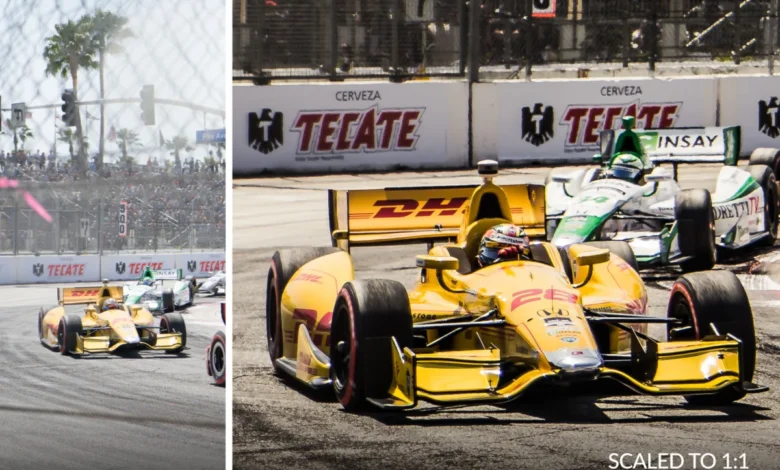
- Extreme Cropping: For wildlife and sports photographers, the ability to crop into a frame while maintaining sufficient detail for a sharp image is critical. If a photographer is shooting a bird from a distance with a fixed focal length lens, a 50-megapixel sensor allows them to crop away 75% of the image and still possess a usable, high-resolution file.
- Large-Format Printing: In commercial, fashion, and advertising photography, images are often required for large-scale displays, such as building wraps, billboards, or full-page spreads in luxury magazines. In these instances, the "pixel density" or dots-per-inch (DPI) becomes vital to prevent pixelation when viewed at close range.
- Studio Flexibility: Commercial photographers often use high-resolution medium format systems to capture a single "master" file. From this single high-resolution capture, they can extract multiple, high-quality, high-resolution compositions—such as a close-up of a subject’s eyes or a detail shot of a product—allowing for massive efficiency in editorial workflows.
The Hidden Costs of the Megapixel War
Beyond the initial investment in a high-resolution camera body, there are significant downstream implications that consumers often overlook.

Storage and Data Infrastructure: The storage requirements for high-resolution cameras are staggering. A 50-megapixel RAW file can easily exceed 50-70 megabytes. For a wedding photographer capturing 4,000 images per event, this equates to roughly 200-300 gigabytes per wedding. Over the course of a year, this necessitates expensive, high-capacity, and redundant RAID storage systems, which represent a significant overhead for small businesses.
Computational Load: High-resolution files demand more powerful computer hardware. Editing thousands of images from a 60-megapixel sensor requires significant RAM, high-end graphics processing units, and faster processors. Workflow bottlenecks become common, as software must render larger previews and perform more complex calculations during noise reduction and color grading.

The "Downsampling" Advantage
One counter-intuitive phenomenon in digital imaging is that high-resolution sensors can actually produce cleaner images when downsampled. When a 36-megapixel image is resized down to 16 megapixels, the process of averaging the pixel data can significantly reduce visible noise and improve the signal-to-noise ratio. This technique is often used by low-light photographers who prefer the flexibility of a high-resolution sensor but require the clean, low-noise output of a lower-resolution file.
Industry Perspectives and Future Implications
Industry experts often point out that we are approaching the physical limits of sensor technology. As pixels become smaller to fit more onto a single sensor, they become less efficient at collecting light, which can negatively impact dynamic range and high-ISO performance. This is why many professional video-centric cameras cap their resolution at around 12 to 24 megapixels; larger pixels are simply better at capturing light in challenging environments.

The consensus among imaging professionals is that the "Megapixel War" is entering a maturity phase. Moving forward, innovation is shifting away from simple resolution increases toward improved autofocus, artificial intelligence-driven image processing, and enhanced dynamic range.
For the vast majority of enthusiasts, the message is clear: if you are not printing on a massive scale or frequently cropping your images to a significant degree, your money is likely better spent on high-quality optics (lenses) or lighting equipment. A lower-resolution camera with a superior lens will almost always produce a more aesthetically pleasing image than a high-resolution camera paired with mediocre glass. The goal of photography remains the capture of light, composition, and emotion; megapixels are merely the container for that capture, and once the container is large enough for the intended purpose, any additional capacity is merely excess baggage.