Native Instruments Unveils Super*Saw Synthesizer in Collaboration with PC Music Founder A. G. Cook

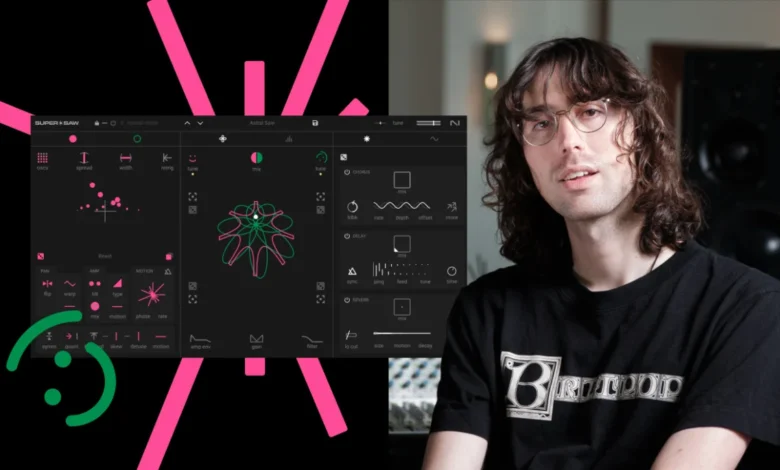
Native Instruments has officially announced the launch of Super*Saw, a specialized virtual instrument designed in collaboration with producer, visionary artist, and PC Music founder A. G. Cook. Pronounced "SuperStarSaw," the newly released synthesizer focuses entirely on the audio architecture of the stacked sawtooth wave—a waveform configuration that emerged during the virtual analog revolution of the 1990s and subsequently became a defining fixture of euphoric pop music, rave anthems, and wall-of-sound club productions.
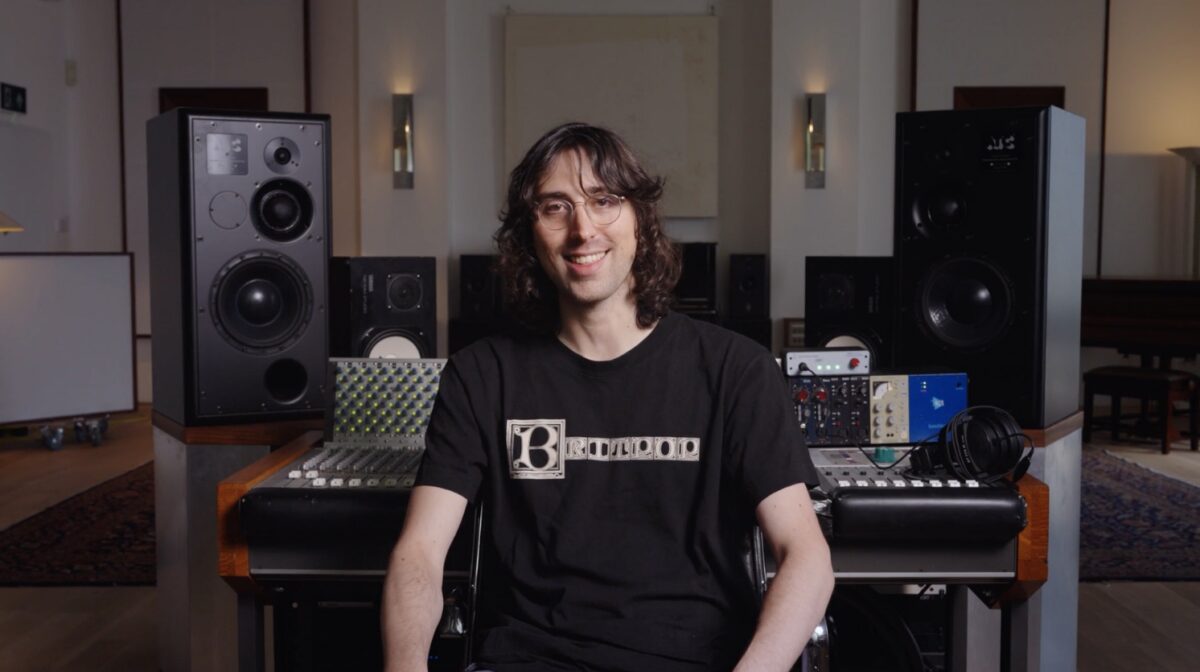
The instrument is now available globally through the Native Instruments ecosystem. To mark the release, Cook demonstrated the software’s capabilities during an exclusive session at Baltic Studios in London, highlighting how the plugin condenses complex, multi-layered DAW workflows into a single, real-time expressive interface.
Main Facts and Technical Architecture
At its core, Super*Saw is engineered to address a very specific sonic signature: the aggressive, harmonically rich sawtooth wave. While a single sawtooth wave provides a sharp and piercing foundation, historical electronic music production relied on "stacking"—detuning dozens of these oscillators simultaneously to create massive, wall-of-sound textures.
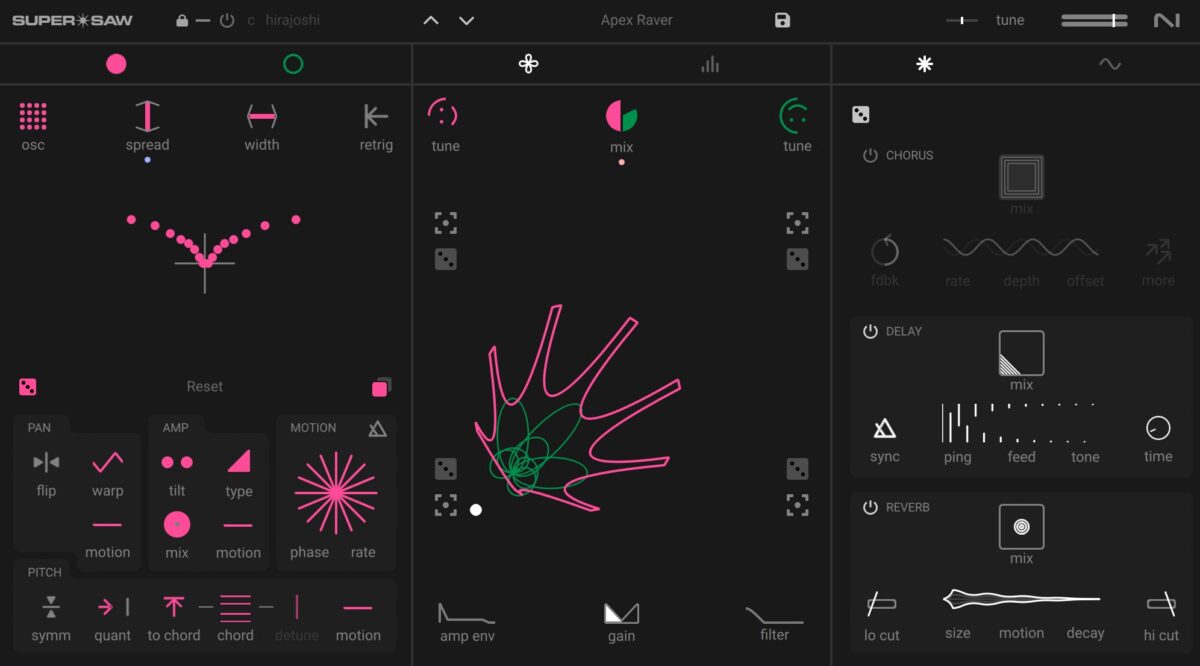
Super*Saw formalizes this technique through a dual 8-voice sawtooth oscillator system. The architecture is divided into two distinct, color-coded visual and functional layers: pink and green. According to Cook, this dual-layering approach mirrors his own studio methodologies.
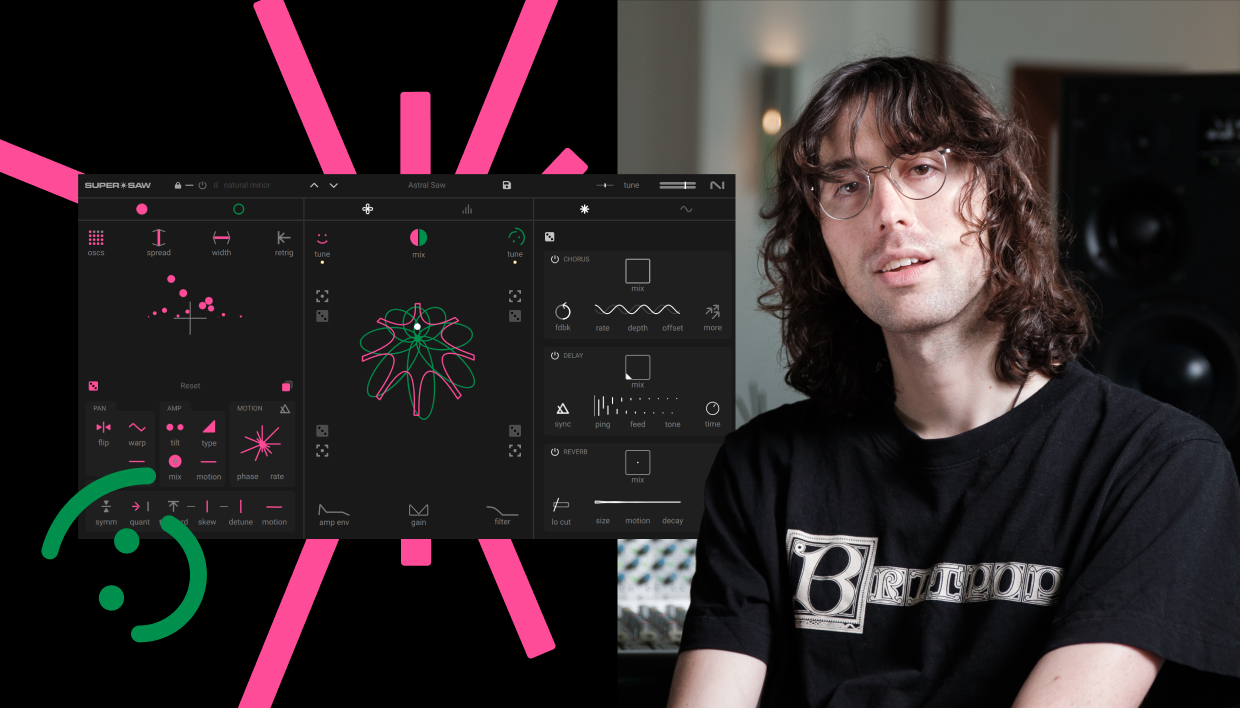
"I had a strong sense that it would be two layers, these two groups, because that’s often how I think about building sounds," Cook stated during his studio walkthrough. "It’s almost like having a comedic duo. One half could be going crazy and the other half could be anchoring it with a fundamental note. It then became obvious that pink and green would stack really well while feeling distinct."
Rather than requiring static automation or cumbersome internal routing, the plugin incorporates a 4-corner Morpher. This interactive control allows producers to smoothly transition between different chord shapes, detuning rates, and modulation states on the fly. Furthermore, the instrument includes a star-shaped modulator that can be mapped independently to panning, amplitude, or pitch, alongside a randomization engine designed to inspire unexpected sonic variations.
Background Context and Evolution of the Supersaw
The cultural lineage of the supersaw dates back to the mid-1990s, most notably popularized by the Roland JP-8000 synthesizer released in 1997. The hardware introduced a dedicated "Super Saw" waveform that instantly combined multiple sawtooth waves with individual phase and pitch offsets within a single voice. This innovation allowed electronic music producers to achieve massive, stadium-filling leads without exhausting limited polyphony or chaining multiple outboard synthesizers.
Over the subsequent decades, the supersaw evolved from a trance music staple into a fundamental building block across various electronic genres. In the 2010s, the emergence of the PC Music record label—founded by A. G. Cook in 2013—recontextualized the sound. Cook, alongside frequent collaborators such as the late SOPHIE, Charli XCX, and Caroline Polachek, pushed digital production to hyper-maximalist extremes. By stacking virtual instruments to unprecedented densities, producers blurred the line between melodic chords and percussive noise blocks.
Chronology and Development Phase
The development of Super*Saw represents the culmination of a long-standing ambition for Cook, whose production credits span a decade of avant-garde pop and electronic music. Prior to the creation of the plugin, achieving Cook’s signature sound required labor-intensive studio workarounds.
In past projects—such as his tracks "Stargon" and "Superstar," as well as his expansive 2020 multi-album project 7G and subsequent solo records like Apple and Britpop—Cook relied on complex session routing. Achieving the characteristic movement and thickness of his chord progressions necessitated duplicating tracks across multiple Digital Audio Workstations (DAWs), manually writing meticulous automation curves, and layering independent third-party plugins to manage detuning parameters.
"Doing some of those more classic A. G. Cook-style supersaw sounds can sometimes be the slowest part of my process," Cook explained. "I was doing these long workarounds, and it never felt like I was playing the synths or interacting with them in a musical way."
Discussions between Cook and Native Instruments eventually led to the conceptualization of a dedicated tool that would encapsulate these workflows. The resulting software serves as a functional synthesis of his decade-long catalog, directly referencing the aesthetic and sonic worlds of his previous releases.
Industry Implications and Workflow Impact
The release of SuperSaw reflects a broader trend in music technology toward hyper-focused, genre-specific virtual instruments. Rather than attempting to serve as an all-encompassing workstation synth, SuperSaw restricts its parameters entirely to sawtooth waves, forcing producers to explore the creative boundaries of a single foundational waveform.
Industry analysts note that artist-led plugin development has become an increasingly vital sector of the music software market. By translating personal studio workflows into commercially viable tools, software developers like Native Instruments provide independent producers with access to complex sound-design techniques that previously required advanced audio engineering expertise or tedious multi-plugin chains.
For Cook, the instrument functions as both a practical studio utility and a retrospective milestone. "This plugin is a sort of coda, epilogue, or final chapter to the albums that I’ve already released as A. G. Cook," he noted. "It feels more exciting than just making a big sample pack of all those sounds, to think about boiling that stuff down into an instrument that can be used by other people in completely different ways."
Commercial Availability
Super*Saw is compatible with major Digital Audio Workstations and is available immediately for purchase and digital download through the official Native Instruments platform. The release is expected to attract electronic music producers, pop composers, and sound designers seeking to replicate or expand upon the high-density aesthetic pioneered by PC Music and modern electronic pop innovators.