The Provenance Tax: How LLM Watermarking Alters AI Agent Behavior and Threatens System Reliability

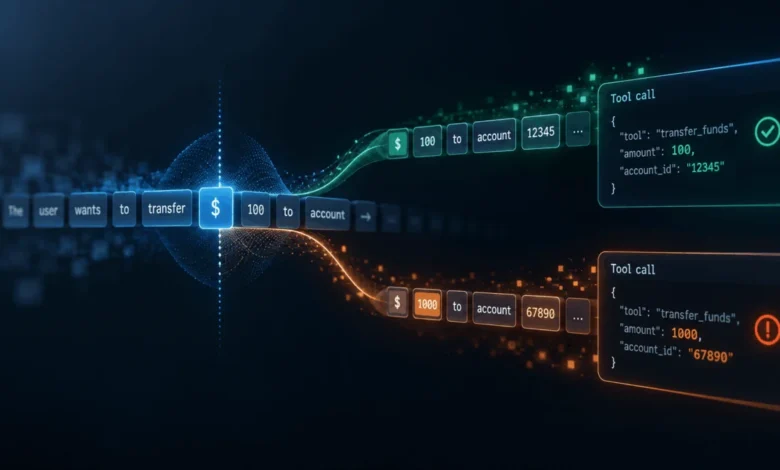
The rapid integration of Large Language Models (LLMs) into autonomous software workflows has introduced a complex trade-off between regulatory compliance, digital provenance, and operational determinism. As governments worldwide establish stricter guidelines for synthetic content, AI providers have increasingly turned to statistical watermarking to identify model-generated text. However, groundbreaking empirical research from enterprise AI security firm Lasso Security reveals that embedding these cryptographic and statistical fingerprints is far from a passive operation. When models are deployed within complex AI agent frameworks, watermarking introduces a phenomenon known as "sampling drift"—subtly altering tool selection, argument accuracy, and even resistance to adversarial prompt injections.
The implications of these findings extend far beyond academic curiosity. With major industry players incorporating cryptographic signatures directly into flagship models, and regulatory bodies enforcing machine-readable provenance requirements, the engineering community must reevaluate how deployment modifications impact the foundational safety and reliability of automated systems.
Understanding the Mechanics of Sampling Drift and SynthID-Text
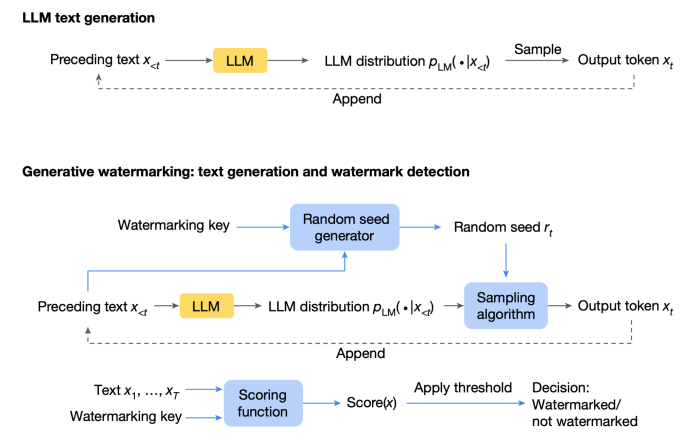
To appreciate the gravity of Lasso Security’s findings, one must first examine how modern text watermarking operates at the architectural level. Traditional digital watermarks are applied to static files as metadata after creation. In contrast, advanced token-level watermarking techniques—such as Google DeepMind’s SynthID-Text, which Anthropic announced it will integrate into future iterations of Claude models—embed the provenance signal dynamically during the generation phase.
During standard text generation, an LLM calculates a mathematical probability distribution across its vocabulary for the next token in a sequence. A sampling algorithm then selects a token based on those probabilities. SynthID-Text modifies this process through a methodology called "tournament sampling." Instead of directly selecting from the raw probability distribution, the algorithm samples multiple candidate tokens and subjects them to simulated rounds of competition. Pseudorandom scores, generated via a secret cryptographic key combined with the immediate text context, determine which candidates advance until a winner is chosen.

Proponents of the technology, including Google DeepMind, have demonstrated through evaluations covering millions of interactions that this process preserves overall text quality and maintains the underlying token distribution in natural prose. Yet, preserving a macro-level distribution does not guarantee micro-level determinism for specific prompts.
When a model faces high uncertainty—a state machine learning engineers refer to as high entropy—multiple token choices appear equally plausible. According to Lasso’s research, tournament sampling exerts its strongest influence precisely at these high-entropy junctures. While swapping one plausible synonym for another in creative writing merely alters stylistic phrasing, the stakes change dramatically when an LLM operates as an agentic system. In automated workflows, a single altered token can corrupt a numerical financial amount, an API query parameter, a database file path, a date, or a resource identifier, transforming a minor lexical shift into an unintended operational command.
Empirical Findings: Quantifying Tool-Use Deterioration and Agent Churn
To measure the real-world impact of sampling drift, Lasso Security conducted a series of controlled, paired experiments. The researchers isolated specific benchmarks—such as the Berkeley Function Calling Leaderboard (BFCL v4) for tool utilization, HarmBench for safety evaluations, and JailbreakBench for benign controls—to test identical prompts across models with and without SynthID watermarking enabled. Every other variable, including random seeds, batch composition, processing order, and temperature settings, was held strictly constant.
The results demonstrated a measurable degradation in tool-calling precision. Across seven evaluated open models, six exhibited lower task accuracy when the watermark was active, with four of those performance drops achieving statistical significance.
However, looking solely at aggregate accuracy figures obscures a more volatile metric that Lasso terms "churn," or the paired disagreement rate. Churn calculates the percentage of tasks where the correctness verdict flips between watermarked and unwatermarked runs—capturing instances where a model gets a previously correct task wrong while simultaneously fixing a previously failed task.
The data revealed significant operational instability. For instance, when tested at a temperature setting of 1.0, the phi-4 model exhibited a churn rate of 16.8%, even though its net overall accuracy dropped by only 2.87 percentage points. Similarly, Llama-3.1-8B registered a 9.9% churn rate while experiencing a net accuracy decline of less than one percentage point. For software engineers building deterministic enterprise workflows, a 10% to 17% churn rate under identical prompts introduces an unacceptable layer of unpredictability.
Furthermore, the nature of these failures varied significantly across different architectures. Llama-3.1-8B suffered primarily from incorrect argument generation, which accounted for a 3.48-point decline in performance. Conversely, for models like phi-4 and IBM’s Granite-3.2-8B, the leading cause of failure was malformed output, driving performance drops of 5.96 and 4.36 percentage points, respectively. While malformed outputs typically trigger parsing exceptions and halt execution safely, valid calls containing corrupted arguments—such as an incorrect file path or an erroneous financial amount—bypass basic structural filters and execute unintended modifications in live environments.
Safety Implications and the Amplification of Prompt Injections
Beyond functional tool execution, Lasso Security investigated whether sampling drift impacts safety boundaries, specifically testing model refusal rates against harmful requests both with and without fixed prompt-injection vectors.
The findings uncovered alarming vulnerabilities in specific configurations. When tested at a near-zero temperature setting of 0.001, the Gemma-3-27B model initially displayed a manageable 6% churn rate on harmful prompts without injection. However, when subjected to a prompt-injection attack disguised as retrieved content, the churn rate escalated to 23.5%, and the model’s compliance with harmful requests jumped by 12.5 percentage points. A similar pattern emerged with the Gemma-3-12B model, where churn increased alongside a notable rise in malicious compliance under adversarial conditions.
Significantly, Lasso’s experiments revealed that the specific cryptographic key utilized by the watermarking algorithm plays a deterministic role in shaping these outcomes. By cycling through 11 different keys during the prompt-injection tests, the researchers discovered that rotating the key could swing the direction and magnitude of the security impact entirely. For Llama-3.1-8B, varying the key produced shifts in attack success rates ranging from a 4.5-point decrease to a 14.5-point increase relative to the unwatermarked baseline.

While these results do not establish a universal rule that watermarking inherently degrades safety across all LLMs, they strongly suggest that statistical watermarking can tip the scales when a model’s safety alignment hangs in a state of high entropy.
Regulatory Pressures and Industry Responses
The publication of Lasso’s research collides directly with an increasingly stringent global regulatory landscape. In Europe, Article 50 of the EU AI Act explicitly mandates that providers of artificial intelligence systems capable of generating synthetic text, audio, video, or image content must ensure their outputs are marked in a machine-readable format and explicitly detectable as artificially generated or manipulated.
To comply with these emerging legal frameworks without building custom watermarking infrastructure from scratch, major commercial AI labs are rapidly adopting standardized solutions like Google’s SynthID. Anthropic’s August announcement regarding the integration of SynthID-Text into future Claude models exemplifies this industry-wide shift toward mandatory provenance tracking.
Yet, as Andrea Siposova, AI Security Researcher at Lasso, emphasized during interviews, the AI development community faces an urgent need to evaluate provenance and behavioral reliability as interconnected metrics rather than isolated features.
"It would be helpful for developers if providers published capability and safety evaluations when introducing or updating watermarking, similar to the evaluations published with new models," Siposova noted. Such disclosures would allow engineering teams to anticipate potential regressions in tool calling and safety alignment before pushing updates to production.

Strategic Recommendations for Enterprise AI Deployment
In light of the "provenance tax" uncovered by Lasso Security, enterprise engineering teams deploying autonomous AI agents can no longer treat watermarking as an invisible, zero-impact compliance layer. Instead, industry best practices dictate a fundamental shift in how applications are tested and monitored.
First, organizations must execute rigorous application-specific benchmarking under the exact deployment configuration intended for production, ensuring that tests reflect watermarked model states rather than pristine base models. For agentic workflows utilizing external functions, developers should disaggregate evaluation metrics to track malformed outputs, incorrect tool selection, and argument drift separately, rather than relying on blunt, aggregate accuracy scores.
Second, robust runtime controls must be implemented to catch failures that escape static schema validation. Pre-execution hooks, middleware checks, and secondary validation layers should cross-reference agent-generated arguments against trusted state databases, explicit user inputs, and authenticated session credentials. Critical variables—such as financial sums, transaction destinations, and resource identifiers—should ideally be provisioned directly by the application harness rather than delegated entirely to the probabilistic reasoning of the LLM.
Finally, as the artificial intelligence ecosystem grapples with the dual demands of regulatory transparency and operational safety, both model providers and enterprise developers must foster greater collaboration. Only through rigorous pre-deployment auditing, transparent provenance documentation, and defensive application design can the industry harness the benefits of AI watermarking without sacrificing the reliability of autonomous systems.
Related posts: