Mastering the Art of Bridge Photography: A Comprehensive Technical Guide for Architectural Imaging

Bridges represent one of the most enduring intersections of human ingenuity and environmental adaptation, serving as both vital infrastructure and compelling subjects for visual storytelling. As a genre of photography, bridge imagery occupies a unique space that bridges the gap between architectural documentation and landscape artistry. From the sweeping, tension-based curves of modern suspension designs to the rigid, geometric history embedded in century-old truss structures, bridges offer a diverse range of technical challenges and aesthetic opportunities. Achieving professional-grade results requires more than a casual snapshot; it demands a strategic application of optical physics, compositional theory, and environmental awareness.

The evolution of bridge design—from the Roman stone arches that have stood for millennia to the glass-and-steel cable-stayed marvels of the 21st century—has provided photographers with an ever-expanding palette of shapes and textures. Recent trends in urban planning, which increasingly prioritize pedestrian-only bridges and adaptive reuse of industrial spans, have further intensified the interest in these structures as subjects for both hobbyist and professional photographers.

Foundational Compositional Strategies
To capture the essence of a bridge, photographers must first determine the narrative goal of the image. The "postcard shot," characterized by a wide-angle perspective, remains the industry standard for establishing the structural context of a bridge. By utilizing lenses with focal lengths ranging from 14mm to 35mm, photographers can incorporate the surrounding landscape, emphasizing how the bridge functions as a conduit between two disparate geographical points. This approach provides the viewer with essential spatial orientation, often capturing the horizon lines or urban skylines that define the bridge’s location.

Conversely, the shift toward macro and telephoto perspectives allows for the isolation of structural details. By focusing on the interplay of steel rivets, concrete textures, or the tension cables of a suspension bridge, the photographer can move away from literal representation toward abstract geometric art. Modern high-resolution camera sensors now facilitate heavy cropping in post-production, allowing photographers to extract clean, minimalist compositions from wider captures, though in-camera framing remains the preferred method for maintaining optimal image fidelity and dynamic range.

The Role of Foreground and Framing
Depth is a critical element in architectural photography, and the use of foreground elements is a proven technique for creating a three-dimensional effect. Whether utilizing natural features like overhanging tree branches or man-made elements such as foreground buildings or structural supports, framing serves to draw the viewer’s eye toward the bridge. This technique is particularly effective in high-density urban environments, such as the DUMBO neighborhood in Brooklyn, where framing the Manhattan Bridge with local brownstones or industrial ironwork has become a classic trope that provides a sense of place and historical weight.

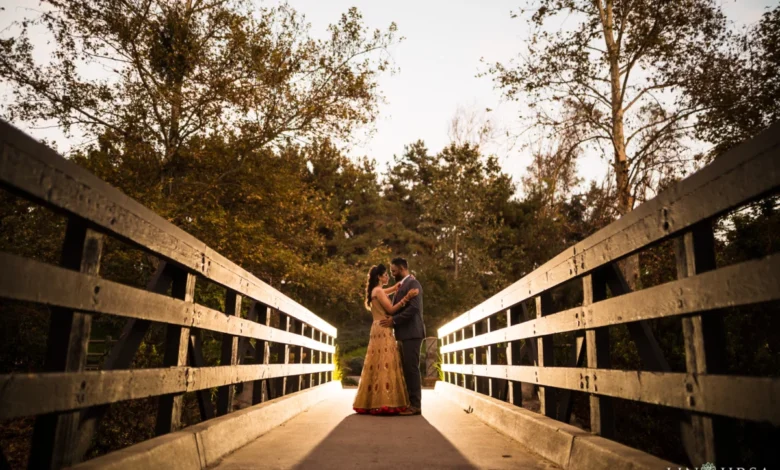
The inverse technique—using the bridge itself as a frame for human subjects—requires a mastery of perspective. Photographers often scout locations on or beneath a bridge to identify "frames within frames." This approach often incorporates leading lines, where the converging rails, cables, or pathways guide the viewer’s gaze toward the primary subject, such as a pedestrian or a vehicle. The precision of these lines is a hallmark of high-quality architectural photography and necessitates a disciplined approach to leveling the camera to avoid unwanted keystone distortion.

Leveraging Light and Environmental Variables
The aesthetic impact of a bridge photograph is frequently dictated by the ambient lighting conditions. The use of leading lines is most effective during the "golden hour," when the soft, directional light creates long shadows that emphasize the texture of the bridge’s materials.

For photographers looking to advance their technical repertoire, long-exposure photography offers a mechanism to transform the appearance of the environment surrounding the bridge. By utilizing Neutral Density (ND) filters—which reduce the amount of light entering the lens—photographers can employ shutter speeds ranging from several seconds to several minutes. This technique has the dual effect of smoothing the water surface beneath the bridge into a mirror-like sheen and turning the motion of traffic into ribbons of light, provided the camera is mounted on a stable tripod to eliminate vibration.

Unique Perspectives and Geometric Analysis
While eye-level photography is standard, the most compelling images often come from unconventional angles. Looking directly up at a bridge from its foundation reveals geometric patterns that are often invisible from a distance. The symmetry found in truss bridges and the rhythmic repetition of vertical pylons create a visual cadence that is highly sought after in modern architectural photography.

Furthermore, the rise of drone technology has revolutionized the documentation of bridges. Overhead perspectives provide a bird’s-eye view of the bridge’s footprint, allowing for the capture of symmetry and scale that were previously impossible without expensive aerial equipment. This "plan view" perspective has become a standard in the documentation of engineering marvels, offering an objective, almost clinical view of the bridge’s design and its integration into the landscape.

Safety, Ethics, and Professional Standards
The pursuit of the perfect photograph must remain secondary to safety and legal compliance. Professional photographers are often required to secure permits for shooting on major infrastructure, and entering restricted areas, such as the undersides of bridges or active traffic lanes, is strictly prohibited in most jurisdictions.

Data from urban photography groups suggests that the most successful bridge images are those that tell a story of function rather than just form. Whether it is a long-exposure shot capturing the transit of commuters at twilight or a detailed, high-contrast black-and-white study of rusted steel, the best images are those that convey the weight, purpose, and endurance of the structure.

Broader Implications and Future Trends
The documentation of bridges is not merely an artistic endeavor; it serves as a historical record of human infrastructure. As climate change necessitates the retrofitting or replacement of aging bridge networks globally, the photographic documentation of these structures provides vital context for architectural historians and engineers.

The integration of computational photography—where software algorithms assist in correcting perspective, stitching panoramas, and balancing exposure—has made high-end bridge photography more accessible to the general public. However, the fundamental principles of composition, such as the rule of thirds, the use of leading lines, and the importance of dynamic range, remain the bedrock of the craft.

As we look toward the future, the combination of traditional photography techniques and emerging technologies like photogrammetry (creating 3D models from photos) is expected to become the next frontier in bridge documentation. For now, the photographer who balances technical proficiency with a keen eye for geometry and light will continue to find that bridges remain among the most rewarding subjects in the photographic canon. Through diligent preparation, the right equipment, and an understanding of the relationship between structure and space, any photographer can elevate their work, turning a simple bridge into a compelling visual narrative that stands the test of time.