Which countries have banned social media for kids?

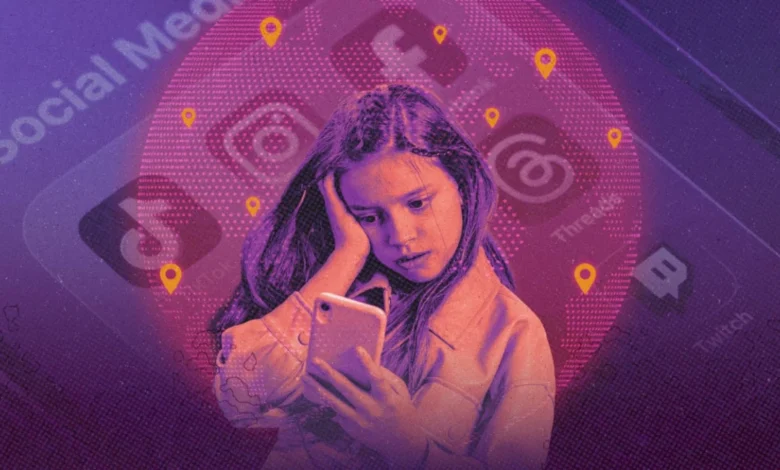
The global legislative landscape is undergoing a profound transformation as an increasing number of nations move to restrict or ban social media access for children. What began as a pioneering initiative in Australia has rapidly evolved into a widespread international trend, with governments worldwide grappling with the complex challenges posed by digital platforms on youth development. This concerted effort reflects growing concerns among policymakers, parents, and educators about the detrimental effects of excessive or unsupervised online engagement, ranging from mental health crises to exposure to harmful content.
The Growing Global Movement: A Policy Shift Towards Child Online Safety
The impetus behind this global push is multifaceted, primarily driven by a recognition of social media’s profound impact on the psychological and developmental well-being of young people. Governments are increasingly citing extensive research linking prolonged screen time and early exposure to social media to rising rates of anxiety, depression, cyberbullying, body image issues, and self-harm among minors. Beyond mental health, the proliferation of child sexual exploitation material, violent content, and pornography accessible on these platforms has underscored an urgent need for robust regulatory frameworks. Furthermore, the "addictive" design of many social media applications, featuring infinite scrolls, algorithmic feeds, and constant notification systems, is frequently highlighted as a deliberate mechanism that keeps young users engaged for extended periods, often at the expense of sleep, academic performance, and real-world social interaction.
The proposed and enacted legislations vary in their specific age thresholds, implementation mechanisms, and scope, but a common thread is the requirement for social media companies to implement stringent age verification systems. This places a significant burden on platforms to accurately determine the age of their users and prevent minors from circumventing restrictions. While the core objective is to safeguard children, these laws have simultaneously ignited debates surrounding digital privacy, freedom of speech, and the practical effectiveness of such bans, with some studies already suggesting that determined young users are finding ways to bypass these measures.
A Chronology of National Measures and Proposals
The past year has seen an unprecedented acceleration in legislative action, creating a complex and evolving patchwork of regulations across continents. Here is a detailed look at the countries leading this charge:
Australia: The Global Precedent (December 2025)
Australia was the first nation to establish a comprehensive social media ban for children under 16, setting a significant global precedent. The Online Safety Amendment (Social Media Minimum Age) Act, enacted in December 2025, mandates that major social media platforms, including TikTok, Instagram, Facebook, YouTube, X, and Snapchat, implement rigorous age verification protocols. These platforms are required to take "reasonable steps" to prevent minors under 16 from creating or maintaining accounts. However, the initial months of implementation have been challenging. A study conducted by Australian government advisors in July 2026 indicated that the ban’s effectiveness has been limited, with many children reportedly finding workarounds. The legislation also faced immediate legal challenges, notably a lawsuit from Reddit, highlighting the resistance from some tech companies to these new regulations. The Australian government’s bold move has nonetheless served as a blueprint and catalyst for similar legislative initiatives worldwide.
Malaysia: Early Enforcement and Feature Limitations (January 2026)
Following closely on Australia’s heels, Malaysia announced its ban for under-16s in November 2025, with the Online Safety Act 2025 (ONSA) coming into force on January 1, 2026. While the law was officially enacted earlier, its active enforcement commenced on June 1, 2026. This legislation targets platforms with at least 8 million users, such as YouTube, TikTok, Instagram, and Facebook, requiring them to implement age verification and prohibit account creation by children under 16. A distinctive feature of Malaysia’s law is the mandate for social media companies to "limit features that increase, sustain, or extend" children’s online time, directly addressing the addictive design elements of these platforms. This proactive approach aims to curb compulsive usage among young users.
Poland: Proposed Age Verification and Fines (February 2026)
In February 2026, Poland’s Education Minister Barbara Nowacka announced plans to ban social media access for children under 15. The proposed legislation would introduce compulsory age verification for social media sites and impose substantial fines on companies that fail to enforce these restrictions. This move signals Poland’s intent to join the growing cohort of European nations seeking to protect younger demographics from online harms.
Slovenia: Draft Legislation for Under-15s (February 2026)
Slovenia also entered the fray in February 2026, with Deputy Prime Minister Matej Arčon announcing draft legislation to prohibit social media access for children under 15. This initiative underscores a collective European concern regarding the digital well-being of minors and indicates a growing consensus on the need for stricter age controls.
Spain: Protecting from the "Digital Wild West" (February 2026)
Prime Minister Pedro Sánchez announced Spain’s plans to ban social media for children under 16 in February 2026, vowing to "protect them from the digital Wild West." The proposed bill, which awaits parliamentary approval, is particularly notable for its intent to hold social media companies and their executives directly liable for "illegal or harmful content" on their platforms. Sánchez emphasized that algorithmic manipulation and the amplification of illegal content would be reclassified as new criminal offenses, indicating a robust legal framework aimed at accountability within the tech industry.

Greece: Addressing Mental Health and Addiction (April 2026)
Greece announced its intention to ban social media for children under 15 in April 2026, with Prime Minister Kyriakos Mitsotakis publicly articulating the rationale via a TikTok video. Mitsotakis highlighted concerns about sleep disturbances and anxiety among children, attributing these issues to "the pressure to always be online" and criticizing the "addictive design of certain applications." The proposed measure, slated to take effect on January 1, 2027, also emphasizes the necessity of effective age verification.
Turkey: Comprehensive Restrictions (April 2026)
Turkey passed a bill on April 23, 2026, prohibiting children under 15 from accessing social media platforms. The new law mandates age verification, requires rapid responses from companies to "harmful" content, and expands parental control options, reflecting a comprehensive approach to child online safety.
Canada: Broadening Scope to AI (June 2026)
Canada announced its proposed Safe Social Media Act on June 11, 2026, aiming to ban social media accounts for users under 16. This legislation will enforce age verification for online services and impose legally mandated safety requirements on platforms like TikTok, YouTube, and Instagram. Uniquely, Canadian law is also set to extend its provisions to companies utilizing AI chatbots such as ChatGPT, Gemini, and Claude, recognizing the evolving landscape of digital interaction and the potential harms posed by advanced AI to minors.
United Kingdom: Following Australia’s Model (June 2026)
The UK confirmed an impending social media ban for under-16s on June 15, 2026, building upon the age verification rollout implemented in July 2025. The government explicitly stated its intention to adopt a model similar to Australia’s, with plans to expand the law to encompass other digital platforms, including livestreaming and gaming sites. Additionally, the UK is exploring measures such as overnight curfews for 16 and 17-year-olds and blocking infinite-scroll mechanisms for younger users, demonstrating a proactive stance against addictive design.
European Union: Towards a Harmonized Approach (July 2026)
The European Union is moving towards an EU-wide social media ban for children under 13, as announced on July 13, 2026. Ursula von der Leyen, President of the European Commission, presented a report on online safety for children, recommending age-appropriate restrictions, mandatory parental supervision for social media use, and requiring digital platforms to "prove that their services do no harm." The EU has also launched its own age verification app, signaling a concerted effort to harmonize online safety standards across member states. The scope of these restrictions could extend beyond social media to include AI companions, video-sharing platforms, and video games.
France: Pioneering European Enforcement (July 2026)
France is poised to become the first European country to officially enact a social media ban for children under 15, with the government reaching a compromise on the bill on July 20, 2026. This landmark legislation will block under-15s from creating new accounts starting September 1, and by January 2027, all existing accounts will fall under the new law. France’s decisive action is expected to set a precedent for other European nations considering similar measures.
Other Countries Under Consideration:
- Denmark: The country’s prime minister, Mette Frederiksen, announced plans for a social media ban for kids under 15 in October 2025, with legislation potentially arriving in 2026. Reports suggest parents might be able to grant permission for children aged 13 and above.
- Germany: While not yet enacted, a German expert panel suggested a social media ban for children under 13 in June 2026, indicating active government consideration.
- Indonesia: In March 2026, Indonesia announced it would ban social media for children under 16. The Minister of Communication and Digital Affairs, Meutya Hafid, stated that accounts belonging to anyone under 16 on "high risk" platforms like YouTube, TikTok, Facebook, Instagram, Threads, X, Bigo Live, and Roblox would be deactivated by the end of March.
- Brazil: Brazil’s Digital Statute of Children and Adolescents came into force in March 2026. It requires children under 16 to link their social media accounts with a legal guardian and mandates age verification for adult content. The law also compels platforms to limit features designed to "artificially increase, sustain, or extend" children’s time online, such as automatically playing videos.
- Thailand: Although no ban has been announced, there is significant ongoing discussion within Thailand regarding the implementation of social media restrictions for minors, indicating potential future legislative action.
Driving Forces Behind the Bans: A Deeper Dive
The global momentum for these social media bans is underpinned by a growing body of evidence and advocacy from various sectors. Medical professionals and child psychologists have increasingly voiced alarms about the mental health repercussions of early and extensive social media use. Studies published by organizations like the American Psychological Association and the Royal College of Psychiatrists in the UK have highlighted correlations between high social media engagement in adolescents and increased rates of depression, anxiety disorders, eating disorders, and body dysmorphia. These findings often point to the constant pressure to present an idealized self, exposure to curated and often unrealistic lifestyles, and the pervasive nature of cyberbullying as significant contributors to psychological distress.
Beyond mental health, governments are responding to public outrage and parental concerns regarding exposure to inappropriate and harmful content. The ease with which minors can encounter violent imagery, hate speech, and sexually explicit material, often through algorithmic recommendations, has pushed policymakers to act. The tragic cases of young individuals whose mental health was severely impacted by online content have served as powerful motivators for legislative reform, prompting a re-evaluation of the "self-regulation" model that tech companies have historically favored.
Challenges and Criticisms: The Balancing Act

Despite the clear intentions, these legislative efforts are not without their complexities and criticisms. A primary concern revolves around the practical effectiveness of age verification technologies. Critics argue that no system is foolproof, and tech-savvy children can often find ways to circumvent restrictions, potentially by using parents’ IDs or VPNs, as the Australian study in July 2026 suggested. This raises questions about whether these bans will truly achieve their intended purpose or simply drive children to less regulated corners of the internet, where they might be even more vulnerable.
Digital privacy advocates have also raised significant alarms. The implementation of robust age verification often requires users to provide personal data, sometimes including biometric information, to third-party verification services. This raises concerns about data security, potential for misuse, and the erosion of privacy for both adults and minors. There are fears that such systems could create a "digital ID" requirement that infringes on fundamental rights to anonymity and free expression online.
Furthermore, some critics argue that blanket bans might infringe upon children’s rights to freedom of expression and access to information, as enshrined in international conventions. While acknowledging the need for protection, they advocate for a more nuanced approach that focuses on digital literacy education, parental guidance, and platform design changes rather than outright prohibition. The lawsuit filed by Reddit against Australia’s ban underscores the legal and ideological battle lines being drawn between governments and tech corporations over the future of online regulation.
The Role of Age Verification Technology
Central to almost all proposed and enacted bans is the reliance on age verification technology. This technology can range from simple self-declaration (easily circumvented) to more advanced methods like facial recognition, ID scanning, or linking to official government databases. The EU’s development of its own age verification app highlights a trend towards standardized, perhaps government-backed, solutions. However, the deployment of such technologies presents a complex dilemma: the more accurate and robust the verification, the more intrusive it tends to be regarding personal data. Ensuring these systems are secure, unbiased, and compliant with privacy regulations like GDPR is a significant technical and ethical challenge for both governments and tech companies.
Implications for Tech Companies and Future Policy
The proliferation of these bans carries profound implications for social media companies. They face mounting pressure to re-engineer their platforms, not only to comply with age restrictions but also to redesign features that are deemed "addictive" or harmful to minors. This could lead to significant investments in new technologies, changes in algorithmic design, and potentially a shift away from engagement-at-all-costs metrics. Non-compliance could result in substantial fines, legal challenges, and reputational damage.
Looking ahead, this trend suggests a future where the internet is increasingly segmented by age, with different access levels and content experiences tailored for various demographic groups. It also indicates a growing willingness of national and supranational bodies to assert greater control over the digital sphere, challenging the long-held notion of the internet as a borderless and largely unregulated space. The ongoing debate will likely shape international digital policy, potentially leading to greater collaboration on cross-border enforcement and the development of global standards for child online safety.
Conclusion: An Evolving Digital Frontier
The global movement to ban social media for children under various age thresholds marks a pivotal moment in the digital age. Driven by legitimate concerns over youth mental health, online exploitation, and addictive design, governments are taking assertive steps to recalibrate the relationship between children and technology. While the implementation challenges are significant and debates over privacy and effectiveness persist, the political will to protect the youngest digital citizens appears stronger than ever. As these laws are refined and new technologies emerge, the landscape of online interaction for minors will undoubtedly continue to evolve, pushing both policymakers and tech giants to navigate an increasingly complex and regulated digital frontier. This story remains dynamic and will continue to be updated as new legislative proposals are tabled and existing laws are enforced.