Meta Raises Quest VR Headset Prices Amidst Strategic Pivot Towards AI and Broader Economic Headwinds

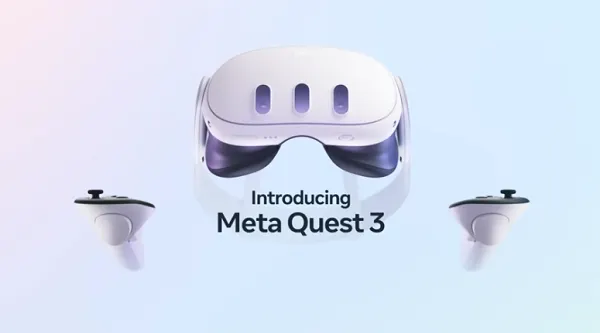
Meta Platforms Inc. has announced significant price increases for its Meta Quest 3 and Quest 3S virtual reality (VR) headsets, with consumer costs set to rise by between $50 and $100 per unit. The company attributes these adjustments primarily to escalating hardware production expenses, citing a global surge in the cost of critical components, particularly memory chips, which impacts a wide array of consumer electronics. While Meta maintains its long-term commitment to VR technology, this move is widely interpreted by industry observers as a pragmatic recalibration, signaling a broader strategic pivot away from its ambitious, and costly, metaverse vision to an intensified focus on artificial intelligence (AI) development.
Details of the Price Adjustment and Meta’s Rationale
Effective immediately, the Meta Quest 3 unit, previously priced at $500, will now retail for $599, representing a $99 increase. Similarly, the Meta Quest 3S 128GB version will see its price jump from $300 to $349, a $49 increase, while the 256GB version of the Meta Quest 3S will climb to $449.99, an increase of approximately $50. These price hikes reflect a notable shift in Meta’s approach to its hardware pricing strategy, especially given its previous willingness to absorb substantial losses to drive VR adoption.
In an official statement released on its blog, Meta explicitly detailed the reasons behind the decision: “We’re making this change because the cost of building high-performance VR hardware has risen significantly. The global surge in the price of critical components — specifically memory chips — is impacting almost every category of consumer electronics, including VR. To keep delivering the quality of hardware, software, and support you expect from the Quest platform, we need to adjust our pricing.” This explanation underscores the external economic pressures faced by tech manufacturers worldwide. Supply chain complexities, exacerbated by geopolitical tensions, energy price fluctuations, and lingering effects of global events, have indeed led to increased manufacturing costs across various sectors. For Meta, a company that has invested billions into its Reality Labs division (responsible for VR/AR hardware and software), navigating these economic realities while striving for profitability is a critical balancing act. The company has historically subsidized its hardware to attract a larger user base, viewing VR headsets as the gateway to its metaverse ecosystem. This price adjustment, therefore, suggests a tempering of that aggressive subsidy strategy.
A Chronology of Meta’s Metaverse Ambitions and Reality Labs’ Journey
To fully understand the significance of these price hikes, it’s essential to trace Meta’s journey into the immersive computing space. The company’s profound commitment to what it then termed the "metaverse" became globally recognized in October 2021, when Facebook Inc. famously rebranded itself as Meta Platforms Inc. This audacious name change was more than a cosmetic update; it was a declarative statement of intent, signaling CEO Mark Zuckerberg’s conviction that the metaverse represented the next major computing platform, succeeding mobile internet.
At the time, Zuckerberg envisioned an interconnected network of virtual spaces where users, represented by digital avatars, could seamlessly socialize, work, play, learn, and transact. The company embarked on a monumental investment spree, pouring tens of billions of dollars into its Reality Labs division. This division was tasked with developing the foundational hardware (VR/AR headsets), software platforms (like Horizon Worlds), and underlying infrastructure necessary to realize this futuristic vision. Initial projections and industry hype were immense, with many tech analysts predicting a rapid transformation of digital interaction.
Key to Meta’s metaverse strategy was the Quest line of VR headsets, which aimed to make virtual reality accessible to mainstream consumers with standalone devices that didn’t require powerful PCs. Horizon Worlds, Meta’s flagship social VR platform, launched in late 2021, was positioned as a critical first step towards this immersive future. It was designed to allow users to create and explore virtual environments, play games, and interact with others.
However, the path to the metaverse proved far more challenging and expensive than anticipated. Reality Labs consistently reported massive operating losses, totaling over $13.7 billion in 2022 and an additional $4.65 billion in Q1 2023 alone. Public reception to Horizon Worlds was often lukewarm, with criticisms ranging from its simplistic graphics and clunky user experience to a perceived lack of compelling content and user engagement. Many early adopters and critics expressed skepticism about the platform’s ability to deliver on the grand promises of the metaverse. User retention numbers for Horizon Worlds were reportedly low, and the platform struggled to attract and retain a vibrant, active community. These financial hemorrhages and experiential shortcomings put increasing pressure on Meta’s core advertising business, leading to investor concerns and a significant dip in the company’s stock value in late 2022.
The Accelerating Pivot Towards Artificial Intelligence
Against this backdrop of metaverse struggles, a noticeable shift in Meta’s strategic priorities began to emerge, accelerating dramatically over the past year. This pivot has seen artificial intelligence ascend to the forefront of CEO Mark Zuckerberg’s public discourse and Meta’s internal resource allocation.
One of the clearest signals of this reorientation came with Meta’s recent announcements regarding Horizon Worlds. Last month, reports surfaced that Meta was "shutting down" Horizon Worlds VR social element, which was initially deemed a critical cornerstone of its metaverse vision. While Meta later clarified that it would continue to support existing Horizon users, it also stated that the platform would no longer receive updates and would eventually become unstable. This effectively relegates Horizon Worlds to a maintenance-only mode, signifying a significant deprioritization of its foundational metaverse social experience. This move is a stark contrast to the initial narrative where Horizon Worlds was presented as the future of social interaction.
Mark Zuckerberg’s evolving rhetoric has been particularly telling. While he once championed the metaverse as the company’s singular focus, his recent public statements and earnings calls are increasingly dominated by discussions of AI. He has articulated a vision where AI is not merely a feature but the driving force behind Meta’s next generation of products and services, from improving content recommendations across its social media platforms to developing advanced generative AI capabilities.
The financial commitments underscore this strategic shift. Meta is reportedly investing an astonishing $600 billion into AI infrastructure over the next three years alone. This colossal investment is aimed at building out the computational power, data centers, and talent necessary to achieve its ambitious goals in AI, including the pursuit of "superintelligence" and the development of cutting-edge AI models. These investments are far more substantial and immediate than any publicly disclosed future spending plans for its metaverse initiatives.
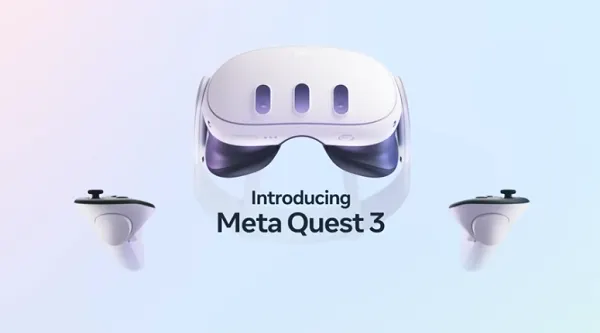
Furthermore, Meta’s hardware development is increasingly intertwined with AI. While the company still works on VR, the emphasis has subtly shifted towards "AI glasses" and upcoming augmented reality (AR) versions. These devices, though still immersive, are envisioned as tools that leverage AI to enhance everyday life through contextual information, real-time translation, and intelligent assistance, rather than primarily transporting users to fully virtual metaverse worlds. This represents a more pragmatic, utility-focused approach to immersive technology, driven by AI’s immediate capabilities.
Economic Pressures and Market Realities
Beyond the internal strategic shifts, broader economic pressures have undeniably played a role in Meta’s decision to raise Quest headset prices. The global economy has been grappling with persistent inflation, supply chain disruptions, and increased energy costs since the pandemic. The semiconductor industry, in particular, has faced unprecedented demand coupled with manufacturing limitations, leading to significant price increases for crucial components like memory chips and processors. These costs are then passed down the supply chain to consumer electronics manufacturers.
For years, Meta had been willing to absorb substantial losses on its VR hardware, treating the Quest headsets as loss leaders to build market share and accelerate metaverse adoption. This strategy, while common in emerging technology markets, became unsustainable given the scale of Reality Labs’ losses and the slower-than-anticipated consumer uptake of VR. Investors, increasingly focused on profitability and efficiency, have exerted pressure on Meta to rationalize its spending and demonstrate a clearer path to return on investment for its ambitious projects.
The competitive landscape of the VR/AR market also factors in. While Meta has been a dominant player, new entrants and evolving technologies are changing the dynamics. High-profile devices like Apple’s Vision Pro, though at a significantly higher price point, have raised the bar for immersive computing experiences, forcing Meta to consider its own product quality and pricing strategy. Other companies like Sony (PSVR 2) and Pico are also vying for market share, creating a competitive environment where balancing innovation, quality, and cost is crucial. By raising prices, Meta may be attempting to recover some of its production costs while still maintaining a competitive edge, albeit with a smaller subsidy.
Official Responses and Future Outlook: Reconciling Commitments
Despite the clear pivot towards AI and the price increases for its VR hardware, Meta has publicly reiterated its commitment to the VR space. In its official announcement regarding the price hikes, the company stated: “We remain committed to investing in VR and leading the category because we believe this is the future of computing. We have a long-term roadmap full of new hardware and experiences, and this adjustment helps us stay on track to deliver that future.”
Reconciling this statement with the company’s actions – namely, deprioritizing Horizon Worlds and massive AI investments – requires a nuanced interpretation. It suggests that Meta’s vision for "the future of computing" might be evolving. While VR remains a component, its role might be shifting from being the primary interface for a standalone metaverse to being an enabling technology for AI-powered experiences, or a platform that converges with augmented reality.
This recalibration could mean several things for the future of VR within Meta:
- More Sustainable Hardware Business: The price hikes indicate a move towards making the VR hardware division more financially sustainable, reducing the massive subsidies that contributed to Reality Labs’ losses.
- Focus on Core VR Experiences: Meta might be concentrating its VR efforts on more established use cases like gaming, fitness, and professional training, where VR has demonstrated clearer value propositions, rather than the broader, more abstract concept of a social metaverse.
- AI Integration: Future VR and AR hardware and software will likely feature deeper integration of Meta’s advanced AI capabilities, making immersive experiences more intelligent, personalized, and responsive. This could involve AI-powered avatars, intelligent environments, or enhanced user interfaces.
- Long-Term Convergence: The "long-term roadmap" might envision a future where AI, AR, and VR converge, with AI serving as the intelligence layer that powers compelling spatial computing experiences, rather than VR being a standalone, all-encompassing metaverse.
Implications for Developers, Consumers, and the Industry
For VR developers, Meta’s strategic shift introduces a degree of uncertainty. While Meta reaffirms its commitment to VR, the deprioritization of Horizon Worlds might signal a changing landscape for metaverse-centric applications. Developers may need to adapt their strategies to align with Meta’s evolving focus, potentially prioritizing AI integration and more practical VR/AR applications over expansive, open-ended social metaverse experiences. The increased hardware prices could also impact the growth of the VR user base, potentially slowing down adoption rates if the higher cost becomes a barrier for new consumers.
For consumers, the price hikes mean a higher entry barrier to Meta’s VR ecosystem. While Meta Quest headsets remain more affordable than some high-end alternatives, the increases could deter casual users or those on tighter budgets. However, if Meta’s renewed focus on AI leads to more compelling, intelligent, and useful VR/AR experiences in the long run, the higher price point might eventually be justified by enhanced value.
From an industry perspective, Meta’s actions are highly influential. As a major player in the immersive technology space, its strategic pivots send ripples across the sector. Other companies developing VR/AR hardware and software will be closely watching how Meta’s AI-driven approach unfolds. It could encourage a broader industry shift towards integrating AI more deeply into immersive technologies, potentially leading to a redefinition of what "the metaverse" truly means, or perhaps even a move away from the term altogether in favor of "spatial computing" or "intelligent reality."
In conclusion, Meta’s decision to raise prices for its Quest VR headsets, while attributed to rising hardware costs, is intrinsically linked to a significant strategic reorientation towards artificial intelligence. This move reflects a pragmatic response to economic pressures and the challenging realities of building a profitable metaverse, coupled with a growing recognition of AI’s transformative potential. While Meta maintains its long-term belief in VR, the company is clearly recalibrating its path to the future of computing, with AI now occupying a more central and immediate position in its technological ambitions. The ultimate success of this pivot, and whether VR will seamlessly integrate into an AI-powered future, remains to be seen.
Related posts: