Blackmagic Camera 3.3 for Android Now Supports Remote Pre-roll Control and Direct Live Streaming to Social Platforms

Blackmagic Design has announced the release of Blackmagic Camera 3.3 for Android, a significant update that introduces remote control capabilities for pre-rolls on compatible Blackmagic Design cameras and integrates direct live streaming functionalities to popular social media platforms including Facebook, Instagram, and others. This update, arriving in April 2026, significantly enhances the utility of Android devices for professional videographers and content creators, further cementing Blackmagic Design’s commitment to a seamless and integrated production ecosystem across various operating systems. The new features aim to streamline workflows, improve efficiency, and expand the reach of professional-grade video content directly from the camera to global audiences.
Key Enhancements and Their Impact
The two cornerstone features of Blackmagic Camera 3.3 for Android represent a substantial leap forward for mobile-integrated professional video production. The ability to remotely control pre-rolls offers a critical advantage in dynamic shooting environments, where capturing spontaneous moments just before recording officially begins can be invaluable. Pre-roll functionality, a staple in high-end broadcast and news acquisition cameras, buffers a short amount of video (typically a few seconds) continuously, allowing operators to save footage that occurred immediately before the record button was pressed. Integrating this control into an Android device via the Blackmagic Camera app means that cinematographers and videographers can now activate this crucial feature from a distance, facilitating discreet operation, improving shot composition from challenging angles, or enabling single operators to manage complex setups more effectively. This is particularly beneficial for documentary filmmaking, live event coverage, and run-and-gun journalism where every second counts and moments are often unpredictable. For instance, a camera positioned in a hard-to-reach location can now have its pre-roll activated and managed without physical interaction, ensuring no critical action is missed.
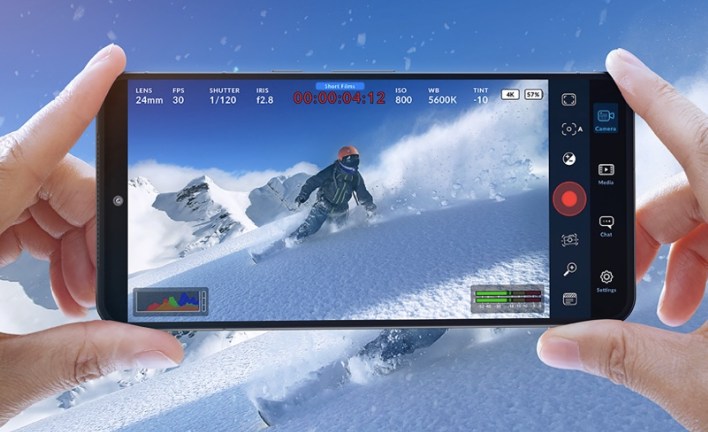
The second major enhancement, direct live streaming to Facebook, Instagram, and other platforms, addresses the growing demand for immediate content delivery in a high-quality format. In an era dominated by social media and real-time engagement, content creators are constantly seeking ways to bypass cumbersome intermediate steps. Traditionally, live streaming from professional cameras required external encoders, dedicated streaming software, and often a computer, adding layers of complexity and potential points of failure. Blackmagic Camera 3.3 for Android simplifies this process dramatically. By enabling direct streaming from the camera via the Android app, users can initiate high-quality broadcasts with minimal setup. This feature democratizes professional live streaming, making it accessible to a wider array of users, from independent journalists covering breaking news to small businesses promoting products, and artists sharing live performances. The implications for audience engagement are profound, allowing for instant connection with viewers on platforms where they are already highly active, reducing latency from production to consumption. The "other platforms" mention suggests potential for custom RTMP (Real-Time Messaging Protocol) streaming, offering flexibility to stream to virtually any service that supports the protocol, including YouTube, Twitch, or private content delivery networks.
Blackmagic Design’s Ecosystem and Strategic Vision
Blackmagic Design, an Australian company renowned for its innovative and often disruptive products in the professional video industry, has consistently aimed to democratize high-end production tools. From their DaVinci Resolve color grading software (now a full-fledged NLE) to their Cinema Cameras and ATEM live production switchers, the company’s philosophy revolves around offering professional capabilities at accessible price points. The Blackmagic Camera app, initially launched for iOS devices in late 2023, extended this philosophy to mobile platforms, transforming smartphones into powerful camera controllers and even standalone recording devices for proxy files and cloud workflows. The subsequent release for Android in early 2026 marked a critical expansion, acknowledging the vast global market share of Android users and ensuring platform neutrality for their integrated ecosystem.
This latest 3.3 update for Android is a natural progression of Blackmagic Design’s overarching strategy: to create a cohesive workflow where hardware and software seamlessly communicate, from acquisition to post-production and distribution. By leveraging the processing power and connectivity of modern Android smartphones, Blackmagic is empowering users to achieve professional results with greater efficiency and fewer external devices. The app acts not just as a remote control but as a central hub for managing camera settings, monitoring footage, and now, directly distributing content. This integration reduces the barrier to entry for professional video production, making advanced features like pre-roll capture and direct streaming available to a broader audience of content creators, independent filmmakers, and broadcasters operating with leaner crews and budgets.
A Deeper Dive into Feature Mechanics and Benefits
-
Remote Control of Pre-rolls:
- Mechanism: The Blackmagic Camera 3.3 app connects to compatible Blackmagic Design cameras (likely including the popular Pocket Cinema Camera series, URSA Mini Pro, and possibly the Cinema Camera 6K and Studio Camera lines) via Bluetooth or Wi-Fi. This connection allows the Android device to act as a sophisticated remote interface. When the pre-roll feature is engaged on the camera, it continuously records a specified duration of video (e.g., 3-5 seconds) into a temporary buffer. Upon receiving a "record" command, the camera writes the buffered footage to storage before the live recording begins, ensuring that the critical moments leading up to the intended action are captured.
- Benefits:
- Unmissable Moments: Crucial for event coverage, sports, wildlife documentaries, and news gathering where action can be unpredictable.
- Discreet Operation: Allows cameras to be placed in less accessible or conspicuous positions while maintaining full control over recording, ideal for sensitive interviews or hidden camera setups.
- Solo Operation Enhancement: A single operator can manage multiple cameras or operate a camera from a distance while performing other tasks, significantly improving efficiency.
- Improved Safety: For hazardous environments, remote control eliminates the need for personnel to be physically near the camera during operation.
- Creative Flexibility: Enables unique shot compositions and perspectives that would be difficult to achieve with direct manual control.
-
Direct Live Streaming to Social Platforms:
- Mechanism: The Blackmagic Camera 3.3 app leverages the Android device’s internet connectivity (cellular data or Wi-Fi) to send video streams directly from the connected Blackmagic camera to designated social media platforms. Users will likely configure their streaming accounts within the app, choosing the desired platform (Facebook, Instagram, etc.) and stream quality settings. The app likely handles the encoding and transmission protocols required by each platform, simplifying the technical complexities for the user.
- Benefits:
- Simplified Workflow: Eliminates the need for external streaming hardware or complex software setups, reducing equipment overhead and setup time.
- Higher Quality Streams: By utilizing the professional image sensor and processing capabilities of Blackmagic cameras, streams are expected to offer significantly higher visual fidelity compared to typical smartphone-only streams. This means better low-light performance, wider dynamic range, and superior color rendition.
- Instant Audience Engagement: Direct delivery to platforms like Facebook and Instagram allows creators to reach their established audiences immediately, fostering real-time interaction and community building.
- Cost-Effectiveness: Reduces the need for dedicated streaming teams or expensive third-party services for basic live broadcasts.
- Versatility: The "other platforms" provision suggests support for custom RTMP streams, offering unparalleled flexibility to stream to virtually any online video service, including corporate intranets, educational platforms, or niche streaming sites.
Chronology of Blackmagic Camera App Development (Leading to 2026 Update)
The evolution of the Blackmagic Camera app illustrates the company’s strategic expansion into the mobile ecosystem:
- Late 2023: Blackmagic Design initially launched the Blackmagic Camera app for iOS. This groundbreaking release transformed iPhones into powerful cinematographic tools, offering professional camera controls, advanced monitoring features, and unique capabilities like recording directly to Blackmagic Cloud and proxy generation. This marked Blackmagic’s first significant foray into leveraging consumer mobile hardware for professional video production.
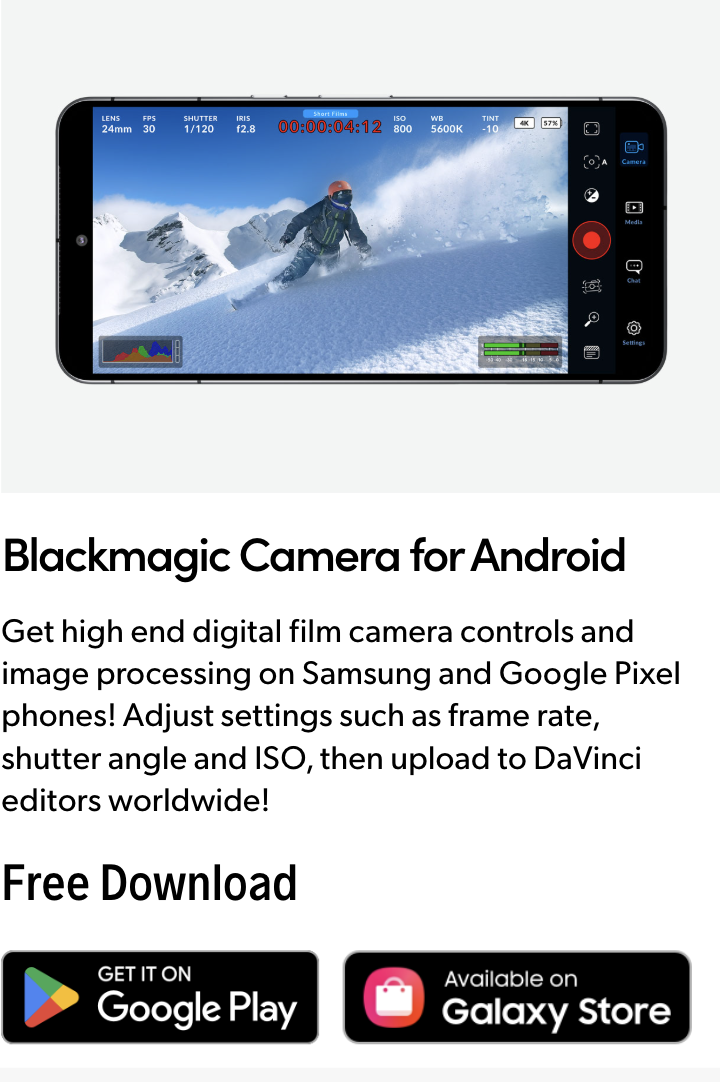
- Early 2026: Following the success and demand from the Android community, Blackmagic Design released the Blackmagic Camera app for Android. This brought the core functionalities, including advanced camera controls, digital slate, and professional monitoring tools, to the vast Android user base, ensuring a broader reach for their integrated workflow. This release was crucial for providing platform parity and expanding the Blackmagic ecosystem’s accessibility.
- April 2026 (Current Update): The release of Blackmagic Camera 3.3 for Android introduces the aforementioned remote pre-roll control and direct social media live streaming. This update builds upon the foundational Android app, adding critical features that enhance both the acquisition and distribution phases of video production, demonstrating continuous development and responsiveness to industry needs.
Market Context and Supporting Data
The release of Blackmagic Camera 3.3 for Android comes at a time of unprecedented growth in mobile content creation and live streaming. According to industry reports, Android continues to dominate the global smartphone market share, making the expansion of professional tools to this platform strategically vital. Data from analytics firms indicates that:
- The global live streaming market is projected to grow significantly, with estimates suggesting it could reach over $247 billion by 2027, driven by increased internet penetration and demand for real-time content.
- Social media platforms like Facebook and Instagram continue to see massive engagement with live video, with billions of users tuning into streams daily.
- The market for professional video equipment that integrates with mobile devices is also on an upward trend, as creators seek portable, powerful, and cost-effective solutions.
- The adoption of professional-grade cameras by independent creators and small production houses has surged, partly due to the affordability and advanced features offered by companies like Blackmagic Design.
This update directly addresses these trends, positioning Blackmagic Design cameras as even more versatile tools for the modern content creator operating within a dynamic media landscape.

Inferred Statements and Industry Reactions
While specific official statements regarding the 3.3 update are yet to be widely disseminated, the implications are clear, and industry experts and users are likely to react positively.
Grant Petty, CEO of Blackmagic Design, might emphasize the company’s vision: "Our goal has always been to empower creators with the most advanced tools, and to do so in a way that is intuitive and accessible. With Blackmagic Camera 3.3 for Android, we are bringing even more sophisticated controls like remote pre-roll and direct social streaming to the palm of your hand, allowing our users to capture and share their stories with unparalleled speed and quality. This is about removing barriers and fostering creativity, ensuring that regardless of your operating system, you are part of a seamless, professional workflow."
Industry analysts are likely to view this update as a strategic move. Sarah Chen, a senior analyst at MediaTech Insights, commented on similar trends: "Blackmagic Design consistently understands the pulse of the industry. Integrating direct social streaming and remote pre-roll control into their Android app is a brilliant tactical play. It not only enhances the value proposition of their cameras but also solidifies their position in the rapidly converging worlds of professional broadcast and social media content creation. This kind of integration is what today’s creators demand – efficiency, quality, and direct reach."

Matthew Allard ACS, a multi-award-winning freelance Director of Photography and Editor of Newsshooter.com, whose expertise often highlights practical applications for professionals, would likely appreciate the workflow enhancements. "For DPs and videographers on location, especially those working solo or in small teams, remote pre-roll control is a game-changer. It means less running back and forth, more precise shot capture, and ultimately, less stress. And direct streaming? That’s just smart. Cutting out the middleman for social broadcasts saves time and ensures a higher quality feed goes out directly from a professional camera, which is a huge advantage for breaking news or live event coverage."
Broader Impact and Implications
The Blackmagic Camera 3.3 for Android update carries significant implications for various facets of the video production industry:
- Democratization of Professional Workflows: By making advanced features like pre-roll and direct social streaming accessible via a ubiquitous Android smartphone, Blackmagic Design further democratizes professional video production. This empowers a new generation of filmmakers, journalists, and content creators who may not have access to large budgets or crews.
- Enhanced Mobile Integration: The update reinforces the trend of tighter integration between professional camera hardware and mobile software. Smartphones are evolving beyond mere consumption devices to become integral parts of the production chain, acting as controllers, monitors, and even distribution hubs.
- Shift in Live Production Paradigms: The ability to stream directly from a professional camera to social media platforms challenges traditional live production setups. While dedicated broadcast solutions will always have their place, this offers a viable, high-quality alternative for many scenarios, particularly those requiring agility and speed.
- Increased Competition and Innovation: Blackmagic Design’s continuous innovation in this space is likely to spur other camera manufacturers and software developers to enhance their mobile integration and streaming capabilities, ultimately benefiting end-users with more sophisticated and integrated tools.
- Future-Proofing Content Creation: As audiences increasingly consume content on mobile devices and demand real-time engagement, tools that streamline this process from high-quality capture to instant distribution are essential for future-proofing content creation strategies.
In conclusion, the Blackmagic Camera 3.3 for Android update is more than just a software revision; it is a strategic enhancement that aligns with the evolving demands of the professional video industry. By offering remote pre-roll control and direct live streaming capabilities, Blackmagic Design is not only improving the functionality of its cameras but also empowering a vast community of Android users to produce and distribute high-quality content with unprecedented efficiency and reach. This development reinforces the company’s position as a leader in providing innovative and accessible tools that bridge the gap between aspirational creativity and professional execution, setting a new benchmark for mobile-integrated professional video workflows.
Related posts: