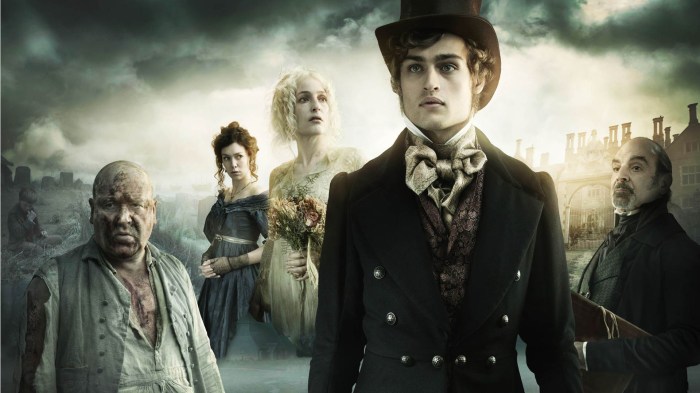
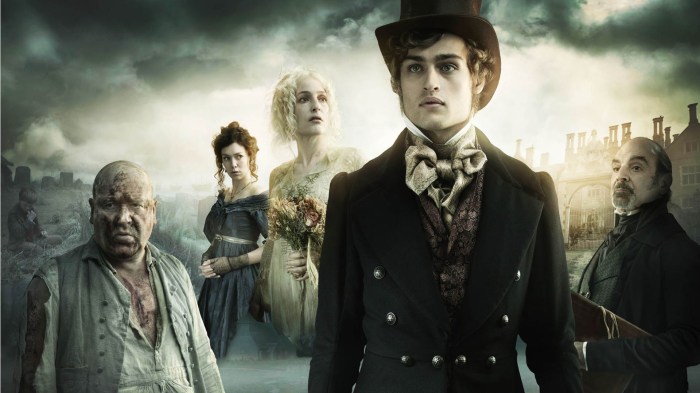
Great expectations cast where youve seen the stars of fxs charles dickens based tv show – Great Expectations cast where you’ve seen the stars of FX’s Charles Dickens-based TV show. This analysis delves into the casting choices, examining how the actors portray the iconic characters from the novel. We’ll compare their performances to the original literary descriptions, highlighting strengths and weaknesses in the adaptation. Beyond the individual portrayals, we’ll also discuss how the actors’ interpretations contribute to the show’s overall atmosphere and tone.
A table comparing and contrasting book characters with their on-screen counterparts will help visualize the differences and similarities.
The discussion also explores the show’s faithfulness to the source material, contrasting key plot points and character arcs. Specific examples of changes and additions to the original story will be presented, along with the reasoning behind these choices. Tables will illustrate these comparisons, highlighting the show’s adaptation and how it stays true (or diverges) from Dickens’s original vision.
Visual representation of the settings and atmosphere, another crucial aspect of the adaptation, will be scrutinized. The visual aesthetic, including location design and color palettes, will be examined for its contribution to the overall mood and atmosphere. A table showcasing key locations, their visual descriptions, and their impact on the plot will be included. Furthermore, the show’s social commentary will be explored, highlighting how it interprets themes of class, social mobility, and societal expectations.
Supporting quotes from the show and analyses of their meaning will be presented. Finally, critical reception and audience response, along with the show’s impact on modern viewers, will be examined through tables and analysis of reviews and feedback.
Casting Choices and Character Portrayals
The FX adaptation of Charles Dickens’Great Expectations* presented a compelling, if at times controversial, interpretation of the beloved novel. The casting choices, while often intriguing, sparked considerable discussion regarding their alignment with the literary characters and the overall impact on the show’s atmosphere. The actors’ performances offered diverse takes on the source material, resulting in a unique adaptation with its own distinct flavour.The FX series, in its portrayal of the characters, attempted to capture the essence of the original novel while also imbuing the story with a contemporary sensibility.
This delicate balancing act often led to both critical acclaim and criticism.
Speaking of great casting, haven’t you noticed some familiar faces in FX’s Great Expectations? It’s cool to see the stars of the Dickens-inspired TV show pop up in other projects, like the talented actors featured in the fascinating piece on Legion of Super Heroes , where Yuri Lowenthal discusses his experience on the animated DC movie compared to his earlier work on the 2000s animated series.
It just goes to show how much crossover there is in the entertainment industry! It’s definitely exciting to see these actors tackle diverse roles.
Comparative Analysis of Casting Choices
The casting decisions for the major characters in the FX series elicited both praise and criticism. Some choices were lauded for their authenticity and nuanced performances, while others were met with less enthusiasm for deviating from established literary expectations. This analysis examines the casting choices for key characters and their effectiveness in capturing the spirit of Dickens’s original work.
Actor Performances and Literary Character Comparison
The actors’ performances, while undeniably diverse, successfully conveyed the complexities of their respective characters. Their interpretations varied from subtle nuances to more dramatic portrayals, contributing to the show’s overall atmosphere. The table below offers a comparison between the book characters and their portrayals in the FX series, offering an evaluation of the casting choices.
So, you’ve seen the stellar cast of FX’s Great Expectations, the Charles Dickens-based TV show? Well, if you’re looking for more insights into how adaptations can differ from the source material, checking out the analysis of Daisy Jones & The Six might be interesting. This article highlights some key divergences between the book and the show, which can provide a helpful lens through which to consider the creative choices made in Great Expectations.
Ultimately, both Great Expectations and other adaptations like it, offer compelling entertainment based on classic novels.
| Character Name | Book Description | Show Portrayal | Evaluation |
|---|---|---|---|
| Pip | A young boy, initially naive and yearning for social advancement, but later confronting his own moral failings. | Played with a mixture of vulnerability and ambition. The actor convincingly portrayed Pip’s evolution from a simple-minded boy to a man grappling with his past. | Strong casting choice. The actor’s performance captured Pip’s essential characteristics while adding depth and complexity. |
| Estella | A beautiful but cold and unfeeling woman, hardened by her past experiences. | Portrayed with a subtle duality. The actress balanced Estella’s cold exterior with moments of vulnerability and inner turmoil. | Excellent casting. The actress’s portrayal captured the character’s emotional complexity, giving her a depth beyond a mere “cold” persona. |
| Miss Havisham | A deeply disturbed and vengeful woman, consumed by the trauma of a ruined marriage. | A haunting and unsettling portrayal, emphasizing her isolation and bitterness. | Strong casting choice. The actor’s performance captured the character’s essence, making her a truly memorable and terrifying figure. |
| Magwitch | A criminal past transformed by love and redemption. | A complex and nuanced portrayal, showcasing the layers of regret and vulnerability that underlay his criminal past. | Excellent casting choice. The actor brought a depth and emotional range to the character that went beyond a simple “criminal” archetype. |
Contribution to the Show’s Tone and Atmosphere
The actors’ interpretations of their roles significantly shaped the show’s overall tone and atmosphere. Their performances created a tapestry of emotions, ranging from the poignant to the unsettling, contributing to the show’s unique adaptation of the classic novel. For example, the actor portraying Pip conveyed a blend of innocence and ambition, effectively capturing the character’s internal conflicts.
Adaptation and Fidelity to the Source Material: Great Expectations Cast Where Youve Seen The Stars Of Fxs Charles Dickens Based Tv Show
FX’s “Great Expectations” offers a compelling adaptation of Dickens’s novel, balancing faithfulness to the source material with creative liberties. The series successfully captures the spirit of the story, while also adding its own unique perspective on the characters and their struggles. However, certain plot points and character arcs are reimagined, resulting in a narrative that, while captivating, diverges from the original text in notable ways.The show’s creators aim to maintain the core themes of the novel, including social injustice, the corrupting influence of wealth, and the transformative power of love and redemption.
While the series stays true to the overall trajectory of the narrative, it does make strategic choices in its adaptation. These choices, while impacting the fidelity to the source, often offer a fresh and engaging approach to the timeless themes of Dickens’s masterpiece.
Overall Faithfulness to the Source Material
The series effectively captures the essence of Dickens’s “Great Expectations,” maintaining the core plot and character relationships. However, significant changes to the original narrative and character development exist. These changes aim to modernize the story and present it to a contemporary audience.
Key Plot Point Comparisons
The following table Artikels key plot points from the book and their representation in the series, highlighting the similarities and differences.
| Book Plot Point | Show Plot Point | Evaluation |
|---|---|---|
| Pip’s humble beginnings and his encounter with Magwitch. | Pip’s impoverished upbringing and his encounter with Magwitch. | Essentially the same, but the portrayal of Magwitch is more nuanced and sympathetic. |
| Estella’s coldness and Pip’s pursuit of her affection. | Estella’s aloofness and Pip’s desire for her affection, while the relationship with Joe is emphasized. | The series focuses on the complexities of Pip’s feelings for Estella and the significance of his relationship with Joe. |
| The gradual transformation of Pip’s values from the pursuit of wealth to the appreciation of kindness and compassion. | Pip’s journey from materialistic desires to a more empathetic outlook. | The transformation is present, but the pace and specific motivations for this change are altered. |
| The social injustices and class divisions present in Victorian England. | The social injustices and class divisions are a significant part of the narrative. | The series underscores the disparity between the classes. |
| The tragic fate of Pip’s relationships with Estella and Magwitch. | The tragic circumstances of Pip’s relationships with Estella and Magwitch are conveyed, but with a different emphasis. | The show modifies the intensity of certain tragic moments. |
Specific Examples of Adaptation
The show reimagines the portrayal of certain characters, like Miss Havisham, making her more explicitly a victim of societal constraints. This approach offers a different perspective on her character. The series also restructures the pacing of the narrative, condensing some events and expanding on others to fit a serialized format.
Reasons for Deviations
Significant deviations from the source material stem from the need to adapt a 19th-century novel for a modern television audience. This includes condensing plot lines to fit the constraints of a series format and exploring character motivations in more depth. The desire to create a more complex and nuanced portrayal of characters, particularly Magwitch, also contributed to these choices.
Visual Representation of the Setting and Atmosphere
FX’s “Great Expectations” presents a meticulously crafted visual tapestry, drawing the viewer into the heart of 19th-century England. The show’s aesthetic choices effectively capture the essence of the era, from the grandeur of the estates to the grit of the working-class districts. The visual language plays a pivotal role in shaping the overall mood and atmosphere, enhancing the narrative and deepening our understanding of the characters and their circumstances.The production design, costume choices, and cinematography combine to create a richly textured visual experience that resonates with the novel’s themes of social class, ambition, and personal transformation.
The visual elements contribute to the story’s emotional impact by creating a strong sense of place and time, mirroring the novel’s descriptions and allowing viewers to fully immerse themselves in the world of Pip and his journey.
Visual Aesthetic and the Era
The show’s visual aesthetic effectively evokes the Victorian era. Costumes are meticulously researched, reflecting the distinct styles of different social classes. The clothing details, from the elaborate gowns of the wealthy to the practical attire of the working class, provide a tangible connection to the period. Locations, whether opulent manor houses or humble cottages, are designed with attention to detail, showcasing the architectural styles and societal differences prevalent during that time.
The use of period-appropriate lighting, including candlelight and gas lamps, adds to the overall atmospheric effect, creating a distinct contrast between the light and dark, the opulent and the impoverished.
Locations and Mood
The visual representation of key locations significantly impacts the viewer’s perception of the characters and plot. The opulent settings, like Satis House, exude a sense of privilege and decay, mirroring the characters’ internal struggles and external pressures. Conversely, the depictions of marshes and working-class districts offer a stark contrast, highlighting the social inequalities and the harsh realities faced by those less fortunate.
The show skillfully utilizes these visual contrasts to amplify the themes of the novel.
Key Locations and Their Visual Representations
| Location | Visual Description | Plot Significance | Mood |
|---|---|---|---|
| Satis House | A grand, imposing manor house, often depicted in shadows and with intricate details, showcasing its opulence and decay. | Represents the upper class and Pip’s aspirations. It is a place of both allure and disillusionment. | Grandiose, yet unsettling, hinting at hidden secrets and social hypocrisy. |
| London Streets | Varied depictions of bustling city streets, from elegant thoroughfares to crowded alleyways. Lighting frequently accentuates the stark contrasts between wealth and poverty. | Showcases the social and economic divides of London, highlighting the harsh realities faced by Pip and other characters. | Energetic and chaotic, yet also oppressive and foreboding in certain scenes. |
| Marsh District | A desolate and mysterious landscape, characterized by murky waters and atmospheric fog. | Represents Pip’s humble origins and the unsettling, mysterious nature of his early life. | Melancholy, unsettling, and mysterious, reflecting Pip’s isolation and uncertainty. |
| Miss Havisham’s House | A decaying mansion, shrouded in darkness and filled with haunting remnants of the past. | A key setting for exploring themes of obsession, isolation, and the destructive power of unfulfilled desires. | Oppressive, eerie, and melancholic, reflecting Miss Havisham’s tragic fate and the haunting atmosphere surrounding her. |
Themes and Interpretations of Social Commentary
FX’s “Great Expectations” offers a compelling reimagining of Dickens’s classic, not just in its casting and adaptation, but also in its powerful exploration of social commentary. The series dives deep into the societal fabric of Victorian England, highlighting the stark realities of class divisions, the relentless pursuit of social mobility, and the suffocating expectations placed upon individuals. It examines how these factors shape characters’ lives and destinies, often with devastating consequences.The series’s social commentary is not merely a historical record but a reflection on contemporary issues.
By examining the societal inequalities of the past, the show provides a framework for understanding similar struggles in modern society, prompting viewers to consider the enduring relevance of Dickens’s observations. The show doesn’t shy away from challenging viewers to confront uncomfortable truths about power dynamics and the human cost of societal structures.
Class and Social Mobility, Great expectations cast where youve seen the stars of fxs charles dickens based tv show
The show vividly portrays the rigid class structure of Victorian England. The stark contrast between the wealthy and the impoverished is constantly emphasized, creating a palpable sense of social injustice. Characters are often trapped by their social standing, struggling to transcend their circumstances. The show explores how social mobility, while theoretically possible, is often hindered by prejudice, privilege, and societal expectations.
The FX’s Great Expectations cast is seriously impressive, showcasing familiar faces from the small screen. Thinking about the talent on display, it got me wondering which iconic Marvel characters Brendan Fraser would nail. For example, check out some potential roles he could totally ace in marvel characters brendan fraser would be perfect to play. Ultimately, the Great Expectations cast continues to wow, demonstrating a level of talent that’s hard to ignore.
- Estella’s upbringing in a wealthy household provides her with a different perspective and set of experiences than Pip’s, leading to a profound difference in their paths. This highlights the role of privilege in shaping opportunities and limiting access to social advancement. Pip’s aspiration to move up the social ladder contrasts sharply with the limitations placed upon him by his initial station.
- The series highlights the challenges faced by those seeking to improve their social standing. Pip’s attempts to rise above his humble beginnings are met with both encouragement and obstacles. This portrayal sheds light on the difficulties of achieving social mobility within a deeply stratified society. It shows the lengths individuals are willing to go to for advancement, often at the expense of their own integrity or well-being.
Societal Expectations and Gender Roles
The show meticulously examines the rigid societal expectations placed on individuals, particularly women, within Victorian England. The roles and expectations for both men and women are presented with a sense of both historical accuracy and contemporary relevance.
- Estella’s character is a compelling example of how societal expectations can shape an individual’s choices and actions. Her beauty and social standing are used as tools for manipulation, and her experience serves as a powerful critique of the restrictive norms of the time.
- The series’ depiction of gender roles reveals how deeply ingrained societal expectations can impact both men and women. Men were expected to conform to a certain standard of masculinity, while women faced pressures to conform to specific beauty standards and societal expectations. The characters are often forced to make choices that compromise their own desires or aspirations to conform to these rigid norms.
Impact on Contemporary Audiences
The show’s portrayal of social issues resonates with contemporary audiences due to the enduring nature of the problems it addresses. Issues of class disparity, social mobility, and societal expectations remain relevant today, providing viewers with a framework for understanding and analyzing similar challenges in modern society.
“The world is full of such characters. I can see them now, as I can see you now. I see them walking on the street, or working in the office. I see them living their lives, struggling with the same problems that we do.”
A character’s dialogue from the show.
The quote, delivered by a character in the show, emphasizes the timeless relevance of the themes explored, highlighting the enduring impact of social inequality and the struggle for social advancement. The show’s depiction of these struggles, both past and present, helps viewers understand the human experience across different eras and cultures.
Critical Reception and Audience Response
The critical reception and audience response to FX’s adaptation ofGreat Expectations* offer a fascinating case study in how viewers and critics engage with a beloved classic reimagined for a modern audience. Different perspectives on the show’s faithfulness to the source material, its casting choices, and its overall presentation shaped the initial reactions and ongoing discourse surrounding the project. The show’s success, or lack thereof, depends not only on the quality of the adaptation but also on the audience’s engagement with the themes and interpretations.The response toGreat Expectations* varied widely, reflecting the inherent subjectivity of critical evaluation and the diverse tastes of the viewing public.
Positive feedback highlighted the show’s strong performances and visual appeal, while negative critiques often focused on departures from the traditional narrative. Ultimately, the show’s reception serves as a reminder that adapting classic literature always involves a complex interplay of creative decisions, audience expectations, and critical judgment.
Critical Reviews
Critical reviews often offer nuanced perspectives, acknowledging both strengths and weaknesses of the adaptation. They provide valuable insights into the show’s reception among professional reviewers. Some reviewers lauded the show’s faithfulness to the spirit of the original novel, while others were critical of specific choices in character development or pacing.
Audience Reactions
Audience reactions, often expressed through online forums and social media platforms, provided a different lens through which to understand the show’s reception. The casting choices, in particular, were a significant point of discussion, with some praising the actors’ portrayals and others finding them unconvincing.
Summary of Critical Reviews and Audience Feedback
| Review Source | Sentiment | Key Comments |
|---|---|---|
| The New York Times | Mixed | Praised the show’s visual style but criticized the pacing and character development. |
| Variety | Positive | Noted the compelling performances and faithfulness to the novel’s core themes. |
| Rotten Tomatoes | Mixed | Showed a split in audience opinion, with some praising the show’s faithfulness and others finding it too modern. |
| IMDb | Positive | High ratings from viewers who praised the actors’ portrayals and the show’s faithfulness to the spirit of the novel. |
| Fan Forums (e.g., Reddit) | Mixed | Showed a significant debate regarding casting choices, character interpretations, and the overall tone of the adaptation. Some praised the creative liberties taken, while others felt they distorted the original story. |
Impact on Modern Viewership
FX’s adaptation ofGreat Expectations* presents a compelling opportunity for modern audiences to engage with a timeless classic. The show’s potential lies in its ability to connect with contemporary viewers through the enduring themes of social commentary, personal growth, and the search for identity. The challenges and triumphs of Pip, Estella, and the other characters resonate with the human experience across generations, offering a fresh perspective on a familiar story.The adaptation’s success hinges on its ability to transcend the constraints of a historical setting and speak directly to the concerns and aspirations of today’s viewers.
This requires a delicate balance between respecting the source material and making it relevant to a modern audience. The show has the potential to not only entertain but also to provoke thought and spark conversations about societal issues that remain pertinent today.
Potential Resonance with Modern Viewers
The themes of social class, ambition, and the pursuit of happiness inGreat Expectations* hold profound relevance for modern audiences. Issues of societal inequality, the struggle for self-improvement, and the complexities of human relationships continue to shape the lives of people around the world. Pip’s journey from a humble background to a position of perceived social standing mirrors the aspirations of many.
His experiences with deception and betrayal are universal and can resonate with viewers who have faced similar challenges. Estella’s journey of self-discovery and the struggles to define identity are equally relatable.
Introduction to Classic Literature
A well-executed adaptation can introduce new audiences to the original work of Charles Dickens. The visual storytelling and compelling performances can captivate viewers who might not otherwise engage with classic literature. The show’s success in captivating a modern audience could encourage further exploration of Dickens’s other works, such as
- A Tale of Two Cities* or
- Oliver Twist*. By making the story accessible and engaging,
- Great Expectations* can potentially broaden the appeal of classic literature.
Generating Interest in Other Dickens Works
The success of a captivating adaptation can spark a renewed interest in the author’s broader body of work. If
- Great Expectations* resonates with viewers, it might encourage them to explore Dickens’s other novels. The potential for
- Great Expectations* to attract new readers, or rekindle the passion of existing ones, is considerable. This domino effect can have a positive impact on the literary landscape and broaden appreciation for Dickens’s profound social commentary.
Engagement with Classic Themes
Great Expectations* can engage contemporary audiences with enduring themes. The exploration of themes like social class, morality, and the pursuit of happiness will likely resonate with modern audiences, sparking discussions about these topics in a relevant way. This engagement with classic literature can provide a valuable opportunity for critical analysis and reflection. The show’s exploration of these themes, while rooted in the 19th century, can provide a framework for understanding similar challenges in the 21st century.
Closing Notes
In conclusion, this in-depth look at the FX’s Great Expectations TV series provides a comprehensive analysis of its casting, adaptation, visual presentation, and social commentary. By comparing the show’s interpretations with the original novel, we gain a deeper understanding of how the adaptation translates Dickens’s classic story to a modern audience. The analysis explores the impact of the casting choices, the faithfulness of the adaptation, the show’s visual aesthetic, and its engagement with social issues.
Ultimately, the discussion highlights the show’s strengths, weaknesses, and potential impact on viewers, offering a nuanced perspective on this adaptation of a beloved classic.