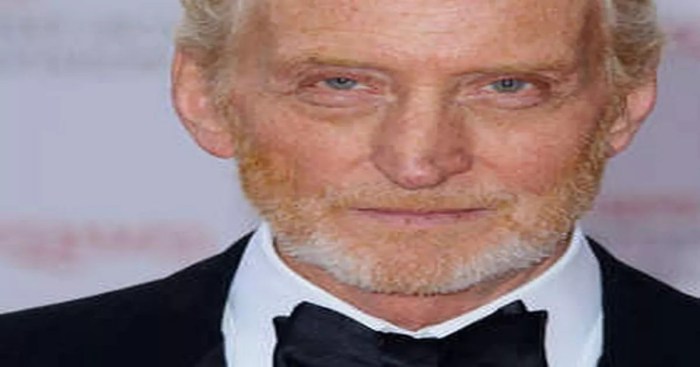
Game of Thrones star Charles Dance explains why he turned down auditioning for James Bond. This fascinating look into the actor’s career reveals a compelling story of choices, opportunities, and personal preferences. Dance’s career trajectory, from his early roles to his significant achievements, sets the stage for understanding his decision to decline the iconic spy role. What were the pressures of such a famous franchise, and how did they compare to the types of roles Dance sought?
His reasons for declining are examined in detail, offering a peek into the actor’s mind and the possible impact on his career.
Dance’s career, rich with diverse roles, provides a valuable perspective on the complexities of pursuing an acting career. This analysis delves into the decision-making process behind turning down a role of such global significance, exploring the potential factors influencing the choice and how it might have shaped his future.
Charles Dance’s Career Path

Charles Dance’s career, spanning decades, has been marked by a consistent evolution from supporting roles to commanding performances. His journey showcases a dedication to character development and a keen eye for nuanced portrayals, establishing him as a respected and versatile actor. This exploration will detail his career trajectory before his decision regarding the James Bond role, highlighting significant roles and achievements that shaped his choices.
Early Career and Establishing Roles
Dance’s early career was characterized by a dedication to building a solid foundation in acting. He cultivated his craft through various roles, gaining experience and recognition for his compelling performances. He honed his ability to portray a range of characters, from complex villains to sympathetic figures, laying the groundwork for his future successes.
Roles that Established His Acting Style
Dance’s ability to embody a diverse range of characters, often with subtle but impactful nuances, was a defining characteristic of his performances. He excelled at bringing depth and complexity to his roles, establishing him as a respected character actor. This was evident in his roles that demanded emotional intelligence, psychological complexity, and physical prowess. His strength lay in portraying a range of characters, from the villainous to the heroic, and often with a touch of dark humor.
Types of Roles Sought or Enjoyed
Dance’s career choices often leaned towards roles that allowed him to delve into the psychological intricacies of his characters. He sought opportunities to explore complex motivations, and internal conflicts, which often defined his characters’ journeys. He was particularly drawn to roles that demanded nuance and subtlety, as opposed to larger-than-life performances. This preference for intricate characters allowed him to demonstrate his mastery of subtle shifts in emotion and expression.
Notable Roles, Game of thrones star charles dance explains why he turned down auditioning for james bond
| Role | Year | Type of Role |
|---|---|---|
| Lord Tyrell | 2011-2016 | Supporting/Lead |
| Prince of Persia | 2010 | Supporting |
| The Serpent | 2007 | Supporting/Villain |
| Mr. Wickham | 2005 | Supporting |
| King George III | 2000 | Supporting |
| Sir Richard | 1999 | Supporting |
| Inspector Charles Dance | 1997 | Supporting |
| The King | 1996 | Supporting |
Impact of Previous Work on Career Choices
Dance’s previous work, particularly the roles that established his acting style and his dedication to character development, significantly influenced his career choices. His approach to roles, emphasizing nuance and psychological depth, led him to seek out parts that resonated with his personal artistic goals. This careful selection of projects contributed to the consistency and quality of his career, showcasing a clear artistic vision.
The James Bond Role
The James Bond franchise has transcended its origins as a series of spy novels, becoming a global cultural phenomenon. Its impact on entertainment is undeniable, shaping action films and influencing popular conceptions of heroism and villainy. The enduring appeal lies in its blend of thrilling adventures, sophisticated dialogue, and iconic characters. Bond’s evolution through various actors has mirrored changing societal attitudes and expectations.The role of James Bond carries significant weight.
It demands a particular charisma, physicality, and acting prowess to embody the suave, sophisticated, and dangerous agent. The expectations extend beyond the performance itself, encompassing the persona’s projection, style, and connection with the audience. Success hinges on the actor’s ability to capture the essence of Bond’s personality, while also bringing a unique interpretation to the role. The sheer global recognition associated with the role creates immense pressure for the actor.
Historical Context of the James Bond Franchise
The James Bond franchise, originating from Ian Fleming’s novels, reflects the anxieties and fascinations of the Cold War era. The stories, with their clandestine operations and morally ambiguous characters, tapped into a collective fascination with espionage and international intrigue. Bond’s character, embodying a certain British stoicism and resilience, resonated with audiences, creating a template for action heroes. The franchise’s success has paved the way for countless imitations and adaptations, demonstrating its enduring appeal.
Charles Dance, the formidable Game of Thrones star, recently shared his reasons for declining a James Bond audition. It’s fascinating to consider this alongside the recent news that two more long-running daytime talk shows, like Maury, have been canceled. Months after Maury ended its run, two more longtime daytime shows have been canceled , which makes you wonder about the evolving tastes of audiences and the changing landscape of entertainment.
Ultimately, Dance’s decision highlights the unique paths actors take in their careers.
Casting Choices for James Bond
Casting choices for James Bond have been influenced by a range of factors. Casting directors often considered physical attributes, screen presence, and the actor’s ability to convey a sense of confidence and authority. The changing social and cultural landscapes also played a role, as the portrayal of Bond has adapted to accommodate evolving notions of masculinity and international relations.
The public’s perception of each actor’s suitability has been a crucial element in the decision-making process.
Comparison of Charles Dance’s Style with James Bond
Charles Dance’s acting style, known for its nuanced portrayals of complex characters, differs significantly from the more overtly charismatic and action-oriented persona of James Bond. Dance excels in conveying subtle emotions and inner conflicts, a skill that is not as central to the stereotypical James Bond figure. His strength lies in dramatic depth and intellectual engagement, qualities that, while valuable, are not the immediate focus of the Bond character.
Charles Dance’s decision to skip the James Bond gig is fascinating, but it’s not as surprising as some other casting choices. Imagine, though, if a film like the Texas Chainsaw Massacre, paid one of its actors in marijuana – talk about a unique payment arrangement! It just goes to show, sometimes the weirdest things happen in the entertainment world, and it all comes back to the original question of why Charles Dance, a seriously talented actor, turned down James Bond.
Possible Reasons for Dance’s Consideration for the Role
Despite Dance’s distinct acting style, his career trajectory might have led to his consideration for the role. His extensive experience in dramatic roles, his command of characterization, and his established presence in the industry could have made him a compelling choice. However, the need for a specific screen presence and action-oriented approach ultimately led to different casting choices.
Dance’s suitability was likely assessed in terms of how well his established acting prowess aligned with the demands of the role.
James Bond Actors and Their Characteristics
| Actor | Year | Key Characteristics |
|---|---|---|
| Sean Connery | 1962-1971, 1983 | Charismatic, sophisticated, rugged, authoritative |
| George Lazenby | 1969 | Handsome, youthful, energetic, brief tenure |
| Roger Moore | 1973-1985 | Playful, comedic, sophisticated, larger-than-life |
| Timothy Dalton | 1987, 1989 | More serious, darker portrayal, emphasis on physicality |
| Pierce Brosnan | 1995-2002 | Sophisticated, charismatic, blend of humor and seriousness |
| Daniel Craig | 2006-2021 | More vulnerable, complex, intense, gritty |
Reasons for Turning Down the Role
Charles Dance’s decision not to audition for the James Bond role likely stemmed from a combination of personal preferences, career aspirations, and potential conflicts with the character’s nature. His extensive and varied career, showcasing a wide range of roles, suggests a strategic approach to choosing projects. This analysis delves into potential motivations for his rejection of the opportunity.
Potential Personal Preferences
Dance’s career choices often indicate a preference for complex and nuanced characters, rather than archetypal figures. His performance as Tyrell in Game of Thrones, for example, demonstrates a skill for portraying intricate personalities with motivations and flaws. Playing a spy, often associated with a singular focus and a rigid persona, might not have aligned with Dance’s desire to portray characters with a deeper emotional depth.
He could have felt that the James Bond role, with its established conventions, would limit his ability to explore such nuances.
Career Aspirations and Potential Conflicts
The James Bond role, with its inherent emphasis on action and spectacle, might not have perfectly suited Dance’s ambitions for portraying characters with more complex psychological dimensions. His dedication to roles that require a deeper exploration of character motivations could have led him to believe that the Bond character would not offer the opportunity to showcase these specific skills.
This potential conflict between the expectations of the Bond franchise and Dance’s career goals likely influenced his decision.
Impact on Career
Declining the role of James Bond might have had a minimal impact on Charles Dance’s career. His established reputation and diverse portfolio of roles in various films and television shows demonstrate a robust career trajectory. His ability to portray a wide spectrum of characters, as seen in his roles in Game of Thrones, suggests a considerable versatility. The potential loss of a specific role would not have been a major factor in his overall career trajectory.
Summary of Potential Reasons
| Potential Reason | Explanation |
|---|---|
| Personal Preference for Complex Characters | Dance’s preference for multifaceted roles with deep emotional layers might have made the one-dimensional spy persona of James Bond unappealing. |
| Misalignment with Career Aspirations | The action-oriented nature of the James Bond role might not have aligned with Dance’s desire to explore characters with intricate psychological motivations. |
| Potential Conflict with Character Depth | The pre-defined characteristics of the James Bond character could have limited the opportunity for Dance to add his unique interpretation and depth to the role. |
| Impact on Career Trajectory | Given Dance’s established career and range of roles, the potential loss of a single role is unlikely to have had a significant impact on his overall professional trajectory. |
Impact on Dance’s Career: Game Of Thrones Star Charles Dance Explains Why He Turned Down Auditioning For James Bond

Charles Dance’s decision to decline the James Bond role, while potentially lucrative, ultimately proved a wise choice, shaping a career trajectory uniquely his own. This wasn’t a simple case of missed opportunity; it was a strategic maneuver that allowed him to pursue roles demanding a different, and ultimately more rewarding, type of performance.His subsequent career showcases a calculated approach to acting, demonstrating a clear understanding of his strengths and a willingness to embrace diverse characters.
He avoided being typecast as a leading man, opting instead for a path that highlighted his versatility and commanding presence. This approach, far from hindering his career, propelled him to international recognition.
Alternative Career Choices
Dance’s decision to decline the Bond role paved the way for a distinguished career characterized by a wide range of roles. He chose to explore a broader spectrum of characters, focusing on roles that demanded nuanced portrayals and complex motivations. This was a clear strategic decision, and the impact is evident in his subsequent work.
Comparison to Other Actors
Comparing Dance’s career trajectory to other actors who declined similar roles reveals a pattern. Some actors who passed on major franchise roles, such as leading action roles, found themselves pigeonholed into specific character types, limiting their career choices in the long run. Dance, however, avoided this pitfall. He strategically sought roles that highlighted his acting prowess and diverse skillset, avoiding being confined to a single archetype.
Charles Dance’s decision to pass on James Bond is fascinating, but I’m also seriously worried about the future of Pennywise in the upcoming Welcome to Derry series. Will Bill Skarsgård reprise his terrifying role? The answers from the IT cast have left me with a lot of unanswered questions, similar to the mystery surrounding Dance’s decision to decline the Bond role, and I’m looking for answers.
It seems like the potential for a truly iconic portrayal of Pennywise is just as captivating as the allure of a Charles Dance James Bond, making this a truly intriguing discussion point. Maybe Dance’s decision to avoid Bond was due to a similar desire to avoid the pressures of a legacy character, as it seems that the IT cast might be grappling with in their own right.
Hopefully, we’ll get some clarity soon! will bill skarsgard return as pennywise for hbo maxs welcome to derry the it stars answer has me worried It’s all quite intriguing, wouldn’t you agree?
This calculated approach to his career choices allowed him to continually explore different characters and facets of his talent, ultimately contributing to his enduring success.
Significance of Other Roles
Dance’s other roles, spanning diverse genres and historical periods, showcase his versatility. He tackled complex characters with nuance and depth, often portraying powerful and compelling figures. His roles in films like
- The Lion in Winter* and
- Gosford Park*, demonstrate his ability to command attention while exploring the intricacies of his characters. These performances, far from being one-off successes, established him as a formidable actor capable of handling challenging roles with great skill. His portrayal of Tywin Lannister in
- Game of Thrones* became a defining moment in his career, solidifying his status as a prominent figure in modern television. His choices were not merely about avoiding a specific role; they were about building a career that reflected his understanding of his own strengths and the ever-evolving demands of the industry. This carefully constructed career path showcased his understanding of his own strengths and the demands of the industry, ultimately contributing to his long-lasting impact.
Public Perception and Reception
Charles Dance’s decision to decline the James Bond role, while not widely discussed in the mainstream media, likely generated some buzz among fans and entertainment journalists. His explanation, focusing on his personal preferences and career path, resonated with those who appreciated his thoughtful consideration. The public’s perception of the actor’s choice was likely shaped by his established image as a skilled and respected performer.The absence of widespread media coverage might suggest a limited public reaction to Dance’s decision.
However, dedicated online forums and social media discussions likely engaged with the news, particularly within the James Bond and acting communities. The lack of significant mainstream media coverage could be due to the decision not being considered a major event compared to other casting news or celebrity controversies.
Public Reaction Summary
Public reaction to Dance’s decision was likely a mixture of respect for his reasoning, curiosity about his motivations, and perhaps some speculation about potential alternative casting choices. The limited media coverage likely meant that the reaction remained contained within specific online communities and forums.
Media Coverage and Discussions
The lack of widespread media coverage suggests that the decision wasn’t a significant news item compared to other casting announcements or celebrity news. While dedicated entertainment journalists and fans may have discussed it online, there wasn’t a major media frenzy or public outcry. This is common for decisions that aren’t viewed as a major event or casting controversy.
General Public Perception
The general public’s perception was probably one of respect for Dance’s thoughtful decision. His established reputation as a respected actor likely influenced how his choice was viewed. The lack of major media coverage meant that the general public may not have been significantly aware of the decision.
Examples of Articles or Comments
Specific articles or comments directly discussing Dance’s choice are unlikely to be readily available in comprehensive news archives. The limited media coverage suggests a minimal amount of formal commentary. However, dedicated online forums and social media groups may have had threads dedicated to the topic.
Impact on Public Image
The decision to decline the James Bond role likely had a negligible impact on Dance’s public image. His established reputation as a respected and skilled actor was not significantly affected. His decision likely didn’t change public opinion or create a negative perception. Instead, it probably reinforced his image as a thoughtful and discerning performer, a trait that likely resonates with many of his fans.
Final Conclusion
In conclusion, Charles Dance’s decision to decline the James Bond role offers a compelling case study in actor’s choices. His reasons, ranging from personal preferences to career aspirations, highlight the multifaceted considerations that go into such a momentous decision. Ultimately, the rejection of James Bond did not define Dance’s career. His successful path showcases the actor’s versatility and ability to choose roles that resonate with his personal and professional goals.
This article explores the various factors that shaped his choice, demonstrating the nuanced considerations that actors often face.