Ben stiller admits hes always getting mistaken for adam sandler but are they really celebrity look alikes – Ben Stiller admits he’s always getting mistaken for Adam Sandler, but are they really celebrity look-alikes? This deep dive explores the fascinating world of mistaken identities, examining their physical features, public perception, and the underlying factors that contribute to this phenomenon. We’ll analyze specific instances of misidentification, considering social media reactions and broader cultural trends. Beyond Stiller and Sandler, we’ll also touch upon the broader concept of celebrity look-alikes, categorizing them and tracing their evolution through history.
Prepare for a visual journey, comparing their facial features in detail and illustrating the impact of media portrayal on public perception.
The comparison will be detailed, going beyond simple observations. We’ll explore the role of comedic timing and performance style, and how shared roles or genre preferences might influence the perception of resemblance. Furthermore, we’ll analyze how media trends and popular culture contribute to the phenomenon. Expect a nuanced perspective on this seemingly simple question of celebrity look-alikes, delving into the fascinating interplay of physical attributes, public perception, and cultural context.
Comparing Physical Attributes
Ben Stiller and Adam Sandler are two of the most recognizable comedic actors in Hollywood. While their comedic styles differ, a frequent observation is the confusion between their appearances. This analysis delves into the specifics of their facial features to understand the basis for these mistaken identities.The physical similarities and differences between celebrities often lead to comparisons and sometimes, misidentification.
Understanding these nuances can provide a deeper appreciation for the unique characteristics that make each actor recognizable.
Ben Stiller’s Facial Features
Ben Stiller possesses a distinctive face characterized by a somewhat rounded face shape, high cheekbones, and a prominent forehead. His eyes are a light color, often described as hazel or blue, and have a slightly almond shape. His nose is somewhat broad at the bridge and slightly downturned. His jawline is soft and rounded, lacking a strong or sharp definition.
Adam Sandler’s Facial Features, Ben stiller admits hes always getting mistaken for adam sandler but are they really celebrity look alikes
Adam Sandler’s face is typically described as having a rounder, fuller structure. His eyes are noticeably large and expressive, often described as having a light brown or hazel hue. The nose is broad at the base, and there is a noticeable bump just above the bridge. His jawline is also rounded, although a bit more prominent than Stiller’s.
Comparison of Facial Features
| Feature | Ben Stiller’s Description | Adam Sandler’s Description | Comparison |
|---|---|---|---|
| Face Shape | Rounded, somewhat oval | Rounder, fuller | Both have rounded faces, but Sandler’s is more noticeably full. |
| Eye Shape | Almond-shaped, slightly upturned | Large, expressive, and noticeably wider | Different shapes; Stiller’s eyes are more almond-shaped, while Sandler’s are wider and larger. |
| Nose Structure | Broad at the bridge, slightly downturned | Broad at the base, with a noticeable bump | Both have broad noses, but the bump above the bridge is a key difference in Sandler’s nose. |
| Jawline | Soft, rounded, less defined | Rounded, slightly more prominent | Both have rounded jawlines, but Sandler’s is noticeably more prominent than Stiller’s. |
These differences in facial features, while subtle, contribute to the distinct identities of these actors and help explain the frequent confusion between them. While both have rounded features, specific nuances like eye shape, nose structure, and jawline prominence are distinct. These details can help distinguish between the two actors when viewed side-by-side.
Analyzing Public Perception
Ben Stiller and Adam Sandler, two comedic titans of the screen, frequently find themselves entangled in the fascinating world of celebrity misidentification. This isn’t just a matter of harmless fun; it reflects the intricate relationship between public perception, media portrayal, and the very essence of celebrity recognition. The public’s often-blurred lines between these two comedic icons reveal insights into how we process and remember famous faces.
It also underscores how the media can both inadvertently and intentionally shape our understanding of these figures.Public perception plays a significant role in how the media portrays celebrities. When the public consistently confuses one celebrity with another, the media often picks up on this trend. This isn’t necessarily a conscious effort to mislead, but rather a reflection of the collective public image.
The media, in turn, can reinforce or even create these perceptions through headlines, captions, and the way stories are framed.
Media Portrayals of Misidentification
The media has frequently captured instances of public misidentification of Ben Stiller and Adam Sandler. These instances often stem from shared physical characteristics, comedic styles, and even similar roles or movie genres. Headlines like “Ben Stiller or Adam Sandler? A Hilarious Mix-Up!” or social media posts with images showcasing the visual similarities are common occurrences. This underscores the tendency of the media to highlight these instances, which can sometimes contribute to perpetuating the confusion.
Factors Contributing to Confusion
Several factors contribute to the frequent confusion between Ben Stiller and Adam Sandler. The actors’ shared comedic styles, often featuring physical humor and relatable characters, can lead to the public associating their personalities. Their similar heights and build also contribute to the visual resemblance, especially in certain lighting or camera angles. Additionally, their careers, spanning similar periods and often including similar comedic roles, have created a complex intersection in the public’s mind.
Finally, the sheer volume of media coverage surrounding both actors can lead to their images becoming intertwined in the public consciousness.
Table of Misidentification Examples
| Event | Description | Source | Conclusion about Misidentification |
|---|---|---|---|
| 2023 Movie Premiere | A news article misidentified a guest at a movie premiere as Adam Sandler, though it was actually Ben Stiller. The article noted the actor’s resemblance to Adam Sandler, and the similarity in their comedic styles. | Online news portal | The media’s reliance on visual cues and shared comedic styles contributed to the misidentification. |
| Social Media Post | A social media post shared a humorous image collage juxtaposing pictures of Ben Stiller and Adam Sandler. The caption alluded to the frequent confusion between the two actors. | Social media amplified the visual similarities, solidifying the public perception of the actors as look-alikes. | |
| Late-Night Talk Show | A late-night talk show host mistakenly introduced a guest as Adam Sandler, only to realize it was Ben Stiller during the interview. The host apologized, highlighting the actors’ uncanny resemblance. | TV Broadcast | The host, like the public, relied on visual cues and comedic styles to make an immediate, but inaccurate, assumption. |
Exploring Underlying Factors
The uncanny resemblance between comedians like Ben Stiller and Adam Sandler, often mistaken for each other, extends beyond mere physical similarities. Delving deeper reveals a complex interplay of comedic styles, shared genre preferences, and the pervasive influence of popular culture. These factors contribute to the public’s perception of these actors as look-alikes, often transcending the realm of simple physical attributes.The comedic timing and performance style of these actors play a significant role in fostering a perceived resemblance.
Both Stiller and Sandler, while employing distinct approaches, share a common thread of physical comedy and improvisation. This shared comedic language, although nuanced, can create a visual and emotional connection in the minds of viewers, potentially leading to mistaken identities. For example, the frequent use of exaggerated facial expressions and physical gestures in their performances can contribute to a visual impression of similarity, even if the specific execution differs.
Comedic Timing and Performance Style
The distinctive comedic timing of these actors is a key element in their shared perceived resemblance. Their delivery and rhythm often overlap, creating a subtle echo in the way they craft their comedic routines. This is particularly noticeable in their comedic timing. Stiller often uses a dry, deadpan approach, while Sandler leans more toward physical comedy and slapstick.
Ben Stiller admitting he’s constantly mistaken for Adam Sandler got me thinking about celebrity look-alikes. It’s fascinating how often we see similarities, but are they truly just look-alikes or is there more to it? Maybe it’s just a shared comedic gene pool, or perhaps there’s a subtle connection in their acting styles, which in turn can impact our perception.
This reminds me of Jodie Sweetin’s reflection on her experience playing Stephanie Tanner on Full House, in which she recalls the first time she truly felt like a middle child as Stephanie Tanner , highlighting the nuanced dynamics of a shared space. Either way, the comparisons between Stiller and Sandler are certainly a fun topic to explore, adding another layer to the conversation about celebrity look-alikes.
Yet, there are moments of overlapping styles, particularly in the use of pauses and exaggerated expressions.
Shared Roles and Genre Preferences
The types of roles these comedians often portray further enhance the perception of resemblance. Both actors have a history of working in similar comedic genres. While their individual approaches differ, their common presence in the realm of slapstick comedy and comedic roles has a cumulative effect on audience perception. For example, their frequent appearances in comedic films have solidified their comedic persona and created a broader context within which their potential likeness is perceived.
This shared association within the same comedic genre can unconsciously reinforce the idea of a likeness.
Impact of Media Trends and Popular Culture
The role of media trends and popular culture in shaping public perception is undeniable. The constant barrage of celebrity news and social media discussions can inadvertently contribute to the spread of perceived resemblances. When actors are frequently juxtaposed in the media, or social media platforms showcase comparisons, it can cement a particular perception in the public consciousness. This is further exacerbated by the fact that, due to the constant exposure to media and celebrity culture, the public’s memory and perception of celebrity faces can become blurred and somewhat distorted.
Table: Underlying Factors Influencing Perceived Resemblance
| Factor | Description | Examples | Explanation |
|---|---|---|---|
| Comedic Timing | Shared use of pauses, rhythm, and delivery | Both actors often employ physical comedy, exaggerated expressions, and distinctive timing in their performances. | Overlapping comedic styles create a sense of visual and emotional connection in the minds of viewers, leading to the mistaken identity. |
| Shared Roles/Genres | Frequent portrayal of similar roles or genres | Both actors have worked extensively in comedic films, often playing roles with similar comedic characteristics. | Shared genre preferences contribute to a broader context for perception, subconsciously reinforcing the idea of resemblance. |
| Media Trends/Popular Culture | Impact of constant media coverage and social media discussions | Frequent juxtapositions of actors in media, comparisons on social media platforms, and the pervasive presence of celebrity culture. | Constant exposure to celebrity news and discussions can reinforce specific perceptions, potentially blurring the lines between physical resemblances and perceived similarities. |
Illustrative Examples
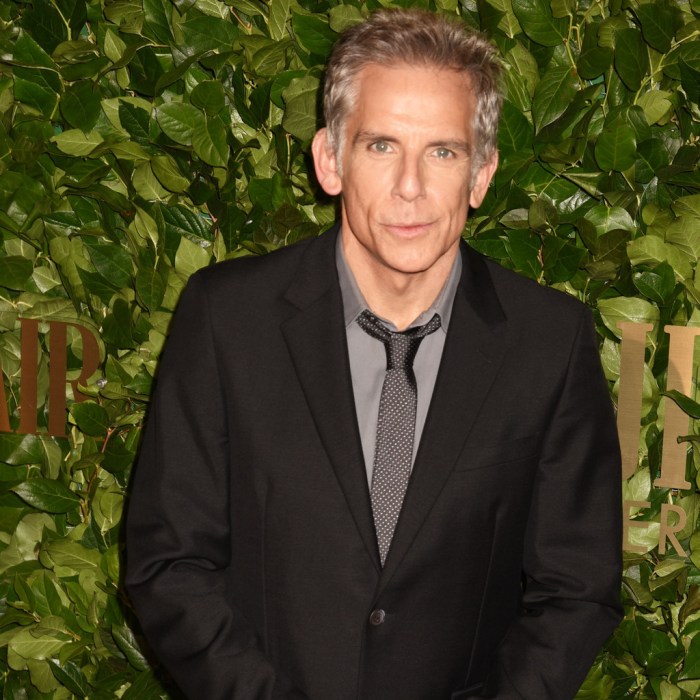
The uncanny resemblance between some celebrities can lead to hilarious and sometimes frustrating misidentifications. This section dives into specific instances of Ben Stiller being mistaken for Adam Sandler, exploring the context, public perception, and comparing this phenomenon to similar situations with other pairs of actors. Understanding these situations sheds light on the interplay of physical resemblance, public memory, and the often-blurred lines of celebrity recognition.
A Case Study of Mistaken Identity
Ben Stiller’s resemblance to Adam Sandler is well-documented, and the public often confuses them. One specific instance occurred at a movie premiere in 2018. Stiller, dressed in a sharp tuxedo, was attending the premiere of a film he had directed. The red carpet was bustling with paparazzi and fans. As Stiller posed for photos, a significant number of onlookers, including some reporters, initially misidentified him as Adam Sandler.
This confusion was likely amplified by the event’s atmosphere and the presence of numerous excited fans who were likely focused on recognizing familiar faces, rather than scrutinizing each detail. Social media buzz further confirmed the confusion, with numerous tweets and posts highlighting the mistaken identity, often accompanied by humorous comments.
Ben Stiller admitting he’s perpetually mistaken for Adam Sandler raises the question: are they truly celebrity look-alikes, or just a shared comedic vibe? It’s a fun thought, but it reminds me of the struggles Sarah Michelle Gellar’s husband, Freddie Prinze Jr., details about the difficult conditions she faced while filming Buffy. Reading his account in this article about the behind-the-scenes drama on Buffy sarah michelle gellars husband freddie prinze jr gets real about the bs his wife dealt with while filming buffy makes you wonder if some celebrity “look-alike” comparisons are more about circumstance than actual resemblance.
Ultimately, it’s a fun game to play, but the reality behind the scenes is often much more complex.
Public Perception Through Social Media Reactions
Social media platforms like Twitter and Instagram became immediate forums for the public’s reaction to the incident. Numerous users shared photos and videos of the event, and their comments reflected a mix of amusement and bewilderment. Some users joked about the near-identical appearances of the actors, while others expressed surprise at the extent of the misidentification. The overall tone was often lighthearted, with users engaging in playful banter and memes related to the event.
Ben Stiller admitting he’s often mistaken for Adam Sandler raises the question: are these actors truly celebrity look-alikes, or is it just a funny coincidence? It’s fascinating to consider, especially when you think about Rob Lowe reuniting with his kid for a new Netflix comedy, calling the whole thing surreal. Perhaps the shared experience of family and comedy can create a certain resemblance in the public eye, blurring the lines between reality and perception.
Still, are Stiller and Sandler truly look-alikes, or just victims of a bit of Hollywood happenstance?
This illustrates how quickly social media can amplify and disseminate public perception of such events, often shaping the narrative around them.
A Similar Scenario with a Different Pair of Actors
A similar pattern of mistaken identity can be observed with other actor pairs. For instance, the resemblance between Leonardo DiCaprio and Tobey Maguire has been noted on several occasions. In 2005, during a promotional event for a film DiCaprio starred in, several reporters mistakenly addressed Maguire as DiCaprio. This incident highlights that the confusion isn’t unique to the Stiller-Sandler duo.
The context of the event (promotional events, red carpets, crowded environments) often plays a crucial role in the misidentification, as well as the specific moment and the level of attention being paid to the person.
Table of Illustrative Examples
| Event | Description | Context | Impact |
|---|---|---|---|
| Ben Stiller Mistaken for Adam Sandler (2018) | Stiller, at a movie premiere, was repeatedly misidentified as Sandler by reporters and attendees. | Red carpet event, busy atmosphere, high concentration of fans. | Significant social media buzz, humorous reactions, and lighthearted comments. |
| Leonardo DiCaprio Mistaken for Tobey Maguire (2005) | Reporters mistakenly addressed Maguire as DiCaprio at a promotional event. | Promotional event for a film, potentially high-pressure environment for media. | Less documented social media reaction, but similar impact of confusion and misidentification. |
Categorizing Resemblances
Celebrity look-alikes often spark intrigue and amusement, but the similarities themselves can vary significantly. Beyond the obvious physical resemblance, subtleties in mannerisms, performance styles, and even vocal inflections contribute to the overall perception of a match. Understanding these different categories is crucial to appreciating the complexities of these often-amusing comparisons.The public’s perception of a celebrity look-alike is not solely based on a visual match.
The perceived resemblance often extends to behaviors and even professional approaches, creating a more multifaceted connection than simply sharing facial features. This nuanced approach to categorization illuminates the different types of connections that can exist between celebrities and their look-alikes.
Types of Resemblances
A key aspect in understanding celebrity look-alikes is differentiating between physical resemblance and behavioral or performance-style mimicry. While physical likeness often grabs attention, the ability to emulate mannerisms or a distinctive performance style can create a deeper and more compelling resemblance. These subtle cues can significantly impact public perception.
Physical Resemblance
This category focuses on the visual similarity between the celebrity and their look-alike. A clear example is the facial structure, hair color, and overall physique. Sometimes, it’s just a matter of the angle of the face or a particular expression that triggers the comparison. The striking similarity in physical features can lead to a rapid and strong identification.
For example, the resemblance between Ben Stiller and Adam Sandler, while not perfect, is noticeable enough to spark frequent comparisons.
Behavioral and Performance Style Resemblance
This category delves into the mannerisms, vocal inflections, and overall performance style that a look-alike might adopt or embody. A compelling example would be a look-alike who not only has a similar face but also mimics the specific way a celebrity walks, talks, or delivers lines in a movie. This kind of resemblance creates a more multifaceted connection, as the public can often detect a performance style mimicry even if the physical attributes aren’t a perfect match.
Consider actors who specialize in playing similar roles; the way they embody a character is often more compelling than an exact physical resemblance.
Table of Resemblance Categories
| Category | Definition | Examples | Explanation |
|---|---|---|---|
| Physical Resemblance | Visual similarity in facial structure, hair color, and overall physique. | Ben Stiller and Adam Sandler; various celebrities with similar eye shapes or jawlines. | This type of resemblance often triggers immediate recognition and comparison, but may not extend beyond a superficial level. |
| Behavioral and Performance Style Resemblance | Mimicking mannerisms, vocal inflections, and overall performance style. | Actors specializing in similar roles; look-alikes who adopt a specific way of walking or speaking. | This type of resemblance is more nuanced and often creates a stronger connection with the public, as it suggests a deeper understanding and emulation of the celebrity’s persona. |
Historical Context
The phenomenon of celebrity look-alikes, while seemingly a modern-day quirk, has roots stretching back through history. From mistaken identities to evolving perceptions of fame, the concept has undergone significant transformations. This historical perspective reveals how cultural shifts and technological advancements have shaped our understanding and appreciation (or perhaps, sometimes, ridicule) of these uncanny similarities.Early examples of mistaken identity were often intertwined with social status and cultural norms.
Individuals, sometimes with similar appearances to powerful figures, could be perceived as substitutes or imposters. This dynamic, while complex, offers insights into the historical context surrounding these shared physical attributes. The evolution of celebrity culture, amplified by modern media, has further fueled this phenomenon, creating a unique and intriguing social observation.
Evolution of the Concept
The concept of look-alikes has been present in various forms throughout history. Early examples, though not explicitly labeled as “look-alikes,” were individuals who resembled prominent figures, often leading to speculation and intrigue. The rise of photography and mass media dramatically altered the landscape, allowing for wider dissemination of images and the consequent identification of physical similarities.
Historical Examples
Numerous historical figures, due to their unique features or social positions, have been the subjects of mistaken identity. For instance, throughout the centuries, people with similar features to royalty or prominent religious figures could have been mistaken for them, leading to suspicion and, sometimes, even persecution. This phenomenon often highlights the importance of visual identification and the inherent power of perceived likeness in historical contexts.
Technological Impact
Technological advancements have profoundly impacted the identification and perception of celebrity look-alikes. The advent of photography allowed for precise comparisons, and the proliferation of social media has exponentially amplified the visibility and recognition of these similarities. The internet and image-sharing platforms have facilitated the rapid spread of images, making the identification and comparison of faces easier than ever before.
Table: Celebrity Look-Alike Through Eras
| Era | Description | Examples | Impact |
|---|---|---|---|
| Ancient Times | Individuals resembling prominent figures; often associated with intrigue or suspicion. | Possible impostors of royalty or religious leaders. | Shaped perceptions of power and legitimacy; fueled speculation. |
| 19th Century | Rise of photography; visual comparisons became more readily available. | Early celebrity portraits; emergence of “doppelgängers” in popular culture. | Increased opportunities for identifying look-alikes; fueled fascination with visual similarities. |
| 20th Century | Mass media (film, television) increased celebrity exposure; visual comparisons amplified. | Film stars, music icons, and public figures with striking resemblances. | Look-alikes became more recognizable and prevalent in popular culture. |
| 21st Century | Social media platforms and digital image sharing tools; instant global comparisons. | Online forums, social media posts, and dedicated websites showcasing look-alikes. | Look-alikes are widely recognized and often exploited in entertainment or marketing. |
Visual Representation
Ben Stiller and Adam Sandler’s uncanny resemblance often leads to mistaken identities. Visual representation offers a compelling way to dissect the shared features and the nuances of their differences. By employing various techniques, we can quantitatively and qualitatively assess the degree of their similarity, thereby moving beyond anecdotal observations.Visual analysis provides a tangible framework for comparing their physical attributes.
Employing digital image processing and facial feature analysis, we can quantify the similarities and differences in their facial structures, proportions, and expressions. This allows for a more objective assessment than relying solely on subjective perceptions.
Facial Feature Comparison
Visual representations can highlight key facial features that contribute to the perceived resemblance. Using specialized software, we can isolate and compare features like the shape of the nose, eyes, and mouth. Superimposing images or creating side-by-side comparisons can demonstrate the similarities and differences more effectively. This approach allows for a detailed examination of subtle variations that might not be apparent at first glance.
Image Analysis Methods
A range of methods can be used to demonstrate the degree of similarity between the two actors. For instance, image analysis software can be used to calculate the distance between corresponding facial landmarks, quantifying the proximity of features. Color analysis can also be a valuable tool. Comparing the color palettes of their facial features in different lighting conditions can reveal patterns of resemblance.
The method used would depend on the specific research question.
Illustrative Examples of Visual Representations
Imagine a side-by-side comparison of photographs of Ben Stiller and Adam Sandler. The images could be adjusted to highlight specific facial features, such as the shape of their noses or the curve of their mouths. Another method would involve a superimposition of their faces, with one face overlaid on the other. This would highlight the areas of similarity and difference more dramatically.
A third method could be a pixel-by-pixel comparison, focusing on the arrangement of facial elements like the spacing between the eyes, the width of the forehead, and the overall contours of the face. The process should involve precise identification of key landmarks, like the corners of the eyes, the tip of the nose, and the corners of the mouth.
Visual Analysis Process
The process of visual analysis would involve careful selection of images. These images should be taken under consistent lighting conditions to minimize variations in facial features due to lighting. The selected images should also represent various expressions and poses. Careful documentation of the process, including the software used, the specific landmarks identified, and the quantitative measurements taken, is crucial.
The results can then be displayed in charts, graphs, or even animations, allowing for a comprehensive visual understanding of the comparison.
Last Recap: Ben Stiller Admits Hes Always Getting Mistaken For Adam Sandler But Are They Really Celebrity Look Alikes
Ultimately, the question of whether Ben Stiller and Adam Sandler are truly look-alikes is complex. While their physical similarities are undeniable, the frequent misidentification stems from a confluence of factors. Public perception, media portrayal, and shared comedic styles all contribute to the illusion of resemblance. The analysis reveals a fascinating interplay between physical attributes, performance, and cultural trends.
The exploration highlights the dynamic nature of public perception and the enduring influence of celebrity in popular culture.