The Paradox of Personal AI: Why Mark Zuckerberg is Betting Billions on a Concept Consumers Have Repeatedly Rejected


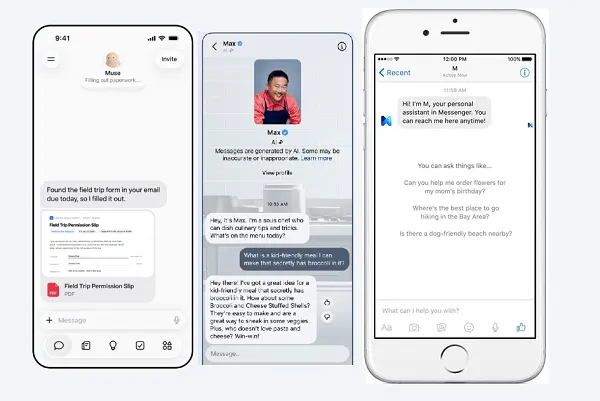
Meta Platforms continues to double down on consumer-facing artificial intelligence assistants, introducing its most advanced conversational tool to date, the Muse app and chatbot. The release represents the latest iteration of CEO Mark Zuckerberg’s long-standing vision to integrate a personalized, task-oriented artificial intelligence agent into the daily lives of billions of users. Muse allows individuals to name their conversational agent, delegate background tasks, and interact with an ever-present digital companion. Zuckerberg has framed this development as a crucial milestone on the pathway toward universal personal superintelligence.
However, this ambitious rollout arrives with a heavy burden of history. Meta’s persistent drive to popularize digital assistants stands in stark contrast to a decade of consumer apathy toward similar products from the same company. Despite repeated public indifference and the eventual discontinuation of past projects, leadership in Menlo Park remains convinced that frictionless, AI-driven life optimization is the inevitable future of human-computer interaction. This persistent push raises critical questions about whether Meta is pioneering the next paradigm of computing or simply chasing a sci-fi-inspired ideal that everyday users neither want nor need.
A Decade of Digital Assistants: A Chronology of Meta’s AI Ambitions
To understand the significance of the Muse release, one must examine Meta’s turbulent history with virtual assistants and automated bots over the past ten years. The company’s pursuit of conversational commerce and task delegation is far from a recent pivot brought on by the generative AI boom.
The journey began in August 2015 with the launch of Facebook M, an artificial intelligence-powered assistant integrated directly into the Messenger platform. Unlike purely automated competitors of the era, M relied on a hybrid model of machine learning and human contractors to fulfill complex user requests. According to then-Messenger chief David Marcus, M was designed to purchase items, arrange gift deliveries for loved ones, book restaurant reservations, coordinate travel arrangements, and manage schedules. Despite its robust capabilities, the operational costs were high, and consumer adoption remained stubbornly low. Recognizing the lack of mainstream traction, Meta officially pulled the plug on the M project in January 2018, less than three years after its grand debut.
Undaunted by the failure of M, Meta pivoted toward automated enterprise and creator tools. In April 2016, the company launched the Messenger Bots platform during its annual F8 developer conference, enabling businesses to automate customer service interactions. While some brands found niche utility in the platform, it failed to become the revolutionary consumer interface Zuckerberg had promised.
Years later, capitalizing on the rise of large language models, Meta attempted another consumer-facing pivot in 2023 by introducing celebrity-themed chatbots across Instagram, WhatsApp, and Messenger. Featuring the likenesses and simulated personalities of prominent cultural figures such as Snoop Dogg, Tom Brady, and Kendall Jenner, these bots were backed by significant marketing campaigns and celebrity endorsements. Much like the Messenger bots and Facebook M before them, consumer interest quickly waned, and the celebrity AI initiative failed to capture sustained engagement.
Muse represents the fourth major chapter in this saga. Equipped with vastly superior generative AI capabilities compared to its predecessors, Muse can understand nuance, maintain context, and execute asynchronous tasks with greater autonomy. Yet, the foundational value proposition remains identical to projects that consumers have already rejected twice over.
The Philosophy of Optimization: Silicon Valley Versus Mainstream Realities
The persistence behind Meta’s digital assistant strategy offers a revealing glimpse into the worldview of its chief executive. In various public appearances and podcast interviews, Zuckerberg has articulated deeply personal motivations for deploying agents like Muse. During a recent discussion with media outlet Sources, Zuckerberg outlined his specific use case for the technology, stating that his AI agent helps him strive to be a better father, a better husband, and a more attentive friend.
This perspective illuminates a fundamental philosophical divergence between Silicon Valley’s technocratic elite and the broader public. Zuckerberg approaches daily life through the lens of hyper-optimization—a mindset that views time as a scarce resource to be managed, streamlined, and maximized for efficiency. In this paradigm, delegating administrative tasks, logistical research, and communication management to an artificial intelligence is viewed as an unqualified good that frees up cognitive bandwidth for higher-level pursuits.
However, market data and sociological trends indicate that this optimization-first mindset is far from universal. For the average consumer, engaging in mundane tasks like product research, browsing retail shelves, and navigating interpersonal communications are not necessarily inefficiencies to be engineered away. Rather, they form the texture of lived experience. Many individuals derive satisfaction from the tactile nature of shopping, the serendipity of discovering new products organically, and the unscripted, sometimes inefficient nature of human-to-human interaction.
By treating social friction and manual labor as systemic flaws to be corrected by algorithms, Meta risks misinterpreting what users actually seek from technology. While consumers readily embrace artificial intelligence tools that automate tedious corporate drudgery or accelerate software coding, they have consistently shown reluctance to outsource their personal lives and social navigation to a software program.
Strategic Implications and Financial Stakes
The stakes for Meta’s current AI strategy are extraordinarily high. Over the past several years, the company has poured tens of billions of dollars into capital expenditures, acquiring advanced graphics processing units, expanding data center infrastructure, and hiring top-tier machine learning research talent. Wall Street has closely monitored these soaring expenditures, frequently punishing tech stocks when capital outlays outpace near-term monetization strategies.
For Meta’s massive AI investments to yield an adequate return, the company needs products that can scale to billions of users and create sticky, high-value ecosystems. Digital assistants like Muse are designed to serve as the ultimate operating system for the user’s digital life, anchoring them firmly within Meta’s product architecture and opening up lucrative new avenues for targeted advertising, subscription services, and transaction fees.
If Muse meets the same fate as Facebook M and the celebrity-voiced chatbots, it could severely undermine confidence in Meta’s consumer AI roadmap. It would suggest that despite possessing unprecedented computational power and vast troves of behavioral data, the tech giant remains vulnerable to fundamental miscalculations regarding consumer demand. Data alone, critics point out, reveals what people do, but it frequently fails to capture why they do it—or what elements of friction they actively prefer to retain.
The Road Ahead for Consumer AI
As Meta pushes forward with its promotional campaigns for Muse, the tech industry is watching closely to see if the third time is truly the charm. Artificial intelligence technology has undoubtedly crossed a chasm of capability since 2015, shifting from brittle rule-based systems to fluid, generative models capable of complex reasoning and personalized adaptation.
The technical readiness of the assistant, however, has rarely been the primary bottleneck. The core challenge facing Meta is cultural and psychological. Convincing a skeptical public to welcome an AI agent into the intimate spaces of marriage, parenting, and friendship requires more than superior natural language processing; it requires a cultural shift in how humanity values efficiency versus organic experience.
Whether consumers are finally ready to embrace the life-optimizing digital assistant Mark Zuckerberg has envisioned for a decade remains one of the defining questions of the current technological era. For now, Meta is banking its future on the bet that if you build the ultimate assistant long enough and loud enough, the world will eventually change its mind.