Strategic Social Media Management: An Indispensable Pillar for Startup Growth and Market Penetration


Managing a nascent business often consumes the vast majority of a founder’s time and resources, dedicated primarily to refining core strategy, product development, and hands-on operational execution. This intense focus frequently leaves minimal bandwidth for the perceived auxiliary tasks of content creation and maintaining a robust social media presence. However, in today’s digitally interconnected world, social media transcends mere marketing; it has become an indispensable ecosystem for startups, offering unparalleled reach and a suite of potent, often free, marketing tools. It serves as the primary conduit for placing a new venture before its target audience and fostering engagement without the prohibitive expenditures associated with traditional advertising. Fortunately, the advent of sophisticated automation tools has rendered comprehensive social media management considerably more feasible, even for the most time-constrained startup founders. When synergized with a meticulously crafted strategy encompassing judicious platform selection and efficient content production, social media can emerge as the quintessential channel for cultivating brand presence, attracting a loyal customer base, and ultimately driving sustainable growth. This article provides an in-depth, practical guide to effective social media management tailored specifically for the unique demands of startups.
The Startup Conundrum: Resource Scarcity Meets Market Imperative
The journey of a startup is inherently characterized by a delicate balance between ambitious vision and constrained resources. Early-stage companies operate under immense pressure to achieve product-market fit, secure funding, build foundational teams, and rapidly iterate on their offerings, all while navigating a competitive landscape. This operational intensity means that every dollar spent and every hour invested must yield demonstrable returns. Historically, marketing budgets were the first to be curtailed in lean startups, often relegated to an afterthought in favor of product development. However, the digital revolution has fundamentally altered this paradigm, transforming marketing from a discretionary expense into an integral component of early-stage success. Social media, in particular, offers a lifeline, providing a cost-effective avenue to generate awareness and build credibility at a stage when traditional advertising channels are financially out of reach. The strategic process of creating and disseminating content on social media to promote a startup business, known as social media management for startups, extends beyond mere posting. It encompasses a holistic approach involving analytics, community engagement, and continuous optimization, all geared towards establishing trust and converting an unfamiliar audience into loyal customers, often with a critically limited budget. Unlike established corporations that might occasionally post erratically or delay responses to customer inquiries without significant repercussions, emerging businesses must demonstrate unwavering consistency and responsiveness to cultivate a nascent brand identity and foster initial customer relationships.
The Evolving Landscape of Digital Presence for Emerging Businesses
The importance of social media for startups is not a static phenomenon but rather a reflection of the evolving digital ecosystem. A decade ago, a startup’s marketing efforts might have centered around press releases, industry events, and nascent search engine optimization. Today, the landscape is dominated by social platforms, which have matured into sophisticated marketplaces and community hubs. Data from Statista reveals that global social media users surpassed 4.9 billion in 2023, representing over 60% of the world’s population. This ubiquitous presence means that a significant portion of any startup’s potential customer base is actively engaged on these platforms. For early-stage businesses, this represents a monumental shift: a direct, often unfiltered, line of communication to their audience that bypasses traditional gatekeepers and exorbitant media costs.
Pillars of Trust and Engagement: Why Social Media is Non-Negotiable for Startups

When a business is in its infancy, brand recognition is virtually non-existent. The fundamental challenge is to gain visibility and earn the trust of potential customers. Social media offers a uniquely potent and cost-effective channel to achieve both.
Low-Cost Trust Building Before Brand Recognition: An active, consistent social media presence is a powerful signal of credibility and legitimacy. It allows startups to demonstrate transparency, articulate their values, and share their story in a humanized way, fostering a sense of connection that traditional advertising struggles to achieve. A #BrandsGetReal survey by Sprout Social highlighted that 65% of consumers report feeling more connected to a brand with a strong social media presence. This sentiment underscores social media’s role as an ideal platform for sharing authentic narratives and building rapport.
Startups can leverage social media to build trust through:
- Authentic Storytelling: Sharing the founder’s journey, the inspiration behind the product, and the challenges overcome. This humanizes the brand and creates an emotional connection.
- Transparency and Values: Openly communicating company values, ethical sourcing, or commitment to sustainability.
- Behind-the-Scenes Glimpses: Showing the team, the development process, or company culture. This builds relatability and trust.
- User-Generated Content (UGC): Featuring customer testimonials, reviews, and how customers use the product. This acts as powerful social proof.
For instance, the founder of Every Voice Co. effectively establishes trust by sharing real footage and personal stories of her interactions with her previously non-verbal son. This deeply personal narrative directly connects to the brand’s mission of providing inclusive communication tools, showcasing authenticity and empathy that resonates profoundly with potential customers. This approach allows a nascent brand to transcend mere product features and connect on a deeper, emotional level, critical for an audience unfamiliar with the company.
Direct Customer Feedback Loop for Product and Positioning: Social media platforms, through comments, direct messages (DMs), and interactive features, establish an invaluable direct line of communication between startups and their burgeoning customer base. This continuous feedback loop is particularly critical for startups, enabling them to gauge audience reactions, validate assumptions, and fine-tune their product positioning in real-time. Complaints, questions, feature requests, and even general commentary provide actionable insights that can directly inform agile product development cycles. This direct access to customer sentiment allows startups to pivot quickly, address pain points, and build products that genuinely meet market needs. Brands like Oak & Willow exemplify this proactive approach, often creating dedicated posts that explicitly solicit honest feedback from their customers, demonstrating a commitment to continuous improvement and customer-centricity that is highly valued by consumers. This iterative feedback mechanism is a strategic advantage for startups, allowing them to remain highly responsive to market demands.
Common Pitfalls and How to Avoid Them: Navigating Social Media Missteps
While social media offers immense opportunities, many new businesses find themselves overwhelmed, often due to a lack of strategic foresight. Avoiding common mistakes is crucial for maximizing impact with limited resources.

Trying to Be Everywhere on Every Platform: A prevalent misconception among startups is that omnipresence across all social media platforms will maximize reach. While the desire to connect with as many potential customers as possible is understandable, attempting to maintain an active, engaging presence on every single platform (e.g., Facebook, Instagram, LinkedIn, X, TikTok, Pinterest, YouTube, Snapchat) is a recipe for dilution and burnout. Each platform has its unique algorithms, content formats, audience demographics, and engagement norms. Spreading thin leads to inconsistent posting schedules, delayed responses to messages and comments, and a generally lackluster presence across the board. Even with cross-posting tools, the nuanced requirements of each platform mean that generic content often underperforms. A better approach is strategic selection, focusing efforts intensely on two to three platforms where the target audience is most active and engaged.
Posting Without a Strategy or a Content Calendar: Unlike established brands that can occasionally deviate from a strict schedule due to their inherent brand equity, emerging businesses cannot afford such inconsistencies. At the startup stage, consistency is paramount for maintaining visibility, staying top-of-mind, and appealing to platform algorithms that reward regular, high-quality content. Many startups fall into the trap of posting ad-hoc, whenever a content idea strikes, or when time permits. This reactive approach prevents the development of a coherent brand narrative, makes it difficult to track content performance, and inevitably leads to gaps in the publishing schedule. A well-defined content strategy, supported by a meticulously planned content calendar, is not merely a "best practice" but a fundamental requirement. It ensures a steady stream of relevant content, helps align posts with marketing goals, and prevents the reactive scramble for content ideas. Without it, winning algorithm visibility and sustained audience engagement becomes an insurmountable challenge.
Not Measuring Results: Pushing out content "hoping for the best" is a common, yet critical, oversight for startups. Many fail to track content performance or measure results, often citing lack of time or expertise. This blind approach means there’s no actionable data to discern what content resonates with the audience, what formats drive the most engagement, or which topics generate leads. Without metrics like reach, engagement rate, click-through rates, and conversion rates, social media efforts remain speculative. This lack of measurement translates directly into inefficient resource allocation, as startups continue to invest time and effort into strategies that may not be yielding tangible business outcomes. Effective social media management necessitates a data-driven approach, where performance analytics guide future content creation and strategy adjustments.
Not Using a Social Media Management Tool: The initial instinct for many budget-conscious startups is to manage social media manually, relying solely on native publishing features across different platforms. While seemingly cost-effective in the short term, this approach is severely inefficient and scales poorly. The manual scheduling of individual posts, logging into multiple platforms, and aggregating analytics manually consumes a disproportionate amount of time – a startup’s most precious resource. Moreover, manual management makes it virtually impossible to visualize a holistic content cadence, plan effectively across multiple channels, or identify optimal posting times without dedicated data analysis. Social media management tools designed for startups offer centralized dashboards for scheduling, content calendars for visual planning, automation features for consistent publishing, and integrated analytics for performance tracking. These tools streamline workflows, ensure consistency, and provide insights that would otherwise be inaccessible, freeing up founders to focus on core business activities. Platforms like Sprout Social, for instance, offer tiered plans, with their Essentials plan specifically tailored and priced for startups, starting at an accessible rate and providing essential publishing and scheduling functionalities.
Crafting a Robust Social Media Blueprint: A Strategic Guide for Startups
For startups and lean operations, every investment of time and capital must be highly strategic. A robust social media strategy is the bedrock upon which efficient management workflows and measurable success are built.
Set Goals Tied to Business Outcomes: For startups, social media marketing efforts must directly contribute to tangible business objectives. Whether the aim is lead generation, increased brand awareness, customer acquisition, or community building, each social media goal should be clearly linked to a measurable business outcome. This ensures that every resource allocated to social media generates value. Examples include:

- Increasing website traffic from social media by X% in Y months.
- Generating Z number of qualified leads through social channels per quarter.
- Improving customer engagement rates (e.g., comments, shares) by X%.
- Growing follower count by X% to expand brand reach.
- Achieving a specific ROI on paid social campaigns.
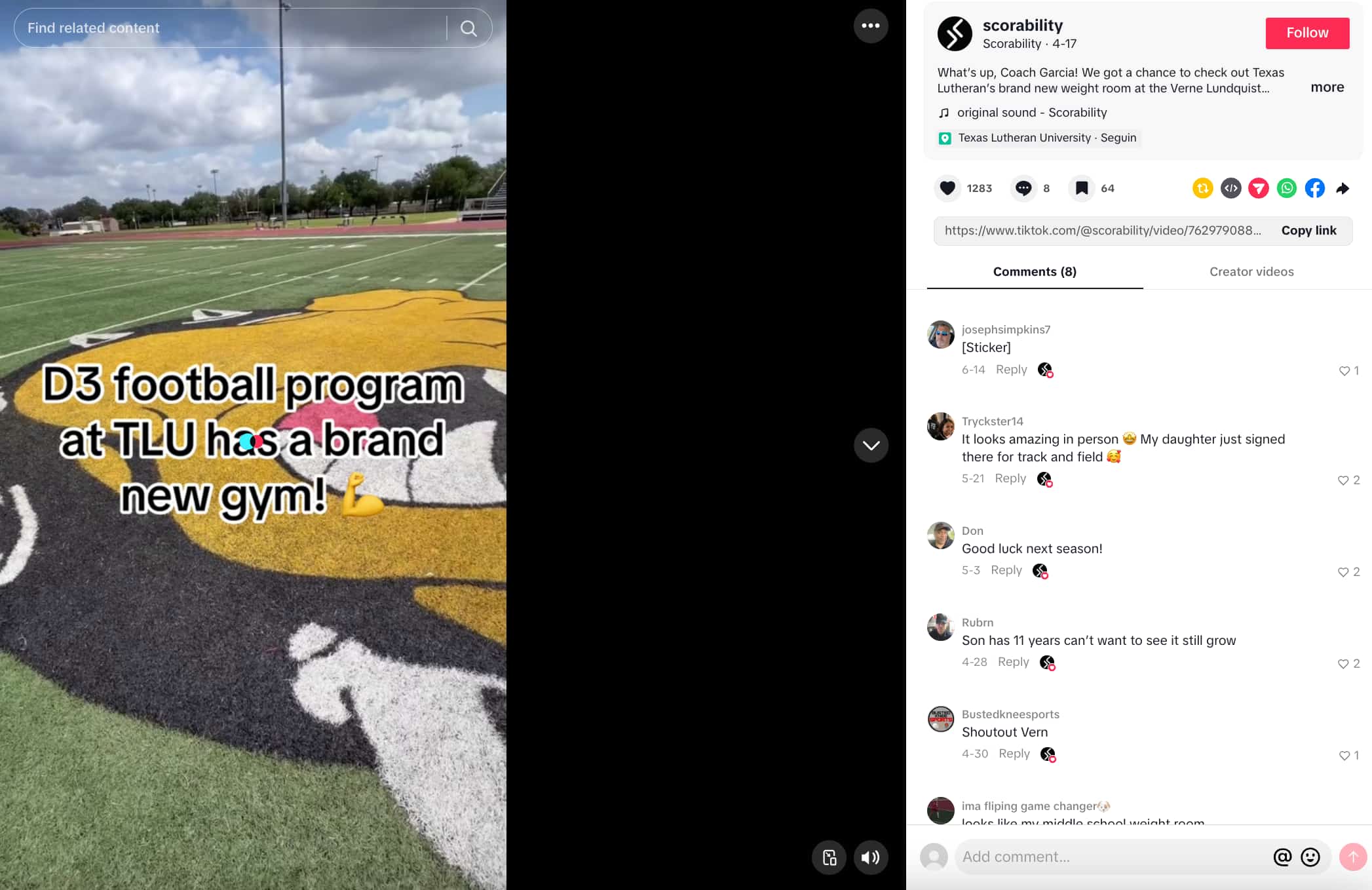
Choose Platforms Where Your Audience Actually Is: The critical element of smart social media management for startups is judicious platform selection. Rather than attempting to be everywhere, focus efforts on the one or two platforms where the target audience predominantly spends their time. This requires an understanding of demographic data and platform-specific behaviors. For example, TikTok is a dominant platform for Gen Z; Sprout Social’s 2026 Social Media Content Strategy Report indicates that 72% of Gen Z social media users are active on TikTok. Therefore, a startup like Scorability, which connects athletes and high school teams with college coaches, strategically maintains an active TikTok presence to engage its college-aged demographic effectively. Conversely, a B2B SaaS startup might prioritize LinkedIn for professional networking and thought leadership, while a visually-driven consumer brand might find Instagram and Pinterest more suitable.
Define Your Brand Voice Early: Before any content is created, it is imperative to define the brand’s voice. This encompasses the specific language, tone, and personality the brand will project across all communications. Is the brand authoritative, playful, empathetic, innovative, or perhaps witty and sarcastic? A consistent brand voice is crucial for establishing a recognizable identity and fostering emotional connections with the audience. It dictates how captions are crafted, how customer inquiries are responded to, and how the brand participates in online conversations. A clearly defined voice ensures that all team members, even as the startup grows, can maintain a unified and on-brand communication style.
Establish Your Content Pillars: Content pillars are the foundational themes or topics around which a brand’s social media content revolves. They align with the brand’s goals and target audience interests, ensuring a diverse yet cohesive content strategy. Typically, 3-5 content pillars are sufficient for a startup. For example, if the goal is brand awareness and community building, content pillars might include:
- Educational Content: Tutorials, industry insights, how-to guides related to the product or industry.
- Behind-the-Scenes/Company Culture: Showcasing the team, product development, or daily operations to humanize the brand.
- User-Generated Content (UGC): Featuring customer stories, reviews, and testimonials.
- Interactive Content: Polls, Q&As, quizzes to foster engagement.
- Promotional/Product Features: Showcasing product benefits, new releases, or special offers.
The 2026 Social Media Content Strategy Report emphasizes that users expect brands to adapt their content to each platform. Therefore, create platform-specific content pillars. Humorous skits and trending audio might thrive on TikTok, while LinkedIn demands professional thought leadership and insightful text posts.
Decide Your Posting Cadence Per Platform: The optimal frequency of posting varies significantly by platform and audience behavior. Some platforms reward multiple daily posts, while others risk overwhelming the audience with more than one. Experimentation and data analysis are key to fine-tuning this.
| A sample posting cadence to consider: | Platform | Recommended Cadence | Notes |
|---|---|---|---|
| 3–5 Reels/feed posts per week | Supplement with 2–4 Stories daily for sustained engagement and reach. | ||
| 3–5 posts per week | Prioritize community-driven content, questions, and discussions over sheer volume. | ||
| 2–5 posts per week | Focus on thought leadership, industry insights, and professional updates. Avoid posting twice a day without a 7-hour gap to prevent cannibalizing reach. | ||
| X (Twitter) | 1–2 posts per day | Best for real-time engagement, news, and quick interactions. Requires resources for sustained monitoring. | |
| TikTok | 2–5 videos per week | Fast-paced, demanding continuous, trending content for momentum and algorithm visibility. | |
| YouTube | 1 long-form + 1–3 Shorts per week | Prioritize depth, value, and high-quality production over quantity for long-form; use Shorts for quick updates and teasers. |
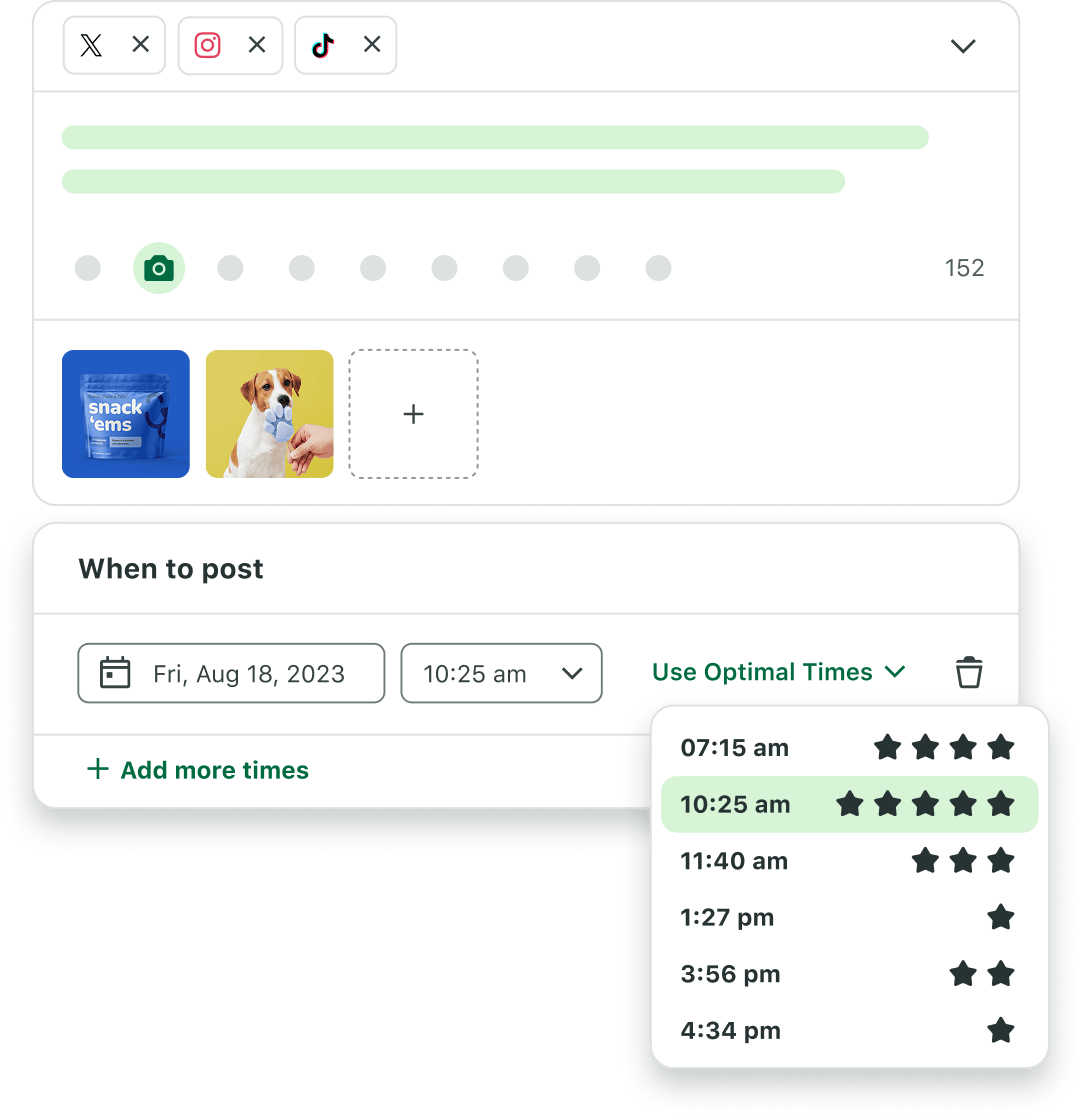
Beyond frequency, timing is crucial. Posts should go live during periods that guarantee the highest initial visibility and engagement, as this early traction often dictates broader algorithmic reach. Advanced social media management tools, such as Sprout Social’s Essentials plan, offer "Optimal Send Times" features that analyze content performance and audience behavior to suggest the best times to publish, eliminating guesswork.
Build a Lightweight Content Calendar: Once goals, platforms, brand voice, content pillars, and posting cadences are defined, organizing these elements into a content calendar becomes essential. A social media calendar serves as a visual roadmap, enabling startups to plan content ideas, track publishing schedules, and maintain a consistent strategy. It doesn’t need to be overly complex initially; essential elements include:
- Date and Time of Post: For consistent scheduling.
- Platform: Which channel the content is destined for.
- Content Type/Pillar: Categorization (e.g., educational video, behind-the-scenes photo).
- Caption/Text: The accompanying message.
- Visual/Media: Link to or description of the image/video.
- Call to Action (CTA): What action the audience should take.
- Relevant Hashtags: For discoverability.
Sprout Social’s Essentials plan includes an intuitive visual content calendar, allowing startups to plan and visualize their social media posts across various platforms for an entire month. This centralized planning facilitates "content batching," where dedicated time blocks are set aside to create multiple posts for the week or month ahead, significantly enhancing efficiency.
The Technological Edge: How Automation Tools Empower Lean Teams
The effective execution of a sophisticated social media strategy, particularly for lean startup teams, is significantly enhanced, if not entirely enabled, by social media management tools. These platforms transition social media from a series of manual, disjointed tasks into a streamlined, integrated workflow.
Key functionalities offered by these tools include:
- Centralized Publishing and Scheduling: Consolidate content creation and scheduling across all chosen platforms from a single dashboard, eliminating the need to log into multiple accounts.
- Visual Content Calendars: Provide an at-a-glance view of all scheduled content, making it easy to identify gaps, adjust timings, and ensure a balanced content mix.
- Optimal Send Times: Utilize data analytics to suggest the best times for posting, maximizing reach and engagement without manual guesswork.
- Unified Inbox: Aggregate messages, comments, and mentions from all social channels into one inbox, ensuring timely responses and preventing missed customer interactions.
- Performance Analytics: Offer comprehensive reports on key metrics such as reach, engagement, follower growth, and click-through rates, providing actionable insights for strategy refinement.
- Team Collaboration Features: Facilitate internal review and approval processes, ensuring all content aligns with brand guidelines, even as the team grows.
These tools are not merely conveniences; they are strategic investments that provide a significant return by saving invaluable time, ensuring brand consistency, and providing data-driven insights that would be impractical or impossible to obtain manually. For startups operating with stringent budgets, many platforms, including Sprout Social, offer scaled pricing models. The Essentials plan, for instance, is specifically designed to be accessible for startups and smaller operations, providing foundational publishing and management tools at a competitive monthly rate. This enables even the most resource-constrained ventures to leverage professional-grade social media management capabilities.
Broader Implications: Social Media’s Impact on the Startup Ecosystem
The strategic adoption of social media management by startups carries broader implications for the entrepreneurial ecosystem and consumer behavior. It fundamentally levels the playing field, allowing innovative, agile startups to compete with established incumbents who may be slower to adapt to digital engagement strategies. This fosters a more dynamic and meritocratic market where compelling ideas and authentic brand connections can gain traction regardless of initial advertising budgets. Furthermore, social media has redefined consumer expectations; customers now anticipate direct, personalized, and timely interactions with brands. Startups that excel in this area build stronger relationships and cultivate loyal communities, which are invaluable assets in a competitive market. Finally, the demand for high-quality, platform-specific content has fueled the growth of the creator economy, providing new avenues for collaboration and content production that further democratize marketing for emerging businesses.
Un-complicate Social Media for Your Startup
For startups, the most effective approach to social media management is to embrace simplicity and strategic focus. Concentrating efforts on the most relevant platforms, consistently publishing high-quality content, and engaging authentically with the audience are the cornerstones of success. Social media management tools designed for startups demystify and streamline this complex process by providing the organizational and automation capabilities necessary for consistent and impactful publishing. Sprout Social’s Essentials plan, for instance, offers a comprehensive suite of entry-level publishing tools—including a visual content calendar and optimal send times—specifically crafted for lean startup teams, enabling them to manage their digital presence effectively and efficiently. Trying a free trial, such as the 30-day offer from Sprout Social, can demonstrate firsthand how these tools can significantly simplify and enhance a startup’s social media workflow, transforming a potential operational burden into a powerful engine for growth.