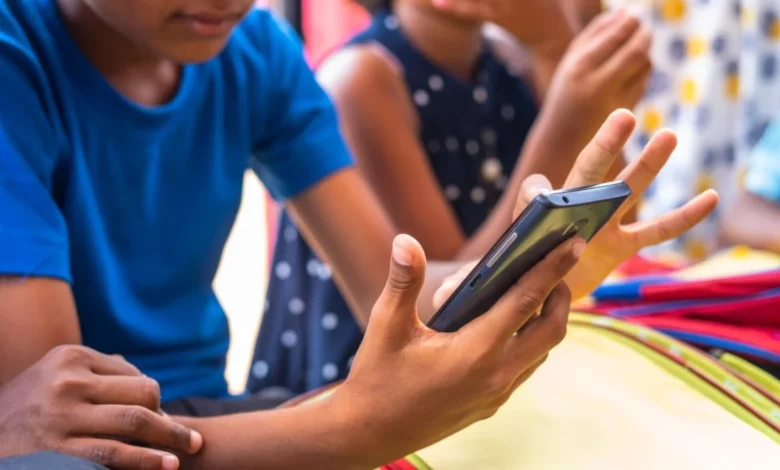
The global legislative landscape is undergoing a significant transformation as an increasing number of nations move to restrict children’s access to social media platforms. Spearheaded by Australia, a growing list of countries, including the United Kingdom, Canada, Brazil, Austria, Indonesia, and several others in Europe and Asia, are enacting or proposing laws that impose age restrictions, typically for those under 14, 15, or 16. These measures represent a concerted effort by governments worldwide to address the escalating concerns surrounding the impact of digital platforms on the mental health, safety, and development of young people. While the stated intentions are to protect minors from online harms such as cyberbullying, child sexual exploitation, self-harm promotion, and the "addictive" design of applications, these legislative initiatives are also drawing considerable criticism regarding their effectiveness, potential infringement on digital privacy, and freedom of expression.
The Genesis of a Global Regulatory Wave
The impetus for these widespread social media bans stems from a deepening global concern over the detrimental effects of unregulated online environments on children and adolescents. Over the past decade, a growing body of research and public discourse has highlighted a correlation between increased social media use among youth and a rise in mental health issues, including anxiety, depression, eating disorders, and body image concerns. Experts, including the U.S. Surgeon General, have issued warnings about the profound risks, pointing to the addictive algorithms, constant pressure for validation, and exposure to harmful content as key drivers of this crisis.
Governments worldwide have observed what many perceive as a failure of self-regulation by technology companies. Despite pledges to enhance safety features and enforce age guidelines, critics argue that platforms have prioritized engagement and profit over the well-being of their youngest users. Features like infinite scroll, notification systems, and personalized recommendation algorithms are often cited as intentionally designed to maximize screen time, fostering dependency and potentially leading to compulsive use. This perceived inaction has galvanized policymakers to intervene, seeking to establish legally binding frameworks that compel tech giants to implement robust age verification mechanisms and redesign their services with child safety as a paramount concern. The aims are clear: to mitigate exposure to explicit or violent content, reduce cyberbullying, prevent self-harm ideation, and safeguard children’s developing minds from the constant demands of the digital sphere.
A Chronology of National Interventions
The trend of national governments implementing or proposing social media bans for minors has rapidly accelerated since late 2025, with Australia setting a significant precedent. The following provides a detailed overview of the actions taken or planned by various countries:
Australia
In December 2025, Australia became the first nation to enact a comprehensive social media ban for children under 16 with the passage of the Online Safety Amendment (Social Media Minimum Age) Act. This landmark legislation mandates that platforms such such as TikTok, Instagram, Facebook, YouTube, X, and Snapchat implement rigorous age verification processes and undertake "reasonable steps" to prevent minors from creating accounts. The move was lauded by child safety advocates but quickly faced challenges. A July 2026 study by Australian government advisors indicated that the ban, in its initial months, had proven largely ineffective, with many children reportedly finding ways to bypass age gates. Furthermore, the legislation sparked legal challenges, notably a lawsuit from Reddit, highlighting the complex interplay between national laws and global tech operations. The ongoing struggle underscores the significant enforcement hurdles in an interconnected digital world.
Austria
Following Australia’s lead, Austria announced in March 2026 a proposed bill to ban social media use for children under 14. The draft legislation, expected to be finalized by summer, seeks to protect younger adolescents from online harms. Uniquely, Austria’s proposal also includes the introduction of a new compulsory school subject, "Media and Democracy," aimed at enhancing digital literacy among youth. This curriculum would educate students on how to critically evaluate information, recognize disinformation, and understand the mechanisms of radicalization online, addressing the educational aspect alongside the regulatory.
Brazil
Brazil’s Digital Statute of Children and Adolescents came into force in March 2026, establishing a social media ban for children under 16. The law introduces a requirement for minors to link their social media accounts to a legal guardian, ensuring parental oversight. Furthermore, it mandates that tech platforms implement robust age verification for users attempting to access adult content. A critical component of Brazil’s legislation is the directive for social media companies to limit "features designed to artificially increase, sustain, or extend" the time children spend on platforms, explicitly targeting addictive design elements like automatically playing videos. This indicates a broader approach to regulate platform design rather than just access.
Canada
On June 11, 2026, the Canadian government announced a proposed law, the Safe Social Media Act, which aims to ban users under 16 from holding social media accounts. This ambitious legislation will enforce strict age verification for accessing online services and impose legally mandated safety requirements on major social media platforms such as TikTok, YouTube, and Instagram. Significantly, Canadian law will also extend its reach to companies utilizing AI chatbots like ChatGPT, Gemini, and Claude, recognizing the emerging risks associated with generative AI for minors. This broad scope highlights an evolving understanding of "social media" to include a wider array of interactive digital services.
Denmark
Denmark announced plans on October 8, 2025, to implement a social media ban for children under 15. Prime Minister Mette Frederiksen indicated that the law could be enacted in 2026, though specific dates and details remain pending. Early reports suggest that parents might retain the discretion to allow their children to use social media from the age of 13, introducing a degree of parental control within the broader ban. This potential flexibility reflects an attempt to balance governmental protection with familial decision-making.

European Union
An EU-wide initiative for stricter online safety for children emerged on July 13, 2026, with Ursula von der Leyen, President of the European Commission, presenting a report recommending age-appropriate restrictions for children under 13. The EU has also launched its own age verification application to facilitate compliance. A cornerstone of the proposed framework is the principle that digital platforms "must prove that their services do no harm," shifting the burden of proof onto the tech industry. This comprehensive approach extends beyond traditional social media, potentially impacting "other digital services such as AI companions, video-sharing platforms, and video games," as reported by Mashable’s Anna Iovine, signaling a holistic regulatory strategy for the digital ecosystem.
France
France is on the verge of approving its social media ban for children under 15, with the government reaching a compromise on the bill on July 20, 2026. This would make France the first European country to officially enact such a ban. According to Le Monde, the legislation will be implemented in two phases: blocking under-15s from creating new accounts as of September 1, 2026, and extending the law to all existing accounts by January 2027. This phased approach aims to allow platforms and users time to adapt to the new regulations.
Germany
While Germany has not yet rolled out a social media ban, the government is actively considering proposals. A German expert panel suggested in June 2026 that a social media ban for children under 13 should be explored, indicating a clear trajectory towards similar protective measures.
Greece
Greece announced plans on April 8, 2026, to ban social media for children under 15. Prime Minister Kyriakos Mitsotakis, in a TikTok video translated by the BBC, articulated concerns about sleep issues and anxiety among children due to "the pressure to always be online," directly criticizing the "addictive design of certain applications." If passed, the measure is slated to take effect on January 1, 2027, and will necessitate robust age verification mechanisms.
Indonesia
Indonesia announced a ban on social media for children under 16 on March 6, 2026. Meutya Hafid, the country’s Minister of Communication and Digital Affairs, stated that accounts belonging to anyone under 16 on "high risk" online platforms would be deactivated by the end of March. The minister specifically named major platforms including YouTube, TikTok, Facebook, Instagram, Threads, X, Bigo Live, and Roblox, demonstrating a broad scope of application.
Malaysia
Malaysia implemented a social media ban for under-16s through its Online Safety Act 2025 (ONSA), announced in November 2025 and coming into force on January 1, 2026, with enforcement ramping up by June 1, 2026. The law requires social media companies to implement age verification and prohibit children under 16 from creating accounts on platforms with at least 8 million users, which includes major players like YouTube, TikTok, Instagram, and Facebook. Similar to Brazil, the ONSA also mandates that companies "limit features that increase, sustain, or extend" children’s online time, targeting the design elements that contribute to addiction.
Poland
Poland is planning to ban children under 15 from social media. Education Minister Barbara Nowacka announced these plans on February 26, 2026, which would include mandatory age verification on social media sites and substantial fines for companies failing to enforce these regulations. This highlights a trend of significant financial penalties to ensure compliance.
Slovenia
Slovenia is also moving towards restricting youth access to social media. Draft legislation for a ban on social media access for children under 15 was announced by Deputy Prime Minister Matej Arčon on February 5, 2026, signaling its alignment with the broader European movement.
Spain
Spain announced plans on February 3, 2026, to ban social media for children under 16. Prime Minister Pedro Sánchez vowed to "protect them from the digital Wild West," emphasizing the government’s strong stance. The proposed bill, pending parliamentary approval, seeks to hold social media companies and their executives liable for "illegal or harmful content" on their platforms. Sánchez stated at the World Governments Summit in Dubai that the government would "turn algorithmic manipulation and amplification of illegal content into a new criminal offense," indicating a pioneering approach to holding platforms accountable for their core operational mechanisms.
Thailand
While Thailand has not yet announced a definitive social media ban, there is significant ongoing discussion within the country regarding the need for such measures, reflecting the global nature of these concerns.
Turkey
Turkey passed a bill on April 23, 2026, blocking children under 15 from accessing social media platforms. According to Associated Press reports citing state media, the law will necessitate age verification, require rapid responses from companies to "harmful" content, and expand parental controls, demonstrating a comprehensive approach to child online safety.

United Kingdom
The UK confirmed an impending social media ban for under-16s on June 15, 2026, building on the rollout of age verification across the country in July 2025, which has shown mixed results. The government explicitly stated its intention to "use the same model for a social media ban as Australia," with plans to broaden the law to encompass other digital platforms, including livestreaming and gaming sites. Additionally, the UK is considering more nuanced restrictions, such as overnight curfews for teens aged 16 and 17, and measures to block "infinite-scroll" mechanisms for children, further targeting addictive design features.
Supporting Data and Expert Perspectives
The legislative actions are largely underpinned by a growing body of scientific evidence. Studies from institutions worldwide have increasingly linked excessive social media use to adverse developmental and psychological outcomes in children and adolescents. For instance, research frequently highlights the impact on sleep patterns, self-esteem, and cognitive development. Neurologists and psychologists point to the "dopamine loop" mechanism, where likes, shares, and notifications trigger a reward response, making platforms inherently addictive, particularly for developing brains that are more susceptible to such stimuli.
Child safety advocates and mental health organizations largely support the intent behind these bans, emphasizing the need for a safer online environment. Dr. Anya Sharma, a leading child psychologist, commented, "These bans, while challenging to implement, send a clear message that children’s well-being cannot be secondary to digital engagement metrics. We’ve seen firsthand the toll that unfiltered online exposure takes on young minds."
However, the practical implementation of age verification remains a significant hurdle. Technology for accurate age verification, such as facial recognition or digital ID checks, raises substantial privacy concerns. Critics argue that requiring children to submit sensitive biometric data or official identification documents could create new risks, making them vulnerable to data breaches or surveillance. Digital rights groups, like the Electronic Frontier Foundation, have voiced strong opposition, stating that "while the goal of protecting children is laudable, these methods could inadvertently build a surveillance infrastructure that impacts everyone’s digital privacy and free speech." Moreover, the Australian government’s own findings on the ineffectiveness of its ban underscore the reality that tech-savvy minors often find ways to circumvent restrictions, whether by using parents’ accounts, VPNs, or simply lying about their age during registration.
Broader Impact and Implications
The global push for social media bans on minors represents a fundamental shift in how governments perceive and regulate the digital sphere. The collective rationale is rooted in the imperative to safeguard the next generation from what many see as an increasingly predatory online environment. By holding tech companies accountable for the safety of their youngest users, these nations aim to foster a digital ecosystem that prioritizes well-being over engagement.
However, the implications are multifaceted and complex. The effectiveness of these bans is a primary concern; if children can easily bypass restrictions, the legislation risks being performative rather than protective, potentially pushing them to less regulated and even more dangerous corners of the internet. Privacy advocates continue to highlight the inherent tension between robust age verification and the right to privacy, especially for minors who may be exploring their identities online. The debate also touches on parental rights, questioning whether the state should override family decisions on digital access.
From an economic perspective, tech companies face immense pressure to comply, incurring significant costs for developing and implementing sophisticated age verification technologies and adapting their platform designs. Non-compliance can lead to hefty fines, as seen in Poland’s proposed legislation, which could reshape business models for platforms heavily reliant on younger demographics.
The trend also raises questions about digital literacy and education. While some countries like Austria are integrating media education into school curricula, others rely solely on bans. Critics argue that a holistic approach, combining regulation with comprehensive digital literacy programs, might be more effective in equipping children with the critical thinking skills needed to navigate the internet safely and responsibly.
As this story continues to develop, the global community will watch closely to see whether these legislative interventions genuinely create a safer digital space for children, or if they merely shift the challenges to new, unregulated frontiers. The ongoing dialogue between governments, tech giants, child advocates, and privacy experts will undoubtedly shape the future of online interaction for generations to come.
Related posts: