
Machine Gun Kelly Clapped Back After Getting Roasted Over Fashion Week Ensemble But Its Not Even The Wildest Thing Hes Worn Recently
Machine Gun Kelly Claps Back After Fashion Week Roasting, But Is It Even His Wildest Look?
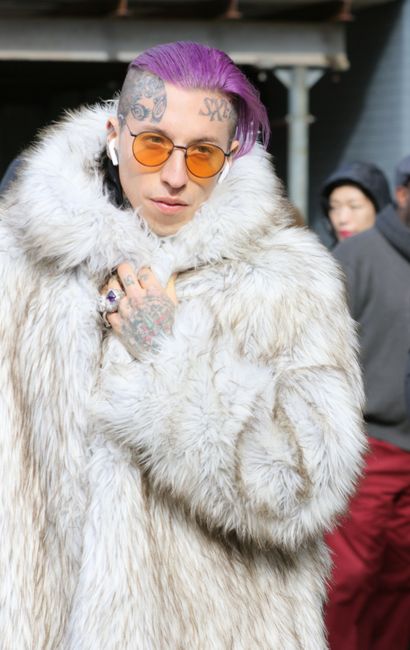
Machine Gun Kelly’s recent appearance at Paris Fashion Week, sporting an ensemble that sparked a fresh wave of online mockery, has once again thrust the musician into the spotlight for his sartorial choices. While the internet, ever the swift judge, dissected and ridiculed his latest outfit, MGK, no stranger to public scrutiny, offered a characteristic retort. This isn’t a new narrative; the "Bloody Valentine" singer has cultivated an image synonymous with audacious, boundary-pushing fashion, often blurring the lines between performance art and personal style. The Paris Fashion Week outfit, which reportedly involved a vibrant, possibly iridescent, and structurally unique garment, joined a growing catalog of looks that have polarized audiences and fueled endless social media commentary. The immediate backlash, a predictable echo of past criticisms, centered on its perceived eccentricity and deviation from conventional aesthetics. Yet, beneath the surface of the online roasting lies a more intricate discussion about celebrity influence, artistic expression, and the evolving definition of fashion itself, especially within the context of someone like Machine Gun Kelly, whose career is built on challenging norms.
The specific details of the Fashion Week ensemble, while fresh in the minds of those who witnessed the ensuing online debate, are secondary to the recurring pattern of MGK’s public persona. This time, the criticism likely honed in on elements such as exaggerated silhouettes, unconventional fabric choices, or an unexpected color palette, all of which have become hallmarks of his style. For instance, one might imagine a ruffled, voluminous top paired with intricately patterned trousers, or a brightly colored, structured jacket that defied traditional tailoring. The reactions, as always, ranged from bemused to outright derision. Tweets and Instagram comments likely echoed sentiments of bewilderment and playful (or not-so-playful) comparisons to abstract art or fantastical characters. Memes undoubtedly proliferated, transforming the image into a viral sensation, albeit one tinged with ridicule. This immediate and widespread public response is a testament to Kelly’s ability to command attention, even when that attention is negative.
However, the crucial element that elevates this particular incident beyond a simple fashion faux pas is the context. Machine Gun Kelly has consistently pushed the boundaries of what is considered acceptable or even desirable in mainstream fashion. His “clapped back” response, therefore, isn’t just a defense of a single outfit; it’s a reaffirmation of his artistic philosophy and his willingness to embrace the controversy that often accompanies it. His retort, while perhaps not a lengthy academic treatise, likely served to underscore his perspective: that fashion is a form of self-expression, an extension of his identity as an artist, and not beholden to the approval of the masses. This defiant stance resonates with his fanbase, who often see his fashion as an integral part of his rebellion against conformity. The act of "clapping back" itself is a performative act, designed to engage with and often dismiss his critics, turning their negative energy into fuel for his continued self-expression. It’s a strategy that has served him well in navigating the often fickle landscape of celebrity culture.
To truly appreciate why the Fashion Week outfit, despite the roasting, might not be his wildest look, one must delve into his recent fashion history. Over the past few years, Machine Gun Kelly has embraced a bold, often androgynous aesthetic, frequently collaborating with designers who share his vision for avant-garde creations. Consider his now-iconic pink ensembles, his excursions into hyper-masculine silhouettes juxtaposed with delicate materials, or his willingness to experiment with extreme makeup and unconventional hairstyles. These aren’t fleeting moments of sartorial experimentation; they are consistent pillars of his public image. One prominent example that comes to mind is his exploration of punk and grunge influences, reinterpreted through a modern, high-fashion lens. This might involve distressed leather, ripped fabrics, chains, and studs, all presented in a way that feels both rebellious and meticulously curated.
Furthermore, his relationship with his girlfriend, Megan Fox, has also seen a notable influence on their shared fashion statements. The couple has frequently appeared in coordinated or complementary outfits that push gender norms and embrace a darkly romantic aesthetic. This can manifest in matching leather ensembles, daring cut-outs, or an embrace of contrasting textures and colors. The visual impact of these pairings is undeniable, and they often generate as much discussion as Kelly’s individual looks. For instance, there was a period where both Kelly and Fox were frequently seen in vibrant pink, a deliberate sartorial statement that challenged traditional gendered color associations. Their public appearances became mini fashion shows in themselves, solidifying their status as style icons who are unafraid to make bold statements together.
The very act of attending Paris Fashion Week, a hallowed ground for haute couture and cutting-edge design, suggests an intent to engage with the fashion world on its own terms, albeit on his own unique terms. His presence there is not merely that of a celebrity guest; it is often that of an influential figure who is shaping trends and inspiring designers. His ensembles at these events are not accidental; they are carefully considered statements designed to provoke thought and generate conversation. The roasting he receives is, in a way, a byproduct of this intent. If his outfits were merely conventional, they would likely go unnoticed. The controversy is, in essence, a sign that he is succeeding in his mission to be disruptive and memorable. The boldness of his choices, while alienating some, resonates with a significant portion of his audience who crave authenticity and a rejection of the mundane.
When evaluating the “wildness” of an outfit, subjective interpretation plays a significant role. However, objectively speaking, some of Machine Gun Kelly’s past looks have arguably surpassed the recent Fashion Week ensemble in terms of sheer audacity or the degree to which they defied societal expectations. Consider his experimentation with full-body latex suits, his embrace of neon colors that bordered on fluorescent, or his deliberate incorporation of elements that are traditionally associated with subcultures and recontextualizing them for a high-fashion audience. One might recall an instance where he wore a brightly colored, oversized suit with exaggerated shoulders, paired with a flamboyant hat and equally attention-grabbing footwear. This kind of look, with its sheer volume and unashamed color, could be argued as more visually arresting and potentially more polarizing than a garment that, while eccentric, might still fall within a recognizable silhouette or color scheme.
Another dimension to consider is the context of the event. A runway show or a red carpet event at Fashion Week often provides a platform for designers to showcase their most experimental creations. While MGK’s choices are often unconventional, they are sometimes within the realm of what designers present on the runway. However, when he dons these looks outside of such curated environments, or when he interprets them in his own unique way, the impact can be amplified. For example, his use of avant-garde makeup, which has included bold eyeshadow, glitter, and even facial embellishments, has consistently generated buzz and sparked debate. These artistic applications of makeup, often in conjunction with equally daring clothing, have a profound visual impact and can be seen as pushing the boundaries of gender expression and personal adornment in a way that is arguably more transformative than a single garment.
The "clapped back" aspect of the narrative is also important. It signifies a direct engagement with criticism, a refusal to be silenced or diminished by public opinion. This defiant posture is as much a part of his persona as his fashion choices. It’s a signal to his fans and to the broader public that he is comfortable in his skin and unapologetic in his artistic vision. This is not a musician who retreats into a shell when faced with negative feedback; he leans into it, using it as an opportunity to reiterate his message. This resilience and willingness to confront negativity head-on is a significant part of his appeal, particularly for a generation that values authenticity and outspokenness. His responses are often concise, witty, and laced with the same rebellious spirit that permeates his music and his fashion.
Ultimately, Machine Gun Kelly’s Fashion Week outfit, and the subsequent roasting, serve as a microcosm of his ongoing impact on the cultural landscape. He has become a prominent figure in the conversation around celebrity style, pushing boundaries and challenging conventions. While some may dismiss his choices as mere attention-seeking, others see him as a genuine artist who is using fashion as a powerful medium for self-expression. The fact that his outfits continue to generate such strong reactions, both positive and negative, is a testament to his influence. The question of whether this particular ensemble was his “wildest” is less important than the fact that it contributed to a larger, ongoing dialogue about masculinity, fashion, and the evolving definitions of what it means to be a public figure in the 21st century. His embrace of flamboyant, unconventional, and gender-bending aesthetics has made him a polarizing but undeniably significant force in contemporary culture. The roasting he endures is not a deterrent; it’s merely part of the performance.
