The Quest for Celestial Clarity: Navigating the Landscape of Lenses for Milky Way Photography

The pursuit of capturing the breathtaking spectacle of the Milky Way often hinges on one crucial, yet elusive, element: light. In the dim embrace of the night sky, starlight offers only a whisper of illumination, necessitating photographers to equip themselves with the fastest lenses available. These optical tools must not only gather as much ambient light as possible but also deliver exceptional image quality, particularly at their widest apertures, where the magic of astrophotography truly unfolds. The precise act of focusing on distant stars presents a significant challenge; even the slightest adjustment on a manual focus ring can mean the difference between a crystal-clear rendition of the cosmos and a frustrating blur. Autofocus systems, while convenient in daylight, often lack the nuanced control required for pinpoint stellar sharpness. While no single lens reigns supreme for Milky Way photography, a curated selection of optics consistently rises to the challenge, offering photographers the best tools for crafting compelling celestial compositions.
For those embarking on this photographic journey, a comprehensive understanding of the equipment is paramount. This exploration delves into the nuances of lens selection, examining the strengths of both zoom and prime lenses in the context of astrophotography. The article aims to equip photographers with the knowledge to make informed decisions, considering factors such as aperture, focal length, sensor size, and budget, to unlock the full potential of their night sky endeavors.
The Great Divide: Zoom Lenses vs. Prime Lenses for Astrophotography
The debate between zoom and prime lenses is a perennial one in photography, and astrophotography is no exception. Both categories offer distinct advantages and disadvantages when it comes to capturing the Milky Way.
Prime Lenses: The Speed Demons of the Night
Prime lenses, characterized by their fixed focal length, are often lauded for their superior low-light performance. Their primary advantage lies in their ability to achieve wider maximum apertures, commonly found at f/1.4, f/1.8, or f/2.0. This exceptional light-gathering capability allows photographers to utilize shorter shutter speeds, thereby minimizing the risk of star trails caused by the Earth’s rotation. Furthermore, wider apertures enable the use of lower ISO settings, which directly translates to cleaner images with less digital noise, preserving the subtle details of the celestial landscape. The precision required for focusing on stars is more manageable with primes, as their dedicated focus rings often offer a more tactile and controlled experience compared to some autofocus lenses where minute movements can lead to significant focus shifts.
Zoom Lenses: Versatility and Convenience
While often limited to a maximum aperture of f/2.8, modern zoom lenses have made significant strides in optical quality, rivaling primes in sharpness, especially in the central areas of the image. Their key advantage lies in their versatility. A single zoom lens can cover a range of focal lengths, allowing photographers to adapt their composition without the need to change lenses in potentially challenging, dark environments. This flexibility is invaluable for capturing expansive vistas or zooming in on specific celestial features. For astrophotography, a zoom lens with a constant f/2.8 aperture can still yield excellent results, particularly when paired with modern camera bodies that excel at high ISO performance.

The choice between a zoom and a prime often boils down to a photographer’s personal style and the specific shooting scenario. Some may prioritize the uncompromised speed and potential for shallower depth of field offered by primes, while others may favor the adaptability and convenience of a zoom lens.
Essential Focal Lengths for Capturing the Cosmos
The focal length of a lens plays a critical role in shaping the composition of Milky Way photographs. Wide-angle and ultra-wide-angle lenses are generally preferred for astrophotography because they encompass a broad field of view, allowing photographers to include significant portions of the night sky, often alongside terrestrial foreground elements.
-
Ultra-Wide (14mm-20mm on Full-Frame): Lenses in this range are ideal for capturing the grandeur of the Milky Way arching across the sky. They allow for the inclusion of expansive landscapes, providing context and scale to the celestial display. At these focal lengths, the Milky Way appears vast and dominant. However, extreme wide-angle lenses can sometimes exaggerate foreground elements, and care must be taken to balance the composition.
-
Wide (24mm-35mm on Full-Frame): These focal lengths offer a slightly more compressed perspective, bringing the Milky Way into a more focused view. They are excellent for integrating foreground elements more harmoniously with the sky, creating a sense of depth and connection. While still wide enough to capture substantial portions of the sky, they are less prone to the extreme distortions that can sometimes occur with ultra-wide lenses.
The infographic provided in the original context illustrates how different focal lengths impact the framing of the Milky Way. For instance, a 35mm lens might be used to incorporate a compelling foreground, but it limits the visible expanse of the sky. Conversely, a 14mm lens would showcase a much larger portion of the celestial band, potentially at the expense of foreground detail or leading to an overwhelming sky. The decision of which focal length to employ is therefore a creative one, driven by the desired narrative and the visual elements the photographer wishes to emphasize.

Curated Selections: Top Lens Recommendations for Milky Way Photography
The following recommendations represent a selection of lenses known for their performance in astrophotography, categorized by sensor size and lens type, catering to various budgets and brand preferences.
Best Crop Sensor Zoom Lenses for Milky Way Photography
For photographers utilizing crop sensor cameras (APS-C or Micro Four Thirds), these zoom lenses offer excellent wide-angle capabilities and desirable apertures:
- Tokina AT-X 11-20mm f/2.8 PRO DX: A popular choice for its sharpness and wide aperture, offering a versatile focal range for crop sensors.
- Tokina AT-X 14-20mm f/2.0 PRO DX: This lens boasts an even faster f/2.0 aperture, providing a slight edge in light-gathering capabilities.
- Sigma Art 18-35mm f/1.8 DC HSM: Renowned for its exceptional image quality and a remarkably fast f/1.8 aperture, this lens is a favorite among many photographers for its prime-like performance in a zoom package.
Best Crop Sensor Prime Lenses for Milky Way Photography
Prime lenses for crop sensors often offer incredibly fast apertures at accessible price points, making them excellent entry points into astrophotography:
- Rokinon 10mm f/2.8 ED AS UMC: A super-wide prime that captures a vast field of view, ideal for dramatic nightscapes.
- Rokinon 12mm f/2.0 NCS CS (Mirrorless Only): Specifically designed for mirrorless systems, this lens offers a fast f/2.0 aperture and a compact form factor.
- Rokinon 16mm f/2.0: Another strong contender for crop sensor users, providing a slightly tighter field of view than the 10mm or 12mm options.
Best Full-Frame Zoom Lenses for Milky Way Photography
Full-frame photographers seeking broad coverage and excellent low-light performance will find these zoom lenses to be invaluable tools:
- Nikon AF-S Zoom Nikkor 14-24mm f/2.8G ED: A legendary ultra-wide zoom known for its exceptional sharpness and robust build quality.
- Canon EF 16-35mm f/2.8 III L USM: Canon’s L-series offering delivers outstanding image quality, weather sealing, and a versatile zoom range.
- Tamron SP 15-30mm f/2.8 Di VC USD: This lens offers a slightly wider starting focal length than some competitors and features Tamron’s Vibration Compensation for added stability.
- Sigma 14-24mm f/2.8 DG HSM Art: The Sigma Art line is synonymous with optical excellence, and this ultra-wide zoom is no exception, delivering superb sharpness and minimal distortion.
Best Full-Frame Prime Lenses for Milky Way Photography
For full-frame photographers who prioritize maximum aperture and optical precision, these prime lenses are top-tier choices:

- Sigma Art 14mm f/1.8 DG HSM: This lens is a game-changer, offering an unparalleled f/1.8 aperture in an ultra-wide prime, allowing for unprecedented light gathering.
- Rokinon 14mm f/2.4 SP (Special Performance): Rokinon’s Special Performance series offers enhanced optical quality, and this 14mm f/2.4 is a highly regarded option for astrophotography.
- Rokinon 20mm f/1.8 ED AS UMC: A more affordable ultra-wide prime that still delivers excellent results for night sky photography.
- Tokina FIRIN 20mm f/2 FE (Mirrorless Only): Designed for Sony E-mount mirrorless cameras, this lens provides sharp images and a fast f/2.0 aperture.
- Rokinon 24mm f/1.4 ED AS UMC: A classic focal length for astrophotography, offering a balance between wide-angle coverage and subject isolation.
- Sigma Art 35mm f/1.4 DG HSM: While not ultra-wide, the 35mm focal length is incredibly versatile and can be used effectively for astrophotography, especially when incorporating prominent foreground elements.
Beyond the Specs: Choosing the "Right" Lens for Your Vision
The pursuit of the "best" lens for Milky Way photography can sometimes lead photographers down a rabbit hole of specifications and price tags, overlooking a more pragmatic approach. While cutting-edge optics offer remarkable performance, it’s crucial to remember that the "right" lens is the one that best suits your individual needs, budget, and shooting style.
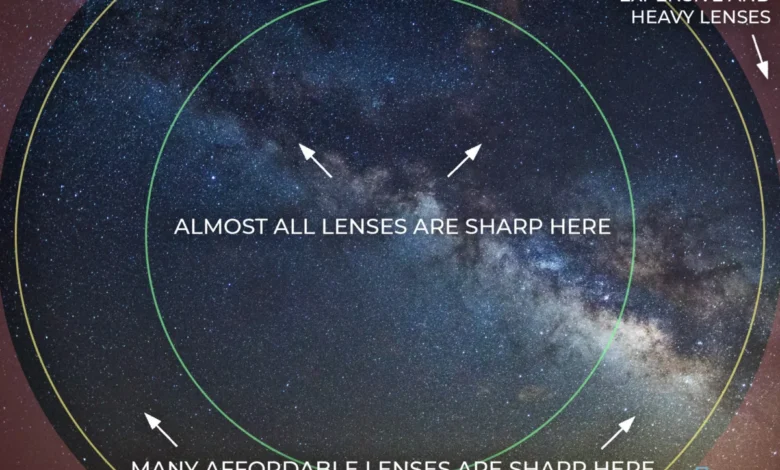
Recent advancements in lens design mean that many modern wide-angle lenses perform exceptionally well in the central portion of the image circle. If your primary concern is capturing sharp stars in the main area of your frame, then selecting a lens with a focal length and aperture that aligns with your artistic vision, and prioritizing a lightweight and affordable option, can be a perfectly sound strategy. The extreme corners of the image are often where the most expensive and exotic lenses truly differentiate themselves, and for many photographers, the subtle differences in these areas may not be a primary concern, especially when the focus is on the grandeur of the Milky Way itself.
The decision-making process should involve a self-assessment of priorities. Consider the following factors:
- Aperture: A wider aperture (lower f-number) is generally more desirable for gathering light.
- Weight and Portability: If you plan to hike to remote locations, a lighter lens is a significant advantage.
- Price: Lenses vary considerably in cost. Determine a budget that aligns with your financial comfort.
- Corner Sharpness: While important for some, the absolute sharpness in the extreme corners may be less critical for general Milky Way photography.
- Focal Length: Choose a focal length that best suits your desired field of view and compositional approach.
For instance, an adventure photographer undertaking multi-day treks may prioritize a lightweight lens like the Rokinon 14mm f/2.8 or Nikon 20mm f/1.8, even if it means a slight compromise in corner sharpness compared to a heavier, more expensive option. Conversely, a landscape photographer who primarily shoots from a base camp might opt for a larger, optically superior lens.
Ultimately, the most important aspect of Milky Way photography is not solely about the equipment, but about the creative vision and the willingness to explore. By understanding the capabilities of different lenses and aligning them with personal priorities, photographers can select the tools that will best enable them to capture the awe-inspiring beauty of the night sky. The journey of astrophotography is one of continuous learning and adaptation, and the right lens is merely a facilitator of that creative exploration.