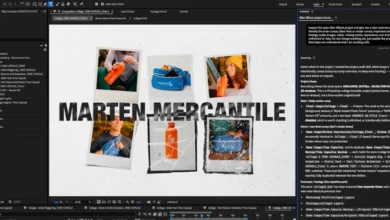
Disney and Adobe Forge Multi-Year AI Alliance to Revolutionize Creative Pipelines

The Walt Disney Company has officially entered into a multi-year strategic alliance with Adobe, positioning the software giant as its primary "AI Innovation Partner." This collaboration marks a significant pivot in Disney’s long-term technological strategy, focusing on the integration of generative artificial intelligence into its expansive creative workflows. Under the terms of the agreement, Disney will gain exclusive access to Adobe’s suite of generative AI tools, including Firefly and Firefly Foundry, alongside advanced features in Premiere and Photoshop. Furthermore, the partnership includes dedicated engineering support to develop proprietary AI models trained specifically on Disney’s intellectual property, aimed at producing commercially viable and production-ready creative assets.
The Scope of the Partnership
The operational reach of this alliance is extensive, spanning across Disney’s diverse business units. Walt Disney Imagineering is already utilizing Firefly Foundry to accelerate the development of theme park attractions. The process involves transforming rough, human-made sketches into fully rendered, high-fidelity concept art, significantly reducing the time between initial ideation and final visual approval.
Beyond Imagineering, the collaboration extends into the studio and broadcasting divisions. Disney’s internal innovation incubator, StudioLAB, is tasked with piloting experimental production workflows that leverage Adobe’s generative models. Meanwhile, ESPN Edge, the network’s advanced media technology arm, is exploring how these AI tools can automate and enhance the creation of real-time sports content. By utilizing models trained on Disney’s own vast library of visual data, the company aims to ensure that the output remains consistent with its established brand aesthetic while mitigating the copyright and licensing risks often associated with third-party generative AI models.
Chronology of Disney’s AI Strategy
The move to partner with Adobe is the latest in a series of aggressive maneuvers by Disney to capture the benefits of generative AI. The company’s trajectory over the past eighteen months illustrates a fluctuating and highly ambitious approach to tech integration:
- November 2025: Disney initiated a comprehensive overhaul of its flagship streaming platform, Disney+, integrating generative AI tools designed to personalize user experiences and streamline content discovery.
- December 2025: In a high-profile move, the company announced a staggering $1 billion investment deal with OpenAI, intending to leverage the Sora model for cinematic production. However, this partnership collapsed in early 2026 following the abrupt shuttering of the Sora project, resulting in a total withdrawal before any capital was deployed.
- Mid-2026: Disney signaled a shift in leadership and talent acquisition, appointing former Character.AI CEO Karandeep Anand as its first Chief Technology Officer. This appointment was accompanied by an aggressive $180 million recruitment drive targeting engineering talent from Character.AI.
- November 2026: The formalization of the Adobe partnership marks the latest attempt to stabilize the company’s AI infrastructure, moving away from high-risk experimental ventures toward established, scalable enterprise solutions.
Economic Context and Workforce Implications
The timing of this partnership is notable, occurring against a backdrop of ongoing economic restructuring within The Walt Disney Company. Throughout 2026, the studio has engaged in multiple rounds of layoffs, affecting various departments as part of a broader corporate initiative to reduce overhead and achieve leaner operational margins.
Industry analysts point to a paradox in Disney’s current financial strategy: while the company has engaged in significant cost-cutting measures—including substantial workforce reductions and massive stock buybacks—it continues to allocate significant resources toward AI development. Critics and labor advocates suggest that these AI investments are intended to automate labor-intensive creative tasks, potentially diminishing the role of human artists, illustrators, and production staff. Conversely, supporters of the initiative argue that these tools serve as "force multipliers," allowing a smaller team of artists to achieve higher levels of output quality and speed, thereby keeping Disney competitive in an increasingly crowded media landscape.
Technical Implications for Creative Pipelines
The core of the Adobe-Disney alliance lies in the concept of "bespoke AI models." Unlike generic models, which are trained on public, often unverified data sets, the models being developed for Disney will be "walled gardens." By training Firefly Foundry on proprietary assets, Disney aims to avoid the legal pitfalls associated with intellectual property infringement.
From a production standpoint, this could fundamentally alter the animation and design pipeline. Traditionally, concept art—the visual blueprint for films, rides, and merchandise—requires weeks of iteration by human teams. By automating the transition from sketch to render, Disney aims to bypass the "blank page" phase of production. However, industry insiders caution that the quality of these AI outputs remains dependent on the human oversight provided at the input stage. The long-term success of this technology will likely hinge on the company’s ability to integrate these tools without diluting the artistic "magic" that defines the Disney brand.
Reactions and Industry Sentiment
While Disney has not provided a full breakdown of the financial terms of the Adobe agreement, the stock market has reacted with measured optimism, viewing the partnership as a sign of management’s commitment to modernizing the company’s technological infrastructure.

However, within the creative community, sentiment remains divided. The move has reignited discussions regarding the future of creative labor. Unions representing animators and digital artists have expressed concerns that without strict guardrails, the deployment of generative AI at this scale could lead to the devaluation of skilled creative work. In response, Disney representatives have maintained that the focus remains on "augmenting" human creativity rather than replacing it.
Broader Implications for the Media Industry
Disney’s reliance on Adobe is likely to set a precedent for other major studios. As media companies struggle with rising production costs and shifting audience consumption habits, the adoption of generative AI is being viewed not as an optional upgrade, but as a survival mechanism. If the Adobe-Disney partnership successfully demonstrates that proprietary AI models can generate "commercially safe" and high-quality assets, it is highly probable that other major entertainment conglomerates—such as Netflix, Warner Bros. Discovery, and Paramount—will follow suit with their own exclusive tech partnerships.
Ultimately, the Disney-Adobe alliance represents a pivotal moment in the intersection of Silicon Valley and Hollywood. It signals a move away from the speculative "gold rush" phase of AI and into a period of industrial application. For Disney, the success of this endeavor will be measured not just by the technological efficiency gains it achieves, but by its ability to navigate the complex social and labor-related tensions that arise when one of the world’s most iconic creative companies chooses to embrace machine-generated content. As the studio enters its next chapter, the balance between technological efficiency and human-led storytelling will remain the defining challenge of the company’s leadership.